#HillYes by John Erickson

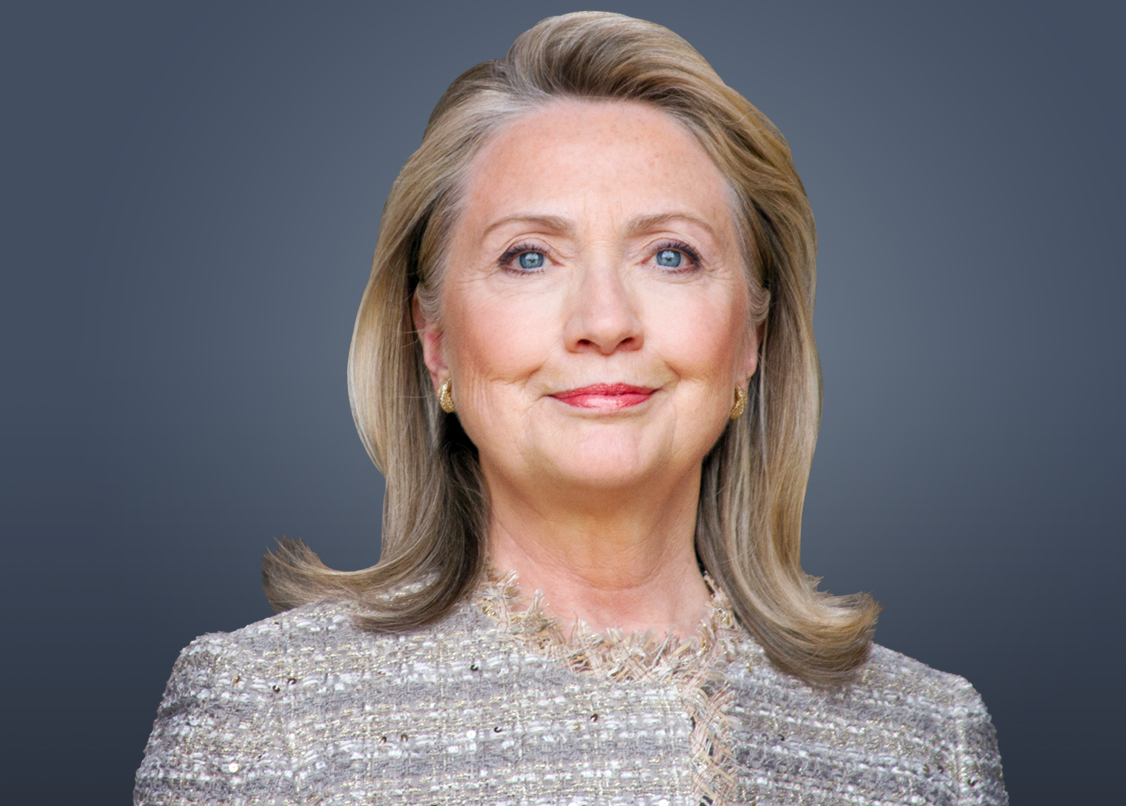
I’m going to do something I’d never thought I’d do: fill your newsfeed with yet another article pertaining to the 2016 United States Presidential election and yes, I’m going to talk about former Secretary of State Hillary Clinton (hint: I’m emphatically supporting her and I’m unapologetic about it.)

John Erickson, sports, coming out.I’m going to do something I’d never thought I’d do: fill your newsfeed with yet another article pertaining to the 2016 United States Presidential election and yes, I’m going to talk about former Secretary of State Hillary Clinton (hint: I’m emphatically supporting her and I’m unapologetic about it.)

Let me start off with my central point: a vote for Hillary is a vote to change history and the world. No, not because she’ll hail in some type of new economic stimulus (although I’m sure she’ll do just fine with our economy #ThanksObama) or because she’ll save us all from the evils of the GOP (looking at you Trump/Cruz/and the “moderate” Kasich) but because she’ll do one thing that’s never been done before: become the first female President of the United States, ever.

While I have tried not to get into “it” (read: online trysts with my friends on social networks who are #FeelingtheBern) the question I beg to ask is: what’s so wrong with wanting the right woman to be the President? This is one, but not my only reason, I will cast my vote for her both in the Democratic Primary in California in June as well as in November (and, if you haven’t guessed, I do not believe or promulgate the reasoning or rhetoric that Bernie Sanders will come from behind and win the Democratic Party’s nomination because I passed 5th grade level Math.)

Hillary Clinton

Continue reading “#HillYes by John Erickson”

To Work and to Pray in Remembrance by Elise M. Edwards

Elise EdwardsOne hundred years ago, Jesse Washington was lynched downtown in Waco, Texas. Next week, on March 20th, some of my colleagues and I are organizing a memorial service to remember this horrific event and pray for a better future for our city.

We invited submissions of original prayers, poems, spoken-word pieces, music, drama, and other pieces of liturgy for this ecumenical memorial event.  We received a number of thoughtful, heartfelt submissions, but we also a question:

“Why in the world do we need a memorial for one person who was lynched?!?! In the reality of things, Jesse Washington was one of thousands of Blacks that were lynched in America during the time period.”

I thought the answer was so obvious that I initially brushed off the question. But as our group proceeded with the plans, I thought about the question and wondered whether our university community would understand why we are doing this. And honestly, in moments of exhaustion when I put off responding to emails, I wondered, too. Why am I doing this?

To remember. We memorialize one person who was lynched to remind us that every single one of the thousands who were lynched was a human being who was killed unjustly.

In the speech “Lynch Law in America,” from 1900, Ida B. Wells-Barnett describes the injustice: “Our country’s national crime is lynching. It is not the creature of an hour, the sudden outburst of uncontrolled fury, or the unspeakable brutality of an insane mob. It represents the cool, calculating deliberation of intelligent people who openly avow that there is an “unwritten law” that justifies them in putting human beings to death without complaint under oath, without trial by jury, without opportunity to make defense, and without right of appeal.”

Wells-Barnett was an African-American journalist and activist for civil rights and women’s suffrage. Her writings and activism advanced anti-lynching campaigns adopted by Black women’s clubs and the NAACP. Unsurprisingly, her work was controversial, even among women’s groups. Wells-Barnett argued that lynching began after the emancipation of slaves to repress “race riots.” When a constitutional amendment permitted black men to vote, lynching was used to violently prevent their participation in state and national elections. When fraud, intimidation, and local policy succeeded in suppressing the black vote, the brutality continued in the name of avenging or preventing rape and assault of white women.[1] For this argument, lawmakers, ministers, and women’s groups accused Wells-Barnett of defending rapists and subverting “justice” for their alleged victims.

She did not defend rapists. (Neither do I.) She condemned a system that used allegations of rape of white women to legitimate hanging, burning alive, shooting, drowning, dismembering, dragging, and displaying black men’s bodies. Some allegations may have been true. Many were false. Despite the veracity of the allegations, the vigilantes tortured and killed men, women, and children in brutal, public ways, and we must not mistake that for any form of justice. Lynching apologists explicitly valued white lives over others. Lynching was, and remains a crime against humanity.

In our own age of campaigns against the impartiality of law and law enforcement, we should remember the lynching victims and the tensions within earlier waves of feminism and the temperance movement over anti-lynching campaigns. We do not have to condone criminal behavior to call for humane law enforcement or prison reform. We can affirm the humanity of accused and convicted criminals in the pursuit of justice. So we remember Jesse Washington and the other lynching victims to engage more consciously in the activism of our time. We remember so that we don’t lose sight of the complexities of our work. We work in remembrance of the many victims of injustice.

We also gather to pray. For some people, prayer is about making requests to the divine. But in a more expansive sense, prayer is communication with the divine. In prayer, we set time aside to connect to something greater than ourselves. It’s our hope that gathering as a community to pray for the future of our city prompts us to see beyond individual concerns. In a liberation ethics framework, as explained by Miguel De La Torre[2], prayer is not limited to individual, private conversations with God in hopes of gaining wisdom and guidance. De La Torre presents prayer as a communal activity that brings together different members of the spiritual body. It involves the critical application of the biblical text to the situation at hand. This involves critical analysis of the social context that gave rise to the text or its common interpretation. So we pray to give us time to come together, to read scripture, to seek God and hear God through other members of our community.

So why are we gathering? Why do we memorialize one person when there are so many others who have been harmed, not just in my local community but all of our communities?

To remember past wrongs.

To commemorate.

To honor.

To inspire.

To call attention to persisting injustices.

To make us mindful in our work.

To provoke us to pray.

[1] This argument about the reasons for lynching is found in several of Wells-Barnett’s essays, but is quite developed in The Red Record: Tabulated Statistics and Alleged Causes of Lynching in the United States (1895).

[2] See Miguel A. De La Torre’s Doing Christian Ethics from the Margins (2nd Edition, 2014).

Elise M. Edwards, PhD is a Lecturer in Christian Ethics at Baylor University and a graduate of Claremont Graduate University. She is also a registered architect in the State of Florida. Her interdisciplinary work examines issues of civic engagement and how beliefs and commitments are expressed publicly. As a black feminist, she primarily focuses on cultural expressions by, for, and about women and marginalized communities. Follow her on twitter, google+ or academia.edu.

Pope Francis, Complementarity, and US Politics by Gina Messina-Dysert

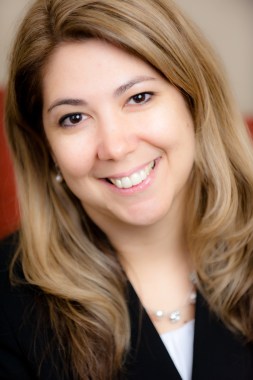
Gina Messina-Dysert profileA theology of complementarity, referred to by Pope Francis as an “anthropological fact,” has had  a strong influence on American politics.  According to the Vatican teaching, women and men have distinct but complementary roles, meaning that women’s value is found in the home as wife and mother and men are responsible for providing for the family.  Such a teaching is highly problematic in that it demeans women’s value and places women on the underside of dualism.

As a woman with an ongoing struggle with infertility, I find it troubling that my church sees my value as less because my womb is barren. Likewise, do women have less value if they choose a career over motherhood?  What if they choose not to marry?  There are also clear implications for single parents, LGBTQ parents, and so on.  In addition, societal norms make clear that women’s work in the home is not valued as the work of men in society.  Likewise, it is damaging to men in that it refuses to acknowledge the critical role men play in the household, in the lives of their children, and their responsibilities to be partners and co-parents.

The idea of complementarity upheld by Pope Francis greatly contributes to economic injustice for women.  The Vatican’s refusal to value women’s roles outside the home influences US social policy on women’s issues. The continued struggle to close the pay gap, implement paid parental leave, and create viable options for childcare and early childhood education are directly connected to complementarity. If women are supposed to remain in the home and be wives and mothers, then there is no need to address any of these issues. How can we possibly have women in leadership roles if they are supposed to be at home cooking dinner and caring for children? And so, when women do pursue careers the social attitude is that women do not belong. Such an idea is even more problematic for women of color who suffer a lower pay rate – $.64 on the dollar for African American women and $.54 for Latina women. Furthermore, many have have been forced to work outside of the home as a result of economic and racial injustice.  In this secular nation, Christian values dominate our political debates and perpetuate the idea that women are subordinate to men. And to be frank, these are community issues that impact men as well as women; yet they have been deemed women’s issues as a result of the manifestation of theological teachings.

As republicans focus on defunding Planned Parenthood, ending marriage equality, protecting religious freedom, and claiming issues like parental leave are not federal issues, women continue to be relegated to second class status. In a time of turmoil and multiple threats to the progression of our nation, there is greater concern for regulating women’s bodies than guns.

https://www.youtube.com/watch?v=17RJfgsTQUc

Pope Francis has been praised for his commitment to the poor; yet he has been unable to make the connection between poverty and the women’s issues that exist as a result of complementarity.   Likewise, the Church’s stance on reproductive justice continues to perpetuate the very issues that the pope seeks to address.  As Sr. Joan Chittister points out:

I do not believe that just because you’re opposed to abortion, that that makes you pro-life. In fact, I think in many cases, your morality is deeply lacking if all you want is a child born but not a child fed, not a child educated, not a child housed. And why would I think that you don’t? Because you don’t want any tax money to go there. That’s not pro-life. That’s pro-birth. We need a much broader conversation on what the morality of pro-life is.

No doubt, his lack of relationships with women is a major contributing factor to his ignorance when it comes to such issues – by the way, which could be easily fixed by embracing women’s ordination. And so, as Pope Francis has become an international figure deemed a savior to the people, these disconnects fuel ongoing US political debates that keep women in a marginalized position and continue a cycle of poverty and oppression.

Pope Francis has called for a “Year of Mercy” in which he has stated that if a woman confesses having an abortion, she will be forgiven.  Many have praised the pope for taking such a step towards healing; yet, I can’t help but think, “how judgmental and irresponsible.”  Without knowing a woman’s circumstance, her decision making process, her doctor’s concerns, etc., why should one be told to repent? To deny women the right to reproductive justice is to deny women the ability to make decisions about their physical, emotional, and financial health – and we see this play out in the US as a result of the influence of complementarity in our political system. So, in this “Year of Mercy,” I wonder will the Vatican confess its sins against women, LGBTQ persons, and others it has marginalized?

comingspring 2016Portions of this article are excerpts from If Jesus Ran for President coming from the Far Press in Spring, 2016.

Gina Messina-Dysert, Ph.D. is Assistant Professor of Religion and Gender Studies at Ursuline College and Co-founder of Feminism and Religion. She writes for The Huffington Post, has authored multiple publications and is the co-editor of the highly acclaimed Faithfully Feminist: Jewish, Christian, and Muslim Feminists on Why We Stay. Messina-Dysert is a widely sought after speaker and has presented across the US at universities, organizations, conferences and on national platforms including appearances on MSNBC, Tavis Smiley, NPR and the TEDx stage. She has also spoken at the Commission on the Status of Women at the United Nations to discuss matters impacting the lives women around the world. Messina-Dysert is active in movements to end violence against women and explores opportunities for spiritual healing. Connect with her on Twitter @FemTheologian, Facebook, and her website ginamessinadysert.com.

Gun Control and Party Lines by Gina Messina-Dysert

Gina Messina-Dysert profileGuns and bibles have somehow become linked in this nation. Particularly throughout the midwest and the south, many associate their right to own a gun with their Christian religious values.  I personally find this confusing given Jesus’ stance on non-violence.

Many call me a “gun hater,” and that might not be too far from the truth.  But with that said, I need to be honest and share that there are guns in my home. They belong to my husband, Chris, but they exist in my space. It was a major issue that we debated before and after we were married.  Growing up in Ohio, Chris started hunting at a young age and continues to do so today (yes, he does eat what he kills).  We have a six year old daughter and I find it very difficult to cope with the fact that we own guns with a child in the house.  Nonetheless, we own a gun safe and take proper precautions.  And although I don’t like guns and I don’t like hunting, after fifteen years of marriage, I finally told my husband that I am going to stop judging him for his hunting lifestyle – it seems like the Jesus thing to do. *read sarcasm

I share this to say that the gun debate that exists in this nation also exists in my home.  Both my husband and I feel very strongly about our stances.  But we love and respect each other and so we find ways to compromise and ensure that in some ways we are both getting what we want, our rights our being honored, and safety is always our first concern.

The gap in the gun control debate has grown substantially in the last few decades.  During his presidency, Ronald Reagan argued that “I do not believe in taking away the right of the citizen for sporting, for hunting and so forth, or for home defense. But I do believe that an AK-47, a machine gun, is not a sporting weapon or needed for defense of a home” (February 6, 1989).  I don’t disagree with this position, and I don’t think many would.  However, the debate over gun control has become about party lines rather than a reasonable law that honors rights and is committed to safety.

In 2015 there were more mass shootings in the US than days in the year. In fact, the US has one of the highest murder rates of developing countries with nearly three quarters of those murders being committed with a gun. In addition, gun control is a serious women’s issue given that most women murder victims are killed by a gun by someone they know. Following the mass shooting at Umpqua Community College on October 1, 2015, Obama commented, “Tally up the number of Americans who’ve been killed through terrorist attacks over the last decade and the number of Americans who’ve been killed by gun violence, and post those side-by-side.”  So here are those numbers:

From 2005-2015:

  • Americans killed in terror attacks on US soil: 71
  • Americans killed by gun violence in the US: 301,797

Whether you are an Obama supporter or not, you have to admit, the numbers don’t lie. Also important to note, mass shootings only account for about two percent of gun deaths annually. Most of those killed by guns are murdered in various situations from domestic violence, to arguments at the bar, to road rage; there are numerous situations that result in someone being murdered with a gun in the US each year.  When I hear Trump propose that there should be no such thing as a gun free zone, I wonder if he is really looking at the issue with a critical eye?

Many republicans don’t disagree that some level of gun control is needed. For instance, in January, 2013 now Speaker of the House, Paul Ryan stated “I think we need to find out how to close these loopholes and do it in such a way that we don’t infringe upon people’s Second Amendment rights.” He continued, “We had this issue, 2001, 1999 I think … when I first got into Congress. At the time I remember thinking, ‘You know, there is a loophole here. We should address that.'”

However, in January of 2016 when President Obama announced his executive action aimed at reducing gun violence, Ryan criticized him for being “dismissive” and called his actions unconstitutional.  Focused on expanding background checks, registration for licensed gun dealers, and narrowing the gun show loophole, Obama’s executive action mirrors Ryan’s call for change in 2013.  However, once the plan was proposed by a democrat, Ryan argued, “We all are pained by the recent atrocities in our country, but no change the president is reportedly considering would have prevented them…At a time when the country wants the president to lead the fight against radical Islamic terror, this is yet another attempt to divide and distract from his failed policies.”

Likewise, Marco Rubio took to the airwaves claiming that Obama wants to take away everyone’s guns.  In an interview on Good Morning America, Rubio made this argument and was quickly called on the carpet by George Stephanopoulos.  Backing down, barely, Rubio acknowledged that the executive action would not take away gun owner rights, but continued that he strongly believes this is the ultimate goal of Obama. Rubio then followed up calling all citizens to purchase guns.  Appearing on Face the Nation with John Dickerson, Rubio argued, “If ISIS were to visit us, or our communities, at any moment, the last line of defense between ISIS and my family is the ability that I have to protect my family from them, or from a criminal, or anyone else who seeks to do us harm. Millions of Americans feel that way.” It seems that fear mongering rather than facts continues to play a critical role in our gun control debate.

While our politicians are obsessed with battling party lines and maintaining partisan stances, our “Christian” nation continues to be one of the most violent.  As a Catholic and a feminist, I would personally like to see harsher gun control laws.  But that said, I wonder, if we fought so vigorously for every person’s right to have food, clean water, and health care as we do for guns, where would we be as a nation? As a people? A global community?  When will our politicians stop focusing on personal vendettas and instead put the needs of the people first?


This article is an excerpt from Jesus in the White House coming from the Far Press in Spring, 2016.

Gina Messina-Dysert, Ph.D. is Assistant Professor of Religion and Gender Studies at Ursuline College and Co-founder of Feminism and Religion. She writes for The Huffington Post, has authored multiple publications and is the co-editor of the highly acclaimed Faithfully Feminist: Jewish, Christian, and Muslim Feminists on Why We Stay. Messina-Dysert is a widely sought after speaker and has presented across the US at universities, organizations, conferences and on national platforms including appearances on MSNBC, Tavis Smiley, NPR and the TEDx stage. She has also spoken at the Commission on the Status of Women at the United Nations to discuss matters impacting the lives women around the world. Messina-Dysert is active in movements to end violence against women and explores opportunities for spiritual healing. Connect with her on Twitter @FemTheologian, Facebook, and her website ginamessinadysert.com.

Wisdom Fiction (Part 2) by Elise M. Edwards

Elise Edwards“There are years that ask questions and years that answer.” from Their Eyes Were Watching God by Zora Neale Hurston

In my previous two posts, I’ve discussed the wisdom that can be found in black women’s literature. Continuing this series, I’m sharing a statement from the most well-known novel written by Zora Neale Hurston. Hurston was an American novelist, folklorist, anthropologist, and cultural critic whose work was first published in the 1920s-1940s. Their Eyes Were Watching God was published in 1937 and has since been reissued and adapted into film.

“There are years that ask questions and years that answer.” This quote is one that has circled around my mind every New Year and every birthday for many years. These times of year are when I’m likely to reflect on the previous year and wonder what has come from it.

Continue reading “Wisdom Fiction (Part 2) by Elise M. Edwards”

Remembering to Be Thankful by John Erickson

Remembering to be thankful may just be a privileged illusion that individuals in positions of power get to write about in the December of each year to self-congratulate themselves about being actually able to be able to be thankful. It may just seem like people who write about being thankful are complaining or pontificating that being thankful is in itself a chore.

WEHO CA (June 7, 2015)©2015 Rebecca Dru Photography All Rights Reserved    www.rebeccadru.com
WEHO CA (June 7, 2015)©2015 Rebecca Dru Photography All Rights Reserved
http://www.rebeccadru.com

With the holidays just around the corner and the frazzled, crisp ping of anxiety, rush, and panic take over the air around us, it is easy to forget to stop and “smell the roses.”  In times where teaching positions continue to shrink and more universities switch to adjunct labor, fees and class costs continue to rise, or just simply life becomes a little more complicated, due to the nature of balancing life, activism, work, friendships, or relationships, remembering to remind myself to be thankful is another task, I find adding to the never-ending list of stuff I always seem I have to do.

However, remembering to be thankful, scheduling it into one’s daily schedule are vital to our success as new and emerging faculty or activists or just in general because being thankful reminds us that we have aspects of our lives that are worth being thankful for.  Remembering to be thankful proves that we are in some way, connected to a larger sense of life that, at times, grants our wishes, wants, or desires, brings us despair, and then allows us to get through it, or even makes us feel alive.

As I sit back and look at the personal and professional landscape around me I understand that I have a lot to be thankful for both consciously and unconsciously.  Most recently at AAR, I participated on a panel in response to Bernadette Barton’s Pray the Gay Away.  During the course of our panel, the conversation of chosen vs. biological families came up.   Most recently, my mentor and panel moderator, Dr. Marie Cartier, talked about the same topic here on FAR and the difficulties many of us experience in regards to our chosen families vs. our biological families.   With the holiday season all around us, and regardless of what or if, you celebrate it or not, it is quite hard to get away from it all without realizing who your “family” is and whether or not you’re close or connected with them can be traumatizing during these times where we’re taught or expected to be with them.

After our discussion on the panel and then at the hotel bar, people discussed the pains and traumas in relation to not having a biological family to go home to during the holidays.  Sitting there and listening to the conversations, I realized that, for once in my life, I had nothing to say. Continue reading “Remembering to Be Thankful by John Erickson”

What If Jesus Had Gone to Daycare? by Katey Zeh

Screenshot 2015-12-08 09.47.34

As a maternal health advocate, I cherish the season of Advent as an opportunity to connect a beloved Christian story to the lives of women today who struggle to bring new life into the world under horrific circumstances. Every year I write something about Mary’s pregnancy and birth. In many ways she is no different from the “Marys” around the world who are young, poor, and unexpectedly pregnant, and who go on to give birth in unclean environments. I often pose the question to communities of faith, wasn’t the Christmas miracle equally that Mary survived the birth? How different would Jesus’s life have been if he’d never known his mother?

I continue asking these questions, but after my daughter was born last October, I have found my Advent reflections shifting to mirror my own parenting experiences. I began to think beyond Mary’s birth and into her early months of motherhood. One morning last December, after a particularly awful night’s sleep, I came downstairs to hear “Away in a Manger” playing on the radio. When it got to the line “But little Lord Jesus/No crying he makes,” I rolled my eyes dramatically and pictured Mary doing the same as she bounced a screaming baby Jesus in her arms. Continue reading “What If Jesus Had Gone to Daycare? by Katey Zeh”

Wisdom Fiction (Part 1) by Elise M. Edwards

Elise Edwards“I was born in a strange little country town that may be like all other country towns, but I do not know. It was the world I was born to. The world is such a place that you need special things to understand it. I do not think I am a fool, but I do not understand life. It is like I am always standing in the dark somewhere. It could be on the edge of a cliff by a deep ravine… Or on a flat piece of all the land in the world… and I would not know. I would not know whether to step stand still. Either one could be a danger… When I am alone. Some lives are like that. Depending on the kindness of everybody.”

-from “Feeling for Life “ in Some Soul to Keep by J. California Cooper

In my previous post, I wrote about the truths we learn from black women’s literary tradition and from listening to the stories of those we too often ignore. Continuing that reflection over the next few months, I’d like to share some of the lessons from J. California Cooper’s short stories. The quote above is taken from the opening paragraph of one of her works.

Continue reading “Wisdom Fiction (Part 1) by Elise M. Edwards”

Truth in Storytelling by Elise M. Edwards

“[ShakespElise Edwardseare] was an alright writer.  I did not always understand him, but some things he said were beautiful and he made some things so clear the way he explained people.  But one thing he was wrong about.  That ‘To be or not to be?’  is not the first question. ‘What is the truth?’ – that is the question!  Then ‘To be or not to be?’  is the second question.”

-from “Feeling for Life “ in Some Soul to Keep by J. California Cooper

This past weekend, I taught a lesson for an adult church group about Christian imagination in the short stories of J. California Cooper. The quote above comes from one of her stories. I was invited to teach a lesson as part of a series on exploring God through literature. It was a delight to participate for several reasons.

Continue reading “Truth in Storytelling by Elise M. Edwards”

‘Imagine’ by Jassy Watson

jassyAt my first international retreat on Lesvos, Greece, women gathered with me from around the globe in the village of Molyvos to connect with their authentic creative spirit and bring their Mediterranean Muse to life on canvas. With permission from our wonderful Greek hosts, we built a Cretan style labyrinth in their olive grove, which we walked and danced daily as a metaphor for our journey within accessing our authentic creative voice. We painted, laughed, danced, swam, feasted, cooked, explored, sang, and dreamed. It was such a truly wonderful time.

I wanted to bring this program to Greece in part because of Carol Christ, who has called Lesvos home for over twenty years. In 2012, I participated in her ‘Goddess Pilgrimage to Crete’. To date, it’s one of the most transformational, life-affirming experiences of my life. I harvested so much creative inspiration and motivation from Greek village life, connecting to Goddess in this ancient landscape. I knew it was the perfect setting to gather women for an inspired creative retreat of my own. Carol took the time to come speak with our group, telling us about how she came to call Lesvos home. She spoke beautifully on Sappho, reading us some of her poetry. It was an honour to have her join us.

The simple, resourceful, sustainable way of traditional Greek village life and the generous nature of the Greek people is a humbling experience. On Lesvos, many people in the villages grow much of their own food, eating seasonally. In fact, food grows wild everywhere; wild thyme, oregano, dill, fennel, walnuts, figs, greens and much more. There are few large chain supermarkets. Trucks laden with fresh produce and fish make their way around the villages announcing their wares through a loudspeaker and the crowd gathers to shop.

There are over eleven million olive trees on Lesvos. Even the smallest plots of land often have them. Some villages own their own olive oil co-op. Cheese is usually homemade. Many people keep sheep and goats and the process has remained virtually unchanged since ancient times. Beehives are commonplace for honey and pollination, as too are grapes. Homemade wine is routine in many a household. Usually more than one job is held to make ends meet, many often supplementing their income through small-scale agriculture. One might be a café owner, a sheep farmer, olive grower and a fisherperson. Many traditional trades such as stone masonry and shoemaking are also still well and truly alive.

Life is not necessarily easy, but it is so much more sustainable, resourceful, and rich in tradition; offering a deeper connection to the land, food sources, community and family than we have in the modern Western world. We live in a disposable society based on convenience. It never ceases to amaze me to think that only a few decades ago, most households in Australia had a veggie plot, chickens, a rainwater tank and access to small family-owned corner shops for other necessities. Now that’s a rarity. It’s imperative for the sustainability of the planet to return to a grass-roots, village-based way of life. Greek village life inspires me and reminds me to hold tightly to these values.

Continue reading “‘Imagine’ by Jassy Watson”