What If Jesus Had Gone to Daycare? by Katey Zeh

Screenshot 2015-12-08 09.47.34

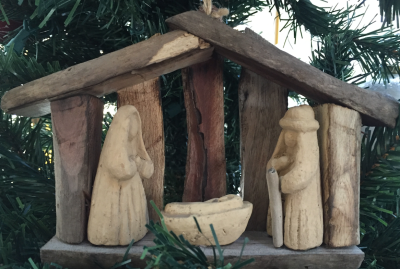
As a maternal health advocate, I cherish the season of Advent as an opportunity to connect a beloved Christian story to the lives of women today who struggle to bring new life into the world under horrific circumstances. Every year I write something about Mary’s pregnancy and birth. In many ways she is no different from the “Marys” around the world who are young, poor, and unexpectedly pregnant, and who go on to give birth in unclean environments. I often pose the question to communities of faith, wasn’t the Christmas miracle equally that Mary survived the birth? How different would Jesus’s life have been if he’d never known his mother?

I continue asking these questions, but after my daughter was born last October, I have found my Advent reflections shifting to mirror my own parenting experiences. I began to think beyond Mary’s birth and into her early months of motherhood. One morning last December, after a particularly awful night’s sleep, I came downstairs to hear “Away in a Manger” playing on the radio. When it got to the line “But little Lord Jesus/No crying he makes,” I rolled my eyes dramatically and pictured Mary doing the same as she bounced a screaming baby Jesus in her arms. Continue reading “What If Jesus Had Gone to Daycare? by Katey Zeh”

Wisdom Fiction (Part 1) by Elise M. Edwards

Elise Edwards“I was born in a strange little country town that may be like all other country towns, but I do not know. It was the world I was born to. The world is such a place that you need special things to understand it. I do not think I am a fool, but I do not understand life. It is like I am always standing in the dark somewhere. It could be on the edge of a cliff by a deep ravine… Or on a flat piece of all the land in the world… and I would not know. I would not know whether to step stand still. Either one could be a danger… When I am alone. Some lives are like that. Depending on the kindness of everybody.”

-from “Feeling for Life “ in Some Soul to Keep by J. California Cooper

In my previous post, I wrote about the truths we learn from black women’s literary tradition and from listening to the stories of those we too often ignore. Continuing that reflection over the next few months, I’d like to share some of the lessons from J. California Cooper’s short stories. The quote above is taken from the opening paragraph of one of her works.

Continue reading “Wisdom Fiction (Part 1) by Elise M. Edwards”

Truth in Storytelling by Elise M. Edwards

“[ShakespElise Edwardseare] was an alright writer.  I did not always understand him, but some things he said were beautiful and he made some things so clear the way he explained people.  But one thing he was wrong about.  That ‘To be or not to be?’  is not the first question. ‘What is the truth?’ – that is the question!  Then ‘To be or not to be?’  is the second question.”

-from “Feeling for Life “ in Some Soul to Keep by J. California Cooper

This past weekend, I taught a lesson for an adult church group about Christian imagination in the short stories of J. California Cooper. The quote above comes from one of her stories. I was invited to teach a lesson as part of a series on exploring God through literature. It was a delight to participate for several reasons.

Continue reading “Truth in Storytelling by Elise M. Edwards”

‘Imagine’ by Jassy Watson

jassyAt my first international retreat on Lesvos, Greece, women gathered with me from around the globe in the village of Molyvos to connect with their authentic creative spirit and bring their Mediterranean Muse to life on canvas. With permission from our wonderful Greek hosts, we built a Cretan style labyrinth in their olive grove, which we walked and danced daily as a metaphor for our journey within accessing our authentic creative voice. We painted, laughed, danced, swam, feasted, cooked, explored, sang, and dreamed. It was such a truly wonderful time.

I wanted to bring this program to Greece in part because of Carol Christ, who has called Lesvos home for over twenty years. In 2012, I participated in her ‘Goddess Pilgrimage to Crete’. To date, it’s one of the most transformational, life-affirming experiences of my life. I harvested so much creative inspiration and motivation from Greek village life, connecting to Goddess in this ancient landscape. I knew it was the perfect setting to gather women for an inspired creative retreat of my own. Carol took the time to come speak with our group, telling us about how she came to call Lesvos home. She spoke beautifully on Sappho, reading us some of her poetry. It was an honour to have her join us.

The simple, resourceful, sustainable way of traditional Greek village life and the generous nature of the Greek people is a humbling experience. On Lesvos, many people in the villages grow much of their own food, eating seasonally. In fact, food grows wild everywhere; wild thyme, oregano, dill, fennel, walnuts, figs, greens and much more. There are few large chain supermarkets. Trucks laden with fresh produce and fish make their way around the villages announcing their wares through a loudspeaker and the crowd gathers to shop.

There are over eleven million olive trees on Lesvos. Even the smallest plots of land often have them. Some villages own their own olive oil co-op. Cheese is usually homemade. Many people keep sheep and goats and the process has remained virtually unchanged since ancient times. Beehives are commonplace for honey and pollination, as too are grapes. Homemade wine is routine in many a household. Usually more than one job is held to make ends meet, many often supplementing their income through small-scale agriculture. One might be a café owner, a sheep farmer, olive grower and a fisherperson. Many traditional trades such as stone masonry and shoemaking are also still well and truly alive.

Life is not necessarily easy, but it is so much more sustainable, resourceful, and rich in tradition; offering a deeper connection to the land, food sources, community and family than we have in the modern Western world. We live in a disposable society based on convenience. It never ceases to amaze me to think that only a few decades ago, most households in Australia had a veggie plot, chickens, a rainwater tank and access to small family-owned corner shops for other necessities. Now that’s a rarity. It’s imperative for the sustainability of the planet to return to a grass-roots, village-based way of life. Greek village life inspires me and reminds me to hold tightly to these values.

Continue reading “‘Imagine’ by Jassy Watson”

Reform? Progress? By Elise M. Edwards

Elise EdwardsIn my class yesterday (a survey of Christian thought and practices), I was lecturing about monastic life in the Middle Ages. Among other points, I mentioned that medieval religious orders provided settings where women could be educated and assume leadership roles (primarily among other women), thinking of Hildegard of Bingen (1098-1179) who was the Abbess of a monastic community in Rupertsberg. Other women medieval writers who developed influential writings, like Mechtild of Magdeburg (ca. 1210-1282) and Catherine of Siena (1347-80), belonged to tertiaries or third orders, which were monastic community for laypersons. This part of the lesson emphasized that monastic reforms around the 12th century opened religious orders more extensively to women and laity.

Still speaking of medieval reforms, I displayed a picture of Francis of Assisi on the screen at the front of the room. I mentioned that Francis was concerned about the poor and the animals and that he has inspired some contemporary Christians, including the current pope who took Francis as his name. We talked about how both St. Francis and Pope Francis are seen as reformers.

Because earlier in my lesson I’d made a point of speaking of women’s experience, when I spoke about the Pope’s name as a possible sign of renewal or reform, Gina Messina-Dysert’s question “What about the women?” came to mind. In her recent post, she responded to the Pope’s exclusion of many issues that concern women in his address to the US Catholic Bishops. Like Gina, I applaud many of the Pope’s reforms but I am confused about how rarely he is criticized for maintaining the long-held Catholic view that disallows women to be ordained as priests.

Let me provide an example: During the Pope’s visit to the US, one of my students described Pope Francis as “very liberal.” When I interjected that he has not supported the ordination of women, the student laughed and said the pope would be accused of heresy for supporting that! While that may be true, my more immediate concern was that in a classroom of students who are mostly supportive of women in ministry, the Catholic restrictions on the priesthood were seen as a part of the tradition not worth challenging. Why is it that preserving male leadership is excused as a part of the tradition while preserving exclusive marriage practices is something to be challenged? They are interrelated.

As we know from blogs and social media sites, many people who support LGBTQ rights were upset over news stories about the Pope meeting with Kim Davis, the county clerk who was jailed for refusing to issue marriage licenses to same-sex couples. Certainly such a meeting is disturbing to same-sex marriage advocates. But is it surprising? At least one womanist ethicist I know, Eboni Marshall Turman, pointed out in a Facebook discussion that the church has long since been public in its support of male privilege and heteronormativity. My intent is not to single out Catholicism for sexist practices. When recently asked about women’s ordination and leadership in Baptist churches in my own town of Waco Texas, I had to admit that even though ordination of women is permissible and practiced in many of the churches, the number of churches that have called women to the position of senior pastor is shockingly few.

My point is this: When we find teachings in particular religious traditions that justify the exclusion of one group, we should expect to find justifications for excluding other groups, too. In the same discussion I referenced above, Eboni Marshall Turman said, ”Oppressions are compounded and intersectional. If they come for me, it is just a matter of time before they come for you. This is basic theological ethics.”

The experiences of varied groups are not the same; our oppressions and marginalizations also differ. But practices of exclusion are constructed on the same logic that values some persons (the in-group) more than others (the outsiders). Therefore, feminists have a responsibility to advance the well-being and interests of other groups (besides women) who are being marginalized.

Another reason for this advocacy is that many women are included in other marginalized groups. To ignore the intersectionality of oppression is to deny its pervasiveness and the realities of women’s lives. This is why feminists of color are often critical of white feminism. (The recent debate over the photo shoot for the movie Suffragette is a new instance of a persistent critique of white or mainstream feminism. See Rebecca Carroll’s piece on “Suffragette’s Publicity Campaign and the Politics of Erasure”).

To counter the limitations of our own experiences and be consistent in our pursuit of equality, feminists should intentionally cultivate practices of solidarity and coalition-building in our work. I, like everyone else, am often unable to see the inconsistencies in my own practices and teachings without others’ experiences to expand my view. This is one reason I value this Feminism and Religion community. Thank you for the wisdom and practices you offer from your own religious traditions and your own experiences of marginalization. You make me a better feminist through your writings and comments.

Perhaps working together, we can bring about religious reforms that our descendants will recognize in the centuries to come.

Elise M. Edwards, PhD is a Lecturer in Christian Ethics at Baylor University and a graduate of Claremont Graduate University. She is also a registered architect in the State of Florida. Her interdisciplinary work examines issues of civic engagement and how beliefs and commitments are expressed publicly. As a black feminist, she primarily focuses on cultural expressions by, for, and about women and marginalized communities. Follow her on twitter, google+ or academia.edu.

From Her Lips by Barbara Ardinger

Barbara Ardinger

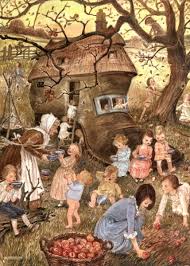
There was an old woman who lived in a shoe,
She had so many children she didn’t know what to do.
She gave them some broth without any bread;
She whipped them all soundly and put them to bed.

Look! Here she comes. Like most old women, she has a lot to say. Let’s listen in:

“Well, that’s what an old nursery rhyme says. But I’m that old woman, and I can tell you for sure that the only thing ‘true’ about that rhyme is that I’m old. I’m older than anyone I know. Oh, I see you there, eavesdropping. That’s okay. You’re welcome here.

Old woman...shoeYou know what? I’ve been called many names by the (mostly) men who make up those rhymes and stories. I’ve been the old witch in the candy house who serves pie to children and then serves the children in the pie. (But did that German guy who wrote that opera about me ever say who eats those pies?) I’ve been the thirteenth old woman at the christening who wasn’t invited and brings a curse that’s as big as the blessings from the first twelve. I’ve been the evil, wicked, mean stepmother.

Continue reading “From Her Lips by Barbara Ardinger”

#LoveWins by John Erickson

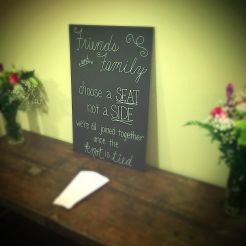
On Saturday, September 19, 2015 I married two of my best friends Andrea and Cindy in holy matrimony in Appleton, WI.

John Erickson, sports, coming out.Don’t urge me to leave you or turn back from you.
Where you go, I will go, and where you stay, I will stay.
Your people will be my people and your God my God.
Where you die, I will die, and there I will be buried.
May the God deal with me, be it ever so severely, if even death separates you and me.
–Book of Ruth 1:16-17

On Saturday, September 19, 2015 I married two of my best friends Andrunnamedea and Cindy in holy matrimony in Appleton, WI.  Having been ordained since 2009, I truly never thought I’d ever get the chance to use these credentials until they asked me a few months back.  Although my answer was an automatic yes, I sought to make sure that my homily and the words of advice I gave them on their special day were something unique, not always heard at wedding ceremonies. Continue reading “#LoveWins by John Erickson”

Feminist Interpretations by Elise Edwards

Elise EdwardsI’ve written a few posts recently referencing biblical themes or stories. I’m not a biblical studies scholar; I’m an ethicist and theologian. So I know that ways I use the texts disturb some people who study them from a historical or biblical studies perspective. To say I don’t use the Bible as those scholars do, though, doesn’t mean I don’t have a disciplined approach. I aim to apply a consistent approach to scripture and to encourage my students to do the same.

I get really annoyed when someone proclaims a variation of “The Bible says it; I believe it; that settles it!” in moral debates. Obviously, people within a religious tradition are going to believe there is truth in the scriptures of their tradition. That’s simply how scripture functions. So I’m okay with “I believe it.” I have a problem with the two other parts of the statement – the Bible says it, and that settles it. The assertion that “the Bible says it” masks the task of interpretation that anyone encountering a text takes on. The statement “that settles it,” when adopted in moral debate, rejects the accountability and humility in sharing our interpretations with others. Continue reading “Feminist Interpretations by Elise Edwards”

Two Wrongs Don’t Make a Right by John Erickson

Kim Davis does need a lot of things but saying of suggesting that she needs a haircut, a makeover, or even to lose weight, makes you and those that continue to repeat it no better than she is; to state such statements doesn’t purport the ideal that #LoveWins, which took over social media just mere months ago, but changes the whole narrative to symbolize that sexism and hate are more important than love and equality.

John Erickson, sports, coming out.Kim Davis, the defiant county clerk, is currently sitting in isolation in a jail cell after refusing to issue marriage licenses to same-sex couples in Rowan County, Kentucky, even after she was ordered by a judge to comply with the Supreme Court’s ruling on same-sex marriage or be held in contempt of court.

Everywhere I turn on both social media or in person people are talking about Ms. Davis, her actions, personal history and for some weird reason her hair and looks.   I’m all for individuals taking a virulent stand against an individual who chooses to not uphold the law of the land as well as continually acting in an unjust discriminatory way but bringing her looks or anything else about her physical appearance into the narrative is not only just plain wrong it is sexism in its worst form. Continue reading “Two Wrongs Don’t Make a Right by John Erickson”

Satirists as Public Theologians by Melissa James

Melissa James Profile photo

Why satirists have become our public theologians (or why I am doubling down on feminist theological ethics as public theology)…

Did you see the Daily Show last night? I’m sure it was all over your Facebook feed and Twitter. The show just nailed the response to. . .fill in the blank. From Ferguson to pay inequality, from racism to culture wars the satirists have had quite the run lately. From political cartoons to the Onion to late night cable “news” shows, satire plays an important role in society. What satirists are excellent at is holding up a magnifying mirror to our society to show us areas of absurdity, oppression, and hypocrisy. The mix of political commentary and humor allows satirists to push further than many other interlocutors in public discourse.

Part of their success stems from our deep need and longing for collective moral reflection and humor allows us to do so in a way that feels safe enough to engage. What makes good satirists effective is their ability to do deep, critical analysis of society. They use sociology. The better they employ their analysis the better their satire. The better the satire the more they reflect to us what we need to hear. And many satirists have played that role really well. Continue reading “Satirists as Public Theologians by Melissa James”