“THE DIVINE MYSTERY”? by Carol P. Christ

carol-christ“The mystery of God in feminist theological discourse” is the subtitle of Elizabeth Johnson’s widely read She Who Is. The notion that God is “a mystery” is rarely questioned in feminist theologies. But maybe it should be.

Although it is true that the finite cannot encompass the infinite, and that all knowledge is rooted in particular standpoints, I do not agree that the first and last thing to be said about the divine power is that it is “a mystery.” Indeed as I will argue here, speaking about God as “a mystery” obscures more than it “reveals.”

christina's loveThe notion that Goddess or God is “a mystery” is rooted in notions of “a God out there” that most spiritual feminists reject. Goddess or God “in” the world is, I suggest, not unknown, but known, not hidden, but revealed–in the beauty of the world and in ordinary acts of love and generosity.

The notion that God is “a mystery” is a well-worn trope in Roman Catholic theology. Protestants make similar claims when they speak of  the hiddenness of God Continue reading ““THE DIVINE MYSTERY”? by Carol P. Christ”

Emergence and the Spirituality of the Sacred Feminine by Anne Kathleen McLaughlin

goddesses
Kathleen and Marie (R-L)

Kathleen and Marie are friends who met at the event in Canada that inspired this post. Marie has given her monthly spot on Feminism and Religion to Kathleen so she can share her reflection with you. 

Emergence: the universe flares forth out of darkness, creating, over billions of years, through trial and error and trying again, astounding newness: carbon for life in the middle of a star…. the birth of planets, our earth holding what is required for life to emerge…. the creation of water from hydrogen and oxygen….the emergence of a cell with a nucleus.

Each of these seemingly impossible happenings did happen, offering us humans the hope that the impossible tasks confronting us in our time can be creatively addressed, showing us, as Brian Swimme expressed it, a domain of the possible beyond imagination. Our human endeavour has been powered by non-renewable energy resources. Our task now is to reinvent the major forms of human presence on the planet in agriculture, architecture, education, economics…. We need to align ourselves with the powers of the universe, consciously assisting, amplifying, accelerating the process of creative endeavour. Continue reading “Emergence and the Spirituality of the Sacred Feminine by Anne Kathleen McLaughlin”

Birth as a Shamanic Experience by Molly

editMollyNov 083Childbirth is a rite of passage so intense physically, psychologically, emotionally, spiritually, that most other events in a woman’s life pale next to it. In our modern lives, there are few remaining rituals of initiation, few events that challenge a person’s mettle down to the very core. Childbirth remains a primary initiatory rite for a woman.” –Maren Hansen (MotherMysteries)

When I was pregnant with my first baby, I read an article with the theme of “Birth as a Shamanic Experience.” I can no longer find the exact article (online or printed), but I distinctly remember my feeling upon reading it: I was entering into a mystery. Giving birth was big. Bigger than anything I’d ever done before and it went beyond the realm of a purely biological process and into something else. Like shamanic experiences, giving birth is often described as involving a sense of connection to the larger forces of the world as well as being in an altered state of consciousness or even a trance state. While shamanic experiences may involve “journeying” to other realms of reality, giving birth requires the most thoroughly embodied rootedness of being that I’ve ever experienced. It, too, is a journey, but it is a journey into one’s own deepest resources and strongest places. The sensation of being in a totally focused, state of trance and on a soul work mission is intense, defining, and pivotal.

Shamanic journeys may be embarked upon for the purpose of soul retrieval and I can’t help but think that this is the purpose of giving birth as well—the birthing woman travels into herself to bring forth the soul of her child.  Continue reading “Birth as a Shamanic Experience by Molly”

God Doesn’t Live Here Anymore: Gay Bars and the Growing Divide Between Sexuality and Spirituality by John Erickson

oes God exist within the LGBTQ community anymore or has the community itself abandoned God for all-night raves, dance clubs, alcohol, and hypersexualized and over commoditized fetishized forms of femininity and masculinity? Oftentimes, I find myself answering yes to the above questions. After surviving hate crime after hate crime and endless batches of newly elected conservative politicians hell bent on ignoring medical and social epidemic plaguing the very country they were elected to serve and protect, why would a community, oftentimes linked to sin itself, believe in a holy entity?

John Erickson, sports, coming out.My good friend and fellow Feminism and Religion Contributor Marie Cartier’s forthcoming book, Baby You Are My Religion: Women, Gay Bars, and Theology Before Stonewall argues that American butch-femme bar culture of the mid-20th Century should be interpreted as a sacred space.  Specifically, gay bars served as both communal and spiritual gathering spaces where butch-femme women were able to discover and explore not only their sexuality but also their spirituality.  An opus of an academic accomplishment based off of the amount of in-depth interviews she conducted, Professor Cartier explores lived religion in an area that has become all too common within the LGBTQ community: the bar

The Palms, the last local and only lesbian bar to be found in city of West Hollywood, CA is closing its doors and I can’t help but wonder where its patrons or parishioners will now go? Continue reading “God Doesn’t Live Here Anymore: Gay Bars and the Growing Divide Between Sexuality and Spirituality by John Erickson”

Goddess Mother by Molly

Mamapriestess

She who changes
She who expands and contracts
She who stretches her limits
She who digs deep
She who triumphs and fails
Every day
Sometimes both within a single hour
She who tends her own hearth
She who comforts and connects and enfolds
She who opens wide

She whose heart cracks open at birth
She who tension bunches her shoulders
And lines her face
She who laughs
She who carries the world
She who sings with her sisters
Molly Remer mamapriestess Triple goddessAnd circles in ceremony
She who holds precious her daughters and her sons

She who defends and protects
She who opens her heart just a little wider
She who trusts
She who tries again
She who gathers to her breast
She who gathers women in ritual
She who hopes
Prays
Fears
She who loves so deeply
That it crosses all boundaries
To eternity. Continue reading “Goddess Mother by Molly”

The Green Man By Barbara Ardinger

The Green Man’s message about rebirth is why he is so popular today. He’s come to symbolize the green movement. He’s a friend of the earth who is whispering to us to wake up and grow up, to march and dance with him in celebration of our relationship with nature. What green thing can we do today?

The Green Man’s message about rebirth is why he is so popular today. He’s come to symbolize the green movement. He’s a friend of the earth who is whispering to us to wake up and grow up, to march and dance with him in celebration of our relationship with nature. What green thing can we do today?
The Green Man

Spring has, as they say, has  sprung, and we who live in the Northern Hemisphere are witnessing the annual greening of the earth. Grasses and grains are growing, trees are leafing, flowers are budding. I like to imagine the goddesses who rule the springtime—Anna Perenna (classical Roman, probably Etruscan), Butterfly Maiden (Hopi), Freya (Norse), Hu-Tu (Chinese), the Rusalky (Russian), and others—calling their worshippers and gatheringthem on the village green to dance and celebrate the revival of the earth. Continue reading “The Green Man By Barbara Ardinger”

The Child of the Bog (continued) By Barbara Ardinger

The story so far. In the ancient land beside the river, the God-King lies in what appears to be death. No one can awaken him. In the house of a court Magician, the peasant girl Ubastet is dusting and conversing with a magical stork when two minor miracles occur. The Magician consults the Hierophant, but they cannot explain the miracles. Now the Queen has come into the room. She is determined to figure out what’s going on. (Where do they fly to? Romania, another land of great enchantment.)

Before the sun set that day, the Queen of the golden land called a convention of priests and wizards and magicians and astrologers and seers and prophets and physicians. When they had all assembled in the throne room, she set the matter before them. Day after day, the learned ones debated, night after night, they performed their high magics and gorgeous rituals. In their secret places, the animals gathered together as well and performed their own rituals. But the mirror, whose thousand pieces had been gathered up and cleansed and set back into the frame in a sublime mosaic, the mirror refused to speak again. The golden beetle remained cold and silent.

child of the bog, barbara ardinger
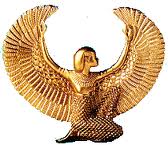
Isis

Continue reading “The Child of the Bog (continued) By Barbara Ardinger”

Do Women’s Circles Actually Matter? By Molly

“We need rituals of memory…because a political movement, the public policy and tactics of our movement, does not come from our ideas, but from the bloody and joyful substance of our lives. We need to be conscious about what our lives have been, to grieve and to honor our strength, in order to break out of the past into the future.” –Minnie Bruce Pratt

I’ve been feeling depressed and discouraged lately after reading some really horrifying articles about incredible, unimaginable violence and brutality against women in Papua New Guinea who are accused of being witches as well as a book about human trafficking around the world (I wrote about this book in a recent post for Pagan Families). Then, I finished listening to David Hillman on Voices of the Sacred Feminine, in which he issued a strong call to action to the pagan community and to “witches” in the U.S. to do something about this violence, essentially stating that it is “your fault” and that rather than spending energy on having rituals to improve one’s love life (for example), modern witches should be taking to the streets and bringing abusers to justice. And, he asserts, the fact that they don’t, shows that they don’t really “believe”—believe in their own powers or in their own Goddess(es). Continue reading “Do Women’s Circles Actually Matter? By Molly”

Imagine a Catholic Church that Loved as only a “Woman” Loves by Michele Stopera Freyhauf

Freyhauf, Feminism, Religion, Catholic Church I came across an abhorrent display of ignorance Saturday when reading an article quoting the Pope’s theologian, Dominican priest Wojciech Giertych, on why women cannot be ordained.  This man is in charge of reviewing speeches and texts submitted to the Pope to ensure that they are free of doctrinal error.  Once you read this, I am sure that many of you will have the same thoughts that I do ranging from – that explains a lot — to —  we are in serious trouble!

Giertych touted the common arguments made against ordaining women – Jesus was a man, Jesus chose only male disciples, etc.  However, then he put forth statements about, (1) the theologian’s task, (2) why maleness is essential to the priesthood, and (3) what the vocation of women is and is not.

What is the Theologian’s Task?

According to Giertych, the theologian’s task in determining the definition of priesthood:

 “In theology, we base ourselves not on human expectations, but we base ourselves on the revealed word of God” without the freedom “to invent the priesthood according to our own customs, according to our own expectations.”

According to CTSA (Catholic Theological Society of America), the theological task is described as follows:

Theologians throughout history have promulgated the riches of the Catholic tradition by venturing new ways to imagine and express the mystery of God and the economy of salvation revealed in Scripture and Tradition. This is a Catholic style of theological reflection that very many Catholic theologians continue to practice today. The teaching of the Second Vatican Council in its Pastoral Constitution on the Church in the Modern World (Gaudium et Spes) is especially eloquent on this responsibility” (See Gaudium et Spes #44).

Continue reading “Imagine a Catholic Church that Loved as only a “Woman” Loves by Michele Stopera Freyhauf”

Endarkenment By Molly

It is from this dark space that we emerge—whether from our own mothers or from the more mysterious cosmic “sea” of soul—and it is to darkness that we return when we close our eyes for the final time.

I find that within Goddess circles the idea of “the dark” remains commonly associated with that which is evil, negative, bad, or unpleasant. The Dark Mother, while acknowledged and accepted, is often at the same time equated with death, destruction, challenge, trials, and obstacles. While I recognize that the concept of a dark, demonic, and destructive mother might too have a place in goddess traditions (as with Kali or Durga), I also think this is unnecessarily limiting and that the idea of the “Dark” in general is in need of re-visioning. It is not just with regard to the role or place of death within the wheel of life or the Goddess archetype that Goddess as Dark Mother and destroyer can be honored or recognized, but the Dark as a place of healing and rest can also be explored. Continue reading “Endarkenment By Molly”