It’s Time for Nuns on the Bus to take to the Road Again: Getting Beyond Being “Pro-Birth” to Protecting all at the Margins by Dawn Webster

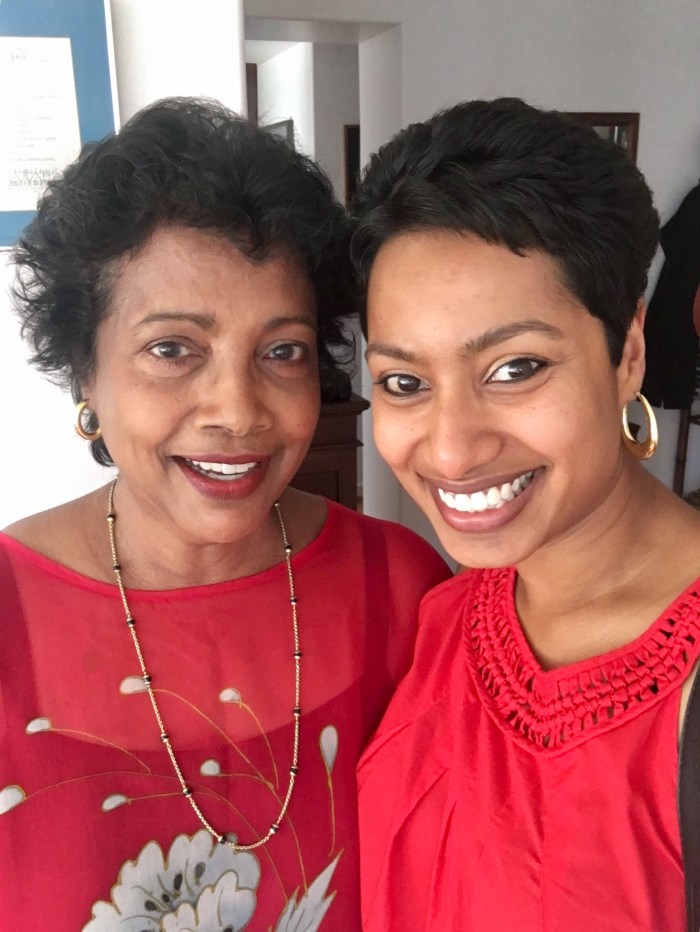
Author and daughter, Dr. Sheela Jane Menon, Assistant Professor at Dickinson College, PA

The country desperately needs to see the Nuns on the Bus on the road again. I just watched Radical Grace, nearly three years after my daughter and son-in-law gave it to me as a Christmas gift. My tardiness made me feel guilty, but despite the passage of time, the film still feels very timely.  Three years after the cancer that is 45 entered the White House; three years after the corruption and cruelty he unleashed has metastasized into key branches of government; three years after Catholics  have witnessed the heart of the Gospels ripped out the way children have been ripped from the arms of their parents at the southern border, this documentary about how a few nuns risked their place in the church to fight for justice tells me we need the leadership of the nuns more than ever.

Catholic voters from the heartland gave 45 the keys to the White House.—60 percent of them voted for him. Many justified voting for a man with Donald Trump’s appalling sexual, business, and racist history by pointing to his supposedly “pro-life” stance. Continue reading “It’s Time for Nuns on the Bus to take to the Road Again: Getting Beyond Being “Pro-Birth” to Protecting all at the Margins by Dawn Webster”

The Philadelphia Eleven: A Documentary by Margo Guernsey

Storytelling is as old as humanity. We tell ourselves stories – about who we are as individuals, about our families, and about our people – to understand who we are. A lot of narratives are told by a dominant segment of society at the expense of others. I am drawn to stories that flip the script. What stories about real people help us envision a world where all human beings can fulfill our God-given potential?
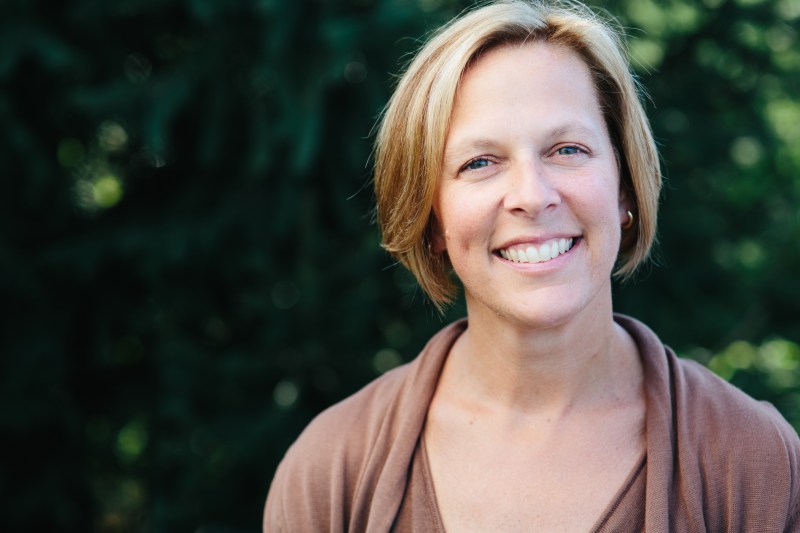
I practice listening deeply to stories. What is this person really saying about him or herself? What is the essence of what we learn from these events? It is never as simple as it seems. It can take time to find the soul of a story. Continue reading “The Philadelphia Eleven: A Documentary by Margo Guernsey”

Exercising Women’s Religious Voice and Authority – Why is this Still an Issue? by Elise M. Edwards

elise-edwardsOver the past few days, I’ve been spending time at a church in Alexandria, Virginia conducting oral history interviews.  I’m doing research for a project about the arts and the church that has me diving deep into the church’s congregants’ and leaders’ experiences. Yesterday’s conversations offered insight about many theological topics that interest me, but what was particularly encouraging was what I witnessed concerning women in ministry.  That’s not what I was looking for, but it is what I needed to see.

Before beginning these interviews, I had already been thinking about the ways women’s authority and voice are often challenged.  This past weekend, I attended a regional religion conference where I assumed a leadership position and my voice was sought out for advice and insight.  I had great conversations with other women in academia about wellness and success while I was there.  Attending the conference provoked fond memories of a similar conference many years ago, when I connected with many colleagues in this FAR community and we discussed the theme of “Women and Authority.” Those were positive experiences.  But I had an unpleasant encounter, too, when I was on the receiving end of a male colleague’s condescending remarks.  I was also made aware of a disturbing incident in which a woman of color was publicly disrespected while speaking at a university event and subsequently trolled.  Those experiences triggered anger and deep sadness. To be honest, I also felt a sense of resignation and defeat.  Patriarchy is just so persistent.

Continue reading “Exercising Women’s Religious Voice and Authority – Why is this Still an Issue? by Elise M. Edwards”

What I Believe (Post-2016) by John Erickson

Ever since the election of You-Know-Who, I have been doing a lot of creative writing.

Ever since the election of You-Know-Who, I have been doing a lot of creative writing. Unlike academic publications, policy reports, or my dissertation, creative writing, much like my mentor Dr. Marie Cartier has written about, provided me with a needed escape from a world that seems to grow darker with each passing day.  In college, I served as Poetry Editor for the Wisconsin Review, the oldest literary journal in Wisconsin. Continue reading “What I Believe (Post-2016) by John Erickson”

The Spirit and Jarena Lee: Inspiration to Break Boundaries by Elise M. Edwards

elise-edwardsI am so frustrated that we are still fighting to affirm women’s place in leadership.  I’ve been thinking about this struggle in the context of church ministries (especially preaching) and social activism, seeing a stark contrast between the way institutional churches and universities promote and subvert women’s authority and the ways movements like Black Lives Matter do.

Particularly, I’ve been struck by the ways that more radical movements employ language and practices that are based in spirit more than hierarchical authority.  I have found a theme emphasizing equality in humanity’s access to spirit in both historical and contemporary movements and writings about religious experience.  I’m certainly not the first one to notice or discuss how appeals to Spirit have empowered those excluded from dominant systems of power to challenge constrictive social structures, but I would like to share how this dynamic has become more visible to me so that, together, we might find encouragement, inspiration, and food for thought.

Continue reading “The Spirit and Jarena Lee: Inspiration to Break Boundaries by Elise M. Edwards”

My Turn: A Femifesto by Marcia Mount Shoop

It’s coming up on a year now that pretty much everything changed in my family’s life. My over twenty years of married life, up until last year around this time, our lives had been built around my husband’s job. John’s work as a coach in the NFL and Division I collegiate football had moved us all over the country—coast to coast and in between.

MMS Headshot 2015This time last year our move was for me to take a job. No more football. And a move not for football meant massive shifts in the daily life of our family.
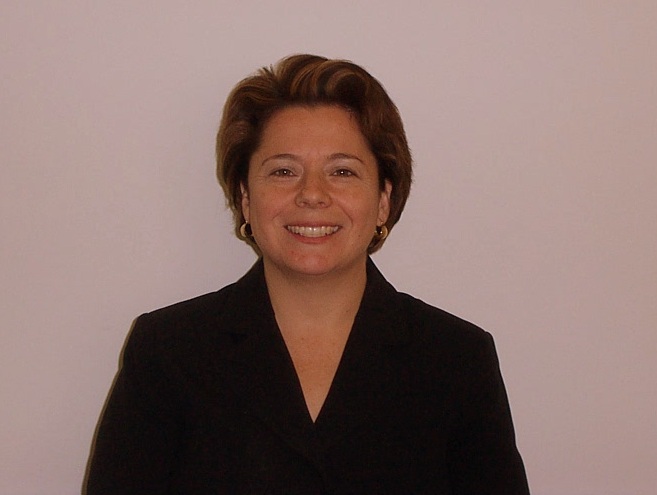
I cannot count the number of times since I took this new job that people have said to me, “Finally, it’s your turn!” Continue reading “My Turn: A Femifesto by Marcia Mount Shoop”

Remembering Sor Juana Inés de la Cruz’s Life and Legacy: Champion of Universal, and Non-Human Rights November 12, 1648/51 – April 17, 1695 by Theresa A. Yugar

She studies, and disputes, and teaches,
and thus she serves her Faith;
for how could God, who gave her reason, want her ignorant?

—Sor Juana Inés de la Cruz, Villancico, or, “Carol”, in celebration of St. Catherine of Alexandria (1692)

05.Yugar 1The reason for this blog, and for writing it on this day, is to celebrate and remember the life and legacy of Sor Juana Inés de la Cruz.
In 1994, I was exposed, by chance, to the life and writings of 17th century Novohispana feminist Sor Juana Inés de la Cruz. I am the product of twelve years of Catholic education, eight years of which were in an all-women setting. Again, by chance, I learned about Sor Juana in a liberation theology class while studying feminist theology at Harvard Divinity School. In this class, I learned about Sor Juana’s bold advocacy of the right of women to be educated. This spurred me to learn more about this Catholic Latina theologian whom I would later discover was the last great author of El Siglo de Oro (Spain’s Golden Age), recognized in her era as an esteemed poet, mathematician, astronomer, and more. This was the beginning of my life-long passion to reclaim the legacy of Sor Juana and her-story within the Christian, non-Christian Western tradition, and in Spanish and Mexican history. Continue reading “Remembering Sor Juana Inés de la Cruz’s Life and Legacy: Champion of Universal, and Non-Human Rights November 12, 1648/51 – April 17, 1695 by Theresa A. Yugar”

Power & Restraint: A Feminist Perspective on Mormon Sisterhood: A sculpture series by Page Turner, presented by David Volodzko

David VolodzkoHistory offers few instances of women helping create scripture. Hinduism’s sacred Rigveda may have been partly composed by women, and scholars believe the biblical Book of Ruth was possibly written by a woman, but the evidence for each is wanting. And while Muhammad’s widow was entrusted with the manuscript that would become the Quran, its scribe was a man named Zayd ibn Thabit. The only clear exception to this is the Book of Mormon, which Joseph Smith partially dictated to his wife Emma. The central role of Mormon women in the church was therefore fixed from the start.
In 1842 Joseph Smith organized the church sisters into a philanthropic organization known as the Relief Society. Among other things, the Relief Society sent women to medical school and opened cooperative stores. Operating independently from local bishops, it afforded Mormon women unprecedented independence. In fact the early Mormon Church was a feminist pathfinder. The first Mormon pioneers arrived in Salt Lake City in 1846, and by 1870 Utah Territory became the second place in the Union (after Wyoming) to give women the right to vote—nearly fifty years before the Nineteenth Amendment. But Mormons wanted freedom for all women, and that same year the Relief Society held a meeting in which the renowned poet Eliza Snow entrusted Bathsheba Smith with a mission to travel “all through the South” preaching “retrenchment [restriction of government spending] … and women’s rights.” Continue reading “Power & Restraint: A Feminist Perspective on Mormon Sisterhood: A sculpture series by Page Turner, presented by David Volodzko”

Wonder Bread by Natalie Weaver

Natalie Weaver editedIt is a difficult thing to wake up and realize you are living a life you do not recognize. This happens for all sorts of reasons. Sometimes, it happens dramatically as in the case of death, job loss, personal trauma, or illness. Other times it is a slow and insidious transition from what you knew to what you have become, as you find yourself looking at your workplace and recognizing no one or wondering who these people are in your home. Sometimes it is as simple as getting a haircut or a pair of contact lenses, when suddenly you see some wrinkle or skin mark you didn’t know had been forming while you slept. I find this experience shockingly regular now, and while I am no longer surprised that it happens, I am consistently surprised at what I discover.

For example, my son is now an altar server in the Roman Catholic Church. This has occurred concurrently with my very unexpected involvement in an annulment case, which has revealed an outrageous lack of pastoral sensitivity on the part of the Church. Witnessing the hurt this process causes, I could run from the Church. But then there is my son in the choir and serving at Mass, trying to understand this world that I both introduce him to and also roundly critique. I was chatting with a colleague at lunch over such matters and noticed her quieting after a time, eyes cast off into the distance. After a long pause, she murmured, “How did I get here again?” Continue reading “Wonder Bread by Natalie Weaver”

Moving Away from Normative Maternal Roles in the Catholic Church by Michele Stopera Freyhauf

FreyhaufEarlier this week, social media was all abuzz about the Pope’s investigation into restoring women to the diaconate. In the complete transcript of the Pope’s comments,  the traditional notion of women’s maternal role in the church is mentioned in relation to the Church.  Certainly this is nothing new.  Here the Pope describes important “maternal” work such as working with the marginalized, catechesis, and caring for the sick – once again, nothing new.

However, in the next sentence, a very subtle shift is seen when it comes to normative gender roles:

…. there are men who do the same [work as consecrated women], and it is good…..and this is important.

What does this mean – a change in language?  a laying of groundwork? or nothing at all?

imgres

It is no secret that cultural constructs of women as maternal and how a mother is defined as or even does has radically changed in today’s society; but, the Church continues to remain steadfast in normative roles between the priesthood and the “motherhood” of the Church (and therefore “motherhood” in general).

Continue reading “Moving Away from Normative Maternal Roles in the Catholic Church by Michele Stopera Freyhauf”