Miriam Speaks by Janet Maika’i Rudolph

Wikimedia Commons: Anselm Feuerbach

Intro:  I have been working on a project inspired by Charlene Spretnak and her book Lost Goddesses of Early Greece. I am writing biblical stories through the eyes and words of the women. The scribes who wrote down the tales of the bible, wrote mostly from men’s point of view. And they had their own which was to destroy evidence of the Goddesses. I tell Noah’s story through Naamah, his wife. Abram and Sarai’s journey to Egypt through the eyes of Sarah. Exodus in Miriam’s voice. In my telling, Miriam went to Midian with Moses and, while there, experienced the Burning Bush and worked with Moses’ wife Zipporah to protect knowledge of the Goddesses. Below is an abridged version of this section of Miriam’s tale.  

I look around at your world today. You, yes you, are my descendants. My beloveds. I mourn for what you’ve lost. No, I am angry, how could things have gotten this bad? I dare you, I dare any of you to challenge my work. We did everything we could. It should not have taken this long to find our clues. But then I see the job the scribes did. It was better and more thorough than even we, who saw so much, could have imagined. I look around at this precious earth we bequeathed to you and see how damaged it is.

Continue reading “Miriam Speaks by Janet Maika’i Rudolph”

The Mothers, the Goddess, Lost and Found, part 2 by Elizabeth Cunningham

Excerpts in two parts adapted from My Life as a Prayer: A Multifaith Memoir. Part 1 appeared yesterday. You can read it here.

The Goddess finds me

Between the birth of my son and the birth of my daughter, I had a second miscarriage. The signs that something was wrong were subtle at first. I drove myself to a doctor’s appointment, hoping to be reassured that everything was all right (though I already sensed it wasn’t). En route to the office, perhaps to distract myself, I pondered why it was that I had never written about the church, or Christianity. Then…

I turn onto the main street. I glance at an old clock tower, and there she is superimposed against it, huge, big as the sky, vast as the earth.

I hear her voice.

You have been searching for me all your life.

She speaks inside me, all around me.

The wild mother, the witch in the wood.” [She shows me the stories I’ve written.] “You have been searching for me all your life.

Continue reading “The Mothers, the Goddess, Lost and Found, part 2 by Elizabeth Cunningham”

The Mothers, the Goddess, Lost and Found, part 1 by Elizabeth Cunningham

Excerpts in two parts adapted from My Life as a Prayer: A Multifaith Memoir
(Note: Both excerpts have been edited for brevity)

The author’s mother as an architectural student.

The Mothers

When I was fourteen years old, I had a dream. I was pregnant and riding a donkey through a landscape, all golds and browns, hills crowned with ancient trees. I arrived at a monastery where monks with brown hands helped deliver my baby. From that time on, I longed to have a child.

My first pregnancy ended in miscarriage. I was devastated. Not only had I lost my longed-for baby, I had always taken my body for granted. Despite illnesses and injuries, I had assumed my will and my body’s health and strength were one. Now I knew in my own flesh that I was not in control; doing all the right things (thinking all the right thoughts) could not save me from sorrow. I sat in my own small version of Job’s ash heap.

Continue reading “The Mothers, the Goddess, Lost and Found, part 1 by Elizabeth Cunningham”

Embodying bell hooks’ theological vision by Liz Cooledge Jenkins

I was recently asked: Who is a theologian you admire? Since I’ve been deeply steeped in the Christian tradition, plenty of Christian theologians could come to mind—Christian theologians, that is, in the sense of humans educated in the Christian theological academy with the theology PhDs to prove it.

 But when I think of theology, these days, I find myself thinking more broadly. Like Kat Armas, who wrote Abuelita Faith as a way of reflecting on and honoring the theological contributions of marginalized women, rather than men who sit in the seats of academic power—and like Sarah Bessey, who writes that theology, at its best, is a field where “everyone gets to play”[1]—I am skeptical of the assumptions Christians often make about who is or isn’t a theologian. And so, when I thought of theologians I look to for wisdom, I thought outside the box. I thought of writer and activist bell hooks.

Continue reading “Embodying bell hooks’ theological vision by Liz Cooledge Jenkins”

Women’s Woven Voices at the Parliament of the World’s Religions by Brecia Kralovic-Logan

Imagine walking into a space surrounded by the woven stories of 1,000 women from around the globe and feeling you are at home. The Women’s Village at the Parliament of the World’s Religions conference in Chicago in August of 2023 offered a place where women could feel welcomed, safe, understood, honored, and inspired. It was surrounded by the color and texture of the Women’s Woven Voices project tapestry.

I am the founder of the international, collaborative, art project- Women’s Woven Voices- that supports women in claiming their powerful voices through writing, weaving, and sharing their stories. For six years I had been inviting women to reflect on their lives, write about their strengths, challenges, joys and what made them feel whole, and then, weave a strip of cloth to represent their story. I collected the woven “Story Cloths” and stitched them together into a collective tapestry. Having stitched over 1,000 stories into the tapestry from women from 10 different countries, I applied to participate in the Parliament as an art installation and then joined the Women’s Task Force to create a very special space for the thousands of women who would be attending the Parliament.

Continue reading “Women’s Woven Voices at the Parliament of the World’s Religions by Brecia Kralovic-Logan”

Let Your Voice Be Heard • Let Your Heart Be Inspired! by Dale Allen

I was honored to be a part of a special project for the Parliament of the World’s Religions Women’s Task Force: conducting interviews inside the first-ever Women’s Village in Chicago at the Parliament Convening. I had been on a team of women led by Sande Hart with Pat Fero. We met online over the course of nearly a year to plan the Women’s Village. It was a very special endeavor, and our group efforts produced a beautiful, calming, nurturing, sacred and inspiring space.  

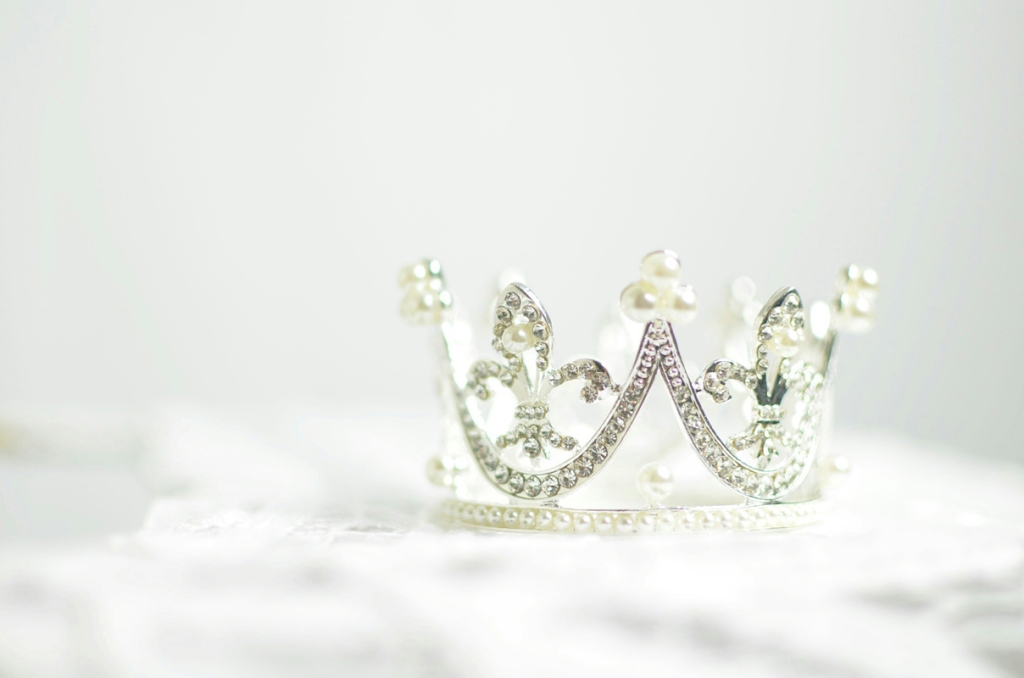
The McCormick Center is America’s largest convention center, and yet we were able to create serenity.  The tapestries of Women’s Woven Voices provided a colorful and meaningful enclosure for our space.  A fountain cascaded a peaceful hum. Majestic staffs created by Erin Beatty stood as sentries; keepers of ancient feminine power. A great Mother Tree crafted by Elisa Guyton and Leah Myers spread her paper branches outward and received the written prayers and blessing posted there by attendees.  The crown-making table was always busy with women talking and crafting exquisite headpieces. The Red Tent room was a tranquil place of mediation, rest, and a variety of spirit-nourishing workshops and presentations.

The Great Mother Tree crafted by Elisa Guyton and Leah Myers, close up with written prayers and blessings.
Continue reading “Let Your Voice Be Heard • Let Your Heart Be Inspired! by Dale Allen”

Your Body Knows Before You Do by Andrea Penner

Our interstate move of 325 miles due east on U.S. Highway 40, formerly Route 66, that iconic highway through the American Southwest, took us from one rental home to another. A month later, I sat in a closed graduate seminar, having received a coveted “yellow card.” By some stroke of magic, the professor had read my master’s thesis.

“I know your work,” he said, signing the over-enrollment waiver.

For the next several years, I studied, wrote, taught, ate, slept, and moved through marriage and motherhood (and one more rental)—all toward the goal of completing the PhD in English while my then-husband cycled through professional jobs and both of us recovered from eight years of cross-cultural Christian ministry.

Continue reading “Your Body Knows Before You Do by Andrea Penner”

Iceland: The Dream Made Real by Marie Cartier

I just came back from a bucket list trip- Iceland. I have wanted to go ever since I learned they had a Women’s Party- which were sometimes in power. The Women’s Party of Iceland ‘Power of the masses’: the day Iceland’s women went on strike and changed history | Iceland | The Guardian where women went on strike and changed the history of the country forever. Today Iceland is the most gender equity country in the world for women, the safest country in the world for women- and extremely beautiful. You can read more about it here: What Are the Icelandic Women Like? Feminism, Tradition and CrossFit (iamreykjavik.com) and here: 7 Laws That Show Why Iceland Ranks First for Gender Equality (globalcitizen.org)

Continue reading “Iceland: The Dream Made Real by Marie Cartier”

Three Women Sit on a Stone: Images of Fate in a Jewish Incantation by Jill Hammer

Tapestry, three fates, 16th century Netherlands

There is an old Yiddish incantation, documented from the 18th century forward, that features three mysterious women.  It is a folk spell warding off the evil eye–the negative influence that may come either from demons or from the jealousy and spite of others (or both). Fear of the evil eye is the reason it was traditional not to compliment cute babies or talented people—because the evil eye might be attracted to such beauty or talent and cause harm.  The evil eye, to give a personal example, is the reason my father, who was normally not a religious person, refused to allow my mother to shop for a crib until I was born, lest the evil eye notice they were going to have a baby and prepare some terrible fate for me.

Continue reading “Three Women Sit on a Stone: Images of Fate in a Jewish Incantation by Jill Hammer”

Honoring the Self by Stephanie Arel

365 days inhabit a year. Maximizing each day entails creating habits. Looking toward this new year, I’ve been thinking about habits that might facilitate a composure apparent in women I admire (Julia Kristeva, Ann Ulanov to name two): I’ll name this self-command as a calm, stalwart comfort with themselves. It’s a self-command I would like to possess, and so I am creating a list of 365 things: simple and some not so simple daily practices held with the intention to honor the self.

What does “Honor yourself (or your self)” mean, though? Sites all over the internet chime in. “Respect, admire, appreciate yourself.” “Redefine the word selfish.” And “Love yourself.” One site focuses on creating practices where honor manifests as “respect and integrity – acting in accordance with your values and holding yourself in high esteem.” In making my list, I realized the necessity to categorize the actions in terms of what they produce. What actions foster a calm, stalwart comfort?

Continue reading “Honoring the Self by Stephanie Arel”