The Reaper by Natalie Weaver

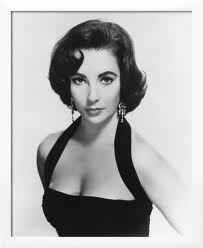
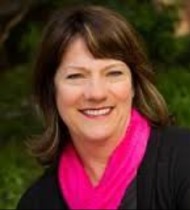
elizabeth-taylorI have begun to call my mother the “Reaper,” which I understand could be to some mums sort of insulting. Images of the Reaper are typically not terribly flattering, you know, with all that sunken skin and stringy black cloth flying around. My mom looks nothing like that, by the way. In fact, she has at all stages of her life borne a striking resemblance to Elizabeth Taylor, causing many a stranger to run up to her over the years, exclaiming, “Oh my goodness, do you know who you look like?” And, let me add, often much to the consternation of those in Mom’s company, such as, well– me, for example– when I was trying to deliver my first baby and the attending nurse ignored me in order to chat with my mom about her resemblances. But, I digress here.

Mom is the Reaper because she is at that point in her life when she rather unabashedly tells it like it is, “reaps truth” as I have come to think of it. Though she may look all violet eyes and white diamonds, she is beyond mincing words.

Is this a feature of aging? I once read that the decreased estrogen and increased testosterone levels in post-menopausal women may contribute to a personality shift where women are more inclined to report on what they are thinking. This may be a factor, but I would find it likelier that many women, menopausal or not, simply get to a point when they have seen/heard/experienced/endured enough that they find little merit in putting up fronts, regardless of hormonal predisposition.

Plus, I am wildly unimpressed by some of the material out there on menopause. It seems like a lot of conflated nonsense that correlates every aspect of female sexual maturation with hormonal imbalance and impending doom. I recently read a book by an “expert” named Dr. Miriam Stoppard – great last name for a menopause specialist, right? – that actually gave medical advice alongside hints about make-up tricks, relationship management tools for your depressed mid-life spouse, and what girdles to wear to help hold up your sagging flesh.

It is interesting that “women who speak their minds” are even an object of contemporary cultural commentary at all. I mean, would there be any talk at all about males who speak their minds? Young girls who speak their minds are cast as feminists, strong-willed, scary to boys, unfeminine, and so on. Of course, the embedded androcentric assumption is that they are doing something contrary to normative female behavior. Older women who “speak their minds” are cast as rude hags and crones, spreading around their venom and disappointment, especially if they swear. This blog on post-divorce dating, kind of says it all:
Continue reading “The Reaper by Natalie Weaver”

Christa Interview with Edwina Sandys by Nettie Reynolds

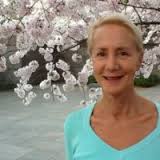
NettieDuring the summer I had the opportunity to interview Edwina Sandys, the creator of the sculpture, Christa. Initially, I was drawn to this sculpture during a seminary class with Whitney Bodman – “Jesus and His Interpreters.”
I came to seminary in 2013, a 47 year old single mom with two teenage kids in tow having left a very difficult sixteen year marriage. Seeing the picture of Christa during our class was a sacred moment for me. It echoed my journey and pain and yet also uplifted the beauty inherent in human suffering and our daily gift of grace and promise of resurrection. The debate over the cross itself and its center in Christianity, its usage to elevate patriarchal power, is ongoing, but for me, in that moment, seeing Christ as female was deeply spiritual. Continue reading “Christa Interview with Edwina Sandys by Nettie Reynolds”

Drowning in the Flood of Migrants and Refugees by Ellen Boneparth

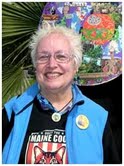
ellen boneparthOn June 22, 2015 Carol Christ translated an article on the refugee crisis in Greece for her FAR blog. I have been visiting Carol in Lesbos this September and have been observing the crisis close at hand.  This blog describes what Carol and I have witnessed and our reactions.
*****

It’s one thing to read about the flood of migrants and refugees to Greece and another thing to see it.

I have been in Lesbos for ten days this past September and have been stunned by the mass of humanity trying to escape war and destruction in Syria, Afghanistan, Iraq and other countries in the Middle East and Africa.

Continue reading “Drowning in the Flood of Migrants and Refugees by Ellen Boneparth”

From Her Lips by Barbara Ardinger

Barbara Ardinger

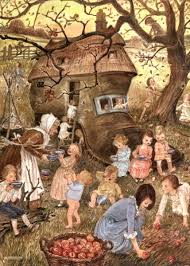
There was an old woman who lived in a shoe,
She had so many children she didn’t know what to do.
She gave them some broth without any bread;
She whipped them all soundly and put them to bed.

Look! Here she comes. Like most old women, she has a lot to say. Let’s listen in:

“Well, that’s what an old nursery rhyme says. But I’m that old woman, and I can tell you for sure that the only thing ‘true’ about that rhyme is that I’m old. I’m older than anyone I know. Oh, I see you there, eavesdropping. That’s okay. You’re welcome here.

Old woman...shoeYou know what? I’ve been called many names by the (mostly) men who make up those rhymes and stories. I’ve been the old witch in the candy house who serves pie to children and then serves the children in the pie. (But did that German guy who wrote that opera about me ever say who eats those pies?) I’ve been the thirteenth old woman at the christening who wasn’t invited and brings a curse that’s as big as the blessings from the first twelve. I’ve been the evil, wicked, mean stepmother.

Continue reading “From Her Lips by Barbara Ardinger”

Women Missing from the Pope’s Address to US Bishops by Gina Messina-Dysert

Gina Messina-Dysert profilePope Francis offered many words of wisdom and discussed key issues in his address to US Bishops in Washington DC.  He acknowledged the sex abuse scandal as a crime and called for bishops to be healers.  He asked that bishops move beyond their own perspectives and be open to dialogue.  And his personal call to act as pastors to immigrants in the US is one that we should all adhere to.  However, I must ask, what about the women?

Noticeably absent from Pope Francis’ address are the many issues that are directly connected poverty and keep women suppressed in the Catholic Church. While he has addressed particular women’s issues on certain occasions, the pope’s comments have been brief and not followed with action. In addition, they do not honor the ongoing struggles women endure as a result of institutional violence that stems from Vatican teaching.

Refusing women’s ordination, denying reproductive rights, and maintaining a theology of complementarity, calling it an “anthropological fact,” continues a culture that perpetuates gender based violence; one that does not offer pastoral care. Continue reading “Women Missing from the Pope’s Address to US Bishops by Gina Messina-Dysert”

Let My People Go! Modern Day Oppression and Exile by Michele Stopera Freyhauf

FreyhaufLet my people go!

Where is the humanity? Why are my sisters and brothers continuously subjected to persecution? Who will help and stop this madness?

I am a member of the human race. Collectively I identify with those who need help and are oppressed. I do not identify with the oppressors, for they are like Pharaoh whose heart was hardened. In identifying with this group, I will provide a label of humanity; for the oppressors do not show care or love but evil and sin towards my people – they cannot be part of this group. As my people flee the boarders from the oppressors, the world has opened their gates to let them in. The world has not turned their back on them. However the oppressors continue to mar their homeland, destroy their culture, and attempt to erase their history, their identity, their footprint on this earth. They are not oppressors but are in fact committing cultural genocide. They are committing genocide against humanity, against anyone who does not follow their ideology, their way of life.

Why should we care? Should we care? For this I say yes. My people need protection and help, but like the Israelites in the story of the Exodus, they yearn for their homeland – a place they were forcibly exiled from. They yearn for food and clean water. They yearn for safety and protection.  While you may think that my people were not forcibly exiled – they were. They fled for their own lives – for their own people, and the community’s hearts became hardened to their pleas for help.

The Syrian crisis is one that we have allowed to repeat over and over again. According to World Vision, nearly 12 million Syrians have been forced from their homes – half of which are children.  At least 7.6 million have been displaced within Syria and more than 4 million have fled the country.  Children affected by this crisis are at risk of becoming ill, malnourished, abused, or exploited.  Save the Children produced a video that shows what happens to a girl after three years of conflict:

Continue reading “Let My People Go! Modern Day Oppression and Exile by Michele Stopera Freyhauf”

E Pluribus Unum: The Woman From Africa by Stuart Dean

Stuart WordPress photoShe’s his only savior.  African in origin, her figure bears witness to her homeland: her hair twisted in dreads, her lips full, her color dark, her chest broad with pendulous breasts, her stomach flat and firm, her legs slender, her feet broad and ample.
The passage above translates the portrayal of Scybale, the black female slave of the farmer in the poem Moretum, that as discussed in an earlier post, is the source of the phrase ‘e pluribus unum.’  It is reasonable to infer it is a self portrait.

The case for Moretum being the work of a woman (and perhaps incorporating a self portrait) begins with the very fact that it portrays a woman so positively.  Portrayals of women in such positive terms in ancient literature are rare.  The details are impressive because they seem so real.  The form of the description manifests a diagnostic technique (head to feet) well attested in ancient poetry.  That includes Sappho’s self portrait (S. 58b), which reads as if composed while standing in front of a mirror, as does this portrait. Continue reading “E Pluribus Unum: The Woman From Africa by Stuart Dean”

Dying For the Triune God by Esther Nelson

esther-nelsonLast week, the Catholic Studies Chair in the public university where I teach sponsored an event that brought Monsignor Kevin Irwin from The Catholic University of America; School of Theology and Religious Studies, Washington DC, into our midst.  His hour-long talk was titled, “Pope Francis’ Teaching on the Environment.”
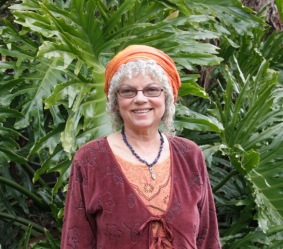
The monsignor couched his talk in the Latin American proverb, “We drink water from our own wells.”  In other words, our life experiences (to a large extent) give us a prism through which we see the world.  We construct a “reality” from that view–a view that in turn shapes us.  Pope Francis, according to the monsignor, was shaped by the huge unemployment rate and resultant poverty that happened (and is still ongoing) in his native country–Argentina.  In addition, he saw first hand how large corporations had taken over the country, laying claim to resources not belonging to them.  Furthermore, environmental destruction has taken a heavy toll on the Amazon in Brazil–an area “beloved” to the current Pope.  These are some of the waters from the well which Pope Francis has drunk, shaping his worldview. Continue reading “Dying For the Triune God by Esther Nelson”

Re-creating a Gynocentric Cosmology: Situating Myself by Glenys Livingstone

Glenys

I am an inventor, a mythmaker, who has received/taken remnants of her indigenous religious heritage, and newly available parts, and spun and woven new threads, fabrics and stories.[i]

 My method of approach has been informed by my deep personal involvement … my need to “place” myself here – as feminist philosopher Luce Irigaray suggests that woman needs to do.[ii]

 Irigaray said that woman is not situated, “does not situate herself in her place,” that she serves as a thing and is thus nude.[iii] I have intuitively felt the need to “clothe” myself, to find the Place within me, to move from object to sentient subject.[iv]

The way the Cosmos was for a white girl child of Western European descent growing up in country Australia, with Protestant religious teachings, was a place surveyed scrupulously by a vengeful Father God, who was at the same time spoken of as the epitome of Love. What did that do to one’s understanding of Love? How does a woman – or any person – become functional within such a cosmology? Continue reading “Re-creating a Gynocentric Cosmology: Situating Myself by Glenys Livingstone”

Black Madonna Transforms into Vodou’s Lesbian Defender by Kittredge Cherry

Kittredge Cherry
Kittredge Cherry

One of the most famous Catholic icons is the model for a Haitian Vodou goddess who protects lesbians.

Traditional images of Erzulie Dantor, the Vodou defender of lesbians, are based on the Black Madonna of Czestochowa.  They even share the same two scars on the dark skin of the right cheek.

Every year more than 100,000 people view the original Black Madonna of Czestochowa icon in Poland at one of the most popular Catholic shrines on the planet. John Paul II, the Polish pope, was devoted to her. Few suspect that the revered icon of the Blessed Virgin Mary has a lesbian connection. Continue reading “Black Madonna Transforms into Vodou’s Lesbian Defender by Kittredge Cherry”