Tibetan Buddhist Nuns Take First Round of Geshema Exams by Karen Nelson Villanueva

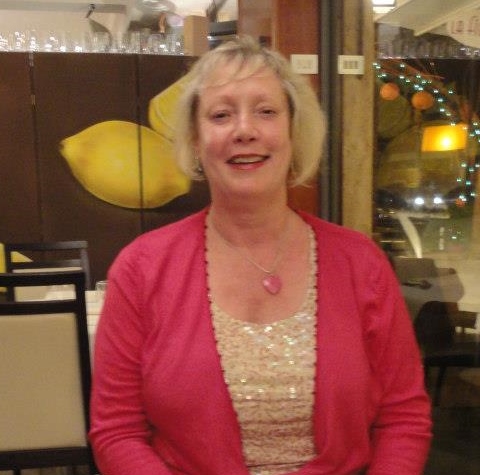
Karen Nelson Villanueva has recently successfully defended her doctoral dissertation, “Invoking the Blessings of the Tibetan Buddhist Goddess Tara Through Chanting Her Mantra to Overcome Fear,”When I signed up to support a nun through the Tibetan Nun’s Project, I was pleased to be paired with someone who reminded me of me. Phunsok Dolma is a woman in her 50’s, trying to better her life and educate herself without a spouse. My first letter from her contained a photograph of a tanned woman appearing strong, hearty, and accustomed to agricultural work. I responded with my photo to establish sisterhood and solidarity. Through her determination, Phunsok chose to live in a monastic community and practice her faith.

With my meager income as a doctoral student, I chose to assist another human being to repay the kindness of the Dharma in my life. In terms of Western culture, I am struggling, but this struggle is minor compared to the lives of many nuns. My annual budget for a Venti cup of coffee at Starbuck’s equals the basic survival for a nun for over two years. One hundred percent of my sponsorship money of $30 per month provides a nun with food, clothing, medical care, and educational opportunities. I am fortunate to have food, housing, and the ability to pursue the study of my heart’s desire. In other words, I am in a position to help someone else.

All efforts make a difference. By supporting a nun through the Tibetan Nun’s Project, I can repay the kindness of what I have received from many Dharma teachers; I can help support my sisters as they struggle to thrive in another part of the world. Recently, I learned with pride that 27 of the nuns sponsored by the Tibetan Nun’s Project sat for the Geshe examination to become teachers of the Dharma to the world. This act affirms my conviction to support these women as I struggle to support myself. Continue reading “Tibetan Buddhist Nuns Take First Round of Geshema Exams by Karen Nelson Villanueva”

Mindfulness of Putting Ourselves Down by Oxana Poberejnaia

oxanaFrom the Buddhist point of view, all phenomena are conditioned, i.e. they arise, carry on, and come to an end because of other phenomena. Buddhism does not look at anything we experience as “things”, but rather as processes.

Confusion arises due to various factors, chief among them : 1) vague sense of “ego”, and 2) language. The vague sense of ego is portrayed in Khemaka Sutta as the last delusion that a monk drops before getting Enlightened, so we won’t worry about it now. Where language is concerned, Buddhism stands on similar positions to those of postmodernism and feminism, i.e. our social world is defined by how we speak about it. One can say that we actually create society by the act of speaking.

Continue reading “Mindfulness of Putting Ourselves Down by Oxana Poberejnaia”

Some Friendly Advice for Female Graduate Students by Grace Yia-Hei Kao

I’m officially in “back to school” mode, as I put the finishing touches on my syllabi, get my course websites ready, and prepare my 5-year old son for Kindergarten.

As I think about new graduate students studying theology or ministry, I’m reminded that while women make-up approximately 1/3 of all seminary students nationwide, at the place at which I work  (Claremont School of Theology), they comprise half of the student body.

In honor of all the new, especially female, matriculates (at my school or elsewhere), I’m reposting below one of my first entries on this blogsite. It was entitled “Undermining Our Own Authority.” The advice I gave then still captures what I’d say now.

Continue reading “Some Friendly Advice for Female Graduate Students by Grace Yia-Hei Kao”

Forgiveness (is a two-way street) by amina wadud

Amina Wadud 2 I am Muslim, by choice, practice and vocation

I don’t know why this came to me as the discussion I want to have in blog form today, but here you go–

Imam al-Ghazzali (d. 1111) said that Allah (God) only stops forgiving when the believer stops asking for forgiveness.  This is the crux of the Islamic view of divine forgiveness.  Start with the fact that we have NO FALL story, because despite mis-conduct in the Garden, Adam and Eve ASKED for and were granted forgiveness.  Thus, they leave without the mark of some eternal “original sin.”  They live as we all do, here on earth, not as some punishment but because that is where they were intended to live in the first place.  The creation story in Islam describes human creation as per a primordial conversation between the Creator and the unseen creatures known as angels, when God says, “Indeed, I will create ON THE EARTH a khalifah (moral agent, vice-regent of God).”

Thus, the relationship between divine forgiveness and human sin or error is fixed in a dialectic where sin and error might be part and parcel of the human being but likewise forgiveness is part and parcel of the Divine Creator.  In fact, the language used is telling.  Taubah, which is also translated as forgiveness, means “returning to the original place/station.”  Our original place is at one with the Creator, and we are in that station in harmony with all of creation ~ a sort of cosmic bliss.  When we err, we fall away from our true nature and the nature of the entire universe so must return to realign ourselves with this cosmic harmony… and everything will be alright. Continue reading “Forgiveness (is a two-way street) by amina wadud”

Birth Warrior by Molly

editMollyNov 083“In this culture…a woman can be made to feel foolish for emphasizing the centrality of giving birth to her identity or her personal religiousness, her ‘womanspirit…’” –Stephanie Demetrakopoulos (Listening to Our Bodies)

After the birth of my daughter in 2011, I received a small package from a Birthing from Within mentor friend. In it was a sweet little t-shirt imprinted with the words, My Mama is a Birth Warrior. The words on the shirt surrounded a labyrinth image, which I love as a metaphor for birth and life

Written on the enclosed card was the following:

Imagine a tribe in which a woman is prepared for childbirth in the same way warriors are prepared for battle. Imagine a Ceremony for this woman before she gives birth, a grand send-off with holy songs and fire. Imagine a feast, prepared just for her.

Her tribe tells her, they say to her “Go to your journey, you have prepared. We have prepared you. If you fall from your horse once or a hundred times, it does not matter. All that matters is that you come back to us, that you come home.

Throughout your journey–your labyrinth of Great Love, Great Determination, Great Faith and Great Doubt—you rode on!

The Great Tribe of Mothers welcomes you back from your birth journey with honor.

Modeling her little t-shirt.

Imagine, indeed. After I read this note I reflected that I did feel I embarked on a mighty journey during my last pregnancy, I did pass through those Gates, and I did ride on. I AM a birth warrior!  Continue reading “Birth Warrior by Molly”

Equal in Faith: Women Fast for Gender Justice in Religion by Lorie Winder

­­Lorie's FB Photo (2)It’s time—past time, really, that we gather as an interfaith community to state, unequivocally, “Gender equity shouldn’t stop at the doors of our churches, synagogues and mosques.”  That’s why I’ll fast at the end of the month with Equal in Faith:  Women Fast for Gender Justice in Religion.

On August 26, women of many faiths will mark National Women’s Equality Day by joining together in a nation-wide fast for gender justice and the equitable inclusion of women in their religious traditions. Sponsored by the Women’s Ordination Conference and Ordain Women, organizations seeking priesthood for women in Roman Catholicism and The Church of Jesus Christ of Latter-day Saints (Mormons), respectively, the day-long fast will culminate in an interfaith prayer service from 6:30-7:30 PM at St. Stephen and the Incarnation Episcopal Church in Washington, DC, a congregation noted for its long-standing support of civil and religious equality.

Those who cannot attend the service in Washington, DC are encouraged to participate virtually through Equal in Faith’s Facebook event page.  In particular, Equal in Faith’s organizers, of whom I am one, invite those who join us in fasting to post a personal statement in support of gender equity in their religious tradition on our Facebook event page. Continue reading “Equal in Faith: Women Fast for Gender Justice in Religion by Lorie Winder”

Hidden Meanings in the Rituals of the Assumption by Carol P. Christ

carol-christ“[T]he Old European sacred images and symbols were never totally uprooted; these persistent features in human history were too deeply implanted in the psyche.  They could have disappeared only with the total extermination of the female population.” Marija Gimbutas, The Language of the Goddess, 318.

August 15 is known to Greek Christians as the date of the Koimisi, “Falling Asleep” or Dormition of the Panagia, She Who Is All Holy.  December 25 is a minor holiday in the Orthodox tradition, while Easter and August 15 are major festivals.  The mysteries of Easter and August 15 concern the relation of life and death.  In Orthodox theology, both Easter and August 15 teach that death is overcome:  Jesus dies and is resurrected; Mary falls asleep and is assumed into heaven.  These mysteries contain the promise that death is not the final end of human life.  Yet this may not be the meaning of the rituals for many of those who participate in them.

In Christus Victor, Gustaf Aulen argued that Eastern (Orthodox) and Western (Catholic and Protestant) traditions understood salvation differently.  The Western Church focuses on salvation from sin, while the Eastern Church focuses on transcending death.  This contrast is not absolute, as for the Western Church sin is the cause of death and when sin is overcome, immortal life is restored.  While Orthodoxy has strong ascetic and monastic traditions, it does not teach ordinary Christians to focus on sexual purity and impurity as Western traditions have done.  Nor is there a strong emphasis on transforming collective sin in movements for social justice.  Significantly, though Roman Catholics and others consistently refer to the “Virgin Mary,” Orthodox Christians prefer “Panagia,” She Who Is All Holy.

In Greece the ordinary rhythms of life are disrupted at Easter and in August.  During lent, many women (and some men) fast, while in August women named Mary and Panagiota–as well as others who wish to honor or petition the Panagia–wear black for two weeks.

Assumption1Throughout the first 2 weeks of August, Greek Christians focus on the death of the Panagia.  According to theology, her Son appears after her death and “assumes” her into heaven.  The Orthodox icon depicts Mary surrounded by the Apostles, while Jesus holds the assumed body of Mary depicted as an infant wrapped in swadling clothes.

When she first saw this icon, my friend Naomi Goldenberg commented that it is an example of the widespread attempt on the part of men to appropriate the power to give birth.  The icon reverses the symbolism of the nativity where the baby wrapped in swadling clothes is held in the hands of his mother.  Christian baptism described as re-birth through the Father, Son, and Holy Spirit is another version of “male birth.” Continue reading “Hidden Meanings in the Rituals of the Assumption by Carol P. Christ”

On Fasting and Feminism by Ivy Helman

headshotOn July 16th, I fasted for Tisha b’Av, when Jews commemorate the destructions of the temples in Jerusalem among other events.  On July 23rd I attended, as a member of GLILA, iftar, hosted by the Tolerance and Dialogue Student Association of UMass Lowell.  Iftar is the traditional nightly break-fast dinner during the month of Ramadan.  On Saturday, July 27th, I read in the Boston Globe an obituary of a sixteen-year-old girl who lost her battle with anorexia nervosa.  That small paragraph obituary gave me pause.  I have literally spent this last month steeped in mine or my friends’ religious practices of fasting.  That young woman spent much of her last years of her life fasting to the point of death.   How does a religious feminist respond?

Religious fasts regularly praise the virtues of self-denial and self-sacrifice.  Abstention from food is thought to be spiritually purifying.  The theology of fasting frequently seeks to humble the adherent in which the practitioner seeks to garner favor or be seen as worthy in the eyes of the divine.  Fasting, especially in Christianity, also separates body and mind. Continue reading “On Fasting and Feminism by Ivy Helman”

Painting Georgia O’Keeffe by Angela Yarber

Hailed as the Mother of American Modernism, her seemingly vaginal flowers lauded by feminists and artists alike, Georgia O’Keeffe stands as a sentinel for strong, creative women who balk at tradition and embrace a faraway freedom.  Though she adamantly denied any association with female genitalia embedded in her sensuously up-close-and-personal flowers—even from feminist artists as famed as Judy Chicago—she remained a female force unbound, painting, living, loving, and creating on her own terms.  So, it’s no wonder that she joins my Holy Woman Icons with a folk feminist twist: Virginia Woolf , the Shulamite, Mary Daly, Baby Suggs, Pachamama and Gaia, Frida Kahlo, Salome, Guadalupe and Mary, Fatima, Sojourner Truth, Saraswati, Jarena Lee, Isadora Duncan, Miriam, and Lilith.

Born in November 1887, O’Keeffe knew she would be an artist from the young age of seven.  Whether you’re familiar with her intricate flowers, soaring skyscrapers, or desert skulls depends largely on the period of her life that interests you.  Whether it was the rural Wisconsin farm of her childhood, the bustling city of New York where she began her relationship with famed photographer Alfred Stieglitz, the peaceful lake in the Adirondack Mountains where they summered, or the harsh desert landscapes of New Mexico where she devoted her later years, she found inspiration and captured beauty wherever she lived, camped, traveled, hiked, or drove in her Ford Model A.  Continue reading “Painting Georgia O’Keeffe by Angela Yarber”

Who is the Church? by Linn Marie Tonstad

Linn Marie TonstadThe headlines blared, “Who am I to judge?” News outlet after news outlet led with the pope’s conciliatory stance toward gays, expressed during an interview aboard the pope-plane as he returned from Brazil. Among the several headers from Fox News (I encourage not clicking!), we find discussions of the pope’s “reaching out” to gays and even one that combines this development with his “urging” of a “greater role” for women. The New York Times story introduced the pope’s comments as follows: “For generations, homosexuality has largely been a taboo topic for the Vatican, ignored altogether or treated as ‘an intrinsic moral evil,’ in the words of the previous pope.” Ignoring the astonishing comment that this has been the case “for generations,” as though homosexuality has historically been the kind of issue for the church it has become in the wake of radical queer movements – see Mark Jordan’s several books on this for the most helpful treatments – the story went on to say that the pope’s comments “resonated throughout the church.” Although the NYT article did a better job than some contextualizing and nuancing the pope’s comments, they were still termed “revolutionary” in an assessment better suited to an opinion page than to a news report. Better-informed commentators, such as James Martin, offered a measured response. Martin said that although the pope’s remarks didn’t really signal a significant change in policy, “in the church, style often proves substantial,” implying that the “pastoral” tone might have effects in the implementation of policy. More significantly, Martin praised the pope’s adherence to Jesus’ injunction not to judge as an instance, first and foremost, of the pope’s commitment to mercy as the hallmark of his pontificate.

My Facebook feed, predictably, lit up with links to and discussions of these comments. While most were thrilled, a few posts noted that, even if Pope Francis is in fact (which is not proven) walking back Benedict XVI’s language of “intrinsically disordered,” the church’s policy has not and will not change in any significant way. What was missing in all but a few instances was attention to the pope’s comments in the same interview on women, and the deep theological problems with the assumptions contained in those comments. And while I, as a queer theologian, would never wish to downplay the struggles of LGBTQI people in the Roman Catholic church, there are rather more women than queers in that church (as elsewhere!). What’s more, it is arguable that it is the sexism and heterosexism of what Marcella Althaus-Reid memorably termed “T-Theology” that underlies condemnation of homosexuality in Roman Catholic theology. Continue reading “Who is the Church? by Linn Marie Tonstad”