Holding On Too Tightly by Sara Frykenberg

Raised in an evangelical, Protestant Christian tradition, I was repeatedly told that “God is love.” God is love. While much of my Christian experience was difficult and even abusive, I have always interpreted this teaching—while sometimes confusing to me, and other times, fueling my spiritual inquiry—as a positive thing. When learning to shed the abusive contexts in my life, I did so encouraged by those who knew that love and god/dess shouldn’t be abusive. When challenging and responding to abusive paradigms within Christianity through my dissertation writing process, I reflected on how leaving an abusive cycle can feel like a hiccup from love, a frozen breathlessness and confusion on how to access love in new ways; but I also had to conclude that love hadn’t really been absent, even if hard to find.

God/dess is love—even when the dominating power celebrated within a particular religion, family or society distorts access to god/dess-loving. Yet, this issue with access, the trained approach to receiving love that is taught in an abusive context, is a habit that I have had to continually and consciously shed. I catch myself falling into patterns of get-love-through-control or get-love-through-performance behaviors. I try to be someone or something to ensure my access to what I perceive as love, sometimes finding it hard to accept that I am loveable without performance, role-playing or being someone that somebody else wants me to be. The more I experience mutual loving—or as Carter Heyward puts it, “godding” –the less I fall into this trap of performance; and the more I realize that my “performing” who I think others want me to be actually hinders my most loving relationships. However, while living outside of the abusive context has become easier in my life, sometimes I panic. Sometimes I hold on too tightly, afraid of the reality of loving without (the illusion of) control. Continue reading “Holding On Too Tightly by Sara Frykenberg”

The Religiosity of Silence by John Erickson

In a repetitive culture of abuse and silence, is it really shocking to find out that an individual who preached such hate and discontent for others actually perpetuated other forms of heinous abuse against others?

John Erickson, sports, coming out.In 2013, I wrote an article about the then latest reality TV scandal featuring A&E’s Duck Dynasty’s Phil Robertson and his rampant foot-in-mouth disease that caused him to express, in the pages of GQ, his true distaste for the LGBT community and specifically for the sexual proclivities of gay men.

Now, two years later in another reality TV show, TLC’s ’19 Kids and Counting’, it isn’t star Josh Duggar’s anti-LGBT statements getting him into trouble but rather his sexual assault and molestation of 5 girls, including two of his sisters. However, while the Internet explodes with attacks against Josh Duggar and his Quiverfull background, it is vital to remember that the silence that he and his family inflicted upon his victims since 2006 has not only been ongoing since then but is also being reemphasized today with each keystroke focusing on the assailant rather than the victims. Continue reading “The Religiosity of Silence by John Erickson”

Halfway… by Sara Frykenberg

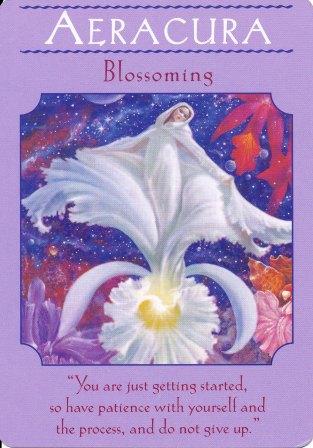
Sara FrykenbergThe title of this post is meant to reflect where I am in the semester, temporally speaking: halfway. Actually, the idea that I am halfway is a bit of a shock to me, considering I feel like I just started! I have a goddess oracle card sitting on my desk that reads: “Blossoming: You are just getting started,” reminding me to be patient with myself as my work takes shape this semester. But seven of fifteen weeks in, I think its time to pull a new card.Aeracura
When the word “halfway” popped into my head, though, I realized this is also a struggle I am having right now. I feel halfway—I answer “yes and no” to every emotional question. I sleep halfway, working even in my dreams. I am halfway okay: one week I am very down and the next, I feel just fine. And sitting on my patio this weekend, unable to sleep, I thought to myself: you are less than halfway full; and realized I that didn’t know what to do to fill myself up.

Continue reading “Halfway… by Sara Frykenberg”

The Day I Re-Learned How to Love My Femininity: This Butch’s Experiment in Healing by _Melody F.

I feel like I am a bit of a typical white, middle class, butch. Maybe not, but I feel like I’ve met me: I dress like a dude, take on what I consider masculine roles in relationships, and do ‘guy things’ like play video games or carry heavy objects. And then there’s that really feminine part of me, the soft-butch side that comes out when I can’t take something macho I’m trying to do seriously, or when my voice (already high) hits that pitch that (not ‘screams,’ but) sort of sweetly says ‘hello, I’m girly.’ When my soft butch side comes out, my students coo at me. It’s all very embarrassing.

But under a face which turns blotchy red in such moments, something my ex used to think was cute, I have been privately wishing that feminine part of me would die away. For the last year, I’ve silently hated her. This post is about when I decided to stop.

I’ve been having an ongoing conversation with a fiercely femme friend of mine about misogyny and masculine privilege in LGBTQ communities. About a month ago she sent me an article by Gabrielle Rivera titled Fat-Booty Butch Wears Leggings — Confuses World, Confronts Self. In it, Rivera dons a pair of leggings for the day and writes a post about her experience that addresses invisibility of femmes, butch privilege, and other well-thought-out and honest observations about queer folks and communities from the perspective of a butch/Queer Person of Color. Rivera rocked both the leggings and the post. (I highly recommend giving it a read.) What struck me most was how very much herself Rivera seemed to stay. Even as she engages a complex shift in the way in which her communities received and read her, she protests her invisibility – nothing about switching codes had erased her or her queerness. I wasn’t sure I would feel the same. I was so alienated from my feminine side that the idea of looking even a little bit feminine, just to touch her, seemed as though it might blank out my identity. Continue reading “The Day I Re-Learned How to Love My Femininity: This Butch’s Experiment in Healing by _Melody F.”

An Ethics of Anger by Ivy Helman

me bio-suitSometimes I feel angry.  I would say that more often I’m upset, disappointed, annoyed or just plain frustrated.  These are easier emotions for me to handle because I tend to shy away from confrontation and conflict.  Of course, when they come up I can deal with them but I’d rather put time and energy into fruitful communication before difficult conflicts erupt.  Nevertheless, this doesn’t always work and other people handle situations and communication differently than I do.  So how does one approach anger?  The anger inside one’s self?  Another’s  anger?  What about when two individuals are angry with each other?  I would like to spend a little bit of time treating each one of these scenarios separately and then conclude with a few general remarks about the importance of empathic feelings of anger over the situations of others.

First of all, everyone handles anger differently.  I’m not sure that there is only one correct way to approach it.  Personally, I use anger as a reflective tool.  Why am I angry?  What happened or didn’t happen to provoke my anger?  Is my anger an appropriate response to the situation in which I find myself?  Are there some concrete actions I can do to right the situation?  These questions allow space for me to not only explore my feelings and ground myself, but more importantly they give me some space between what made me angry and whatever action or inaction I take toward that feeling of anger. Continue reading “An Ethics of Anger by Ivy Helman”

The Hot Seat by John Erickson

Being a man in feminism isn’t easy and that’s how it is supposed to be.

men_feminist_mainI’ve been thinking a lot about what it means to be a male feminist lately.  As the only man to be a permanent blogger on this very site until my colleague and friend Kile Jones came on board, I took my role, as a man in a traditional feminist (online) space very seriously.  Although the ongoing struggle to be a male feminist is one continually wrought with dialogues about power and positionality (amongst a host of many other topics), I am often conflicted when I see male feminists take advantage and destroy the hard work that many, specifically on this site and beyond, worked hard to build and defend.

Not wanting to reopen old wounds or start new online battles, men have been involved in feminism for quite some time.  From James Mott chairing the first women’s rights convention, to radical feminist Andrea Dworkin’s life partner John Stoltenberg, to Michael Kimmel and Michael Kaufman’s life long work to legitimize not only men in feminism but also what it means to be a man who works for gender equality, being a man in feminism isn’t easy and that’s how it is supposed to be. Continue reading “The Hot Seat by John Erickson”

A MEDITATION ON A MIDRASH: “ABRAHAM’S DAUGHTER” BY ARCADE FIRE by Sara Frykenberg

The wages of the sin of sacrificing our children is their death, whether the sacrifice is to some supposed higher order, to absolute obedience or to appear to be the “good Christians” we are “supposed to be”…

Maybe its because I enjoyed the books more, or because of my sister’s all too expectation-garnering reviews or even, because I’d seen this theme before, in an amazing yet gruesome Japanese movie, Battle Royal, I left the theater unsatisfied after watching The Hunger Games. I did however, LOVE the song that played at the end of the movie, which I downloaded before we left the theater.  I listened to it in the car on the way home.  I listened to it the next day, the day after that and for days after that… I listened and listened, and I found surprise, power, anger, sorrow and a channel for grieving that I had needed in the Midrash “Abraham’s Daughter” by Arcade Fire. 

Abraham took Isaac’s hand and led him to the lonesome hill

While his daughter hid and watched, she dare not breathe

She was so still.

I discovered the practice and potential power of Midrash from my teachers in graduate school.  The idea of an “extra-biblical” story that might help to expound upon Biblical passages that are all too often unexplained or unsatisfactory to (my) feminist consciousness was very appealing to me—and it is still appealing to me.  But I have to admit that the feminist Midrash I read in my classes seemed too positive and did not resonate with me.  The pieces were too much like a tender hug or a mother hen covering my wounds with her wings.  I wanted to hear a story of Bible that could help me make sense of the violence I’d discovered in my childhood religion.  I needed a story of Bible that honored my violent struggle to counter the abuse within it and within me.

Like Isaac, I was too intimate with my abuser: unable to avoid walking hand and hand with him when pushed to do so.  Asked to create a prayer or Midrash for a class once, I wrote about the way I would turn the radio in my car up when I started to hear ‘God’ speak to me.  I didn’t know how to listen and tune out the abusive maxims that played over and over again in my head (maxims that surfaced every time I even thought about the divine).  Continue reading “A MEDITATION ON A MIDRASH: “ABRAHAM’S DAUGHTER” BY ARCADE FIRE by Sara Frykenberg”

FORGIVENESS or TRUTH: WHICH IS THE BEST REMEDY? by Carol P. Christ

What happened to you really was bad. This should not happen to any child. It should not have happened to you.

In our culture there is often a rush to forgiveness that precedes acknowledging the harm that has been done. When I was a child and my father yelled at me or withheld love, I was told by mother, “He really does love you. He just does not know how to show it.” She sometimes added, “Even though he will never say he is sorry, you should forgive your father, because he did not really mean what he said.”

As a child I “learned my lesson well.” I came to the conclusion that women must “read between the lines” of the behavior and words of men, because men cannot and do not express their true feelings. This “lesson” did not serve me well in my life. Quite the opposite. When I loved a man and he did not treat me well, I remembered my mother’s words. “He does love me,” I told myself, “he just doesn’t know how to show it.” My mother passed on a very good recipe for accepting abuse.

“Hold on,” I can hear you thinking, “Your mother was only trying to protect you.” Of course she was, but her words had exactly the opposite effect. Instead of helping me to deal with life, my mother’s words confused me. My mother taught me that where men are concerned the word “love” does not have its ordinary meaning, the one I learned from her love for me. Where men are concerned “love” is complicated and mysterious: what does not look or feel like love really is love. Sorry Mom, but that was bullshit! I know you wanted me to find love and happiness and were often puzzled when I didn’t. You wondered if it was anything you did. Despite your best intentions, it was something you did. Continue reading “FORGIVENESS or TRUTH: WHICH IS THE BEST REMEDY? by Carol P. Christ”

A FEMINIST TAOIST VOICE PART 1: MY DIALOGUE WITH ELISA FON, ACUPUNCTURIST, TAOIST, FEMINIST AND FRIEND by Sara Frykenberg

“So it all kind of depends… even in men compared to men, and women compared to women, you would have to have a counterpart to judge something as yin or yang—you are never statically just yin or just yang…”

Elisa Fon is a student of acupuncture, graduating this semester from Yo San University in Santa Monica, CA.  She also studies reiki, energy healing, meditation and yoga.  Elisa and I have known each other for most of our lives as friends, as one another’s support and as chosen family.  Over the last few years, however, we have more consciously fostered an intentional aspect of our intimacy: a challenge to each other to live more authentically, to walk counter-abusively and to live towards physical, spiritual and emotional empowerment.  One privilege of this relationship has been the opportunity to create a language together in order to speak across our differences and share our respective passions: feminist theo/alogies (mine) and Chinese medicine/ healing arts (Elisa’s).

Searching for a way to better understand and teach feminist Taoism, I reached out to Elisa for dialogue and language, which gave birth to the following interview about the relationship of one feminist to Taoism, or a Taoist to feminism. Continue reading “A FEMINIST TAOIST VOICE PART 1: MY DIALOGUE WITH ELISA FON, ACUPUNCTURIST, TAOIST, FEMINIST AND FRIEND by Sara Frykenberg”

Hagar: A Portrait of a Victim of Domestic Violence and Rape

This week Twitter has been a flurry with information for victims of   domestic violence and rape.  This ranges from the U.S. redefinition of rape to include men to Nigeria’s first anti-rape toll free hotline for women.  There is even a male movement to stand against rape.  This problem is an ongoing issue, one that shows no sign of diminishing or going away.  According to Amnesty International, one in three women worldwide have been beaten, coerced into sex, or otherwise abused and their abuser is normally someone they know.  As I contemplate this very difficult issue, I am reminded of the Biblical Hagar in Genesis 16. The story of Hagar and Sarai is abundant

Men Can Stop Rape (http://www.mencanstoprape.org/)

in ethical situations that draw in the reader and presents complex issues that can be very troublesome.  If you take the text hermeneutically, through an ideological examination in its English translation, we have an Egyptian woman, who is also referred to as slave or concubine, forced to engage into sex with her owner’s husband for producing an heir.  Here the abuser is a woman with a docile and obedient husband portrayed by Abram.  What can we  glean from such a story for today’s battered women?  Hope or horrific defeat? Continue reading “Hagar: A Portrait of a Victim of Domestic Violence and Rape”