My woman’s body is entering the dark time of the moon, even with blinding white snow lashing the windows, even with a full moon tracing its way far above thick clouds. My mood is black and soon I’ll be flowing red, and the snow will just drive on white, white, white.
In The White Goddess, Robert Graves tells us: “…the New Moon is the white goddess of birth and growth; the Full Moon, the red goddess of love and battle; the Old Moon, the black goddess of death and divination.”
The Celt in me feels cradled by this imagery, even if, as Judith Shaw and Carol P. Christ have pointed out elsewhere on this site, the idea of maid, mother, and crone is a modern invention, not gift from the past. I agree with Christ: “My suggestion is that we give up the idea that the details of contemporary Goddess Spirituality are rooted in and authorized by tradition. We can instead acknowledge that though we are inspired by the past, we are the ones who are creating contemporary Goddess Spirituality.”
She is the reason BRIDES wear white, swan-like wedding gowns. Brides veil themselves like the Goddess herself, Whom all Bridegrooms honor, until revealing Herself to Her chosen groom. Tiny flowers and shamrocks are said to bloom in Her wake, She brings new life.
BRIDGET BRIGHT by Hedgewytch
She is known as Brigid Bright,
Goddess who shines against the night.
At Cille Dara, at the setting sun,
Her sacred flame is kept by one.
Nineteen times the earth turns round,
As sacred springs come forth the ground.
Twenty times the sun has burned,
And now the Goddess has returned.
Alone she tends her thrice-bright flame,
Born of her heart that bears her name.
The Dagda knows Brigid as Daughter,
Triple Blessed by fire and water.
Poets call her name to inspire.
And healers oft gain from her fire.
Wayland too would know her well
As hammer and anvil ring like a bell.
A sorrowful cry did she give meaning,
When first she brought to Eire keening.
Oh Sacred Fire against darkest night,
Burn for Brigid, for Brigid Bright!
Fire in the head…to quicken us.
Fire in the cauldron…to heal us.
Fire in the forge of the heart…to temper us.
I’m sitting on my meditation pillow for the thousandth time searching for clarity. Initially, going within feels like traversing a jungle; swinging from one thought branch to another. I’m itching for some peace and I’m almost certain this isn’t the way to it. But, I’ve been here before and I won’t quit breathing through the discomfort. I know I will greet the inner goddess soon enough. Getting past the noise is part of accessing her wisdom. The noise teaches me discernment (if I allow it to).
Eventually, the monkey mind gathers up all the branches and turns them into a prodigious figure that blocks the sun inside. Hello darkness my old friend. Inner garbage (fear) makes her entrance. I’m still breathing. Eyes closed. Determined through slow, rhythmic breaths, to move past her. I know I cannot run from her. She’s faster and outwits me every time. Continue reading “Inner Garbage (Fear) vs. Inner Goddess (Love) by Vanessa Soriano”
“Happy are those who find wisdom. . . . She is more precious than jewels, and nothing you desire can compare with her. . . Her ways are ways of pleasantness, and all her paths are peace. She is a tree of life to those who lay hold of her; those who hold her fast are called happy” (Proverbs 3: 13, 15, 17-18).
Sophia is DIVINE WISDOM, Her name comes from the feminine Greek word meaning Holy Wisdom. She is found all over the Bible (Proverbs, Sirach and the Wisdom of Solomon..) and in the Gnostic Gospels (unearthed at Nag Hammadi in 1947.) She has been called the MOTHER OF THE UNIVERSE, Mother of Yahweh and HOLY SPIRIT. The words: “Philosophy, theosophy and sophiology” all come from Sophia. The Bible links her to Christ: “Christ is the Wisdom (Sophia)” (1 Corinthians 1:24, 30). There is some evidence that Mary Magdalene was also called “Mary Sophia.”
Because She did not help advance the patriarchal scheme, Sophia was all but deleted from history. Hidden throughout the Bible and the Dead Sea Scrolls, knowledge of the DIVINE FEMININE all but went up in flames. Even a great cathedral build in Her honor in Constantinopole, Hagia Sophia (Holy Wisdom), was burned to the ground twice. It’s newest rebuild was a mosque and is now a museum. NOTRE DAME (Our Lady) has survived but they eventually claimed it was named after the Virgin Mary. (The famous Notre Dame rose windows are a common symbol of the Divine Feminine!). Some say there are secret societies that still exist to keep knowledge of Her alive.
In their purest form, “egalitarian matriarchies” place the mother principle at the center of culture and society. Their highest values are the love, care, and generosity they associate with motherhood. These values are not limited to women and girls. Boys and men are also encouraged to honor mothers above all, to practice the traits of love, care, and generosity, and to value them in others.
“Egalitarian matriarchal” societies are matrilineal which means that family membership and descent are passed through the female line. They are also usually matrilocal, which means that women live in their maternal home all of their lives. Family groups are usually extended rather than nuclear. Often there is a “big house” in which groups of sisters, brothers, and cousins live together with mothers, aunts, grandmothers, and great-aunts. In what I imagine to have been the original form of the system (still practiced by the Mosuo of the Himalayas), men also live in their maternal house, visiting their lovers at night, and returning home in the morning.
Mosuo women at festival
These societies practice small-scale agriculture. The women are owners and guardians of the land, which is held in common by maternal clans. They are also the guardians of the secrets of agriculture, food storage, and food preparation, which are passed down from mothers to daughters through songs, dances, rituals, and stories that celebrate the Earth as a great and giving Mother. The powers of women as birth-givers and as the guardians of the mysteries of the agricultural cycles are symbolically related to the powers of birth, death, and regeneration in nature and in all creative processes.
Women seated under trees in place of honor at Minoan festival
These social and cultural systems must have first developed at the beginning of the Neolithic era, when “woman the gatherer” first discovered the secrets of agriculture that allowed people to settle down and farm the land. If women discovered agriculture, then it makes sense that they would have been leaders in the first settled communities and guardians or owners of the land they farmed. They would have been the ones to build the first homes on or near the farmland. Sons as well as daughters would have been born in these early settlements.
The males of the families or clans continued to hunt. Over time they became responsible for building and heavy farm labor and for grazing flocks and seeking raw materials away from the settlement. It makes sense that they would be the ones to venture away from the community to gather information and to trade. In a recent documentary, Mosuo men stated that they don’t work as hard as women. This may not have been the case in the past. Today products and raw materials are brought in through the capitalist economy: traditional roles of traders are obsolete. Information gathering was an important part of trade expeditions: this is how new technologies spread rapidly in the Neolithic era; religious and cultural symbols were also shared by traders. Today there are books, newspapers, television, and the internet. Nor are Mosuo men involved in inter-clan negotiations in the People’s Republic of China.
From the division of labor in these societies, an egalitarian system of governance developed in which the elder women or grandmothers supervised the “internal” life of the house or clan. The “internal” domain included family and farm and all of the rituals surrounding birth, puberty, and death, as well as planting and harvesting. Women played central roles in creating and enacting all of these rituals. Through their expeditions and trade activities, elder men, the brothers of the grandmothers and uncles of the next generations, became responsible for the “external” relations of the clan, meeting people from other cultures when they were away from home, and welcoming visitors who arrived on their home territory.
Because of this division of labor, the elder men would have been the ones to meet and greet colonists and invaders and also to speak with storytellers, historians, and anthropologists, most often also men, who were interested in learning about their culture. If foreign men came from patriarchal cultures, they would have assumed that the men who met them were the leaders of their groups. The party line in the field of anthropology, which is followed by academics in other disciplines, is that “men wield the power” in matrilineal societies. I was disappointed to read this when I first started learning about matrilineal societies as a graduate student and to find it repeated in a recent article arguing that Minoan culture might have been matrilineal and matrilocal.
Those of us who have been socialized in patriarchal societies in which “men wield the power” cannot easily imagine alternative systems. When we begin to think about female power, we immediately conjure up pictures where “women wield the power” by going to war, keeping men as slaves, sexually abusing and raping them, and forcing them into subordinate positions. Such images are so abhorrent that we may conclude that patriarchy is not so bad after all. And this stops us from looking for or wanting to envision alternatives.
In 1981 anthropologist Peggy Reeves Sanday challenged these conventional views in her ground-breaking Female Power and Male Dominance. Examining all of the pre-urban societies documented in anthropological records, she discovered that societies that celebrated and valued female power were not female dominant but egalitarian. She also found that societies that celebrated and valued male power were almost always male dominant. They tended to develop in times of external threat (when men became warriors) or environmental crisis (when the female power of the earth was viewed as having failed the community). Though Sanday’s arguments are convincing, they failed to change that anthropological consensus that “men wield the power” in all human societies, including those that celebrate female power and are matrilineal and matrilocal.
What the consensus that “men wield the power” in matrilineal, matrilocal, and matrifocal societies does not recognize is the power women hold in the internal relations of the group. For example, in the Iroquois culture, the councils of female elders that managed the day to day life of the clan were just as important as the councils of male elders that through their “chief” met with European settlers and invaders. In fact, the councils of female elders were slightly more powerful than those of the male elders. Iroquois women could remove male leaders they did not approve of and reject decisions of the male council to go to war. This power of the female council did not mean that Iroquois women dominated Iroquois men. Rather it was an important check-and-balance ensuring that men’s councils could not unilaterally take actions that would negatively affect the internal relations of the clan.
What should we call societies such as these? Obviously we should continue using the terms “matrilineal” and “matrilocal” where they apply. But what term should we use to describe these cultures as a whole? Archaeologist Marija Gimbutas called the egalitarian societies of Old Europe “matrifocal” because she recognized that the term “matriarchal” is usually (mis)understood to mean female dominant; this decision did not protect her work from being criticized for its challenges to the patriarchal consensus.
I dared to use the “m” word after reading Peggy Reeves Sanday and Heide Goettner-Abendroth. I define egalitarian matriarchy as a society and culture organized around the mother principle of love, care, and generosity, in which mothers are honored and women play central roles, and in which men also have important roles and every voice is heard. My new suggestion is that the “m”word always be preceded by the “e” word, in other words that we not use “matriarchy” unmodified, but always write and speak of “egalitarian matriarchies” in order to make it clear that we are not talking about female-dominated societies. This will be my practice in the future.
If I had been asked to write the words that introduce visitors to the Heraklion Archaeological Museum of Crete to its earliest inhabitants, I would have said something like this:
While there is evidence that human beings visited Crete as early as 150,000 years ago, the first permanent settlers arrived from Anatolia in the New Stone Age or Neolithic era, about 9000 years ago, bringing with them the secrets of agriculture and soon afterward learning the techniques of pottery and weaving. As the gatherers of fruits, nuts, and vegetables and as preparers of food in earlier Old Stone Age or Paleolithic cultures, women would have noticed that seeds dropped at a campsite might sprout into plants. Women most likely discovered the secrets of agriculture that enabled people to settle down in the first farming communities of the New Stone Age. As pottery is associated with women’s work of food storage and preparation, and as weaving is women’s work in most traditional cultures, women probably invented these new technologies as well. Each of these inventions was understood to be a mystery of transformation: seed to plant to harvested crop; clay to snake coil to fired pot; wool or flax to thread to spun cloth. The mysteries were passed on from mother to daughter through songs, stories, and rituals. Continue reading “The Heraklion Museum: A Critique of the Neolithic Display by Carol P. Christ”
Forgiveness and yoga require consistent practice. As we engage in each, healing unfolds in the body, mind, and soul. Forgiveness and yoga exist in a symbiotic relationship: forgiveness allows us to release emotional blockages that affect the body/mind, and yoga delivers us to more empowered and peaceful states within the body/mind that encourage the release. Yoga and forgiveness illuminate the body-mind connection.
All world religions and spiritual traditions emphasize the practice of forgiveness. Sages, prophets, rishis, shamans, medicine women—figures who have helped shape religion and spirituality—understood that resentment and anger depress the body and mind, which hinders our connection to the soul and Divine.
Being angry diminishes the quality of life and can incite violence against our self and others. Forgiveness helps us function at fuller capacity from a healthy internal state.
Just as forgiveness promotes healing in the body/mind, yoga accomplishes the same effect. Scientific studies from Harvard show that yoga increases body awareness, relieves stress, improves mood and behavior, and calms and centers the nervous system. Since yoga decreases the stress response in the body, it creates space in the psyche to journey into the practice of forgiveness.
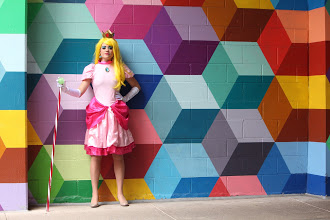
Toy stores and department store aisles are decked with pink and purple princess paraphernalia. Disney has provided an array of princesses for little girls to choose their birthday party or bedroom decor from. But as we all know, there’s a deeper secret hidden in the FAIRY TALES that high powered media execs have made their fortunes on: THE GODDESS.
Every hero’s tale, be it in video games or romantic movies sets out to do one thing: SAVE THE PRINCESS. When I was a child I saved Her myself on my little Nintendo system never knowing why She was in trouble in the first place. And was I the only one who ever wondered why NONE of the PRINCESSES HAD MOTHERS!?
In the early Centuries during the Christianization of Europe, Pagans (which means “people of the land”) hid truths right under the nose of the newly forming Christian Church in their folklore, games and children’s rhymes to avoid being burnt at the stake. These simple people tried to covertly keep the Wisdom of the Sacred Feminine that they’d been honoring since the beginning of time, ALIVE.
The symbol of the Goddess is as old as human history. The most ancient images of the Goddesses from the Paleolithic era are neither pregnant nor holding a child. In Neolithic Old Europe the Goddess was most commonly linked with birds or snakes and only rarely portrayed as mother. Yet we tend to equate the Goddess with the Mother Goddess. I suspect that images of the Virgin Mary with Jesus on her lap and prayers to God as Father have fused in our minds, leading us to think that the Goddess must be a Mother Goddess and primarily a Mother.
In a recent blog, Christy Croft reminded us that in our culture, women’s experiences of mothering and motherhood are not always positive:
[The mother] doesn’t always appear in our stories in simple or easy ways. Some of us mother children we did not or could not grow in our bodies; some of us birth babies who are now mothered by others. Some of us are not mothers at all. Some of us had mothers who could not love us unconditionally, or did not have mothers in our lives, or had mothers who brought us more pain and humiliation than comfort, from whose effects we are still recovering, are still healing.
We, Goddess types, are getting ready to celebrate Imbolc, beginning on the evening on February 1st through the following day, until dusk. Many ask, “well, just what is Imbolc?”
To give you a quick etymology …. From Old Irish it means “in the belly” referring to the pregnancy of ewes. It might also mean “to wash or cleanse oneself” and finally, perhaps, “budding.”
The easiest way for me to understand it is in remembering when I carried each of my children “in the belly.” There was this magical moment when I felt them move for the very first time. This is an event called “quickening,” a stirring of the unborn child in the womb. Every woman who has given birth, remembers this moment with her child. Continue reading “A Time to Make New by Deanne Quarrie”



 I’m sitting on my meditation pillow for the thousandth time searching for clarity. Initially, going within feels like traversing a jungle; swinging from one thought branch to another. I’m itching for some peace and I’m almost certain this isn’t the way to it. But, I’ve been here before and I won’t quit breathing through the discomfort. I know I will greet the inner goddess soon enough. Getting past the noise is part of accessing her wisdom. The noise teaches me discernment (if I allow it to).
 In their purest form, “egalitarian matriarchies” place the mother principle at the center of culture and society. Their highest values are the love, care, and generosity they associate with motherhood. These values are not limited to women and girls. Boys and men are also encouraged to honor mothers above all, to practice the traits of love, care, and generosity, and to value them in others.

 If I had been asked to write the words that introduce visitors to the
 The symbol of the Goddess is as old as human history. The most ancient images of the Goddesses from the Paleolithic era are neither pregnant nor holding a child. In Neolithic Old Europe the Goddess was most commonly linked with birds or snakes and only rarely portrayed as mother. Yet we tend to equate the Goddess with the Mother Goddess. I suspect that images of the Virgin Mary with Jesus on her lap and prayers to God as Father have fused in our minds, leading us to think that the Goddess must be a Mother Goddess and primarily a Mother.
 We, Goddess types, are getting ready to celebrate Imbolc, beginning on the evening on February 1st through the following day, until dusk. Many ask, “well, just what is Imbolc?”
