

 There is significant historical scholarship demonstrating that women’s public lives were coming under increasing restriction during the first few hundred years of Islam. Despite the differing modes of analyses and conclusions of such scholarship, there seems to be agreement that the Qur’an, Hadith, legal, and biographical literature advocate for increasingly restricted public social and religious engagement for women.
While piety and Sufi literature may have called for and depicted women in seclusion, in practical terms, the available historical sources suggest that women’s “secular” public activities–such as manual labor, buying and selling, teaching, and socializing–could not be controlled. Likewise unofficial religious activity such as pious and Sufi men and women visiting each other, attending mixed-gender gatherings, and, in some extreme cases, women setting up camp at the Kaaba or even preaching in the streets was not uncommon. Continue reading “Reconstructions of the Past 2: Hafsa bint Sirin (“Women’s Mosque Attendance”) by Laury Silvers”

 Does Islam need a reformation? The ever-controversial Ayaan Hirsi Ali’s new book
  How much longer do I as a Muslim American female, have to deal with the “gang-buster,” terrorizing, “Satan” worshipers high-jacking my faith for the sake of trying to supposedly ‘preserve’ it? Who are these wackos and why do they seem to represent my faith in mainstream media? Where did they all come from? Which terrorist schools have they all graduated from and what truly is their agenda?
 My father always encouraged us to interpret scripture for ourselves. We read text, learned mainstream interpretations, and then he would ask for our authentic self-generated interpretations delivered in the form of book and chapter reports due to him. Growing up, all prayers and supplications were done in English; my parents wanted us to really understand and synthesize rather than simply memorize Arabic words with a generic sense of what we were reading or reciting.
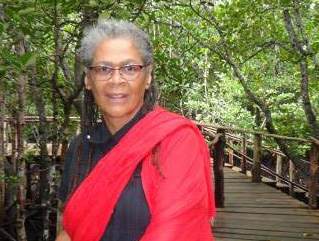 This weekend those of us not performing the ritual pilgrimage, or Hajj, will enjoy the Festival of the Sacrifice of Eid al-Adha. Celebrated on the 10th day of the 12th lunar calendar month, it tends to creep up without warning, since we operate on the solar Gregorian calendar. The next day I jump a plane to Southeast Asia so my attention is already diverted.


 Feminism and Religion