The Czech Tradition of Čarodějnice (Witches).

This post is a follow-up, in a way, to the post I published here on September 11, 2016, entitled “Continuing Pre-Christian Traditions in the Czech Republic,” and will be a combination photo essay* and elaboration on one of the rituals mentioned in that first post.  On April 30th, I was in the small village where my partner’s family has their summer house.  Yes, that same village that has inspired posts like this.  There, we celebrated Čarodějnice, or Witches. This holiday seems to be related to what is called May Day or Beltane in other countries. What is unique about this tradition isn’t necessarily the májka (May Pole) although it is different than other places May Pole, but the burning of the witch.

Throughout the day, everything is gendered.  The women and girls have certain tasks; the men and boys have too.  The women and girls create and decorate.  First, they create a witch to be burned on a large bonfire; the construction and shape of both can vary.  After creating the witch, the women and girls (although it should be virgins – but no one really follows that tradition) decorate the top of a cut-down, very tall pine tree with strips of brightly colored fabric and crepe paper, tying them on to create what will become vertical streamers blowing in the wind, thus creating what is called a májka.  

Continue reading “The Czech Tradition of Čarodějnice (Witches).”


From the Archives:“Vaginas are Everywhere!”: The Power of the Female Reproductive System by John Erickson

Moderator’s note: This marvelous FAR site has been running for 10 years and has had more than 3,600 posts in that time. There are so many treasures that have been posted in this decade that they tend to get lost in the archives. We are beginning this column so that we can all revisit some of these gems. Today’s blogpost was originally posted June 19, 2012. You can visit it to see the original comments here.

I have a beautiful picture of vagina hanging on my wall.  However, for the longest time it was in the back of my closet, with a plastic bag covering it.  I wasn’t ashamed of it but my ex-boyfriend, like most gay men, refused to have it on the wall where he could see it.  He is now long gone; the vagina is now out and proud.

I bid on the picture one fall during a showing of the Vagina Monologues at Claremont School of Theology.  One of my best friends was in the show and I had always loved its powerful message.  I walked out of the theatre, waiting for my friend, and there it was: the picture of the vagina.  I found myself caught up in its beauty.  Its gaze had mesmerized me.  The outlying layers of red, the contours of its shape, they all began to mold into a figure before my eyes.  While I have never thought of myself as a religious person, I realized that at that moment I was no longer looking the old photo but rather I was staring at the outline of the Virgin Mary.  At that moment, I realized that I had to have the picture.

Continue reading “From the Archives:“Vaginas are Everywhere!”: The Power of the Female Reproductive System by John Erickson”

Shofetim: The Divine Feminine, Magic, and the Role of Gender by Ivy Helman.

This post is dedicated to Carol P. Christ. I knew her first as my professor and then my friend for over 15 years. May her memory be a blessing.

This week’s Torah portion is Shofetim (also spelled Shoftim), or Deutoronomy 16:18-21:9.  I have written about this parshah before.   In that post from August of 2018, I reflect on how the patriarchal elements of the portion should not detract from its larger concern for justice, compassion, and peace. Yet, there is more to the parshah.  In fact, I have recently begun exploring Judaism’s connection to all things magical, and interestingly enough, this parshah fits right into my recent inquiries.   Let me share with you some of what I have learned as it relates to this parshah.  

Where Shofetim and magic meet is idolatry.  There are three instances in Shofetim where idolatry is condemned, punished by stoning to death.  All three of these prohibitions involve polytheism, either directly worshiping other deities or participating in practices associated with the worship of those deities.  What are they?

Continue reading “Shofetim: The Divine Feminine, Magic, and the Role of Gender by Ivy Helman.”

The Elusive Patriarchy by Oxana Poberejnaia

oxanaThe sense of separate personal identity is elusive. It is difficult to observe, find and bring to the surface of consciousness where, according to Buddhist beliefs, it dissipates naturally, like a bubble of foam popping. In the same way patriarchy is entrenched in so many different ways and on so many different levels in society that it is as difficult to reach out to it and weed it.
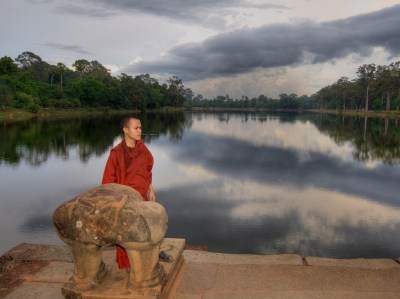
tharavadamonkThere is a Sutta in Theravadin Canon called “Khemaka Sutta” (About Khemaka). The main character in the Sutta, Buddhist monk Khemaka explains his understanding of the “lingering residual ‘I am’ conceit, an ‘I am’ desire, an ‘I am’ obsession.” Khemaka says that it is as difficult to capture and wash away as the remaining scents in clothes that have been washed over and over again.

In Western psychology, there is a notion of catharsis: allowing one self to experience previously repressed emotions. For instance, ancient Greek tragedies like Oedipus are seen as these psychological journeys for the audience. The spectators initially refuse to admit they have certain forbidden impulses. However, through empathising with the protagonist they unwittingly allow themselves to experience those. Healing happens as a result.

Continue reading “The Elusive Patriarchy by Oxana Poberejnaia”

The Purity Complex: Are Men Really Less Affected Than Women? by Andreea Nica

Andreea Nica, pentecostalismWomen’s bodies continue to receive an inexhaustible amount of attention. As a society, we have glorified, scrutinized, degraded, hypersexualized, underrepresented, and misunderstood the female body. Purity culture has orchestrated a movement around the management, perception, and regulation of women’s bodies. As a former Pentecostalist, I grew up knowing there was more focus on my body versus those of my  brothers in Christ. There was a bodily divergence between men and women that I did not fully comprehend but felt obligated to adhere to; the ideological basis of this difference was filled with much ambiguity.

Each time the church organized a sexual purity event and/or discussion, boys and girls were unfailingly segregated. I was always so curious about what was discussed in the boy’s group so I would ask my brother, Christian boyfriend, and male friends at the church to fill me in on the gossip. In my teens, I didn’t know how to perceive the information relayed to me. Looking back now, I am surprised at the discourse around purity culture and masculinity in the church. During my earlier years at college, I convened with the male pastoral leadership, and they confirmed the following main themes taught to men during sexual purity discussions. Continue reading “The Purity Complex: Are Men Really Less Affected Than Women? by Andreea Nica”

The Hot Seat by John Erickson

Being a man in feminism isn’t easy and that’s how it is supposed to be.

men_feminist_mainI’ve been thinking a lot about what it means to be a male feminist lately.  As the only man to be a permanent blogger on this very site until my colleague and friend Kile Jones came on board, I took my role, as a man in a traditional feminist (online) space very seriously.  Although the ongoing struggle to be a male feminist is one continually wrought with dialogues about power and positionality (amongst a host of many other topics), I am often conflicted when I see male feminists take advantage and destroy the hard work that many, specifically on this site and beyond, worked hard to build and defend.

Not wanting to reopen old wounds or start new online battles, men have been involved in feminism for quite some time.  From James Mott chairing the first women’s rights convention, to radical feminist Andrea Dworkin’s life partner John Stoltenberg, to Michael Kimmel and Michael Kaufman’s life long work to legitimize not only men in feminism but also what it means to be a man who works for gender equality, being a man in feminism isn’t easy and that’s how it is supposed to be. Continue reading “The Hot Seat by John Erickson”

To Have and to Hold: Gay Marriage and the Religion Question

If a conservative religious traditions can’t give their mothers or sisters full equality, how can we expect them to give a GLBT individual the time of day?

John Erickson, sports, coming out.Outrage.  Anger.  Fear.  Hatred.  These are just a few of the words that flashed across my Twitter feed as I woke up on that fateful Wednesday, June 26 morning when the Supreme Court of the United States ruled that the Defense of Marriage Act (or DOMA) was unconstitutional and that supporters of Proposition 8, the hotly contested voter initiative in California that banned same-sex marriage, had no standing.   People were mad.  However, it wasn’t just the typical kind of mad that is associated with hatred, it was a type gay_marriage_81102178_620x350of mad that was met with impossible anguish because what I was reading and feeling was a result of one thing: there was nothing more they could do.

What does all this mean?  Questions from friends and family were filling up my inbox and although I wanted to take a moment to just hit “Reply All,” and input the words: Equality, I had to hold back and start to examine the notion that although equality may now be firmly on the proverbial table, there is still a lot of work to be done, specifically for gay marriage and those wanting to marrying inside the traditional church spaces they grew up in and not just the ones that have come out as open and affirming in recent years towards LGBT individuals. Continue reading “To Have and to Hold: Gay Marriage and the Religion Question”

God Doesn’t Live Here Anymore: Gay Bars and the Growing Divide Between Sexuality and Spirituality by John Erickson

oes God exist within the LGBTQ community anymore or has the community itself abandoned God for all-night raves, dance clubs, alcohol, and hypersexualized and over commoditized fetishized forms of femininity and masculinity? Oftentimes, I find myself answering yes to the above questions. After surviving hate crime after hate crime and endless batches of newly elected conservative politicians hell bent on ignoring medical and social epidemic plaguing the very country they were elected to serve and protect, why would a community, oftentimes linked to sin itself, believe in a holy entity?

John Erickson, sports, coming out.My good friend and fellow Feminism and Religion Contributor Marie Cartier’s forthcoming book, Baby You Are My Religion: Women, Gay Bars, and Theology Before Stonewall argues that American butch-femme bar culture of the mid-20th Century should be interpreted as a sacred space.  Specifically, gay bars served as both communal and spiritual gathering spaces where butch-femme women were able to discover and explore not only their sexuality but also their spirituality.  An opus of an academic accomplishment based off of the amount of in-depth interviews she conducted, Professor Cartier explores lived religion in an area that has become all too common within the LGBTQ community: the bar

The Palms, the last local and only lesbian bar to be found in city of West Hollywood, CA is closing its doors and I can’t help but wonder where its patrons or parishioners will now go? Continue reading “God Doesn’t Live Here Anymore: Gay Bars and the Growing Divide Between Sexuality and Spirituality by John Erickson”

Thanks for Coming (Out): Sexuality, Sports, and Spirituality by John Erickson

I have to be honest, Jason Collins’ admission that he was a homosexual, albeit brave, upset me. While coming out is an completely unique experience to every individual that does it, Jason Collins’ story was just another example of the rampant sexist and heteropatriarachal world that privileges male bodies and sexualities over women’s similar experiences. While I applaud Jason’s story and it’s timing, the first thing I asked to my colleagues was: Where was the hubbub over Sheryl Swoopes or Martina Navratilova?

John Erickson, sports, coming out. Like marking off items on a proverbial checklist, closeted LGBTQ individuals who exist within and outside of the world of professional sports, can recount the numerous things they struggle with in terms of their sexuality.  From fearing of the actual coming out process, dressing in their car or at home to avoid the subtle glances and whispers of individuals in the locker room, to wondering what coming out would mean not only for their game but also for their social and, if they choose, spiritual lives, closeted and out LGBTQ individuals within the multi-billion dollar professional sports industry must grapple with that age old question: what does it mean to be gay and open about it?

The Locker Room

I have to be honest, Jason Collins’ admission that he is a homosexual, albeit brave, upset me.  While I understand that coming out is an completely unique experience to every individual who does it, for me Jason Collins’ story was also an example of the rampant sexist and heteropatriarachal world that privileges male bodies and sexualities over those of women.  While I applaud Jason’s story and the timing, the first thing I asked to my colleagues was: where was the same hubbub over Sheryl Swoopes or Martina Navratilova? Continue reading “Thanks for Coming (Out): Sexuality, Sports, and Spirituality by John Erickson”

The Roman Catholic Theology of Womanhood by Ivy Helman

The Vatican has creIvy Helmanated an entire theology of womanhood without the input of a single woman!  Searching the Vatican archives reveals a wide range of documents pertaining to women, some of which mention women tersely only in their capacity as workers needing protection (Rerum novarum, 1891) and others are fully dedicated to describing the status, role and mission of women in the family, society and the world (Mulieris dignitatem, 1988).  Within the documents, as time passes, women become their own category of theological importance.  This is due to the influence of feminism on the status and roles of women across the globe.  Yet, there is vehement anti-feminism in the documents as well.

I searched the documents myself, curious as to what the Vatican had to say about womanhood and wrote a book on the topic published by Orbis in Febrary 2012 entitled, Women and the Vatican: An Explanation of Official Documents.  I would like to lay out that theology now.  Continue reading “The Roman Catholic Theology of Womanhood by Ivy Helman”