Pedukei: A Complex Interplay of Human, Divine, and Nature.


The Torah portion for March 29, 2025 was Pekudei.  Quite often this parshah is read with Vayakhel.  In fact, I have written about the double parshah Vayakhel-Pekudei before, but focused on only Vayakhel.  Now, it is Pekudei’s turn.  

Like parshot Vayakhel and Terumah as well as other parts of the book of Exodus, Pekudei focuses on haMishkan, the Tent of Meeting or Tabernacle.  We read about calculations concerning the costs of the constructions, instructions for the high priest’s garb, ritual washing of hands and feet, when to construct and when to deconstruct the traveling tent, and the divine presence as cloud and fire.  In Pekudei, we have no mention of women and no mention of any Israelite men barring the religious elite: Moses, Aaron, and Aaron’s sons.  Therefore, in this commentary, I want to discuss contradictions in the text that speak to (1) a consistent divine presence that seems to argue against animal sacrifices and (2) the ways in which the natural world and Israelite religion went hand-in-hand.

Continue reading “Pedukei: A Complex Interplay of Human, Divine, and Nature.”

On Terumah: (Eco)Feminist Reflections on the Tent of Meeting.

The Torah portion for March 1, 2025 is Terumah, consisting of Exodus 25:1-27:19. Terumah in Hebrew means contribution, and the parshah begins with the deity requesting donations from the willing hearts of men (yes, only men) of precious metals and stones as well as dyes, linens, wools, and skins.  Terumah then provides the instructions for how to build the Tent of Meeting and all of its components.  In this post, I want to focus on four aspects of the post from the perspective of ecofeminism and feminism: beauty; the misuse of nature, the concept of home, and the indwelling or immanence of the divine.

Continue reading “On Terumah: (Eco)Feminist Reflections on the Tent of Meeting.”

The Grandfathers, part 2 by Sara Wright

Yesterday’s post which you can read here, ended with this line from the Grandfather, “The young people will become confused and when all is finally lost then the Creator will return to restore not just the Tewa but all tribal peoples to the land.”

I experienced wild hope surfacing… I had heard words to this effect before but assumed that the people needed that story to go on. Suddenly I wasn’t so sure… something about the way this man talked to me made me believe him. He exuded a complex sense of deep humility, knowledge and authority. I thought about the ravages of Climate Change and the disgusting cross-cultural belief that the Earth’s job was to serve humanity. My rational brain went on overload giving me a thousand reasons why what he predicted couldn’t be true, almost as if it needed to win this round (ah, Patriarchy exposes itself – if you don’t win you lose). Yes, it was true that we were in a state of breakdown… he didn’t deny it but he also made it clear that this was not the end. First we had to survive the breakdown, and living through it is a challenge that some like me live with every day. These are dark times.

Continue reading “The Grandfathers, part 2 by Sara Wright”

From the Archives: Tree of Life: The Festival of the Trees in an Age of Treefall by Jill Hammer

This was originally posted on January 22, 2019

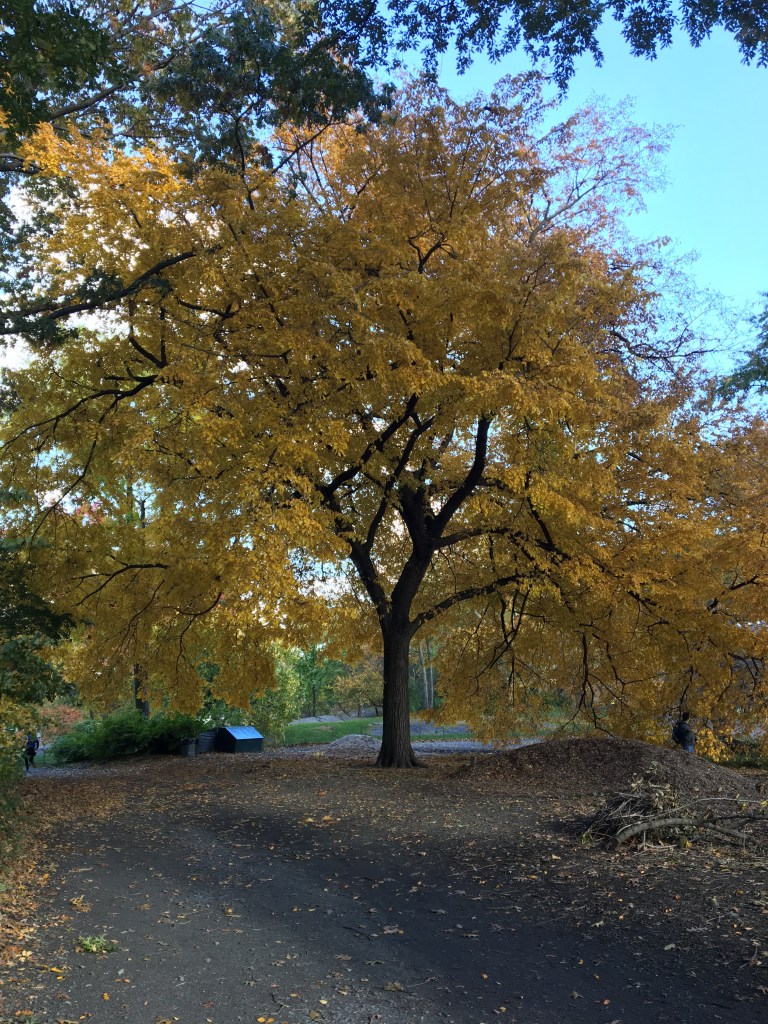
Almost every day, I walk in Central Park.  There are certain trees there I’ve come to know: the gnarled cherry trees by the reservoir, the bending willows and tall bald cypress by the pond, the sycamores that drop their bark each summer, the hawthorn not far from Central Park West.  Lately I’ve been taking photos of the trees to try to capture their essence, their posture in the world.  The trees around me feel like friends, which is what an ancient midrash (interpretation/legend) called Genesis Rabbah says about trees: that they are friends to humankind.  To me, they’ve always been a central manifestation of Mother Earth.

Currently, the national parks in the United States have no staff because of the government shutdown. Some people have taken the opportunity to cut down the rare and endangered Joshua trees in the Joshua Tree National Park—just for fun, I guess, or as a trophy of some kind.  Meanwhile, President Bolsonaro of Brazil recently has indicted that he wants to remove protection for the rainforest, in order to allow development.  It appears that my friends the trees have enemies.  Sometimes the enmity is for personal/corporate gain, and sometimes the enmity seems to have no reason at all.

Continue reading “From the Archives: Tree of Life: The Festival of the Trees in an Age of Treefall by Jill Hammer”

The Story of Changing Woman, part 2 by Sara Wright

Part 1 was posted December 7th. You can read it here.

Commentary:

I love this story because it demonstrates the evolutionary and eternal nature of Woman; her intimate relationship to Nature, her ability to give birth, to mother, to let go, her ability to endure, her need for animals and plants as companions and her willingness to stand her ground until she is able to get what she needs. Changing Woman matures from a passive figure who is acted upon by the forces of Nature into a self-directed female power who knows what she wants, and one who finds peace in choosing relationships with animals, plants and humans on her own terms.

Initially, Changing Woman is impregnated by the wind – the power of the spirit moving across the land – and not through sexual intercourse. Spirit and the Body of the Earth are the two equally creative aspects involved in her birth. The same holds true for her children, who are male, but conceived and birthed in a similar manner without the need for male insemination (no room for Patriarchy to enter here), suggesting to me that all three are parts of one spiritual/bodily whole that cannot be separated. As creative principles (beyond gender stereotypes) they work together as a triad to rid the world of monsters, to make the Navajo world a safe place, and to secure the matrilineal line. According to Navajo mythology securing the matrilineal line is primarily how Changing Woman saves the world.

Continue reading “The Story of Changing Woman, part 2 by Sara Wright”

Witch Power? part 2 by Sara Wright

You can read part 1 here

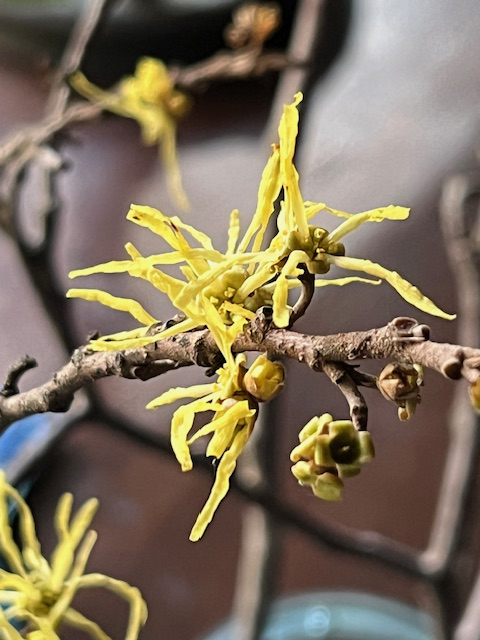
Witch hazel flower

After being nailed as a witch I separated myself from the word and witch power in general. The word witch had a very dark side and could be used in the same frightening manner as it had been during medieval times to label and to expel any woman who lived on the edge (source of my original sense of unease). Especially one who lived alone in the woods and loved animals like I did.

 Why had I been singled out? I was an outsider whose crime was to animate nature. Anything associated with nature was suspect if not ‘evil’.

 Feminists beware. If you claim to be a witch – recall that the word is loaded. Personally, I think the label has backfired reducing our overall power as women. Perhaps making us more suspect than we already are.

Continue reading “Witch Power? part 2 by Sara Wright”

On Noach and its Ecofeminist Potential.

The Torah portion for November 2, 2024 is Noach.  The portion includes the stories of Noah’s ark and the tower of Babel and ends with Abraham and Sarai settling in the land of Canaan.  In my feminist analysis of Noach, I will focus on the ecofeminist potential of divine acknowledgements and how the divine is portrayed.

As ecofeminists at the intersection with religion, one task we have is to interpret those sacred texts which have something to say about nature and animals.  Within Judaism, there are numerous such texts, and parshah Noah is one of them.  Afterall, most of Noach revolves around a great flood in which the deity destroys the earth and most of its inhabitants, animal and human.  

The divine destruction of the material realm is problematic.  The deity blames the divine decision to destroy creation on the rampant corruption of the flesh: human and animal alike (6:13).  In feminist thinking, linking material existence to corruption is unsettling since patriarchy often disavows material existence by linking it to evil.  In addition, in Noach, an aspect of the material world, water, is used in bringing about that destruction.  However, water is also ironically what all flesh depends on for life.    

Continue reading “On Noach and its Ecofeminist Potential.”

On Persephone and the Racetrack: My Experience at Lake Pergusa.

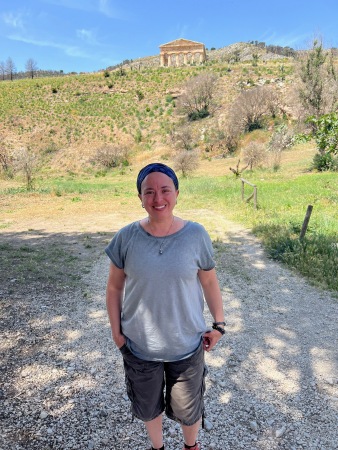
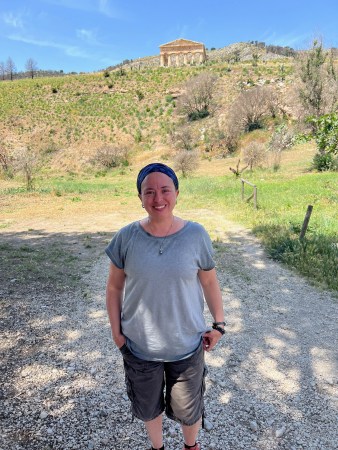
At the Segesta temple.

This May, I visited Sicily to present at the European Academy of Religion’s Annual Meeting. There I saw various historic, religious sites: parts of the city of Siracusa; the Valley of the Temples in Agrigento; mikvot in Palermo; various churches including the Cathedral in Palermo and the Church of St. Cataldo; the Segesta temple; and lake Pergusa where Hades emerges from the land to abduct Persephone. In this blog, I will focus on this lake. As an ecofeminist focusing on religion, this place gave me mixed feelings.

Continue reading “On Persephone and the Racetrack: My Experience at Lake Pergusa.”

Gift From the Beyond, part 2 by Sara Wright

Part 1 was posted yesterday

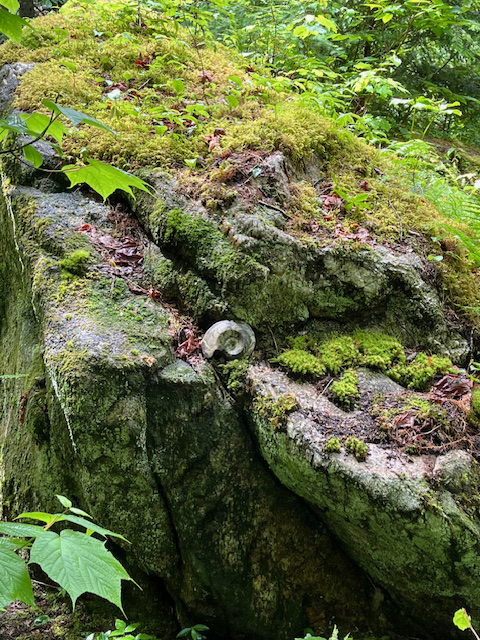
Trillium Rock

My friend Lise sent me some words on the eve of Davey’s birthday (unbeknown to me until the 6th) that reminded me of how often I spoke to him during those months.

“The reason I pray to the dead is I trust their timing. They have all the time in the world, after all, and they also see the big picture and the long story. I pray to the dead because, I admit, how little I know, how little I can understand, and how vast the mystery is of the soul.

Let me circle myself with the living who can hold both, with the dead who can hold it all. We are entangled souls…. We are all praying together, with the flowers, the trees, with all that is.” (I substitute talk for pray because that is what I do)

Continue reading “Gift From the Beyond, part 2 by Sara Wright”

Gift From the Beyond, part 1 by Sara Wright

The words came unbidden “go outdoors”. It was dark but I felt my way to the door. I always listen when Nature calls.

Trillime

I had just re -membered that Davey’s birthday was the next day. ‘Happy birthday Beloved’. My little brother would have been 75. I calculated the years with difficulty imagining what it would have been like if he had lived…

Dead at 21 from a self – inflicted gunshot wound, part of me died with my Gemini Twin. I failed him at the end, turning into a parent who was incapable of being emotionally present to listen to a young boy on the verge of adulthood at a time of desperate need. Instead, I parroted my parents’ script, not having developed one of my own…

”You have everything to live for,” I screamed when Davey tried to tell me that he was tired of living.

I no longer blame myself for my inadequacy, but regrets linger on just the same.

It would be eleven years before I was able to begin grieving. Catapulted out of my body at the time of my brother’s death I felt nothing for years as I self- medicated with alcohol and a dreary round of boyfriends while being unable to be emotionally present for my own young children. To feel one must inhabit a body but mine was overflowing with anguish and abandonment. Too dangerous to go there. Isolated and alone, I huddled in my house in silent torment, an absentee mother following the parental script with children of my own.

Continue reading “Gift From the Beyond, part 1 by Sara Wright”