We live in a dystopia. This world is filled to the brim in dichotomies: poverty and extreme excess, hunger and mountains of food, disease and cutting-edge medicine, materialism and an immense environmental crisis, and hour-long walks for water and hour-long luxurious baths. There are so many parts of our world that are not just unfair, unequal, broken and undesirable, but violent, traumatic and deadly. And, sometimes it feels like it is only getting worse, or at least, again teetering on the edge of yet another catastrophe.
Most of the world’s religious traditions agree that this is not the way the world should be. My own religious tradition, Judaism, traces this separation between the Creator’s utopia, the Garden of Eden, and our current situation all the way back to the beginning of humankind. The actions of the first two humans resulted in exile from the Garden: enter the world diametrically opposed: dystopia. Nonetheless, the Jewish religious tradition’s call for tikkun olam (repairing the world) suggests that it is possible to lift the veil between the Divine and us and consequently recreate the utopian Eden once again. One could say it is why we are here.
That being said, while the dystopian genre has been around for many decades, I have noticed a recent rise in the popularity of dystopian fiction. While I have always had a keen interest in science fiction, from Star Trek to FireFly and beyond, I myself have, as of late, become an avid reader of dystopian novels. I blasted through the Divergent series by Veronica Roth, have reread The Fifth Sacred Thing by Starhawk more times than I can count and just began my dip (25 pages) into The Mandibles by Lionel Shriver – not so action-packed as the others. I’ve also been, one could say, addicted to dystopian films (yes many were books first) like The Hunger Games, Maze Runner, Gattaca, The Fifth Element and Serenity to name just a few.
Pelišky was one of the first movies I watched in the Czech Republic. It takes place in the year (maybe years) before the Soviet Occupation. It follows the lives and struggles of ordinary families. One of the best and funniest scenes takes place at a small post-wedding dinner. The couple receives some new-fangled plastic spoons as a wedding present. The gift-giver is very proud of the fact that they were made in Eastern Germany. One of the characters stirs her tea with the spoon and is about to lick it but as she takes it out of the hot tea it bends as if it was made of rubber. Soon the scene dissolves into arguments, frustrations and disappointments.
The White House Summit on Women was held this week on Tuesday, June 14, 2016 and it was a great privilege to be among those invited to participate in this inaugural event. There was an incredible line up of speakers and so much was shared. It proved to be an overwhelming day – in a very good way. Topics addressed included violence against women, economic empowerment, and education. In addition to the main event, there were breakout sessions on a myriad of topics presented by the most preeminent authorities in their fields. I walked away from the day with a sense of urgency to find news ways to engage gender issues and social policy. However, I also wondered how to bring religion into the dialogue and give greater attention to its impact on women’s issues in the US. Continue reading “Religion and the #StateofWomen by Gina Messina”
Religion. As a species we can’t seem to live with it or without it. There is dispute about the derivation of the word, but some scholars believe it has the same root as the word ligament, ligare, to bind or tie, to reinforce the bonds between human and divine, or perhaps the bonds between believers. The words bond and bind also have a variety of meanings and connotations. A bond can be used to tie someone up; it can be a bond of kinship, or bond given as surety.
Religion’s impulses and manifestations are just as ambiguous. Did religion arise because the world seemed so beyond human control (weather, health of crops, availability of game)? Perhaps there were gods or spirits to appeal to or propitiate? Or did it arise equally from a sense of gratitudefor the earth and seas that feed us, for a sky that dazzles us, for the life that flows through us and surrounds us. Song, dance, storytelling, drama, art likely began as religious or ritual expression. No aspect of life was beyond the sacred. And so religion also went into the business of law, social control. Religion has a long, bloody, ongoing history of occasioning and/or justifying war, oppression, persecution, torture, genocide.
Was religious expression ever purely benign? Were humans? Perhaps when we were still small bands of hunter-gatherers or when we lived in matriarchal, matrilineal cultures where men did not feel obliged to control women (or each other) to ensure the perpetuation of their own DNA. There are benign tenets in most religions still—food as something to share, the stranger as someone to welcome. Birth and death and all the phases of life as a time to gather in community to celebrate or mourn. The call to respond to infirmity, grief and suffering with compassion and to injustice with bravery and truth.
I titled this piece “And no religion, too” after a line from John Lennon’s song “Imagine.” Maybe I am struck by that line, because my life and work have been dominated by religion, literally since birth. My mother’s labor was induced to accommodate my curate father’s schedule. One of my earliest memories, age three, is of plotting to kill God and Jesus. Other childhood memories include being terrified that I would go to prison or hell for trespassing on the property next door. (From the Episcopal version of the Lord’s prayer, I knew trespass meant sin.) I also remember a skirmish with the Roman Catholic kids down the street who used to be my best friends until we went to different schools. A backyard holy war.
As I grew up, I repressed my deicidal tendencies and remained a creed-saying Christian until my mid-twenties when I began to participate in the silent worship of The Religious Society of Friends (Quakers). Later an encounter with the goddess called me to join with others in creating earth-centered ritual at High Valley, a center I directed for eighteen years. During that time, I also became an ordained interfaith minister and counselor. All my life I have been writing novels that ponder religious questions, starting with The Wild Mother, a reimagining of the Garden of Eden story. For twenty years I worked on The Maeve Chronicles, novels from the point of view of a Celtic Magdalen who remains an unconverted pagan. My latest novel, Murder at the Rummage Sale, is set in the church of my childhood. Clearly I am still working with my primary material.
Yet I don’t know that I have a religion any more. I am still friends with my co-celebrants. We meet in a variety of contexts. But for the first time in my life I am not part of a religious community. No doubt I have beliefs, but I have no belief system. As I struggle to write this post, it dawns on me that it is my own life without religion that I am trying to imagine.
To speak ones truth is oftentimes a difficult and nearly impossible act. However, to live one’s truth, on a day-to-day basis, is an aspect of life that has become so foreign to individuals who have become so comfortable in their own skin that I fear the activist and social justice roots that we all claim to hail from have fallen at the wayside and been replaced by complacency and reductionism.
I’m deeply troubled by some of the anti-trans and anti-queer commentary that has been taking place on some of the comments on this blog in recent months. I’ll never forget when this project first began—talking with the founders about its original purpose: to bring the “F” word back into the mainstream religious discourse and more importantly, to be a place where scholars, young and old, senior or junior, could write, collaborate and eventually converse with across cyberspace.
However, in recent months, I’ve found myself being more of a watchdog rather than a frequent commentator on issues pertaining to feminist religious discourse. I’ve found myself reading comments about issues I may not frankly identify or agree with just to make sure that the cisgendering or anti-trans narratives do not become symbolic of what this blog is now rather than what was supposed to be at the beginning.
When I sat down to write my very first post I was scared. I was terrified that feminists from all communities would see me only as I appeared and not for whom I actually was. I was afraid that all I had worked for throughout my life would be moot with the first bad comment on one of my posts. While all of those fears were real and valid they quickly faded away as I was embraced by this community and many others for my passion rather than my gender; my life’s work rather than my privilege; and more importantly, the personal mission to make the world a safer and better place for women and girls everywhere.
To speak ones truth is oftentimes a difficult and nearly impossible act. However, to live one’s truth, on a day-to-day basis, is an aspect of life that has become so foreign to individuals who have become so comfortable in their own skin that I fear the activist and social justice roots that we all claim to hail from have fallen at the wayside and been replaced by complacency and reductionism.
Caitlyn Jenner’s story is one that many individuals, often not highlighted on this blog, know all too well. Caitlyn Jenner’s story and personal experiences are valid and for members of the feminist community to refer to her as not “feminist” or merely as a man “masquerading” as a woman while still utilizing his privilege from being biologically born as a man is troubling and the root of the problem facing many trans individuals today when they’re negotiating coming out as their true selves.
Trans individuals face a cadre of other horrible social, physical and mental statistics that oftentimes lead them to be more likely to self-harm. However, as feminists, isn’t it our job to make sure that all groups have access to the same freedoms rather than working towards denying it for certain groups while trolling the comments sections of posts?
Shakespeare said: “To thine own self be true” and for those of us who identify with the Golden Rule, if we no longer treat others as we would like to treat ourselves, then we really have failed as feminists; and if the comments on recent blogs are any indication, we still have a long way to go before all voices can feel welcomed not only on FAR but also in the world at-large.
John Erickson is a Ph.D. Candidate in American Religious History at Claremont Graduate University. He holds a MA in Women’s Studies in Religion; an MA in Applied Women’s Studies; and a BA in Women’s Literature and Women’s Studies. He is a Permanent Contributor to the blog Feminism and Religion, a Non-Fiction Reviewer for Lambda Literary, the leader in LGBT reviews, author interviews, opinions and news since 1989 and the Co-Chair of the Queer Studies in Religion section of the American Academy of Religion’s Western Region, the only regional section of the American Academy of Religion that is dedicated to the exploration of queer studies in religion and other relevant fields in the nation and the President of the University of Wisconsin Oshkosh’s LGBTQA+ Alumni Association. When he is not working on his dissertation, he can be found at West Hollywood City Hall where he is the Community Events Technician and works on policies and special events relating to women, gender, sexuality, and human rights issues that are sponsored or co-sponsored by the City of West Hollywood. He is the author of the blog From Wisconsin, with Love and can be followed on Twitter @JErickson85
In a repetitive culture of abuse and silence, is it really shocking to find out that an individual who preached such hate and discontent for others actually perpetuated other forms of heinous abuse against others?
In 2013, I wrote an article about the then latest reality TV scandal featuring A&E’s Duck Dynasty’s Phil Robertson and his rampant foot-in-mouth disease that caused him to express, in the pages of GQ, his true distaste for the LGBT community and specifically for the sexual proclivities of gay men.
Now, two years later in another reality TV show, TLC’s ’19 Kids and Counting’, it isn’t star Josh Duggar’s anti-LGBT statements getting him into trouble but rather his sexual assault and molestation of 5 girls, including two of his sisters. However, while the Internet explodes with attacks against Josh Duggar and his Quiverfull background, it is vital to remember that the silence that he and his family inflicted upon his victims since 2006 has not only been ongoing since then but is also being reemphasized today with each keystroke focusing on the assailant rather than the victims. Continue reading “The Religiosity of Silence by John Erickson”
We find our versions of home in these communities and it is within these spaces where our home not only begins to define who we are but we, as a reflection of that space, begin to outwardly redefine the spaces we exist in. If we slowly begin, through our experiences to shape our homes based on privilege and power without self-reflection and acknowledgment of others, then we are no better than those oppressive forces we say we’re against.
This post is a response to a recent blog entry titled “Who is Gender Queer?” on this site from Carol Christ. The post can be read by clicking here.I want to thank my friend, advocate, and upcoming scholar Martha Ovadia for reasons only she knows! Stay brave, speak up, be heard! _________________________________________
It is terrifying to know that something is wrong but not be able to speak truth to power.
It is even more terrifying to know something is wrong, be able to speak to it, and then silence those voices that do not have that same privilege, power, or position.
The struggle that many of us in positions of privilege and power face is not just that of being ostracizing and essentializing forces—it is that we, as allies, members of communities, or even those dedicated to a cause, can ourselves participate in the oppression we are fighting against and can do harm.
It’s taken me a long time to not only be comfortable with who I identify as, but also how I go about fighting and defining my life based on said identity and experience. However, the one thing that I have the ability to do is choose that identity more freely than others. Unlike Leelah Alcorn, Ash Haffner, Aniya Knee Parker, or Yaz’min Shancez pictured above, I did not have to face the types of oppressions they did, to which they sadly lost their lives, as a result of the fact that we exist in a society that can’t deal with the inability to leave things undefined or to allow people to define who they are on their own terms.
It is vital that although my lived experiences could never meet nor match the same types of oppression that these brave individuals had to face, I, as a white, cisgendered gay male, do not become part of their oppression through my own position and privilege.
As a man who exists in the world of feminism and within various women’s communities, I walk a daily tightrope of privilege and power to insure that I do not silence those that I consider allies, friends, mentors, or colleagues. As a man who exists in the world of the LGBTQ community, I walk an additional tightrope to additionally not take away from or diminish the experiences of those members of our community that do not have the same type of lived experiences as myself. Even within minority communities, there are positions of hierarchy and within these hierarchies of knowledge, identity, or power, comes a responsibility to insure that the oppressed do not become the oppressors.
We find our versions of home in these communities and it is within these spaces where our home not only begins to define who we are but we, as a reflection of that space, begin to outwardly redefine the spaces we exist in. If we slowly begin to shape our homes based on privilege and power without self-reflection and acknowledgment of others, then we are no better than those oppressive forces we say we’re against.
I can’t speak for what identity feels like –I can only speak for what essentializing does, and what it does is reflected in the deaths of Lelah, Ash, and the many others who die nameless. It is our responsibility, as allies, members of communities, and those fighting to end sexist, patriarchal, and, even now, homonormative oppression, to make sure that no more deaths occur on our watch or that truth is spoken to power even when power is masquerading around as truth.
John Erickson is a Ph.D. Candidate in American Religious History at Claremont Graduate University. He holds a MA in Women’s Studies in Religion; an MA in Applied Women’s Studies; and a BA in Women’s Literature and Women’s Studies. He is a Non-Fiction Reviewer for Lambda Literary, the leader in LGBT reviews, author interviews, opinions and news since 1989 and the Co-Chair of the Queer Studies in Religion section of the American Academy of Religion’s Western Region, the only regional section of the American Academy of Religion that is dedicated to the exploration of queer studies in religion and other relevant fields in the nation and the President of the University of Wisconsin Oshkosh’s LGBTQA+ Alumni Association. When he is not working on his dissertation, he can be found at West Hollywood City Hall where he is the Community Events Technician and works on policies and special events relating to women, gender, sexuality, and human rights issues that are sponsored or co-sponsored by the City of West Hollywood. He is the author of the blog From Wisconsin, with Love and can be followed on Twitter @JErickson85
Should women (or men) maintain a religious identity within a patriarchal tradition? Is it a feminist act to stay? Or is it only a feminist act to leave? These are questions that regularly surface in conversations related to religion and are often the center of dialogue here on Feminism and Religion.
I was formed by traditions. I was formed by religious rituals. I was a part of a religious community.
I no longer have traditions. I no longer have religious rituals. I am no longer part of a religious community.
I constantly have to tell myself the “no longers” when I feel the echos and ghosts of my past creeping up behind me, reminding me of not only who I was, but who I no longer am.
I sometimes whisper to my husband, “I sleep with ghosts…”
I do not just sleep with ghosts. I wake with ghosts. I sometimes even feel like a ghost. Why?
For me, the act of being Catholic was very much a part of my be-ing. To no longer have Catholicism as part of my be-ing leaves me feeling haunted.
My normal schedule when I was 21 looked like this:
6:00 am: Morning Prayer (Liturgy of the Hours) 7:oo am: Daily Mass, rosary 12:00 pm: Meet people at our church hall (the youth room) to then go to lunch (where we would do midday prayers before eating) 5 pm: sometimes mass again 7 pm: adoration, rosary, and then evening prayer with praise and worship
If it was Saturday or Sunday, it was even more intense (because I was not in classes).
When I was an active Catholic, I had a very distinct language for everything. I had a ritual for all occasions. I was an integral part of a community with very defined roles. I do not have these things anymore and navigating without them has been exhilarating but terrifying. Continue reading “I Look To The Sky by Martha Cecilia Ovadia”
The title of this post is meant to reflect where I am in the semester, temporally speaking: halfway. Actually, the idea that I am halfway is a bit of a shock to me, considering I feel like I just started! I have a goddess oracle card sitting on my desk that reads: “Blossoming: You are just getting started,” reminding me to be patient with myself as my work takes shape this semester. But seven of fifteen weeks in, I think its time to pull a new card.
When the word “halfway” popped into my head, though, I realized this is also a struggle I am having right now. I feel halfway—I answer “yes and no” to every emotional question. I sleep halfway, working even in my dreams. I am halfway okay: one week I am very down and the next, I feel just fine. And sitting on my patio this weekend, unable to sleep, I thought to myself: you are less than halfway full; and realized I that didn’t know what to do to fill myself up.


 We live in a dystopia. This world is filled to the brim in dichotomies: poverty and extreme excess, hunger and mountains of food, disease and cutting-edge medicine, materialism and an immense environmental crisis, and hour-long walks for water and hour-long luxurious baths. There are so many parts of our world that are not just unfair, unequal, broken and undesirable, but violent, traumatic and deadly. And, sometimes it feels like it is only getting worse, or at least, again teetering on the edge of yet another catastrophe.
 Pelišky was one of the first movies I watched in the Czech Republic. It takes place in the year (maybe years) before the Soviet Occupation. It follows the lives and struggles of ordinary families. One of the best and funniest scenes takes place at a small post-wedding dinner. The couple receives some new-fangled plastic spoons as a wedding present. The gift-giver is very proud of the fact that they were made in Eastern Germany. One of the characters stirs her tea with the spoon and is about to lick it but as she takes it out of the hot tea it bends as if it was made of rubber. Soon the scene dissolves into arguments, frustrations and disappointments.
 The White House Summit on Women was held this week on Tuesday, June 14, 2016 and it was a great privilege to be among those invited to participate in this inaugural event. There was an incredible line up of speakers and so much was shared. It proved to be an overwhelming day – in a very good way. Topics addressed included violence against women, economic empowerment, and education. In addition to the main event, there were breakout sessions on a myriad of topics presented by the most preeminent authorities in their fields. I walked away from the day with a sense of urgency to find news ways to engage gender issues and social policy. However, I also wondered how to bring religion into the dialogue and give greater attention to its impact on women’s issues in the US.
  Religion. As a species we can’t seem to live with it or without it. There is dispute about the derivation of the word,
 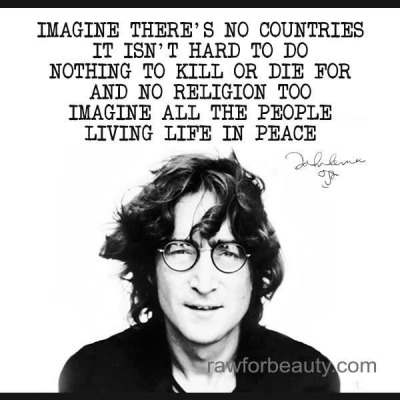 I titled this piece “And no religion, too” after a line from John Lennon’s song “Imagine.” Maybe I am struck by that line, because my life and work have been dominated by religion, literally since birth. My mother’s labor was induced to accommodate my curate fathe
 In 2013, I wrote an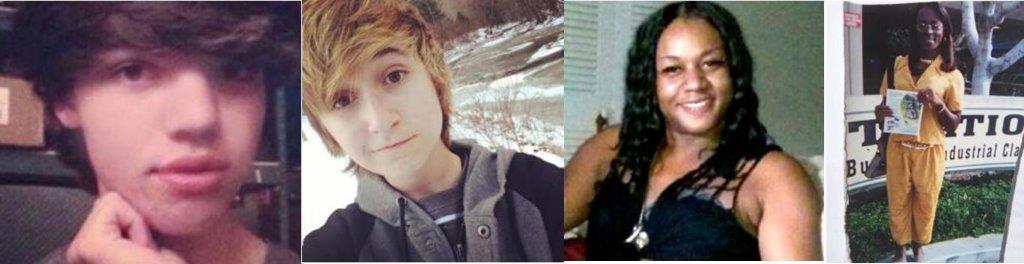

 The title of this post is meant to reflect where I am in the semester, temporally speaking: halfway. Actually, the idea that I am halfway is a bit of a shock to me, considering I feel like I just started! I have a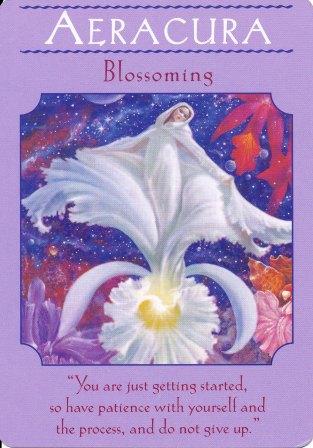
 Feminism and Religion