In the first part of this article, I looked at how Carol P Christ’s Nine Touchstones of Goddess Spirituality from Rebirth of the Goddess are related to traditional women’s ritual dances of the Balkans. After more than thirty years of researching and teaching these dances and the way that they pass on information in encoded symbolic ways, I have come to see them as an educational system, a women’s mystery school.[1] The main message which the dances convey is an ethic of community, partnership, mutual support, and other life-enhancing values aligned with the Nine Touchstones, which can be directly experienced in the dance.
We know from the research of Marija Gimbutas that these values were central to the Old European civilizations which honoured the Goddess, while Yosef Garfinkel and Elizabeth Wayland Barber show that circle dances have their roots in these same early Neolithic cultures of Eastern Europe and the Near East. This leads me to suggest that Balkan women’s circle dances surviving today may have their origin in early egalitarian matriarchal cultures of Neolithic Europe. The Nine Touchstones of Goddess Spirituality provide an perfect template through which to explore the ethics of women’s ritual dances.
“There is no such thing as a bad blessing,” Mama Donna tell us, “no rules . . . no recipes, no prescriptions, no instruction manuals,” no “one-size-fits-all” House Blessing. Yet it’s not so much “anything goes” as “everything matters”: “The only thing you can do wrong in a ritual is to not pay attention to your true intentions.”
Donna Henes, familiarly known as “Mama Donna,” is a national treasure. From her “House of Many Altars” in what she mischievously calls “Exotic Brooklyn,” she serves as an exuberant, irrepressible urban shaman: holding outdoor public rituals at each solstice and equinox for over forty years; blessing and leading New York City’s annual Halloween Parade; creating meaningful, personalized ceremonies for funerals, weddings, new babies, new homes, and new businesses. In 2009, the governor of New York State called on her to bless the fleet during the quadricentennial celebration of Henry Hudson’s voyage to the New World. She is the author of five books, including The Queen of Myself and Celestially Auspicious Occasions, and publishes a monthly e-newsletter, The Queen’s Chronicles, that offers “meaning, moxie, and magic for midlife women.”
The past few weeks, I’ve been sitting with the many layers held by the concept, and the manifest reality, of mother, mothering, and motherhood. Mother is seen in the divine feminine, in the cosmos, and in the sea and the glow of the moon. She is held in our genes and our histories and the eyes of our children. She is found in archetypes of healing, nurturing, and comfort, as well as in stories of criticism, coldness, and abuse. She is the soft one who tends grief and holds hands and braids hair, and she is the unbreakable one whose labor and caregiving is taken for granted in most areas of her life. We carry our mothers with us in our DNA, in our stories, and in the way we navigate the impacts of intergenerational trauma.
She doesn’t always appear in our stories in simple or easy ways. Some of us mother children we did not or could not grow in our bodies; some of us birth babies who are now mothered by others. Some of us are not mothers at all. Some of us had mothers who could not love us unconditionally, or did not have mothers in our lives, or had mothers who brought us more pain and humiliation than comfort, from whose effects we are still recovering, are still healing. Others have mother wounds, mother blessings, that escape delineation in a single blog post restrained both by its word count and the sometimes-limited imagination of its author.
Mother is a tough concept for me. My own relationship with my biological mother was a source of confusion and heartache for years; the resolution of that internal conflict left me feeling cut off from my maternal grandparents, whose influence on my early life was wholly positive, loving, and stabilizing. Connecting with my ancestors is a part of my spiritual practice, so this loss was present with me, in my heart and waking meditations as well as in my rich dream life, which included frequent visits to my grandparents’ home. Each morning I’d awaken from a dream spent in that space to the stifling realization that their home – my childhood home for my earliest memories – had been torn down years ago. Continue reading “Carrying Our Mothers by Chris Ash”
I have never been one to set major resolutions at the beginning of the new year, but this year feels different somehow. I can’t say that I am sad to see the end of 2017. This year has felt like an unpredictable roller coaster both on a national and personal level. The highs of finishing a doctoral program and building a relationship with my boyfriend’s six year-old daughter were met with the complications of job searching, concern over losing access to affordable health care, and my feeble attempts to balance appropriate and timely responses to the constant onslaught of ridiculous, or often downright appalling, headlines with my need to remain at least somewhat sane. All in all I am ready for 2018 to begin and I feel a new drive to find ways to make this a better year for myself and for those around me.
How do I go about accomplishing this? I don’t want my new goals to go the way of so many resolutions… given up on or discarded by mid-January or perhaps February if I’m lucky. Rather I want to find ways to dedicate myself to small changes that I can sustain long-term, small changes that help me feel as though I am having an impact. In addition, I want to find ways to rejuvenate and reinvigorate myself and my actions on a regular basis… to make 2018 feel more like an enjoyable walk in lightly falling snow and less like slogging through five feet of that snow while carrying a heavy burden on my back.
For the last year I have had the honor of serving as Chair of the Board of Directors for the Religious Coalition for Reproductive Choice (RCRC). This leadership role often requires great personal and professional sacrifices and yet blesses me tenfold in return. At this moment in history I can think of no more important organization to offer my time and gifts than on behalf of RCRC.
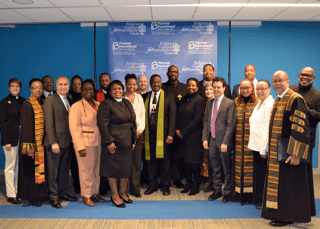
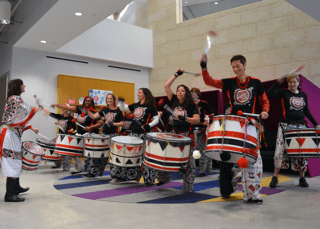
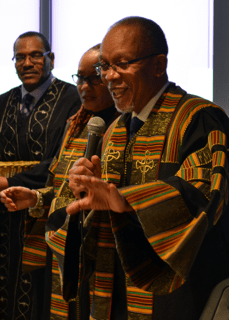
Last week RCRC partnered with Planned Parenthood of Metropolitan Washington (PPMW) to hold an Interfaith Unity Ceremony to honor their brand new health center in southeast D.C. I had the privilege of joining more than sixty clergy, justice leaders, and clinic staff as were led by the Reverend Doctors Dennis and Christine Wiley, co-pastors of the Covenant Baptist United Church of Christ, through an interfaith service of blessing. There was drumming from the all female percussion band Balatá, testimonies from providers and patients, poetry, liturgical dance, a Hindu chant, and a ritual of healing from the shame and stigma surrounding abortion.
Photo Credit: Helen Parshall
At one point during the service a colleague of mine turned to me and whispered, “I’ve got goose bumps. Something is happening here, isn’t it?” I said, “Yes, Spirit is here.”
Many might find an encounter with the sacred at a Planned Parenthood surprising to say the least. It might have been for me had I not experienced something quite similar ten years ago. At the time I was a seminary student at Yale, and I had recently participated in RCRC’s pastoral care training on how to walk alongside women making decisions about their unplanned pregnancies. Before I offered any kind of counseling I wanted to see for myself what went on in abortion clinic. After taking a tour of the local Planned Parenthood health center I was so moved by the love and kindness of the doctors and support staff that I decided to volunteer on days when abortions were provided. Through that experience I felt the holy nudge to dedicate my ministry to supporting the work of abortion providers like Planned Parenthood and standing up for the rights and dignity of those who need access to safe, legal abortion care.
Now, almost a decade later, I found myself back in a health center. That time of being amongst my people, surrounded by words and sounds of truth affirming the sacred decisions of women about their bodies and lives, felt like I had tasted my first bite of food after a long, difficult fast. I didn’t realize how much over these last few months I had been starving for hope, love, and life-giving energy until that ritual of blessing held within the walls of the Planned Parenthood health center.
Photo Credit: Helen Parshall
Later that night on my drive back to the airport I found myself repeating the same simple prayer, “Thank you, thank you, thank you.” I felt an overwhelming sense of gratitude for the way that ritual had restored my spirit and affirmed my call to ministry. For the first time I felt prepared to take on the heavy burden of the next four years. I am ready. Are you?
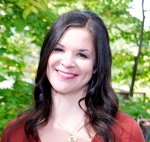
Katey Zeh, M.Div is a thought leader, strategist, and connector who inspires intentional communities to create a more just, compassionate world through building connection, sacred truth telling, and striving for the common good. She has written for outlets including Huffington Post, Sojourners, Religion Dispatches, Response magazine, the Good Mother Project, the Journal for Feminist Studies in Religion, and the United Methodist News Service. Her book Women Rising will be published by the FAR Press in 2017. Find her on Twitter at @kateyzeh or on her website kateyzeh.com.
Pelišky was one of the first movies I watched in the Czech Republic. It takes place in the year (maybe years) before the Soviet Occupation. It follows the lives and struggles of ordinary families. One of the best and funniest scenes takes place at a small post-wedding dinner. The couple receives some new-fangled plastic spoons as a wedding present. The gift-giver is very proud of the fact that they were made in Eastern Germany. One of the characters stirs her tea with the spoon and is about to lick it but as she takes it out of the hot tea it bends as if it was made of rubber. Soon the scene dissolves into arguments, frustrations and disappointments.
Every year on New Year’s Eve, I read creation stories to my family. We light candles, sit in a circle, eat, drink, and read. This little ritual began as my protest to the vulgar commercialization of the New Year and the ponderous weight of trying to be/do/achieve something new every twelve months. Last year, I discovered, however that I felt like the ancient creation myths and the new ways of bringing in the new year messaged similar things. I wrote about it in my blog post from January 2015, committing to write my own creation myth to read this year. I like where it is going… even this little exercise is causing me to think differently about sacred literature. I am becoming Inspired, I gasp to myself, to write my own Scripture, my own sacred truth. Here’s what I’ve got so far. I hope you enjoy it. Happy New Year!
1 The beginning could not be reckoned in the time before time was reckoned. 2 For, what was had yet to know itself, and it could not know itself alone. 3 But, for its love, it could not be known. So it was that the beginning that could be reckoned was not the beginning but the beginning of loving, which was the beginning of knowing, which was the beginning of being. 4 And, in that beginning, a great ellipsis had already become of particle and light, and the particle and light thrummed through darkness forming a whole body. 5 Of the great ellipsis of particle and light, a body and a body and a body were formed, in and of the great ellipsis, thrumming through darkness. 6 The thrumming ellipsis pushed forward so far that its particle and light extended beyond itself and then beyond itself and then beyond itself, as though it were to separate, but it did not. 7 A whole body was formed, which was the beginning of the simultaneity of what was and what is and what will have been. Continue reading “In the Beginning by Natalie Weaver”
In my previous post, I wrote about the importance of rituals. The rituals of the Easter season helped me process some difficult emotions. The way that rituals mark time and demonstrate consistency has been a comfort for me when facing new challenges and settings. But I am quite aware that rituals can become empty. In one of the comments to that post, a woman named Barbara responded, “There came a time for me when familiar and meaningful ritual no longer made sense. I had changed in understanding of what the ritual symbolized and celebrated. And haven’t found new rituals that make sense for me now…or at least I’m not aware of any.” Barbara’s remarks capture not only the loss from no longer being able to relate to existing rituals after life changes, but also the difficulty in finding or creating new rituals to take their place. I thanked Barbara for her honesty and decided that this post would continue the discussion, focusing more on discovery and creation of new rituals.
As I was preparing that post, I watched an episode of Call the Midwife that prompted me to reflect on the need to create rituals when existing ones just don’t work. Call the Midwifeis a BBC-PBS show about nurses and midwives living in a convent in London’s East End at the end of the 1950s and early 1960s. The show is based on the memoirs of Jennifer Worth, and it does a better job than most primetime dramas of showing female characters’ experiences the joys and challenges of their professional lives and personal lives. As it is set in a convent with several characters who are both nuns and midwives, the show also explores the theme of vocation. What does it mean to be called to the religious life? Called to nursing? What does motherhood demand? Continue reading “The Importance of Rituals (Part 2) by Elise M. Edwards”
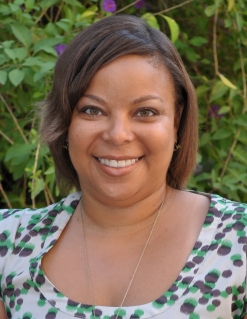
My sister once said about me, “One thing you have to understand about Elise—she takes the ritual of whole thing very seriously.” My sister was right and her words helped me see this quality about myself. What ritual was she talking about me taking so seriously? Happy hour on Fridays.
It was a different season of my life when she said this. I don’t have Friday happy hours regularly anymore, although I did gather with my friends nearly every week for food and drinks for many years throughout my 20s and 30s. It was often on Fridays, but at one point it was Wednesdays and then, for about a year, it was Thursday nights after a late shift at work.
More recently, I would meet a friend for crepes at the farmers’ market on Saturday mornings. Although the day and the time and specifics of these gatherings would vary, the act of setting aside a weekly time to connect with people dear to me and relax as we indulged in good food or drink was a ritual to me.



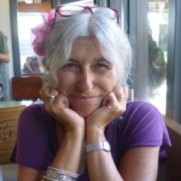 Donna Henes, familiarly known as “
 The past few weeks, I’ve been sitting with the many layers held by the concept, and the manifest reality, of mother, mothering, and motherhood. Mother is seen in the divine feminine, in the cosmos, and in the sea and the glow of the moon. She is held in our genes and our histories and the eyes of our children. She is found in archetypes of healing, nurturing, and comfort, as well as in stories of criticism, coldness, and abuse. She is the soft one who tends grief and holds hands and braids hair, and she is the unbreakable one whose labor and caregiving is taken for granted in most areas of her life. We carry our mothers with us in our DNA, in our stories, and in the way we navigate the impacts of intergenerational trauma.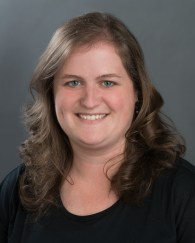
 communities to create a more just, compassionate world through building connection, sacred truth telling, and striving for the common good. She has written for outlets including Huffington Post, Sojourners, Religion Dispatches, Response magazine, the Good Mother Project, the Journal for Feminist Studies in Religion, and the United Methodist News Service. Her book Women Rising will be published by the FAR Press in 2017. Find her on Twitter at @kateyzeh or on her website
  Pelišky was one of the first movies I watched in the Czech Republic. It takes place in the year (maybe years) before the Soviet Occupation. It follows the lives and struggles of ordinary families. One of the best and funniest scenes takes place at a small post-wedding dinner. The couple receives some new-fangled plastic spoons as a wedding present. The gift-giver is very proud of the fact that they were made in Eastern Germany. One of the characters stirs her tea with the spoon and is about to lick it but as she takes it out of the hot tea it bends as if it was made of rubber. Soon the scene dissolves into arguments, frustrations and disappointments.
 Dear Friends,
 1 The beginning could not be reckoned in the time before time was reckoned. 2 For, what was had yet to know itself, and it could not know itself alone. 3 But, for its love, it could not be known. So it was that the beginning that could be reckoned was not the beginning but the beginning of loving, which was the beginning of knowing, which was the beginning of being. 4 And, in that beginning, a great ellipsis had already become of particle and light, and the particle and light thrummed through darkness forming a whole body. 5 Of the great ellipsis of particle and light, a body and a body and a body were formed, in and of the great ellipsis, thrumming through darkness. 6 The thrumming ellipsis pushed forward so far that its particle and light extended beyond itself and then beyond itself and then beyond itself, as though it were to separate, but it did not. 7 A whole body was formed, which was the beginning of the simultaneity of what was and what is and what will have been.
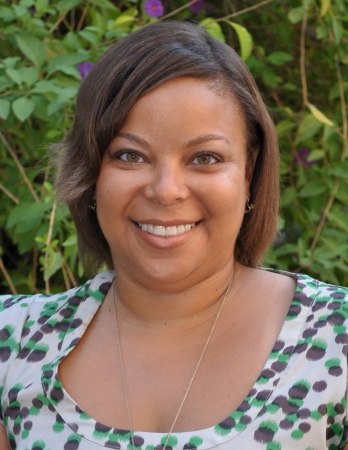 My sister once said about me, “One thing you have to understand about Elise—she takes the ritual of whole thing very seriously.” My sister was right and her words helped me see this quality about myself. What ritual was she talking about me taking so seriously? Happy hour on Fridays.
