This week’s Torah portion is Chukat. It covers a lot of ground. There are the mitzvot concerning purification with a red cow, the deaths of important individuals, and the continued wanderings in the desert, which are rife with complaining Israelites, plagues of snakes and destructions of enemies. It would be impossible to cover all of these events well in the length of this post, so instead I will am going to concentrate on a theme: water. I also want to explain some of the ways Jewish feminists have enriched our connection to water.
Water is first associated with the prophetess Miriam. Miriam is first called a prophetess in Exodus 15, when she takes the women of the community out to sing about their deliverance from Egypt by way of the Re(e)d Sea. Her “Song of the Sea” is thought to be, by many scholars, one of the oldest written texts of the Torah. Yet, the connection between Miriam and water starts earlier in the Torah. Miriam is Moses’ and Aaron’s sister and the one who watches over Moses when his mother, Joheved, hides him in a reed basket on the edge of the Nile (Exodus 2:4). She approaches the Pharaoh’s daughter to secure a milkmaid for her brother (Exodus 4:7).
All along, I’ve believed that Malicroix had something important to offer English-speaking readers: an embrace of solitude, a profound connection with nature, a bold exploration of dream-states. And right now it seems to resonate with our current moment of introspection and reassessment of priorities.
Very early in Henri Bosco’s 1948 novel Malicroix, a young man, Martial de Mégremut, living placidly amid fruitful orchards in a tame Provençal village, receives a letter informing him he has inherited “some marshland, a few livestock, a ramshackle house” from a reclusive great-uncle, Cornélius de Malicroix. Against his family’s strenuous objections–with alarm they speak of “marshes, mosquitoes, miasmas”–Mégremut resolves to travel alone to the remote Camargue to claim his “wild” Malicroix inheritance. The house is on an island, and to reach it Mégremut must cross a rough river, at night, in a frail wooden boat piloted by a taciturn old man who meets him at dusk in the middle of a vast plain.
So begins a deeply internal quest narrative, an initiatory journey that forces Mégremut to come to terms with himself and with the elements–earth, water, wind, and fire–that are ever-present, sometimes terrifyingly so, on the island. For once he arrives, he learns that he must remain there alone for a full three months if he wishes to obtain the inheritance. Torn about whether to stay or leave, he finds that the decision to stay is made of its “own accord,” unconsciously.
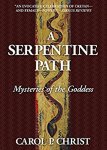
During the past week I have been thinking about Greek spring fountains while designing a water fountain for my new apartment in Heraklion, Crete. When the architect sent photos showing that the tiles had been removed from my balconies, I noticed an enclosed niche that could be used for stacking wood, turned into a closet, or as I began to imagine, would be the perfect place for a fountain to bring the soothing sound of running water to my balcony. Continue reading “Designing with the Goddess in Mind: A Meditation on Greek Spring Fountains by Carol P. Christ”
For over ten years, I’ve been teaching a work of early Jewish mysticism known as Sefer Yetzirah, or the Book of Creation. There are widely differing opinions on the book’s origin and dating, but many scholars date it to the sixth century. Its core concept can be described simply: the Divine used the Hebrew letters as metaphysical channels to create the different aspects of reality: the directions, the elements, the planets, the months of the year, and so forth. Each letter is a channel by which God creates a unique form or entity, and meditating on the letters provides us with a connection to divine creative power. In its discussion of the letters, Sefer Yetzirah shows a strong connection to feminine imagery, and thus helps the later kabbalah develop its own link to the feminine.
Sefer Yetzirah shows influences from Aristotle to Gnosticism, and is often viewed as a work of Jewish philosophy. However, it is also a work of meditation, giving the reader instruction on how to focus and connect to the divine. Scholars such as Richard Hayman and Marla Segol have noted that the book’s structure and content connect it to magical literature: for example, the book has a deep concern with “sealing” the space of the world: letters of the Divine Name are used to seal the six directions of the universe. In a similar way, ceremonial magicians of the ancient world used sealing ritual, including the incantation bowls that were buried in the corners of a home to keep out evil forces. The book, like much ceremonial magic of the region, also discusses the elements. However, Sefer Yetzirah has a three-element system rather than a four or five-element system. The three formative elements are air, water, and fire.
“Let the beauty we love Be what we do
There are hundreds of ways to kneel and kiss the Earth.”
–Rumi
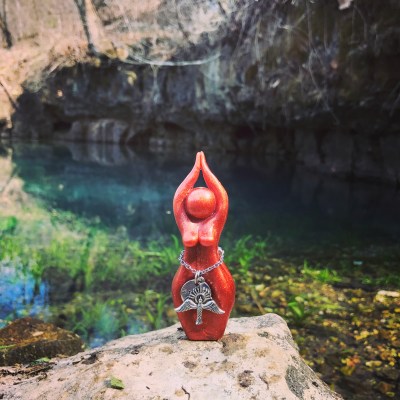
Introductory note: At the end of 2016, my parents purchased a piece of land about one mile from where I already live (they live one mile further away than that). In addition to woodland and meadow, this land has two springs, three creeks, a cave, and ¼ mile of river access. While I have been deeply connected to the land of my birth, the Missouri Ozarks, for a long time, and have written about that connection in multiple past posts for FAR, this new-to-us land has offered a new opportunity: the chance to get to know another section of land “from scratch,” deeply, wildly and well, and to become wise stewards of it for the time in which it is in our care. It is also the first time I have been able to so closely and intimately observe the origin source of a body of water. Previously not giving it much thought, I now have the daily privilege of observing the source of the flow as I watch water emerge directly from the ground. First, there is simply none and then, suddenly, a deep blue pool constantly bubbling as water rises to the surface and flows away on its long, long journey to the sea. This essay is a series of three vignettes as I spend this year immersing myself in relationship with this land.
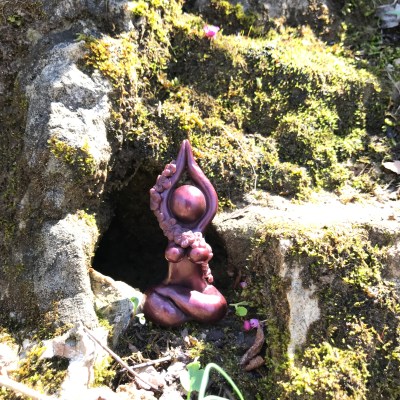
We walk along the nearly vertical hillside hanging onto small trees for support. Finally, though we almost miss it, we spy the opening to the cave nestled behind several mossy stones. The sun is still on the rise above the tree line and the rays filter through the trees so one ray is pointing directly at the cave entrance. We crawl inside, bumping our heads and scraping our backs as we wiggle into this womb in the earth. Once inside, the chamber enlarges so we can stand up. Unlike other caves we have experienced in this area, the only human signs we find are a single bottle cap, a glass bottle, and two sets of initials carved into a rock. In the dark silence we hear the sound of water dripping steadily. I make my way further into the cave, acutely aware that this is living cave and being careful not to step on the fresh, wet, cervix-shaped beginnings of new stalagmites on the floor. At the back of the cave, I find her. A Madonna-like stone column, glistening with water. In the silence of the cave, I quietly sing Ancient Mother to her, as tears well in my own eyes.
I am of this earth for this earth and by this earth.
We skirt carefully along the bank of the creek, making our way to the largest spring. Over three million gallons of water a day flow effortlessly from this small, deep pool nestled quietly in the middle of the woods. I am stunned by the magnitude of this flow as I stand there with my husband, my head resting on his shoulder, hawks wheeling overhead, redbud trees in full bloom. It has never seemed more clear to me how very “small” we are, but a blink of an eye to this spring and its countless years and countless gallons of water, not caring whether it is witnessed in its work or not, but simply, continually, creating and producing. I try to explain this feeling aloud, but words fail me. It is a humbling sensation, not a depressing one. The actual emergence of the water at this origin point of the river is nearly invisible, the continuous gentle, small popping of bubbles on its surface, the only sign that something significant is happening here that distinguishes this body of water from a pond or pool. Yet, those never-ending bubbles rapidly expand to a wide, swift-moving creek, which joins the river and another smaller spring-fed creek to continue to make their way southward across the state. We smell something sharp and see a dead armadillo by the roots of a giant sycamore. We hear a shrill cry and look up to see two bald eagles riding the currents of air high above us. We are so small. So many thousands of years of water have passed, but we are here right now.
Unfathomable eons
Glacier time
I am just a blink of an eye
But I can sit, and watch, and wonder.
We scramble along the uneven terrain on the rocky and wooded hillside, slipping, laughing, and looking. I am exhilarated by the simple thrill of exploring the world right here in front of me. We find tiny flowers. I kneel by the roots of fallen trees. We stop to admire moss on stones. We find gigantic black snake napping in the sun. A complete turtle shell. A shed antler. Each moment feels like a new opportunity to “kiss the earth.” I sing Reclaiming’s song-version of the Rumi quote over and over and as I kneel in each spot to see what it has to show me, in each, I kiss my fingers and press them to the earth. I see all the kissing going on around me…the sun filtering through branches, the fiddlehead ferns kneeling to kiss the earth, the roots wound through rocks, the trillium and bloodroot blooms pushing up between leaves, the water seeping out of the ground and flowing down the hill, the dogwood blossoms opening to the sun, the moss covering stones, the fallen trees stretched along the slope.
“And that is just the point…how the world, moist and beautiful, calls to each of us to make a new and serious response. That’s the big question, the one the world throws at you every morning. ‘Here you are, alive. Would you like to make a comment?’”
–Mary Oliver
We emerge from our walk to find morels growing alongside the path (morels are wild, edible mushrooms found for about two weeks in Missouri each spring and considered a delicacy by many). The afternoon suddenly becomes even more rewarding and we stoop and peer through fallen oak, sycamore, and elm leaves looking for the telltale conical form of these forest treats. We quickly discover that we must tune in and “listen” for the mushrooms, so to speak, or we’ll walk right by them, none the wiser. The moment I start thinking about anything else, I stop finding any. Once I settle into my body and the moment and really look at the world again, there another morel will be.
“I think this is how we’re supposed to be in the world … present and in awe.”
–Anne Lamott, Bird by Bird: Some Instructions on Writing and Life
Molly has been “gathering the women” to circle, sing, celebrate, and share since 2008. She plans and facilitates women’s circles, seasonal retreats and rituals, mother-daughter circles, family ceremonies, and red tent circles in rural Missouri and teaches online courses in Red Tent facilitation and Practical Priestessing. She is a priestess who holds MSW, M.Div, and D.Min degrees and finished her dissertation about contemporary priestessing in the U.S. Molly and her husband Mark co-create Story Goddesses, original goddess sculptures, ceremony kits, and jewelry at Brigid’s Grove. Molly is the author of Womanrunes, Earthprayer, and The Red Tent Resource Kit and she writes about thealogy, nature, practical priestessing, and the goddess at Brigid’s Grove.
The biblical traditions of Miriam the prophetess have captured the imaginations of Bible-readers throughout the ages. Miriam, Moses’ sister, watches over Moses in his cradle (Exodus 2), and leads the Hebrew women in dance at the shore of the Sea of Reeds to celebrate redemption (Exodus 15). Rabbinic lore identifies Miriam with Puah, the midwife who saved Hebrew babies from Pharaoh, and depicts her as the herald of Moses’ birth (Exodus Rabbah 1:13; Babylonian Talmud, Sotah 12a). Contemporary Jewish feminists have established traditions of singing to Miriam the prophetess on Saturday night, parallel to the tradition of singing to Elijah the prophet at that time. It has also become popular among some feminist/egalitarian Jews to place a cup of Miriam on the seder table at the time of Passover. This cup is usually filled with water in order to recall the ancient legend that a well of water followed Miriam through the wilderness, quenching the thirst of the wandering people (cf: Babylonian Talmud, Taanit 9a). It was even said that healing herbs grew near this well, so that Miriam’s prophetic power became a source of healing.
The veneration of Miriam is especially deep in Sephardic Jewish traditions—those Jewish traditions stemming from the Spanish Jewish diaspora, which may be found everywhere from North Africa to Holland to Greece and Bulgaria. Sephardic women used incantations along with various rituals involving salt, herbs, and other substances, as healing for various ailments and troubles; women skilled in these practices were called precanteras or precantadoras. Some of their healing incantations invoke Miriam as the ancestress of all women healers, as in the following prayer:
The Women’s March on Washington has released its statement of vision and principles, and what a stunning testimony to intersectional feminism and collaboration it is! The statement is woman-centered, while at the same time addressing a multitude of issues that affect women’s lives: from access to abortion for all, to an equal rights amendment to the constitution, to the rights of women as domestic and farm workers, to police reform, and so much more.
I was thrilled to read the list of women honored as foremothers to the march:
Bella Abzug*Corazon Aquino*Ella Baker*Grace Lee Boggs*Berta Caceres*Rachel Carson*Shirley Chisholm*Angela Davis*Miss Major Griffin Gracy*LaDonna Harris*Dorothy I. Height *bell hooks*Dolores Huerta*Marsha P. Johnson*Barbara Jordan*Yuri Kochiyama*Winona LaDuke*Audre Lorde*Wilma Mankiller*Diane Nash*Sylvia Rivera*Barbara Smith*Gloria Steinem*Hannah G. Solomon*Harriet Tubman*Edith Windsor*Malala Yousafza
Many of these women have inspired me, particularly (but not only): Bella Abzug, Rachel Carson, Shirley Chisholm, Malala Yousafza. I have taught books by or about many of them, including: Rachel Carson, bell hooks, Audre Lorde, Harriet Tubman, Barbara Smith.
I hope these names will be read at the beginning of the ceremonies, followed by an invitation to all present to speak, shout, or whisper—all at the same time–the names of all the women, known and unknown, who have inspired their own activism for women’s rights. In this way, no one’s name is left out. We have a similar ritual on the Goddess Pilgrimage to Crete, and it is incredibly powerful.
I first heard the Women’s March on Washington discussed at the meeting of the Feminist Liberation Theology Network held in conjunction with the meetings American Academy of Religion and Society of Biblical Literature ten days after the (so-called) election of Donald Trump. At that time a number of women asked if this march would be a white women’s march. Would women of color feel called or able to come? In the interim, women of color have become leaders of the Women’s March on Washington and it is definitely not “for white women only.” It was suggested that women of color might feel safer at local marches. These have been organized as well: learn about Sister Marches here. At the time of this writing 370 Sister Marches had been organized—in all 50 states and in more than 40 countries.
If, like me, you are feeling weary and despondent these days, the statement of the Women’s March on Washington may help to re-inspire your commitment to all women’s rights:
The Women’s March on Washington is a women-led movement bringing together people of all genders, ages, races, cultures, political affiliations and backgrounds in our nation’s capital on January 21, 2017, to affirm our shared humanity and pronounce our bold message of resistance and self-determination
Recognizing that women have intersecting identities and are therefore impacted by a multitude of social justice and human rights issues, we have outlined a representative vision for a government that is based on the principles of liberty and justice for all. As Dr. King said, “We cannot walk alone. And as we walk, we must make the pledge that we shall always march ahead. We cannot turn back.”
Our liberation is bound in each other’s. The Women’s March on Washington includes leaders of organizations and communities that have been building the foundation for social progress for generations. We welcome vibrant collaboration and honor the legacy of the movements before us – the suffragists and abolitionists, the Civil Rights Movement, the feminist movement, the American Indian Movement, Occupy Wall Street, Marriage Equality, Black Lives Matter, and more – by employing a decentralized, leader-full structure and focusing on an ambitious, fundamental and comprehensive agenda. Read more.
Learn more about the march. Readers of FAR might want to participate in the march with WATER (Women’s Alliance for Theology, Ethics, and Ritual). I’ll be there in spirit from Molivos, Lesbos, Greece.
Despite all of the ways Western society has separated the spiritual pursuit from the material and deemed spirituality superior to physicality, the religious holiday of Pesach doesn’t. In fact, it is the physical liberation of the Israelites from slavery in Egypt that starts them on their path toward the covenant and an even deeper spiritual connection to the divine. The Exodus story overflows with images, tales and situations in which: bodies are not ignored; nourishment, comfort and care is addressed spiritually as well as physically and the divine’s spiritual gift, so to speak, to the Israelites is not some other-worldly paradise but a this-worldly land flowing with milk and honey.
Of course, this doesn’t mean that the story is perfect: it is replete with war, murder, militarism, forms of colonialism and other manifestations of patriarchal violence. Patriarchal influences encourage androcentric tellings of events and sexism as well. Three examples are the all-male priesthood, the tenth plague “death of the first-born” (of course the only first born that counts are boy children), and the over-the-top covenantal concern about women as menstruators, adulterers, untrustworthy and so on. These aspects are important to acknowledge and critique, but we cannot stop there. We must cherish the story for its insights as well. Continue reading “Pesach, Toilets, and Clean, Local Water: Seemingly Mundane Yet Necessary Components of an Embodied Liberation by Ivy Helman”
Water is the daily necessity for earth’s creatures.
When the Continental Celts were looking for a new homeland, they ventured west from the known river valleys of the great landmass we call Eurasia. Just beyond the great mountains, the Alps, they discovered sweet and abundant water, fertile soil, expansive woodlands, and the plentiful fish, game, berries, grasses, fungi and broad-leafed plants necessary to support their tribe.
We know that Celtic spirituality was, in its roots, animistic (spirit was alive in every living thing), non-anthropomorphic (the source of life and death was water, land, plant and animal-life), tribe-specific (in France alone there is evidence of several hundred deities) and a spirituality of place, of the major landforms that defined the world (rivers, springs, forests, animals, heavenly bodies). To the extent that Celtic spirituality was theistic, the creator/sustainer/destroyer of life was typically a goddess. Continue reading “Sequana and Blessed Water by Deanne Quarrie”
When Kate Kelly faced excommunication from the Church of Jesus Christ of Latter-Day Saints in June 2014, much of the world took notice. The D.C.-based human rights lawyer garnered wide-spread attention for founding Ordain Women, a movement to push for advocacy of female ordination in her Mormon faith. A ripple of press from The New York Times to The Huffington Post chronicled Kelly’s waves of activism and its subsequent consequences: excommunication in absentia on June 23 by her former church leaders in Virginia.


 Very early in Henri Bosco’s 1948 novel Malicroix, a young man, Martial de Mégremut, living placidly amid fruitful orchards in a tame Provençal village, receives a letter informing him he has inherited “some marshland, a few livestock, a ramshackle house” from a reclusive great-uncle, Cornélius de Malicroix. Against his family’s strenuous objections–with alarm they speak of “marshes, mosquitoes, miasmas”–Mégremut resolves to travel alone to the remote Camargue to claim his “wild” Malicroix inheritance. The house is on an island, and to reach it Mégremut must cross a rough river, at night, in a frail wooden boat piloted by a taciturn old man who meets him at dusk in the middle of a vast plain.
 live (they live one mile further away than that). In addition to woodland and meadow, this land has two springs, three creeks, a cave, and ¼ mile of river access. While I have been deeply connected to the land of my birth, the Missouri Ozarks, for a long time, and have written about that connection in multiple
  spy the opening to the cave nestled behind several mossy stones. The sun is still on the rise above the tree line and the rays filter through the trees so one ray is pointing directly at the cave entrance. We crawl inside, bumping our heads and scraping our backs as we wiggle into this womb in the earth. Once inside, the chamber enlarges so we can stand up. Unlike other caves we have experienced in this area, the only human signs we find are a single bottle cap, a glass bottle, and two sets of initials carved into a rock. In the dark silence we hear the sound of water dripping steadily. I make my way further into the cave, acutely aware that this is living cave and being careful not to step on the fresh, wet, cervix-shaped beginnings of new stalagmites on the floor. At the back of the cave, I find her. A Madonna-like stone column, glistening with water. In the silence of the cave, I quietly sing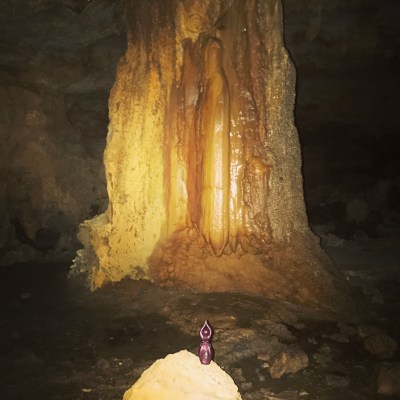
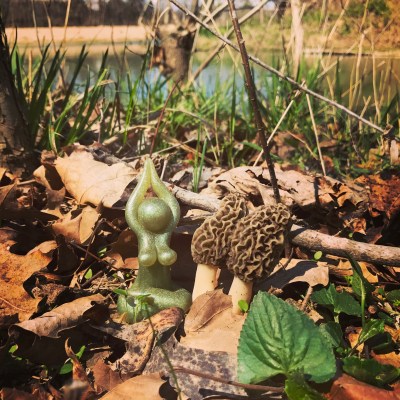 about two weeks in Missouri each spring and considered a delicacy by many). The afternoon suddenly becomes even more rewarding and we stoop and peer through fallen oak, sycamore, and elm leaves looking for the telltale conical form of these forest treats. We quickly discover that we must tune in and “listen” for the mushrooms, so to speak, or we’ll walk right by them, none the wiser. The moment I start thinking about anything else, I stop finding any. Once I settle into my body and the moment and really look at the world again, there another morel will be.
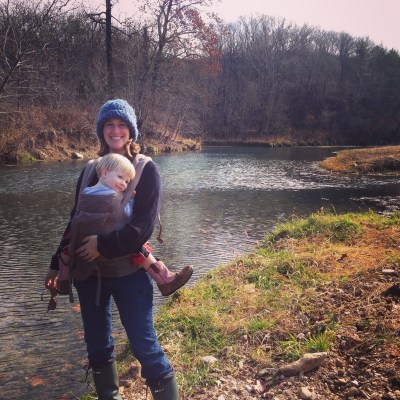 Molly has been “gathering the women” to circle, sing, celebrate, and share since 2008. She plans and facilitates women’s circles, seasonal retreats and rituals, mother-daughter circles, family ceremonies, and red tent circles in rural Missouri and teaches online courses in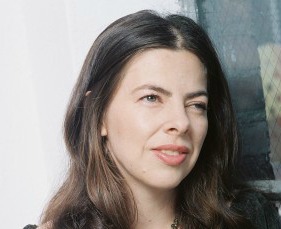


 When Kate Kelly faced excommunication from the Church of Jesus Christ of Latter-Day Saints in June 2014, much of the world took notice. The D.C.-based human rights lawyer garnered wide-spread attention for founding
  Feminism and Religion