An ode to the old me: An ode to Roe v. Wade by Chasity Jones, M. Div 

Greetings Feminism and Religion family! It has been soooo long and I have missed you so much!!
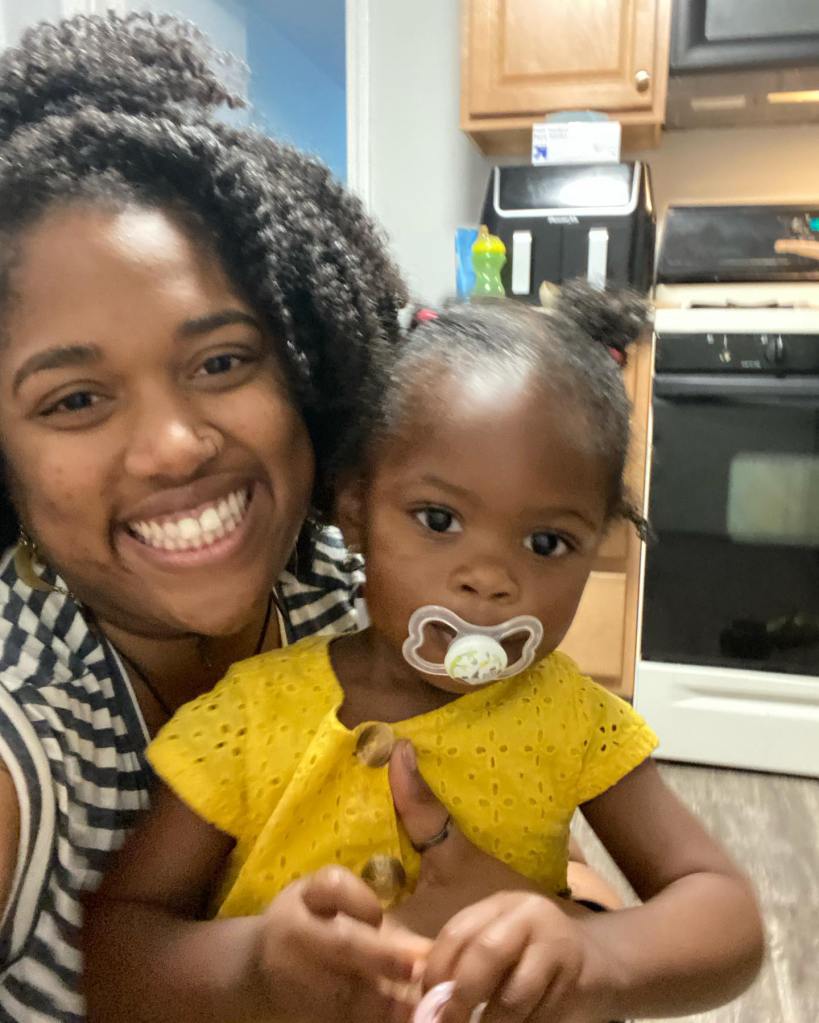
I have been working on a few projects that were rudely interrupted by a heartbreaking divorce, decisions of survival, and the subsequent recovery that followed this period. I have spent the past at least 6 months healing from the shame, guilt, pain, and blame that was placed in my lap for the collapse of the marriage. Needless to say, that shit is heavy and it kept me in an endless and perpetual night- not the beautiful mysterious, infinite, expansive darkness that I have come to know but the night that I was afraid of when I was young. No one could save me from the ways that I tormented myself or questioned my womanhood, motherhood in particular. Even more, no one could save me from being an emotional punching bag from my ex-spouse, who also torments himself.

That being said, I am on the mend and am settled in my own apartment furnished with peace, wholeness, and healing for myself and my daughter. As an earth sign, stable ground and a comfortable home in which I can be myself means the world to me. I am a spiritual advisor at a recovery center in Massachusetts and therefore have studied the art of recovery in many ways. Recovery from loss and recovery of self are two procedures that I address in my upcoming book, Black Gold: The Road to Black Infinity!!

Continue reading “An ode to the old me: An ode to Roe v. Wade by Chasity Jones, M. Div “
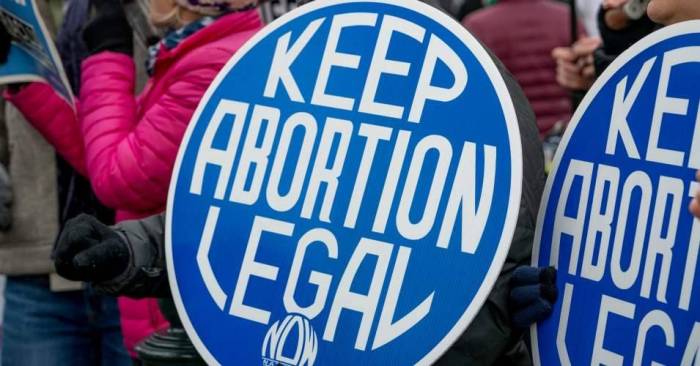
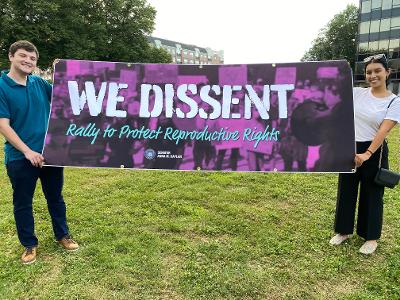
From Kavanaugh to Hell by Sara Wright

The glorious blue and gold summer day permeated by the scent of wild roses faded as the ominous words swirled around my head trying to get in. Roe overturned.

For a moment rebellion – disbelief, NO, something screamed in silent anguish. NO. Then mind flooded with poison… Pure hatred rose in a frightening swell that threatened to overpower my instincts.  But I heard the words: “Go parallel with your hatred –do not give in.” Words that brought me back to my body, to my senses.

My hair caught fire. How did they get away with it again? First Kavanaugh, a credibly accused rapist elected to the Supreme Court – a few years in between and now Roe overturned. Men deciding how women should behave, men insisting that women support ‘life’ at their own expense – rape doesn’t count. Women have lost their most basic human right – the right to have control over their own bodies.

Continue reading “From Kavanaugh to Hell by Sara Wright”

Inspired by Carol P. Christ: Patriarchy Rules the Supreme Court by Janet Maika’i Rudolph

Along with the words of Justices Sotomayer, Breyer and Kagan.

The Supreme Court ruling overturning Roe was expected, but there was nothing that could prepare me (nor likely anyone else) for the devastation of the actual decision. My gut is reeling. I thought it would be useful to survey the landscape through the lens of patriarchy. Thanks to Carol Christ for having always written insightful comments about the roles of patriarchy. This is inspired by her work.

The dissenting judges were quite eloquent, so I will work off their words.

  • “Whatever the exact scope of the coming laws, one result of today’s decision is certain: the curtailment of women’s rights, and of their status as free and equal citizens.”
  • “After today, young women will come of age with fewer rights than their mothers and grandmothers had. The majority accomplishes that result without so much as considering how women have relied on the right to choose or what it means to take that right away. The majority’s refusal even to consider the life-altering consequences of reversing Roe and Casey is a stunning indictment of its decision.”

My Commentary: Through the eyes of patriarchy here is no need to consider life-altering consequences because it only recognizes two roles for women: madonna or whore. We are never seen as full humans with civil and independent rights. Patriarchy doesn’t just hate the sexual freedom of women, it has spent millennia trying to quash it, make it into something dirty, control it. It’s a love/hate relationship with sex. Rape is really OK (look how hard it is to prosecute). Pedophilia OK too (look at the church). But a woman making her own sexual, reproductive choices . . . a bridge too far. Patriarchy will always force us to pay a price for having sex, for being alluring, for being female.

Continue reading “Inspired by Carol P. Christ: Patriarchy Rules the Supreme Court by Janet Maika’i Rudolph”

From the Archives:“Vaginas are Everywhere!”: The Power of the Female Reproductive System by John Erickson

Moderator’s note: This marvelous FAR site has been running for 10 years and has had more than 3,600 posts in that time. There are so many treasures that have been posted in this decade that they tend to get lost in the archives. We are beginning this column so that we can all revisit some of these gems. Today’s blogpost was originally posted June 19, 2012. You can visit it to see the original comments here.

I have a beautiful picture of vagina hanging on my wall.  However, for the longest time it was in the back of my closet, with a plastic bag covering it.  I wasn’t ashamed of it but my ex-boyfriend, like most gay men, refused to have it on the wall where he could see it.  He is now long gone; the vagina is now out and proud.

I bid on the picture one fall during a showing of the Vagina Monologues at Claremont School of Theology.  One of my best friends was in the show and I had always loved its powerful message.  I walked out of the theatre, waiting for my friend, and there it was: the picture of the vagina.  I found myself caught up in its beauty.  Its gaze had mesmerized me.  The outlying layers of red, the contours of its shape, they all began to mold into a figure before my eyes.  While I have never thought of myself as a religious person, I realized that at that moment I was no longer looking the old photo but rather I was staring at the outline of the Virgin Mary.  At that moment, I realized that I had to have the picture.

Continue reading “From the Archives:“Vaginas are Everywhere!”: The Power of the Female Reproductive System by John Erickson”

Vayechi’s Take on Fertility, Women and Theodicy by Ivy Helman.

This week’s Torah portion is Vayechi, or Genesis 47:28-50:26.  It is the last part of the Joseph saga (For my thoughts on two other parshot relating to Joseph, see Mikeitz and Vayigash).  While there is much that could be said, there are three aspects of the parshah which I would like to concentrate on for this post: blessings being associated with fertility; verses 50:19-20’s troubling theodicy; and its women.

Let us begin with the last topic: women.  Women are mentioned four times in Vayechi.  Jacob recalls the burial of Rachel in verse 48:7.  Joseph’s beauty is such that women often look at him (49:22). The blessing that Jacob gives to Joseph includes the blessings of both mother and father (49:25-26).  At present, I will focus my commentary on Jacob’s request for burial, the fourth mention of women in this parshah.

Continue reading “Vayechi’s Take on Fertility, Women and Theodicy by Ivy Helman.”

The Treasures of Vayishlach by Ivy Helman

The Torah portion to be read this Shabbat is Vayishlach (Genesis 32:4-36:43).  It contains the reunion between Jacob and Esau, the twice-renaming of Jacob to Israel, events relating to Dinah, the mass murder of all of the male inhabitants of Shechem, the birth of Benjamin, the death of Rachel in childbirth, the death from old-age of Isaac, and a long list of the descendants of Esau.  Like every blog, there is too much material on which to comment.  Therefore, I will focus on three examples.  Each of these examples in their own way turns expectations or aspects of the Torah on their heads.   

First, we have the way in which Jacob wholeheartedly avoids war.  This is despite the fact that, in the Torah, war is demanded, normalized, or doled out as a form of punishment.  Rarely does fear factored into the Torah’s discussions of war, yet this parshah starts with Jacob’s fears about war: his brother Esau is going to start a war with him.  To avert this war, Jacob sends, in advance of their meeting, large quantities of gifts, mainly in the form of animals.  In addition, as he approaches his brother, he prostrates himself on the ground seven times.  

Continue reading “The Treasures of Vayishlach by Ivy Helman”

Shofetim: The Divine Feminine, Magic, and the Role of Gender by Ivy Helman.

This post is dedicated to Carol P. Christ. I knew her first as my professor and then my friend for over 15 years. May her memory be a blessing.

This week’s Torah portion is Shofetim (also spelled Shoftim), or Deutoronomy 16:18-21:9.  I have written about this parshah before.   In that post from August of 2018, I reflect on how the patriarchal elements of the portion should not detract from its larger concern for justice, compassion, and peace. Yet, there is more to the parshah.  In fact, I have recently begun exploring Judaism’s connection to all things magical, and interestingly enough, this parshah fits right into my recent inquiries.   Let me share with you some of what I have learned as it relates to this parshah.  

Where Shofetim and magic meet is idolatry.  There are three instances in Shofetim where idolatry is condemned, punished by stoning to death.  All three of these prohibitions involve polytheism, either directly worshiping other deities or participating in practices associated with the worship of those deities.  What are they?

Continue reading “Shofetim: The Divine Feminine, Magic, and the Role of Gender by Ivy Helman.”

Post-Hysterectomy Reflections: Not All Women Bleed by Ivy Helman

Around the age of 8, or maybe 10, I learned my aunt had had a hysterectomy.  I remember visiting her house either shortly before or after the operation.  I can’t remember which, and it doesn’t really matter.  At the time, I don’t think I even knew what a uterus was or that I too had one.  

Just like me, she had suffered from uterine fibroids. This year, at the end of May, after nearly two years of various treatments including a failed myomectomy and ineffective prescription medication, I followed in her footsteps.  It was really the only option for me, although it was not an easy decision.  After surgery, there was the usual post-op pain and restrictions, but luckily my body has been healing well.  

Since the surgery, and as I prepare to teach “Gender and Religion” again in the fall, I’ve been thinking about a conversation I had with a student the first time I offered the class at Charles University.  We were about to begin discussing the article, “Why Women Need a Feminist Spirituality,” by Judith G. Martin, when a student pressed me on why we weren’t acknowledging that not all women bleed.  What he really wanted was to make sure that in our category of women, we were including transwomen.   Continue reading “Post-Hysterectomy Reflections: Not All Women Bleed by Ivy Helman”

Let’s Talk About Shame by Janet Maika’i Rudolph

Disclaimer/Trigger Warning: This post includes content about rape, sexual assault, domestic abuse, violence.

The recent, meaningful discussions on this forum about how so many of us feel broken due to our own personal histories have fortified and inspired me. I’ve marveled as women have spoken up so honestly and even brutally about the effects of trauma, rape, cold and dismissive mothers, abusing fathers and so on.

Some of you know my own story. I am a survivor of my father’s childhood abuse and then a rape at knifepoint in my early twenties. I carry a deep and abiding sense of shame. This feeling has always flummoxed me. Why should I feel shame when I didn’t do anything to create my own abuse? Shouldn’t my father have felt the shame? The rapist? Why did I get saddled with it? I was the victim (and survivor), not the perpetrator. But shame is indeed the feeling I carry and I’m not alone. Why is this feeling so pervasive? I don’t have all the answers, but I do have some clues about where to look.

Continue reading “Let’s Talk About Shame by Janet Maika’i Rudolph”

Sappho’s Poems as an Ethos for Women’s Ritual by Jill Hammer

Photo by: Zac Jaffe

For by my side you put on

many wreaths of roses

and garlands of flowers

around your soft neck


and with precious and royal perfume

you anointed yourself.


On soft beds you satisfied your passion.


And there was no dance

no holy place

from which we were absent.


–Sappho (trans. Julia Dubnoff)


Sappho, the poet from Lesbos (630-570 BCE), was considered one of the greatest poets of her time—one of her epithets was “the tenth Muse.” I discovered the poems of Sappho in my thirties and was utterly captivated.  I had newly embarked on a relationship with a woman and Sappho’s love poetry (though by no means exclusively lesbian) supported the expression of eros between women.  Yet even more than that, Sappho’s poems supported an erotic relationship between self and world—a relationship that included ritual as a form of intimacy.  I’m not a Greek scholar—I experience Sappho’s poems in translation. Yet the translations I read back then were a revelation: a world in which women lived in circle with one another.

Continue reading “Sappho’s Poems as an Ethos for Women’s Ritual by Jill Hammer”