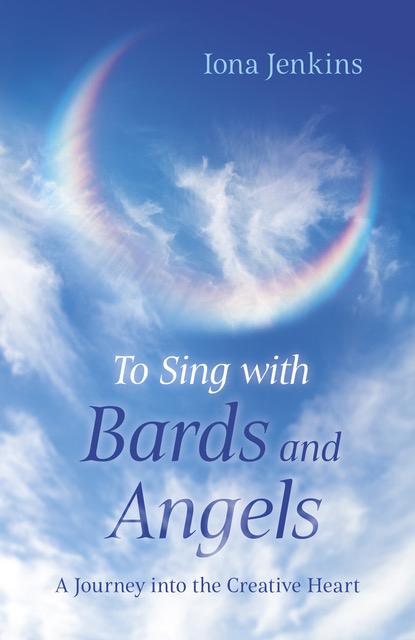
TO SING WITH BARDS AND ANGELS by Iona Jenkins, Book Review by Janet Maika’i Rudolph

There are some books which you just want to sit with, underline, read leisurely, and let sink deeply into your soul. This is one of those books.

Iona Jenkins has led a fascinating life as a Labyrinth Keeper, artist, spiritual seeker (among many other things). In To Sing with Bards and Angels, she delves into her Celtic ancestry as a poet to captivating result. I can deeply connect with her journey as I imagine many others will as well.

This book is filled with Jenkin’s stories of the experiences she has had while walking the spirit pathway. Most notable and the major theme of her book describes her encounters with an ethereal light being she identifies as an angel. Her guide appears in moonlight and its form and words fit within her cultural beliefs as to what an angel is. I love that she notes that she views her guide in this manner because of her own expectations. Her openness in allowing for other interpretations provides a permission structure for anyone reading and/or on their own spirit journey to understand such experiences in their own way whether it be angelic, otherworldly, imaginative, dreamlike, mythic or manifest in this reality.

Continue reading “TO SING WITH BARDS AND ANGELS by Iona Jenkins, Book Review by Janet Maika’i Rudolph”

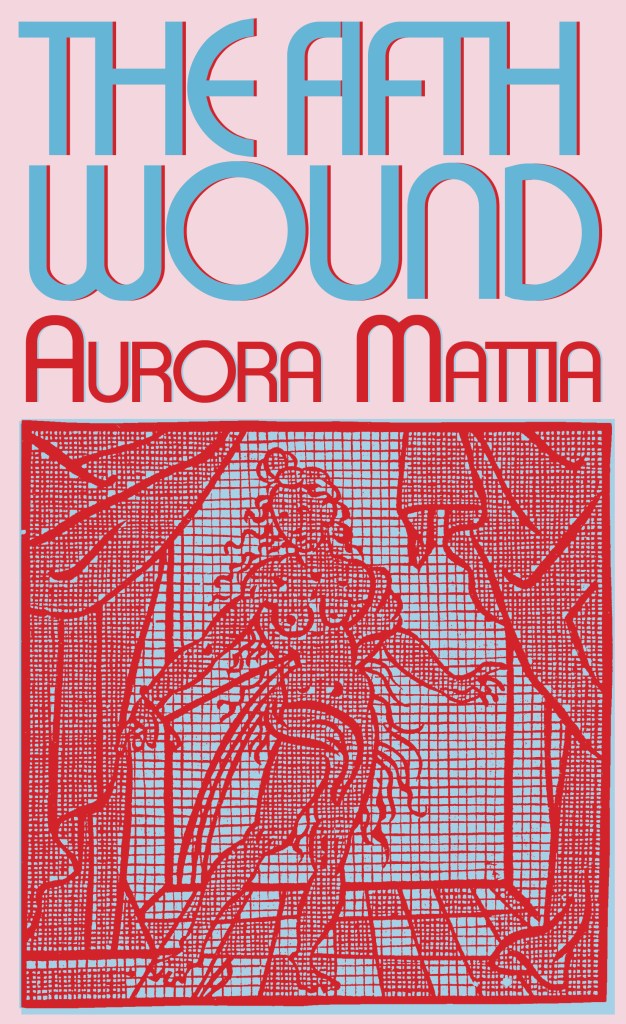
The Fifth Wound by Aurora Mattia, Book Review by Janet Maika’i Rudolph

Dreams are a confluence of lifefragments, swelling and dissolving in waves, perpetually on the verge of meanings. What in Physics is called ‘potential energy,’ I refer to as ‘potential meaning,’ the maximum of which is dreaming.

The Fifth Wound, pg 34

There is so much to like about this book even as it is painful to witness Mattia’s journey. It is also confusing at times which might be by design because life, itself, is so confusing. The prepublication material describes this book as a love story between Aurora and Ezekiel. Both Ezekiel and Aurora begin by describing themselves as “fairies.” Ezekiel remains so, Aurora transitions. She calls herself a tgirl or a transgirl.

Mattia leads a life that refuses to be boxed into any “norm.” The vulnerable wounds that she collects as she navigates this challenging path are both internal and external. Ezekiel and Aurora know and love each other both before and after Mattia’s gender confirmation surgery. It takes some work to understand the hardships of those who don’t fit into societies’ norms; these are norms that too often float through our consciousness often without our even being aware. I believe that wrestling with such issues expands our humanity and for this (but not this alone), The Fifth Wound is an important book.


Continue reading “The Fifth Wound by Aurora Mattia, Book Review by Janet Maika’i Rudolph”

The Patriarchal Dilemma by Janet Maika’i Rudolph

I was listening to a newscast when it was reported that the Ukraine sent missiles into Russia. My initial thought was “it’s about time they took it to the Russians.” The next moment I was horrified at myself.  I am a pacifist.  I think the proliferation of weapons is one of humankind’s great evils and here I was cheering on an attack.  One that could escalate an already nasty war, lead to nuclear weapons use and possibly even a world war. And yet when I look at what is happening in Ukraine, my mind simply can’t comprehend what the people are going through. The trauma of the children cuts particularly deeply. And I can see no sane reason behind the strikes other than rank cruelty.

There it is in a nutshell, what I have come to call the patriarchal dilemma. It’s a no-win situation with no right answer. While life might place us in such positions all on its own, the patriarchal form of this is created by design. It is nasty, it is cruel, and loss of human life and ecological destruction are not glitches but features.

Continue reading “The Patriarchal Dilemma by Janet Maika’i Rudolph”

Hawaiian Adventure Shamanism by Janet Maika’i Rudolph

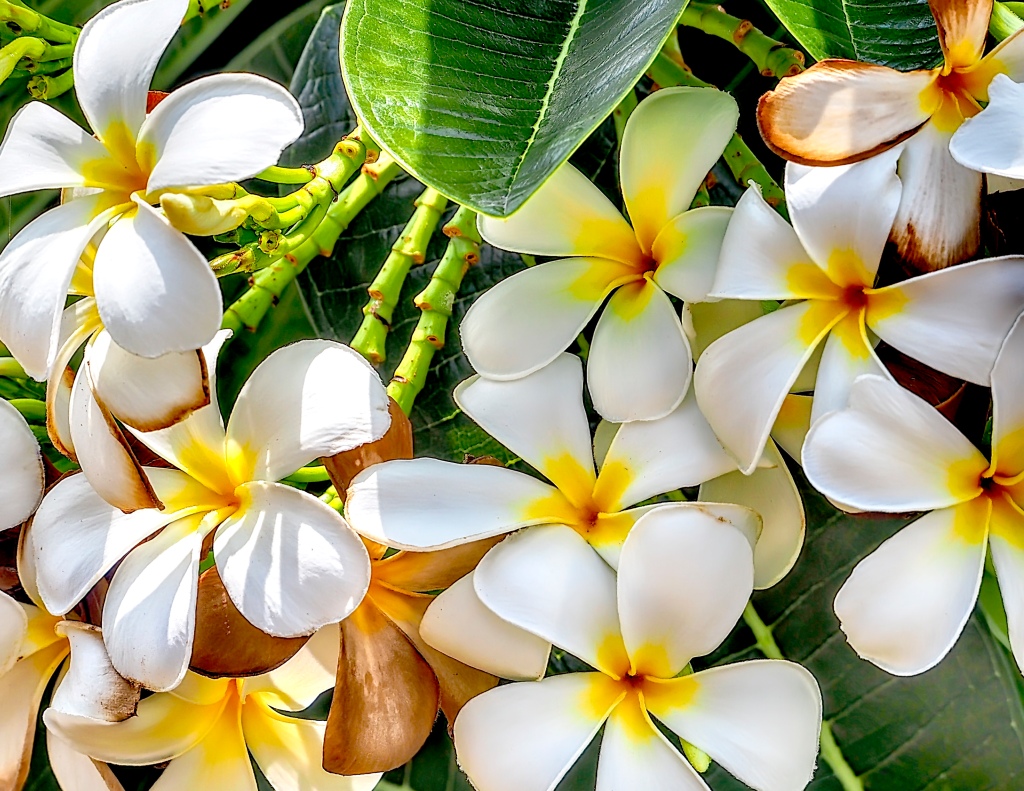
Plumeria, one of the fragrant flowers often used in leis.

While my experience of Hawaiian spirituality isn’t explicitly feminist, I am attracted to it because of its loving and gentle nature. It doesn’t feed the patriarchy. It is a philosophy that doesn’t use dogma but rather principles. It doesn’t work as a top-down power system but rather as an internal power extending to the external world. This is reflected in one of our principles: “all power comes from within.”

I was ordained as an alaka’i (spiritual guide) in October 2016 by Serge Kahili King the founder of Aloha International. He teaches Hawaiian Adventure Shamanism or Huna for short. Huna means secret. It isn’t a secret in the sense of something that can’t be shared but rather something that is esoteric or hard to see. You can think of it like the mists of the sea, hard to distinguish and even harder to hold on to. But all real nevertheless.

Continue reading “Hawaiian Adventure Shamanism by Janet Maika’i Rudolph”

Ode to Seeds by Janet Maika’i Rudolph

“In this is all that is.” 

Julian of Norwich (while purportedly holding a seed in her hand) – 14th century

“Even if I knew that the world would end tomorrow,

I would plant an apple tree today.”

Martin Luther

Have you ever had bedbugs or lice? If not, you’re lucky. If so, you understand just how hard they are to get rid of. Why is that? Because they are essentially seeds with legs.

Seeds need to be able to travel in order to be successful spreaders of life. For example, when an acorn falls from an oak tree, it probably can’t germinate right where it falls. The mama tree has already taken up all the earth/soil space as well as the water sources for its own roots. And the mama tree’s own leafy branches will block out access to the sun. So the innate goal of the seed is to move to find a more friendly space. Evolution has created all sorts of ways for seeds to use motion in the service of finding their own place to germinate. In the case of the acorn, there are squirrels. Because they are a food source, many of the acorns get taken to dens under the earth. Many of those are not eaten. Either they are forgotten or the squirrel in question meets another demise. An acorn that is nestled in a den under the earth, can have a potentially perfect environment to sprout far from its origins.

Continue reading “Ode to Seeds by Janet Maika’i Rudolph”

Biblical Poetry – Trees by Janet Maika’i Rudolph

Image from an Egyptian tomb ca. 1314-1200 BCE. Isis is giving nourishment in the form of fruit and drink,

In many cultures of the world, including our own, trees are considered the ancestors of humanity – own our ancestors.

Trees are connected with great goddesses throughout antiquity. We see this in the bible where, as I’ve noted before, the Tree of Life is Eve’s tree for the word Eve means life. It is, in essence, the Tree of Eve. Goddesses in trees feeding humans were common themes in ancient Middle Eastern art. The tree was Hers to give freely of as she wished.  

Anthropologist and religious scholar, Mircea Eliade writes extensively about the associations of trees ancestral connection to humans. He calls them both mystical and mythical.[1] His examples include the Miao groups of Southern China and Southeast Asia who “worship the bamboo as their ancestor.” He also notes Australian tribes who view the mimosa as their progenitor. And there is a tribe from Madagascar, called Antaivandrika which means “people of the tree,” who considered themselves descended from the banana tree.

Continue reading “Biblical Poetry – Trees by Janet Maika’i Rudolph”

Beauty in the Heart of the Beholder by Janet Maika’i Rudolph

In the past two years, I began a project which I call biblical poetry. I had been doing my own translations of biblical verse based on the hieroglyphic meanings of Hebrew words. Ancient Hebrew or Semitic Early writing grew out of the hieroglyphs of Egypt. Since hieroglyphs are pictures, we are able to use the rebuses or picture puzzles to glean the original or at least older meanings of words. I have begun to see these a route to interpreting meanings from before the dawn of patriarchy. This door to understanding appeals to my religious/spiritual/feminist sensibilities. At first, I attempted to stay somewhat true to the well-known meanings as they have come down through the ages. When I began my poetry project, I broke out of that structure to reveal the more mystical/shamanic/pagan meanings that I find beneath the words. At the bottom of this post, I have links to a few of my past biblical poetry posts.

The bible is quite large, so this is an encompassing project with lots of material to explore. This month, I wanted to take a look at how the concept of beauty is treated in the bible. The word for beauty is yaphah. Yaphah can also mean miracle and wonder as well as beauty. Let’s stop for a minute to unpack that. When we think of the word beauty in our culture, the thought is generally about how someone looks (unusually a female someone). But just the Hebrew word alone broadens the meaning. If beauty is someone or something that is wondrous and has miraculous qualities than it goes well beyond cultural standards of how someone looks. If you love someone, they would be beautiful to you because they would be wondrous. Biblical usages and translations tend to focus on beauty, mostly women, sometimes cows (yep cows) and a few handsome men in the mix. But I found that yaphah doesn’t have to be a vision that relies on one’s eyes.

Continue reading “Beauty in the Heart of the Beholder by Janet Maika’i Rudolph”

The Norns, Spiritual Mystery and Me, Part 2 by Janet Maika’i Rudolph

Part 1 was posted yesterday. You can read it here. The Norns were explaining the mess they had made when they got drunk at a Valhalla party.

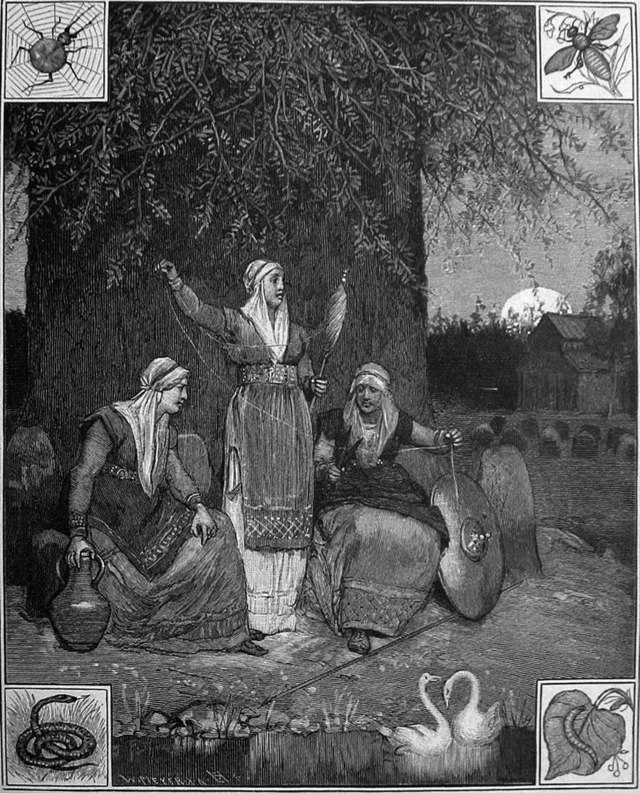
The Norns looked at me with sadness. “We knocked over one of our looms/templates/arrangements” 

Their tone changed, they looked at each other and I thought I could see emotion churning. They were arguing and then they stopped. They turned toward me and looked sheepish, that is if divinities can look sheepish. “It was a disaster/calamity/debacle.”

“Tell me then,” I was growing impatient.

Verdandi: “Well you see the loom we knocked over was . . .”

“What?” I almost shouted at them.

Urd: “It was the loom holding the pattern from Salim/Jerusalem.”

Continue reading “The Norns, Spiritual Mystery and Me, Part 2 by Janet Maika’i Rudolph”

The Norns, Spiritual Mystery and Me, Part 1 by Janet Maika’i Rudolph

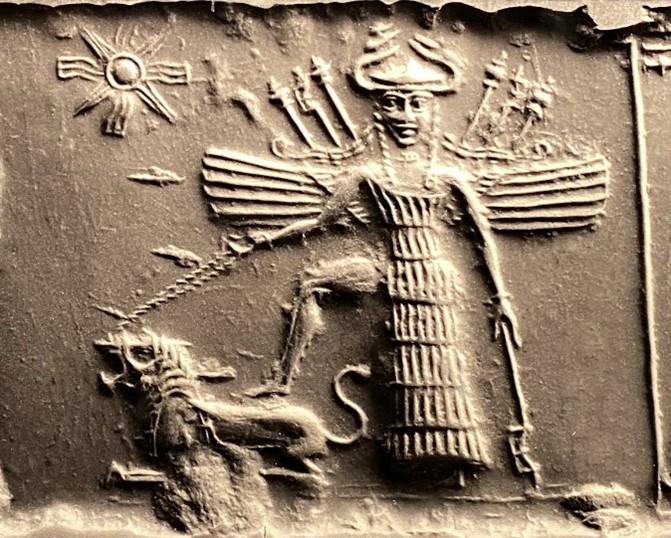
In 2020, I began writing my biography because some weird things were happening in my life including some which were time-bending. To help make sense of it, I wrote up “conversations” with the mythical characters of Persephone, Inanna and the Norns of the Norse. Throughout my bio, I speak to the Norns as an out loud meditation on the nature of time, fate and energy.

The three Norn sisters are Urd, Verdandi and Skuld. Their names come from Old Norse which is not a spoken language. The actual translation of their names is open to speculation. In general, here are their common meanings.

  • Urd – past
  • Verdandi – happening or present
  • Skuld – future or debt.

By mythological tradition, they show up at a child’s birth and then weave their “fateful” decisions about that child’s life into a tapestry. They are considered more powerful and fearsome than the gods because even the gods are ruled by the hands of fate (or Norns in this case). They were also treated as oracles where kings and warriors went to consult them much as was done in Delphi Greece.[1]

Continue reading “The Norns, Spiritual Mystery and Me, Part 1 by Janet Maika’i Rudolph”

From Footbinding to Abortion and Beyond – This Has to Stop! by Janet Maika’i Rudolph

Children’s Museum of Indianapolis

My husband, Marty, is a retired podiatrist.  He worked in pockets of New York City that were poor and largely immigrant. When he first started his practice, he treated women from China whose feet had been bound. Despite being officially outlawed 1912, footbinding was still being practiced well into modern times. He saw these patients in the 1970s and 80s.

For those who don’t know what it is, young girls, as young as 3-5 would have the bones in their feet broken and then the feet bound with cloth strips. Every few years, the feet would be broken again until the desired result was created. To create that affect, the toes would be flattened against the bottom of the foot and arch would be so broken and damaged that the heel would curl back to the front of the foot. At each of the breakings the girl would need to learn to walk again.  One can only imagine that pain of walking on foot bones that had been repeatedly broken. And here is an especially chilling part. The mothers would do it to their own daughters. I won’t go into further gruesome details because they can be easily looked up on the internet.  It left the girls crippled for life.

Continue reading “From Footbinding to Abortion and Beyond – This Has to Stop! by Janet Maika’i Rudolph”