This piece titled, ‘Love Facing’ is a meditation on the intergenerational dynamics of family violence and our need to move beyond labels in order to understand the complexities of American violence. It begins with a narrative critic of spanking as a corrective measure and its propensity to escalate into other forms of violence. The poem continues with reflection on how male privilege and power impact the disempowerment of women and girls. It signals forgiveness as a possible means of understanding intergenerational trauma and stress, however. The piece advocates an understanding of male privilege and dynamics of power and control, as a means of empowering women and children, affected by family violence. Furthermore, it examines our societies failure to raise healthy men and boys, who are comfortable openly expressing their emotions. In the end, the poem signals our human need for unconditional love, respect, and honor and need for religious and spiritual practice imbued with compassion, mercy, and kindness, or feminine attributes of the Divine.
“When the power of love overcomes the love of power, the world will know peace.” ― Jimi Hendrix
When I was in high school I heard a story about a girl who got drunk at a party after a football game and had sex with more than one of the football players. The story was told at the expense of the girl, who was categorized as “easy” and “cheap.” The idea that gang rape might have occurred was not something that either the teller or I might have been capable of considering, for these words and the reality to which they point were not part of our vocabulary.
However, the fact that I remember this story decades later suggests that even then something did not “sit right” with me about the way it was told. The image of the girl, who was cute and had curly long light brown hair still fleets through my memory.
Moderator’s Note: This has been posted on FAR twice, originally on April 7th, 2014 and then again on
During the past week I attended a Los Angeles premiere of a new documentary Anita: Speaking Truth to Power (Dir: Freida Lee Mock USA, 2013). The screening was sold out and I had great seats saved for me– sitting with a friend who works at Samuel Goldwyn, the distributor of this fine film.
In 1991, Anita Hill provided testimony she hoped would serve to dissemble the nomination of Clarence Thomas as a Supreme Court justice. Although the vote would end up being close (52-48) Hill’s testimony did not serve to dissuade the decision — Clarence Thomas’ nomination was confirmed and he was appointed to a life term on the Supreme Court four days after Hill’s testimony concluded. Here is an outline of the debate.
The following is a bit of a messy and meandering blog: a kind of a ‘brain train,’ that starts with a question of reification and eating disorders, and moves into a sense of the literal ‘consuming’ nature of oppression. So I will start with a ‘thank you’ to readers who will meander with me and with gratitude to the teachers whose thoughts I am wandering with along the way.
Reification is the process by which those created ideas that we externalize into institutions, concrete objects, or social principles then become so real to us that we tend to think of them as a separate reality or a thing/ life in and of itself.[1] I teach this concept in my ethics classes when we discuss the way in which actions and choices are connected to what we often consider to be external forces like “the government,” or “the economy,” when in fact, we are in relationship to and often, actively play a role in maintaining these realities (even when only playing a small role). Reification can subversively undermine our understanding of response-ability because it is a way of making the structures that form our society “other” than ourselves.
My students definitely struggle with this concept and often express the fear that they are too small as individuals to see any real change happen. (I too, often struggle with this fear when thinking about the reified ‘monsters’ of oppression and hate.) Dealing with this discouragement in class, I (and we) switch gears by emphasizing praxis and recognizing its successes. I ask my students to consider what can be done and what choices/changes I, they, or we are capable of making while re-membering changes already being made. As Gustavo Guiterrez says: “Pessimism comes from reality because reality is tragic, while optimism comes from action because action can change reality.”[2]Continue reading “Musings on Reification by Sara Frykenberg”
Phelps didn’t just live a life filled with hate but he also embodied the very reasoning why so many communities cannot cross that proverbial bridge to work together to see past their differences and maybe never will. In the case of Phelps, sticks and stones may break our bones, but words really do hurt.
Fred Phelps, an American Pastor who headed the Westboro Baptist Church in Topeka, Kansas died at the age of 84 on March 19, 2014. While some individuals leave behind legacies of their good deeds and loving memories, the only thing Phelps left behind was a family and church founded on the principle of hate.
A frequent eyesore at various events ranging from military funerals and gay pride gatherings to mainstream events that captured the attention of our pop-culture obsessed society, Fred Phelps and his clan believed it was their sacred duty to warn others of God’s anger over the growing acceptance of not only modernity in general but also issues like gay rights and abortion. From slogans and signs such as ‘God Hates Fags’ to ‘Thank God for IEDs (Improvised Explosive Devices), Phelps has caused many controversies both during his lifetime and after his death.
As I think about the incarceration of young black men for relatively minor drug crimes, and the murders of Trayvon Martin and Jordan Davis, I cannot help but compare the astonishing progress that Americans have made in overcoming prejudice against gays and lesbians to the astounding lack of progress we have made in overcoming prejudice against black Americans.
It is often repeated that the reason for changes in attitudes about gays and lesbians is the process of coming out—most people in America now know a lesbian or gay family member, friend, or co-worker. On the other hand, I would dare to speculate that many—perhaps most—Americans who are not African-American do not know a boy like Trayon Martin or Jordan Davis. If you do—count yourself lucky! Our society remains divided by race and class divisions (many of them a legacy of racism) that prevent many non-black Americans from knowing a single young black man. Continue reading “Segregation by Carol P. Christ”
I was first introduced to shame in the church. Shame paradoxically drew me closer to God, prevented me from committing sins, and helped me repress certain natural urges. The church I grew up in indoctrinated its congregation to believe that shame would transform us into true and wholehearted believers – that as carnal beings, we needed to feel both guilt and shame in order to be saved and transformed into spiritual entities.
One question that permeated my mind growing up, but I’d never dare to publicly ask:
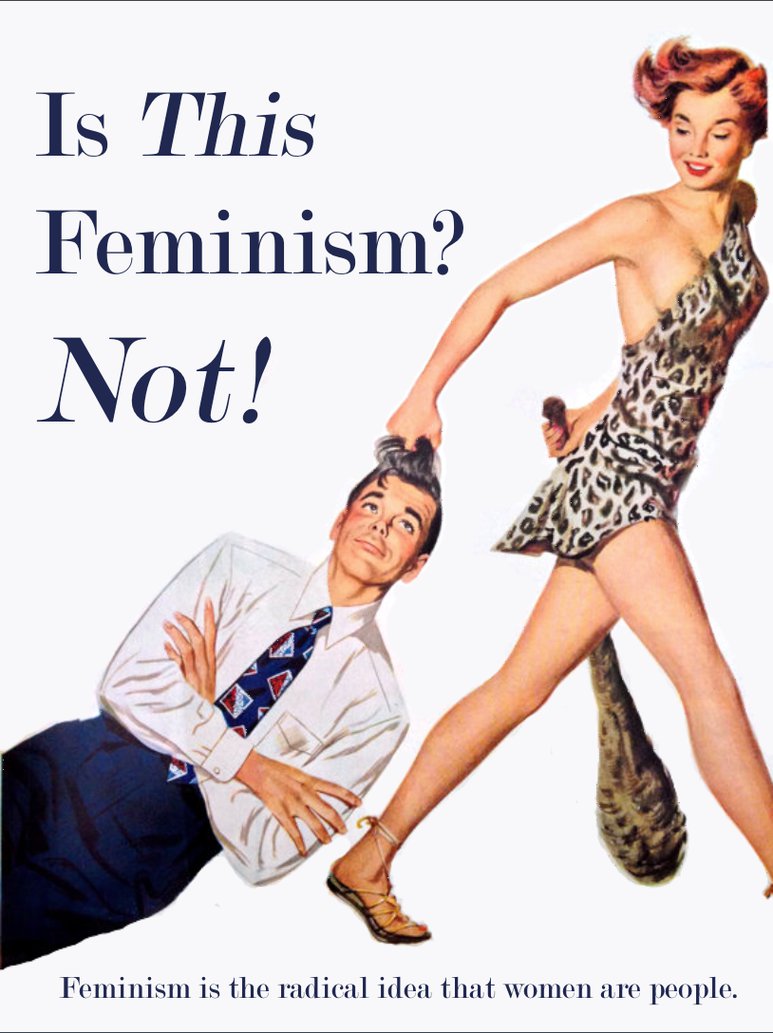
It is so easy to blame feminism for the ills of the world – mainly because of continued misconceptions and misunderstandings about the definition or meaning of feminism. Feminism is responsible for poverty, bad leadership, wars, the polar vortex, the list goes on. Feminism is still considered a derogatory term that serves to incite prejudice against those who label themselves as one. In fact, negative connotations surrounding feminism are exacerbated in today’s culture, especially in the media. Fox News seems to be the poster child of “femiphobia” – a term coined by Stephen Ducat and defined as “wanting to repress every man’s feminine side and demonize the feminine and gay wherever we see them.” Elisabeth Hasselbeck and Nick Adams, in a recent interview, illustrate this femiphobic viewpoint by blaming feminism for raising a culture of “wimps” and “wussies” and thus compromising the U. S.’s national security and weakening its global presence. In other words, feminism is to blame for the problems of the world.
According to Adams, men around the world are no longer allowed to be “manly” and that this phenomenon is a “dangerous” problem:
American men are of course very susceptible to it. It’s really important particularly in America given the leadership role that America has in the world that American men be allowed to be men.
What does in mean to be a man and how is Adams defining that stereotype? While I am aware of the discussion of gender identity and roles even gendered stereotypes, this post is not about what those roles mean. Rather, for this point of discussion, I want to address the issue of masculinity, feminism, and what it means to be a “wimp” as portrayed by popular media.
With that caveat in mind, I ask the following questions:
Is the author suggesting a move to a “hypermasculinity”?
Is Adams identifying masculinity with aggression and violence in a world where feminists and perhaps all women are demonized?
In a society dominated by the “alpha male” character trait,male honor and pride are paramount. Is Fox News telling men to replace so-called passive behavior with pride, abrasiveness, authoritarianism, and arrogance–in such a world if where women are demonized, then assaultand rape will follow. The call for “real men” or “hyper-masculinity” therefore provides a real potential to move us further towards a misogynistic rape culture of violence–in the direction of barbarianism.
Last week I reflected on Angela Yarber’s insightful essay and painting on Jephthah’s daughter. For those who did not read the earlier posts, the story of Jephthah’s daughter is found in the Hebrew Bible. Jephthah’s daughter was sacrificed by her father after he swore in the heat of battle that if his side won, he would sacrifice the first person he would see on returning home. Angela called us to reflect on who Jephthah’s daughter is in our time.
A former evangelical Christian friend of mine sent me information on the intriguing documentary God Loves Uganda. The newly released documentary addresses how the American evangelical movement has prompted a political and social shockwave in the country of Uganda. While missionaries are typically associated with delivering aid and improving the conditions of third world countries, the spreading of Christian values and ideals has inflicted suffering upon ethnic communities through evangelical indoctrination.
The intent of the film is to raise awareness of the political and social brutality that the evangelical missionaries are instigating; specifically through their teaching that homosexuality is a sin and should be dealt with accordingly. In Uganda this means death. Given the rise of globalization, transnational religious actors have been more enabled to engender other nations with their respective religious beliefs, often with minimal regard for the cultural and political landscape of the nation they wish to transform. Continue reading “Evangelical Missionaries Preach Death in Uganda by Andreea Nica”




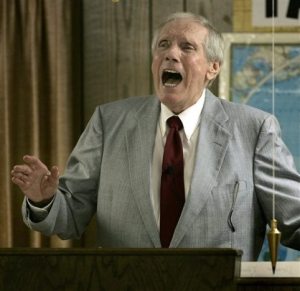 tor who headed the Westboro Baptist Church in Topeka, Kansas died at the age of 84 on March 19, 2014. While some individuals leave behind legacies of their good deeds and loving memories, the only thing Phelps left behind was a family and church founded on the principle of hate.


 er midrash on the story
 Feminism and Religion