

A Complicated History by Elise M. Edwards

Elise EdwardsIn my previous post, I wrote about my participation in planning a memorial event for the lynching of a man named Jesse Washington in Waco, Texas one hundred years ago. It prompted me to reflect on the challenge of faithfully remembering a conflicted past.  It’s important that we don’t just remember past events, but that we remember them appropriately.

I’m convinced that when we remember the past, we must avoid oversimplifying the stories of what occurred to suit our present day agendas and sensibilities.  We have to acknowledge the complexity, tension and conflict in what occurred, and perhaps even our own guilt and complicity in what is still occurring.  As a black feminist Christian ethicist, I face this challenge when one aspect of my identity seeks to address a particular issue through a narrative that implicates or denigrates another aspect of my identity. Uncomfortable as it is, I recognize Christianity’s complicity in its defenses of chattel slavery.  I recognize women’s support of patriarchy.

I went to a lecture a few weeks ago by Walter Brueggemann, a well-respected Old Testament theologian, titled “The Risks of Nostalgia.” Brueggemann warned us of the dangers of mis-remembering the past.  Pointing to texts from the prophets and Psalms, he demonstrated how the people of Israel remembered a past before exile without remembering the difficulties, the exploitative conditions, and the tensions of that time.  Excluding these harsher realities allowed them to gloss over the differences among them to unite in hatred and distrust in a common enemy—the one responsible of their present situation.  By misremembering, they lamented a version of past that didn’t belong to all of them because it didn’t include their diverse histories.  But the singular narrative served a purpose—it furthered their cause, their yearning and motivation to return to the way things were before.  Did this cause really serve all those who were yearning for it? It’s a question that comes to mind when I hear women yearn for a pre-feminist era or Christians yearn for an era of Christendom.

Like the Old Testament people of exile, we are in moral danger when we remember the past with a nostalgia that sweeps over the real stories of what happened in the past.  We risk buying into a narrative that harms us in its oversimplifcation.  A simple solution will suffice if we believe we have a simple problem.

Lynching was not a simplistic problem and the Waco Horror is not a simplistic story.  A black man was lynched for raping and murdering a white woman named Lucy Fryer.  I’ll admit it. The realities of the story make me uneasy. Jesse Washington confessed to a crime and was found guilty in the court proceedings that preceded his murder.  It makes sense to question whether the criminal proceedings were biased and whether his confession was coerced or illegitimate in some other manner.  But even if we question his confession or conviction, we shouldn’t gloss over them as if they never occurred. To present him as a purely innocent victim would be to distort the past to serve a cause – and even a cause as noble as community unity or racial justice should not be attained through lies.  People of integrity must guard against distorting the past for “the good” because the distortions themselves cause pain and harm.

Fryer’s family is still experiencing pain over her murder which precipitated the lynching.  Sadly, their pain is made worse by the remembrances of Jesse Washington.  Their pain does not mean we should not remember, but it does mean we cannot, as people of good conscience, romanticize violence or idealize its victims.  Some people might make Washington out to be a hero or a martyr, but the organizers of the memorial service didn’t remember him that way.  We didn’t cast him as a blameless victim.  But we remembered him as a victim, nonetheless.

We didn’t romanticize the lynching crowds and their pursuit of justice, either. Washington was brutally tortured and killed before a crowd of thousands.  If Christians are a people who embrace the love and mercy of a God who forgives the worst of sinners, they have to condemn even those crimes committed in the name of justice; crimes committed against criminals.

Noble causes, if they are just, must stand in the truth – the messy, complicated truth that resists casting all our heroes as saints, all our villains as irredeemable sinners.  Real humans aren’t characters who wear the white hats and black hats of the old Westerns (or even the white hats of Olivia Pope & Associates on ABC’s Scandal).

When we resist remembering simplistic, nostalgic stories, we can begin to grapple with the reality of how difficult it really is to achieve justice.  We can see humankind for who we really are. And maybe then we can ask for help.

We can ask victims to help us heal the wounds that persist.  We need their help to understand their pain and the underlying causes we seek to solve.

We can ask for the help of those who study the various aspects of our world and culture—the economists, the sociologists, the historians, the artists, the theologians and ethicists, the criminologists, and the scientists. We can be humble enough to learn what we don’t know about what’s really going on.

And I hope we also ask for divine assistance.  Despite their own complicated histories, wrongs, and imperfections, our faith traditions can enable us to do more than merely rightly remember, consider, and observe the problems in the world. They can embolden us with the courage of Harriet Tubman, Sojourner Truth, and Ida B. Wells-Barnett to speak a complicated truth and yet still dare to fight to make this a better world.

Elise M. Edwards, PhD is a Lecturer in Christian Ethics at Baylor University and a graduate of Claremont Graduate University. She is also a registered architect in the State of Florida. Her interdisciplinary work examines issues of civic engagement and how beliefs and commitments are expressed publicly. As a black feminist, she primarily focuses on cultural expressions by, for, and about women and marginalized communities. Follow her on twitter, google+ or academia.edu.

Caroline Schelling on Birth & Death by Stuart Dean

Caroline Schelling

Of the many letters Caroline wrote to her lifelong friend Luise, one of the most intense  (the 57th Letter) dates from seven years after the 4th Letter discussed in my last post.  By then both were married; only a few months earlier Caroline had given birth to her first child (Auguste); though Luise already had children, Caroline knew that one of them was terminally ill.  In the first paragraph Caroline describes how difficult Auguste’s birth was for her; in the second she consoles Luise over the impending death of her child.  She thus subtly parallels birth with death and hence the labor for one with mourning over the other.

Fifteen years later, only a few months after the death of Auguste–the last of her four children to die–Caroline’s generally positive disposition evidenced in the 4th Letter and her experience in grappling with birth and death evidenced in the 57th Letter were being put to the test.  Though she was holding up well, Friedrich Schelling (Friedrich), the man who was to be her third husband, seems to have been suicidal from feeling guilty (rightly or wrongly) for having failed to do enough to cure whatever illness killed Auguste.  Caroline wrote frequently and urgently to him, offering advice and comfort.  In one of those letters (274d) she characterizes the challenge of overcoming grief as a formula to be solved: “(death/pain) x (love/bliss) = (life/peace).”  She terms this one of her ‘primal axioms’ (the “Ursatz”), although she seems playfully to concede to Friedrich that he or perhaps someone else shares responsibility for it. Continue reading “Caroline Schelling on Birth & Death by Stuart Dean”

To Work and to Pray in Remembrance by Elise M. Edwards

Elise EdwardsOne hundred years ago, Jesse Washington was lynched downtown in Waco, Texas. Next week, on March 20th, some of my colleagues and I are organizing a memorial service to remember this horrific event and pray for a better future for our city.

We invited submissions of original prayers, poems, spoken-word pieces, music, drama, and other pieces of liturgy for this ecumenical memorial event.  We received a number of thoughtful, heartfelt submissions, but we also a question:

“Why in the world do we need a memorial for one person who was lynched?!?! In the reality of things, Jesse Washington was one of thousands of Blacks that were lynched in America during the time period.”

I thought the answer was so obvious that I initially brushed off the question. But as our group proceeded with the plans, I thought about the question and wondered whether our university community would understand why we are doing this. And honestly, in moments of exhaustion when I put off responding to emails, I wondered, too. Why am I doing this?

To remember. We memorialize one person who was lynched to remind us that every single one of the thousands who were lynched was a human being who was killed unjustly.

In the speech “Lynch Law in America,” from 1900, Ida B. Wells-Barnett describes the injustice: “Our country’s national crime is lynching. It is not the creature of an hour, the sudden outburst of uncontrolled fury, or the unspeakable brutality of an insane mob. It represents the cool, calculating deliberation of intelligent people who openly avow that there is an “unwritten law” that justifies them in putting human beings to death without complaint under oath, without trial by jury, without opportunity to make defense, and without right of appeal.”

Wells-Barnett was an African-American journalist and activist for civil rights and women’s suffrage. Her writings and activism advanced anti-lynching campaigns adopted by Black women’s clubs and the NAACP. Unsurprisingly, her work was controversial, even among women’s groups. Wells-Barnett argued that lynching began after the emancipation of slaves to repress “race riots.” When a constitutional amendment permitted black men to vote, lynching was used to violently prevent their participation in state and national elections. When fraud, intimidation, and local policy succeeded in suppressing the black vote, the brutality continued in the name of avenging or preventing rape and assault of white women.[1] For this argument, lawmakers, ministers, and women’s groups accused Wells-Barnett of defending rapists and subverting “justice” for their alleged victims.

She did not defend rapists. (Neither do I.) She condemned a system that used allegations of rape of white women to legitimate hanging, burning alive, shooting, drowning, dismembering, dragging, and displaying black men’s bodies. Some allegations may have been true. Many were false. Despite the veracity of the allegations, the vigilantes tortured and killed men, women, and children in brutal, public ways, and we must not mistake that for any form of justice. Lynching apologists explicitly valued white lives over others. Lynching was, and remains a crime against humanity.

In our own age of campaigns against the impartiality of law and law enforcement, we should remember the lynching victims and the tensions within earlier waves of feminism and the temperance movement over anti-lynching campaigns. We do not have to condone criminal behavior to call for humane law enforcement or prison reform. We can affirm the humanity of accused and convicted criminals in the pursuit of justice. So we remember Jesse Washington and the other lynching victims to engage more consciously in the activism of our time. We remember so that we don’t lose sight of the complexities of our work. We work in remembrance of the many victims of injustice.

We also gather to pray. For some people, prayer is about making requests to the divine. But in a more expansive sense, prayer is communication with the divine. In prayer, we set time aside to connect to something greater than ourselves. It’s our hope that gathering as a community to pray for the future of our city prompts us to see beyond individual concerns. In a liberation ethics framework, as explained by Miguel De La Torre[2], prayer is not limited to individual, private conversations with God in hopes of gaining wisdom and guidance. De La Torre presents prayer as a communal activity that brings together different members of the spiritual body. It involves the critical application of the biblical text to the situation at hand. This involves critical analysis of the social context that gave rise to the text or its common interpretation. So we pray to give us time to come together, to read scripture, to seek God and hear God through other members of our community.

So why are we gathering? Why do we memorialize one person when there are so many others who have been harmed, not just in my local community but all of our communities?

To remember past wrongs.

To commemorate.

To honor.

To inspire.

To call attention to persisting injustices.

To make us mindful in our work.

To provoke us to pray.

[1] This argument about the reasons for lynching is found in several of Wells-Barnett’s essays, but is quite developed in The Red Record: Tabulated Statistics and Alleged Causes of Lynching in the United States (1895).

[2] See Miguel A. De La Torre’s Doing Christian Ethics from the Margins (2nd Edition, 2014).

Elise M. Edwards, PhD is a Lecturer in Christian Ethics at Baylor University and a graduate of Claremont Graduate University. She is also a registered architect in the State of Florida. Her interdisciplinary work examines issues of civic engagement and how beliefs and commitments are expressed publicly. As a black feminist, she primarily focuses on cultural expressions by, for, and about women and marginalized communities. Follow her on twitter, google+ or academia.edu.

Mor, Celtic Goddess of Sun and Sea by Judith Shaw

judith Shaw photoMor is an ancient Celtic Goddess of the Sea and the Sun, bringing to mind the shining days of summer and the abundance of the harvest. Yet in a typical Celtic paradox in which opposites exist as one whole she is also a Dark Goddess of Death and Rebirth.
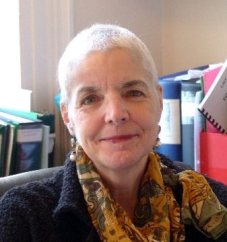
She is depicted sitting on a throne, revealing her association as a sovereignty goddess.  But no ancient stories of courtship and marriage are associated with Mor, no making of a king through marriage to Her.  So She must have been a sovereignty goddess in the most ancient sense – as a protector and guardian of the land, as the spirit of Earth itself. Continue reading “Mor, Celtic Goddess of Sun and Sea by Judith Shaw”

Wisdom Fiction (Part 1) by Elise M. Edwards

Elise Edwards“I was born in a strange little country town that may be like all other country towns, but I do not know. It was the world I was born to. The world is such a place that you need special things to understand it. I do not think I am a fool, but I do not understand life. It is like I am always standing in the dark somewhere. It could be on the edge of a cliff by a deep ravine… Or on a flat piece of all the land in the world… and I would not know. I would not know whether to step stand still. Either one could be a danger… When I am alone. Some lives are like that. Depending on the kindness of everybody.”

-from “Feeling for Life “ in Some Soul to Keep by J. California Cooper

In my previous post, I wrote about the truths we learn from black women’s literary tradition and from listening to the stories of those we too often ignore. Continuing that reflection over the next few months, I’d like to share some of the lessons from J. California Cooper’s short stories. The quote above is taken from the opening paragraph of one of her works.

Continue reading “Wisdom Fiction (Part 1) by Elise M. Edwards”

Ghosts by Lauren Raine

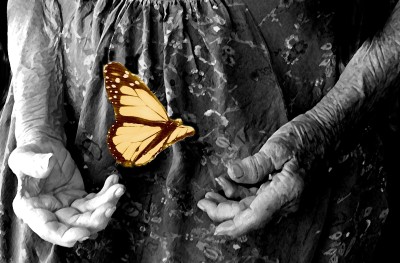
Florence's Hands by Lauren Raine
Florence’s Hands by Lauren Raine


GHOSTS

Where do the dead go?

The dead that are not corpses, cosmetically renewed

and boxed, their faces familiar and serene.

Or brought to an essence, pale ashes in elegant canisters.


I ask for the other dead

those ghosts that wander unshriven among our sleep,

haunting the borderlands of our lives.


Continue reading “Ghosts by Lauren Raine”

Inanna’s Autumn Gift: Fearless Spirituality by Carolyn Lee Boyd

Carolyn Lee BoydFall, the time of the Day of the Dead and All Souls Day, is a perfect season for us to contemplate “fearless spirituality” as we face our most essential fear, that of death. Though humans have celebrated these days for millennia, fear with a religious veneer pervades our culture, whether in hate towards women and the LGBTQ community, lies that demonize followers of other religions, terror of eternal punishment and spiritual unworthiness, and more.
When I seek guidance for cultivating spiritual fearlessness, I look to ancient Sumer’s Inanna and her willing descent into death. Her story cycle begins in fear of the Sky and Air gods and her desire to destroy her huluppu-tree, Earth’s first life. Gilgamesh hacks it apart to rid it of a serpent, a bird, and Lilith. The tree’s remains are made into Inanna’s throne and bed. In the next story she takes all the divine powers of her father, Enki, the God of Wisdom, and then joyfully celebrates her body and sexuality in her marriage to Dumuzi. Continue reading “Inanna’s Autumn Gift: Fearless Spirituality by Carolyn Lee Boyd”

The Elements Are Us by Elizabeth Cunningham

Elizabeth Cunningham headshot jpeg

My late uncle, an atheist since age twelve when well-meaning Christians told him his youngest sister was “in a better place,” is now ashes in three red cloth bags. He was the last of my mother’s siblings to die, at the age of ninety-eight, the first being their little sister who died at age four. His children and grandchildren are taking his ashes to be scattered at sea where they will mingle with the bones the pirate Blackbeard, who met a violent end in these same waters almost three centuries earlier. Though most of this memorial weekend is a series of social occasions, and the guests on the boat continue chatting, I am moved by the sight of my cousins taking up spoons and scattering their father and grandfather’s ashes on the wind.

He is returning to the elements that sustained his life: fire, earth, air, water.  When we breathe, drink or eat, sweat or shed a tear, in every moment of our lives, we connect through the elements to all the life that has gone before us and all the life that is to come.  No belief system is necessary to know this truth in our bones.  May we learn to care for the elements—rivers and oceans, air, soil, fuel for light and heat—as we would care for our own bodies. When the elements are degraded, we are degraded; when they are vital, we are vital. The elements are our ancestors, our children. The elements are us. Continue reading “The Elements Are Us by Elizabeth Cunningham”

A Moment of Silence by Natalie Weaver

Natalie Weaver editedIn my last post, I shared with you my wonderment at the power of music to speak for us when we lack speech and to touch us when we are beyond reach.  Now, I experience wonderment at the power of silence.  For, it was silence that in the end helped my father-in-law, who was truly my father, to shed his mortal coil.  After the noise of caregivers and nurses, of talking and encouraging, of wailing and whispering, there was a window of silence when I sat alone with him, stroking his forehead lightly.  I knew he would be free in that quiet to exhale, and with that final breath, he too became silent.

Silence then filled the house, until it was punctuated by the tidal sounds of grief.  And, just like the tides, the grief now ebbs and flows between moments of gentle motion and moments of crushing force.  Behind that grief, though, and behind the rituals we perform to externalize that grief, there remains a giant silence.  It is strange to me that the silence is not experienced as emptiness.  It is not a void or a vacancy or a nothing.  It is an active presence, that is, the silence itself.  It is a deep mystery to be experienced in its own right, without the error of imposing upon it the productions of noise.  For, the silence of bereavement is a fathomless place from which to hear something we could not have heard before.   The silence is holy. Continue reading “A Moment of Silence by Natalie Weaver”

Death with Dignity by Carol P. Christ

Carol Christ in LesbosIn the summer of 1960 when I was 14 years old my much loved grandmother Mae Inglis Christ died of a cancer that affected her brain. The last time I saw my Nannie was shortly after her diagnosis in the early spring. While we were visiting, the cancer affected her back, and she took to her bed. In those days children were not allowed in hospitals. I never saw my grandmother alive again, but my mother told us that our grandmother was hooked up to tubes much longer than she should have been. Mother vowed, “This will never happen to me.” I was driven to the funeral in a limousine with my grandmother’s girlfriends. They spoke about my grandmother’s last days, describing how (because her mind was affected by cancer) my little grandmother had screamed and screamed at them for not visiting–even though they were with her every day. They found my grandmother’s outbursts so traumatic that they said they were relieved to see her looking so peaceful in her coffin. Continue reading “Death with Dignity by Carol P. Christ”