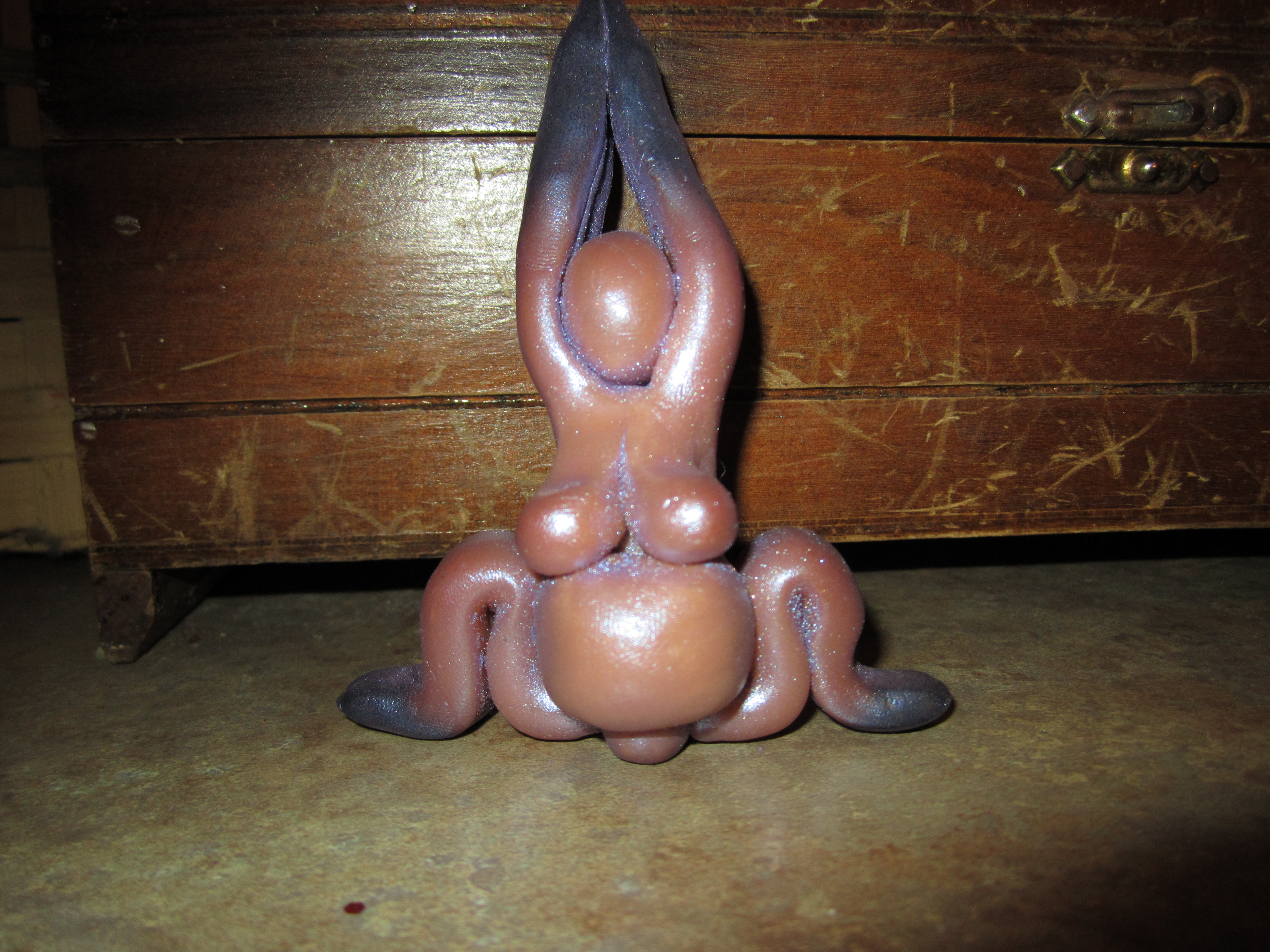
Surviving and Thriving: For My Defender by Sara Frykenberg

Sara FrykenbergLast year many of my actions, choices and emotions could have been characterized as a part of my ongoing efforts towards what I recognize as survival: I was often ‘trying to make it through,’ live ‘despite,’ exist ‘even though,’ grapple with violence or choose in such a way that I could continue to live in the midst of chaos.

Survival is an extremely important skill, practiced by many people for many different reasons.  And before I continue here, I would like to say that in all of my struggles last year, I always had the basic necessities required to live my life.  Many people do not; and for many, survival is an everyday practice that may or may not be achievable, requiring access to necessities that may or may not be accessible.  No one tried to kill me last year.  I had access to food.  I did not lose my home or livelihood; though I felt these things threatened.  I am privileged to live where and how I do, with many resources available to me.  These resources helped me to make it though, where other people survive with far, far less.  I choose to share my own feelings of survival because I want to decry the self-dehumanizing shame that tells me I am bad or wrong for feeling my own experience.  I identify my survival in an attempt to also, thrive. Continue reading “Surviving and Thriving: For My Defender by Sara Frykenberg”
A Poem About Sister Love by Marcia Mount Shoop

A Poem:  Sister Love

This post will
never be complete
it can only house the fragments,
the remains
of days at my sister’s hospital bed

the vortex of medical labels
“critically ill”
“brain aneurism”
the singular attention to
fragile body chemistry
sodium, potassium, blood sugar, magnesium

Continue reading “A Poem About Sister Love by Marcia Mount Shoop”

Feeding the Dead by Deanne Quarrie

Deanne QuarrieMost people really love this time of year and I share much of that.  Living in South Central Texas we actually only have two seasons, with a perhaps two to three weeks in between what we laughingly call spring and fall.  Because the winters are not harsh here, the step into spring feels different from those whose winters are frozen for months on end.  We do experience some relief when our temperatures finally drop a bit in October. Even then those drops are only teasers.  When we do finally get a briskness in the air in the wee, early morning hours of dawn but when the sun rises overhead, any memory of that coolness is forgotten.  This morning at 5:30 am, when I woke, it was 54 degrees. I stepped outside to smell and feel the air, so clean and cool.  And yet, now it is 85 degrees and rising, it once more feels like summer. We don’t have the sudden frosts that turn our trees to vibrant reds, yellows and browns.  Yes, the leaves eventually turn and fall to the ground, but we have no heavy freeze and so our colors are pale compared to those in the North and colder climates.

Many Texans think the emotional feel for our two seasons is backwards, believing that summer, with its blazing sun, is the time to withdraw.  Then in winter, when the weather is mostly mild, that’s the time to come out to play.  This is a reversal of pagan thinking about the seasons in North America. Continue reading “Feeding the Dead by Deanne Quarrie”

“Enlightened Sexism” and The Media: The Cultural Attack on Feminism by Michele Stopera Freyhauf

Freyhauf, Feminism, Religion, Durham, Old Testament, Blogger, Bible, Gender, Violence, Ursuline, John CarrollWhat is a feminist mother of four daughters to do these days?  Look at our media and how girls and women are portrayed to our daughters, teens, and young adults. Then take a look at how media portrays the face of feminism, promoting every negative stereotype out there.  As I scroll through the magazines, listen to songs on the radio, and watch the programming targeted at girls in junior high and up, I cannot help but ask the question – Is the media trying to destroy feminism?

While this introduction might sound drastic, much truth lies behind the questions.  One merely needs to look around and watch former Disney Star, Miley Cyrus, twerk and make lewd gestures with a foam finger while grinding against a man, almost twice her age, as he sings about the blurred lines of sexual consent. When I saw the news stories and yes, watched the video, I was utterly mortified and stunned.  Gloria Steinem, in a statement that seems to condone this behavior stated that Cyrus’ performance (actions) is not a new phenomenon, but a product of American culture.  Instead of looking at it through the lens of degradation and influence, she defended the young star by saying:

 “I wish we didn’t have to be nude to get noticed. But given the game as it exists, women make decisions.  For instance, the Miss America contest… the single greatest source of scholarship money for women in the United States.  If a contest based only on appearance was the single greatest source of scholarship money for men, then we would be saying ‘this is why China wins.’ You know?  But that’s the way culture is.  I think that we need to change culture, not blame the people that are playing the game that exists.”

When Cyrus’ actions are boiled down to being “nude to get noticed,”  and we accept this behavior by merely chalking her performance up to  culture – isn’t it time to change culture?  Continue reading ““Enlightened Sexism” and The Media: The Cultural Attack on Feminism by Michele Stopera Freyhauf”

Liberations of Immigrant Women in Western Religious Conversion by Andreea Nica

Andreea Nica, pentecostalismThe prolonged debate around feminist subjectivity and religious participation continues to evoke much compelling discussion in academia, political arenas, and public space. There have been a number of academic studies around the intersection of gender, religion, and migration, specifically on how gender and immigration assimilation is constructed and managed within western religious systems.

I am currently researching the trajectories of immigrant assimilation and conversion, and how gender relations and religious identities are managed within these processes to further develop my proposal for doctoral study. I find this area of research fascinating as it’s so diverse and pertinent to the progression of gender equity amongst religious participants. Continue reading “Liberations of Immigrant Women in Western Religious Conversion by Andreea Nica”

Birth Song, Life Song, Death Song by Molly

editMollyNov 083“A woman can spin a primal umbilical rope within her womb through which she passes life-energy to the future.” –Melissa Raphael
“In some indigenous cultures of the Americas there is the practice of finding one’s death song while alive. This song becomes the ally of the person throughout their lives, so that they become very acquainted with what the song means in their lifetime. Death then, is a companion of life, and is never forgotten. In the hour of death, these people would, if they were able to, sing their death song–exiting this world with song on their lips and no doubt feeling the power their ally-song had gathered by being with them in their life. I can see that a death song would provide a connection between the person and the cycles of life, guiding the dying person into the next world and helping to allay fear…” –Leslene della-Madre, Midwifing Death

I was introduced to blessingways, or mother blessing ceremonies, as a girl when my mother’s group of friends hosted them for each other during their pregnancies. I loved attending the ceremonies for my mom during her pregnancies with my younger brother and sister and witnessing the web of love, support, and commitment woven around her. They touched me deeply with their sacred, magical, and mysterious flavor. When I was twelve, the same group of friends had a coming of age blessingway ritual for the daughters of the group, ranging in age from 10-16. It was a mystical, beautiful experience. We wore wreaths of flowers in our hair and were blessed with wisdom and tokens from the wise women of our tribe. At 34 years old now, I still have my folder of prayers, quotes, and messages from that day. For years it smelled faintly of rose petals.

Continue reading “Birth Song, Life Song, Death Song by Molly”

Truths My Mother Taught Me by John Erickson

I never gave much credence to religion but through my mother, I met G-d, and through her I understood that I’m not a feminist because of the books I’ve read but rather because of the woman I call mom.

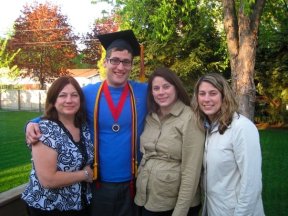
Graduation PhotoThe first question I always get asked when I’m in feminist spaces is: “What inspired you to become a feminist?”  Although I could go into the various histories revolving around men’s involvement in the early stages of the women’s movement to the similarities between the LGBTQ and women’s movements, my simple answer has always relied on one person: my mother.

I’ll be the first to admit (as well as many other people who will join me in the same chorus) that my mother deserves Sainthood for having put up with all the shenanigans I have, and still continue to, put her through. From running away from our local Catholic church the moment she dropped me off at Sunday School, to swearing like a sailor on leave at a very early age in front of Father Schmidt (who still fondly remembers me and the list I brought in with me to the confessional booth). Continue reading “Truths My Mother Taught Me by John Erickson”

Mindfulness of Putting Ourselves Down by Oxana Poberejnaia

oxanaFrom the Buddhist point of view, all phenomena are conditioned, i.e. they arise, carry on, and come to an end because of other phenomena. Buddhism does not look at anything we experience as “things”, but rather as processes.

Confusion arises due to various factors, chief among them : 1) vague sense of “ego”, and 2) language. The vague sense of ego is portrayed in Khemaka Sutta as the last delusion that a monk drops before getting Enlightened, so we won’t worry about it now. Where language is concerned, Buddhism stands on similar positions to those of postmodernism and feminism, i.e. our social world is defined by how we speak about it. One can say that we actually create society by the act of speaking.

Continue reading “Mindfulness of Putting Ourselves Down by Oxana Poberejnaia”

Birth Warrior by Molly

editMollyNov 083“In this culture…a woman can be made to feel foolish for emphasizing the centrality of giving birth to her identity or her personal religiousness, her ‘womanspirit…’” –Stephanie Demetrakopoulos (Listening to Our Bodies)

After the birth of my daughter in 2011, I received a small package from a Birthing from Within mentor friend. In it was a sweet little t-shirt imprinted with the words, My Mama is a Birth Warrior. The words on the shirt surrounded a labyrinth image, which I love as a metaphor for birth and life

Written on the enclosed card was the following:

Imagine a tribe in which a woman is prepared for childbirth in the same way warriors are prepared for battle. Imagine a Ceremony for this woman before she gives birth, a grand send-off with holy songs and fire. Imagine a feast, prepared just for her.

Her tribe tells her, they say to her “Go to your journey, you have prepared. We have prepared you. If you fall from your horse once or a hundred times, it does not matter. All that matters is that you come back to us, that you come home.

Throughout your journey–your labyrinth of Great Love, Great Determination, Great Faith and Great Doubt—you rode on!

The Great Tribe of Mothers welcomes you back from your birth journey with honor.

Modeling her little t-shirt.

Imagine, indeed. After I read this note I reflected that I did feel I embarked on a mighty journey during my last pregnancy, I did pass through those Gates, and I did ride on. I AM a birth warrior!  Continue reading “Birth Warrior by Molly”

To Dust and Ashes by Natalie Weaver

Natalie WeaverThis year marks the fifth anniversary of the publication of Mama, PhD: Women Write About Motherhood and Academic Life, edited by Caroline Grant and Elrena Evans.  I contributed a chapter.  A few days ago, I was contacted by the editors and asked for an update.  “What had changed for me in five years?” they asked.  As I tried to respond to their questions, I was surprised by the gravity in my heart.  When I wrote about motherhood and life as a professional theologian five years earlier, I was a new mother, applying for my third-year review, and trying to navigate my nascent roles as both mom and scholar/educator.  I felt overwhelmed to be sure, but I was overtly grateful to have such a rich and full array of choices about how I lived my life.  Here, a few years later, I am applying for full-professorship.  I am a more seasoned mother with two healthy children.  I chair two departments at my school, and I am generally more established in the many things I juggle simultaneously.  Had I given it any consideration, I would have anticipated a more cheerful five-year check-in. Continue reading “To Dust and Ashes by Natalie Weaver”