Honoring Our Dead, Holding their Stories by Marie Cartier

MarieCartierforKCETa-thumb-300x448-72405Next Saturday, November 1,  is the holiday Día de Muertos, or Day of the Dead. This is a Mexican holiday that has currency now throughout the world—but especially in California. After all, in 2014 Latinos will surpass whites in California demographics. It is prevalent at this time in Southern California to see sugar skulls decorated—to even have children make decorated sugar skulls and honor the dead. The holiday provides a focal point for a centered observance and prayer dedicated to those who have died in the past year. It is connected to the other holidays at this time, particularly Halloween where as we Wiccans often say “the walls between the worlds are thin.”

Another tradition celebrated at this time is creating an altar for loved ones—or several altars or ofrendas. The altars can hold sugar skulls, photos and artifacts of the deceased, and marigolds. Marigolds are a symbol of death and are referred to as “the flower of death.” Marigold petals might mark a path from a home to a grave in a village so that the dead can find their way back for this holiday. Marigolds make arches and decorations in and around the altars/ofrendas for the scent of the marigold is purported to draw the dead back for the Day of the Dead reunion. The holiday has its roots in indigenous Mexican holidays and continues back possibly 4,000 years to Aztec rituals honoring the goddess Mictecacihuatl, the Queen of the Underworld. Continue reading “Honoring Our Dead, Holding their Stories by Marie Cartier”

Anne Hutchinson, America’s First Feminist Theologian: 1591-1643 by Carol P. Christ

Carol Christ in Lesbos“She had rather been a husband than a wife; and a preacher than a hearer; and a magistrate than a subject.” Reverend Hugh Peter of Salem

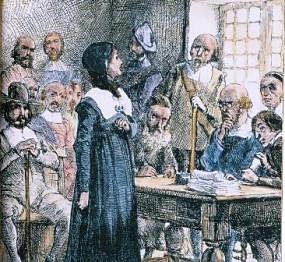
Anne Hutchinson was banished from the Massachusetts Bay Colony for heresy in 1637 and excommunicated from the Puritan Church of Boston in 1638. Her banishment came just three years after she, her husband, and eleven living children arrived in America seeking the freedom to practice their religion as they saw fit. Governor Michael Dukakis pardoned her in 1987. Historian Howard Zinn called her a true American hero.

anne hutchinson trialI managed to get through graduate school in Religious Studies without ever having studied the theology of Anne Hutchinson,* though I vaguely remember references (probably with smirks of disapproval) to the “Antinomian Controversy” which is associated with her name. I recall Anne Hutchinson’s name because of an article published in Feminist Studies in the 1970s, when I had just begun to study women and religion. However it was not until recently that I learned of her place in history through reading American Jezebel by Eve LaPlante.

Hutchinson was accused of theological errors in her trials. The Calvinist doctrine of predestination figured heavily in the accusations. But the real issue at stake was that Anne dared to follow her own inner knowing, to articulate it theologically, and to teach her views against the grain of the Puritan authorities in Boston. Continue reading “Anne Hutchinson, America’s First Feminist Theologian: 1591-1643 by Carol P. Christ”

Writing: Changing the World and Ourselves. By Ivy Helman

I still remember the first tim20140903_180423e I read Mary Daly’s Gyn/Ecology. It awoke something within me. Her use of language, the power of her writing and the ease with which she created new words taught me so much about the world around me and about the way the language, and subsequently its use in writing, shapes lives, choices, abilities and destinies. She also taught me about myself.

I was hooked, but not just on Mary Daly. Shortly after I finished her book, I moved onto other feminists writing about religion like Katie Cannon, Judith Plaskow, Alice Walker, Carol Christ, Rita Gross, Gloria Anzaldua, Audre Lorde, Adrienne Rich, Margaret Farley and Starhawk to name just a few. All of them, in fact every feminist I’ve ever read, has shown me the way in which words have power and how words speak truth to power. Ever since, I’ve wanted to be the kind of writer whose words carry a power that not only affects people but also inspires a more just, more equal, more compassionate and more humane world. In other words, I wanted to be a writer activist.

Yet, I’ve always carried around with me a sneaky suspicion that people don’t consider writers true activists. If you aren’t holding a sign, screaming or participating in some sort of public demonstration or civil disobedience, then you have no right to call yourself an activist. Is that really true? Continue reading “Writing: Changing the World and Ourselves. By Ivy Helman”

Fannie Lou Hamer’s Commitment to Life by Elise M. Edwards

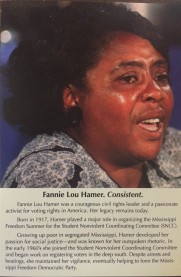
Elise EdwardsA few weeks ago, I came across a postcard that I was given at a conference last year. I got the postcard (advertisement?) because it has a picture of Fannie Lou Hamer on it, and in my home and office, I like to display images and quotes from inspirational women, especially black women. Hamer was a sharecropper from rural Mississippi who became a leader within the civil rights movement in the United States. I was happy to have something with her likeness on it. It was only later that I looked at the text on the front and back of the card, which read in part, ”Often called the ‘spirit of the Civil Rights Movement,” Hamer worked tirelessly on behalf of the rights of others—including the unborn. [She said,] ‘The methods used to take human lives such as abortion, the pill, the ring, etc. amounts to genocide. I believe that abortion is legal murder.’” I realized then that the card was distributed by an organization called Consistent Life, who, in support of a “consistent ethic of life,” is “committed to the protection of life threatened by war, abortion, poverty, racism, capital punishment and euthanasia.”

I was conflicted about the ushamere of Hamer’s image for this organization’s purposes. It is true, Hamer did have those views about abortion and birth control. But I did not know if her image and story was being manipulated for a particular political and religious agenda—one I do not align myself with. I put the card in a box of other images and quotes. I didn’t display it, but I didn’t throw it away, either, which is why I came across it again a couple weeks ago as I was cleaning and decorating my home office. I had the same misgivings about the image as before, and I set it aside again. Continue reading “Fannie Lou Hamer’s Commitment to Life by Elise M. Edwards”

She Alone Was There In The Beginning: Nature Creatrix by Stuart Dean

Stuart WordPress photoI concluded my last post by suggesting that “Creator” in the Declaration of Independence (DI) should have been ‘Creatrix.’  Though ‘Creator’ imbues the DI with a bit of quasi-scriptural authority, the possessive pronoun “their” before it effectively limits the full benefits of creation to men.  That alone should have precluded even the suggestion that the DI effectively endorses Christianity or that it constitutes the basis for a civil religion.

Quite obviously that has not been the case, but that should not be taken to validate the misogyny the DI manifests.  ‘Creator,’ the masculine form of the Latin noun derived from the verb ‘to create’ (‘Creatrix’ is the feminine), is unambiguously masculine in a way that ‘God’ simply is not.  Its appearance in the DI raises the suspicion that it was selected to underscore the masculinity of “Nature’s God,” the phase used in the DI’s opening paragraph.  Surely some of the signatories of the DI knew their Latin authors well enough to know how peculiar it is to speak of Nature as having or needing a God.  Perhaps they wanted to clarify things. Continue reading “She Alone Was There In The Beginning: Nature Creatrix by Stuart Dean”

Right to Life vs Right to A Life: Abortion & The Death Penalty by Marie Cartier

MarieCartierforKCETa-thumb-300x448-72405Earlier this week I went to hear Sr. Helen Prejean speak about the death penalty. You will remember, if the name does not immediately ring a bell, that the amazing movie Dead Man Walking (dir. Tim Robbins, 1995) was about her and her ministry to provide solace and closure with God to those inmates on Death Row. In the film, Sr. Prejean was played by Susan Sarandon. Dead Man Walking, a phenomenal hit, chronicled her first attempt at this ministry—her trials and limited success—in helping Matthew Poncelet come to grips with what he had done, ask forgiveness of the victims’ parents (because he was complicit in the murder of two teenagers) and face his death with dignity.

dead man walkingIn addition to teaching Gender and Women’s Studies, I have also been the screenwriting professor at University of California Irvine since 1992. I have used the screenplay for this movie (adapted from Prejean’s book and direct interviews) almost since it was published. It’s a great example of how research, interview, and authenticity can make a movie work—rather than “making it up.” Even the title was new to most of America- “Dead man walking!” refers to the last walk an inmate makes as he (or she) walks to his (or her) death.

So, I was enthusiastic when I heard that Sr. Helen was speaking at a local church very close to my house. Although I’ve used the screenplay for well over a decade, I had never met her or read the actual memoir she wrote. It seemed the perfect opportunity to meet her and get a signed copy—and also something my students would love to hear about when we discuss the film in the winter. Continue reading “Right to Life vs Right to A Life: Abortion & The Death Penalty by Marie Cartier”

Reviewing Gender and Career Progression in Theology and Religious Studies by Michele Stopera Freyhauf

IMG_4764 copy

Abstract from the Study:  The low proportion of women within the subject areas of Theology and Religious Studies has long been observed, and is increasingly recognised as a serious problem for staff and students. In this new study, Mathew Guest, Sonya Sharma and Robert Song chart patterns of gender imbalance among staff and students across UK Theology and Religious Studies departments, exploring why such patterns remain so persistent. Drawing on interviews with Theology and Religious Studies academics across the country, the report examines the professional life of female university staff, and makes recommendations for how universities might address the inequalities of opportunity and practice that emerge.

The Report can be found at this link: http://trs.ac.uk/wp-content/uploads/2013/11/Gender-in-TRS-Project-Report-Final.pdf

While this report focused on UK institutions, it is an important study for this field of study and did garner feedback outside of the U.K.  Some of the findings that may be of interest:

  • Females outnumber males at the undergraduate level in theology and religious studies (60/40).  When moving to the taught post-graduate level, the proportion of female students drop to 42%, and at the post-graduate research level (Ph.D. program) another drop to 33%.
  • Women make up 29% of academic staff in the field of theology and religious studies.  37% amount early career academics and lecturers, 34% senior lecturers, and only 16% amount professors.
  • Comparing the field of theology and religious studies to other disciplines across the humanities, social sciences, and natural sciences reflect the same trajectory of gradual female withdrawal in tandem with academic progression.  The drop-out rate seems to be more dramatic in theology and religious studies, especially between the undergraduate and taught postgraduate levels.
  • Structural factors influencing this pattern include the tendency of theology and religious studies departments to recruit postgraduates from international contexts in which a form of Christianity that favors the authority of men is prominent.
  • Interviews with academics in the field reveal additional factors which include entrenched connections to Christianity and Christian churches, the gendered style of academic engagement in some of the sub-discipllines, and the up-hill struggle to develop the confidence to succeed in a male-dominated environment.
  • Generic issues include poor allowance for childcare and family responsibilities as well as bullying.
  • Advisors have a profound effect as well as interaction with the faculty.
  • Often, women are pressured to perform better than their male counterparts in order to stand out from the other female candidates.
  • Gender stereotypes that work against “women’s entrance and mobility” in academic jobs, especially those related to leadership positions.
  • Collegiality focused on “male sociability”whereby women’s ideas are suppressed or they find themselves on the margins within their departments.
  • Being the lone voice or scapegoat in the department for “women’s issues.”
  • Studying stereotypical topics and migrating away from traditional “male” disciplines.

Continue reading “Reviewing Gender and Career Progression in Theology and Religious Studies by Michele Stopera Freyhauf”

Are You Ready for Some Football? by John Erickson

Although putting women in charge of drafting new policies that address the “woman problem” currently facing the NFL, it too reeks of the similar dismissive and patronizing actions women face when trying to obtain leadership roles in their religious traditions. Supercilious progress for the sake of progress isn’t progress and progress under the guise of silence is still misogyny. We need women in positions of leadership in both the NFL as well as in religious traditions. The culture of violence and silence will only continue, albeit with a Band-Aid firmly in place, holding the painful experiences and histories of women, long forgotten and often overlooked, until society values their rights just as much as the men leading the prayers and those that are being prayed for on Sundays across America.

John Erickson, sports, coming out.There is never a reason for physical violence.  There is never a reason to hit your partner or child to the point where they are unconscious or bruised.  There is never a reason to inflict violence against someone else, but apparently there are exceptions to these rules if you’re an NFL football player.

In my native state of Wisconsin, watching football on Sunday is synonymous with attending church prior to the game.  Watching football on Sunday is a cultural norm in many, if not all, different regions of the country where individuals, whether you like it or not, gather each Sunday to both praise and pray that your team ends up on top.
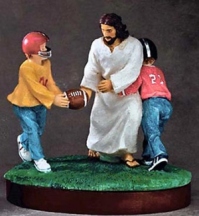
Football Jesus

In Wisconsin, you attend church with your family and head to your desired destination where you gather with friends and family to eat, talk about your life, and of course watch your local football team battle their weekly rival.  Although I am not much of a football fan these days, I have very fond memories of attending football games, watching them with my family and talking about the Green Bay Packers’ Super Bowl chances.  It was my time to both bond with the men of my family as well as catch up on the gossip the women would whisper back and forth to each other at the dinner table while the men were in the other room screaming at the TV.

Although I’m sure I will watch more games in my future, lately, all I do is cringe when I think about the growing violence that women and children face and have faced in the large shadow of an organization worth north of $9 billion dollars.

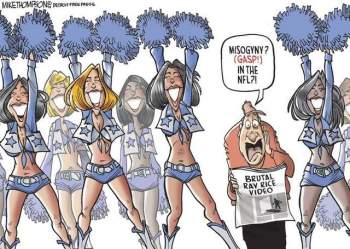
The biggest scandal to hit the news waves lately is that of Baltimore Ravens running back Ray Rice’s assault of his wife in an Atlantic City elevator.  Although Rice and the various other incidents regarding NFL players and violence is disturbing, the biggest problem facing the NFL isn’t just its treatment of women but its continual commodification of them as a disposable resource emblematic with the culture of violence that it has created.

photo (1)

If you didn’t know, women make up an estimated 45% of the NFL‘s more than 150 million American fans and have, in recent weeks, become their most valuable resource and source of criticism.  However, after a long string of incidents stemming back from NFL teams underpaying cheerleaders to the Ray Rice incident, one needs to ask what the roles of women, if any, are outside of the disturbing images of the abused wife, hypersexualized cheerleader?  Is being dragged out of an elevator by your abusive husband the only way to get women’s issues addressed in the NFL by fans, league owners, and the NFL commission?

The roles of women in the NFL and religion have many similarities.  Aside from end zone celebrations where players praise God for his apparent direct role in helping them score a winning touchdown or certain players edifications as gods on Earth, women make up the crux of both NFL fandom and attendance but are responsible for the gatherings similar to the ones I, and many others, grew up with.
bilde

Although putting women in charge of drafting new policies that address the “woman problem” currently facing the NFL, it too reeks of the similar dismissive and patronizing actions women face when trying to obtain leadership roles in their religious traditions.  Supercilious progress for the sake of progress isn’t progress and progress under the guise of silence is still misogyny.  We need women in positions of leadership in both the NFL as well as in religious traditions.  The culture of violence and silence will only continue, albeit with a Band-Aid firmly in place, holding the painful experiences and histories of women, long forgotten and often overlooked, until society values their rights just as much as the men leading the prayers and those that are being prayed for on Sundays across America.

Ann Braude said it best in her foundational text Sisters and Saints that “if we want to understand the history of American women, we need to examine the religious beliefs and activities that so many have found so meaningful.” Without women, we wouldn’t have many, if not all, of the religions that are present throughout the world today and in case we forget, without women, we too wouldn’t have the millions of little boys who grow up being taken to and from practice by their mothers with the hope that they too could one day become the professional football players that fans scream and pray for.

Without women, there is no NFL and without women, there is no religion.  Kelly Brown Douglas said it best on this very blog when she stated, “It is the violence that violence creates.”  Although I agree with her, I would only add that while violence does indeed create violence, the real sin isn’t the violence itself but rather the silence that follows.

Let us pray that we will continue to not be silent and that we will rise up and fight for the millions of women (and men) each day who do not live in fear that their significant other’s multimillion dollar contract will not be reinstated but rather that they and their children may not see another day on this Earth.

 John Erickson is a Ph.D. Candidate in American Religious History at Claremont Graduate University.  He holds a MA in Women’s Studies in Religion; an MA in Applied Women’s Studies; and a BA in Women’s Literature and Women’s Studies. The LGBTQ and women’s rights movements, masculinity studies, gender theory, and the utilization of technology in forming communities and creating new teaching methodologies influence his research interests.  His work is inspired by the intersectionality of feminism, queer identity, LGBTQ history, and religious and sexual cultural rhetoric. He is a Non-Fiction Reviewer for Lambda Literary, the leader in LGBT reviews, author interviews, opinions and news since 1989 and the Co-Chair of the Queer Studies in Religion section of the American Academy of Religion’s Western Region, the only regional section of the American Academy of Religion that is dedicated to the exploration of queer studies in religion and other relevant fields in the nation.  When he is not working on his dissertation, he can be found at West Hollywood City Hall where he is the City Council Deputy and Chief of Staff to Councilmember Abbe Land. He is the author of the blog From Wisconsin, with Love and can be followed on Twitter @JErickson85

Reciprocity, Empathy, and Reconciliation: The Roots of Human Morality in Our Primate Ancestors by Carol P. Christ

carol mitzi sarahA link to a talk called “Moral Behavior in Animals” by Franz de Waal recently found its way into my email inbox. I am a big fan of Franz de Waal because his findings confirm what I always believed—that animals are intelligent. I followed the link and other suggested links and spent most of the evening listening to de Waal.

De Waal began his studies of animal behavior at a time when instinctual behaviorism was academic orthodoxy: the idea that animals can think and feel was “poo-pooed” by “scientists.” As de Waal observed ironically, everyone who has a pet knows better than that. But academic researchers continued down this path, expressing contempt for ordinary people who thought their pets were intelligent and the likes of de Waal who suggested that scientists might be colossally wrong.

De Waal’s discovery that chimps almost always “reconcile” after fights by touching hands, hugging each other, grooming, and even kissing, led him down “the garden path” to his discovery that what he calls the “two pillars of morality”—“reciprocity and empathy”– are found in primate social systems and in those of other higher mammals including dolphins and elephants . Continue reading “Reciprocity, Empathy, and Reconciliation: The Roots of Human Morality in Our Primate Ancestors by Carol P. Christ”

Emerging Energy Wisdom by Oxana Poberejnaia

oxanaWe women of this blog, of this movement to bring Feminism to Religion and vice versa, are planting seeds of a better future. One part of this future is educating young people. I do not want my daughter to repeat some of the mistakes I have done in my youth. One thing I would most certainly urge her to do would be:

Conserve Your Energy

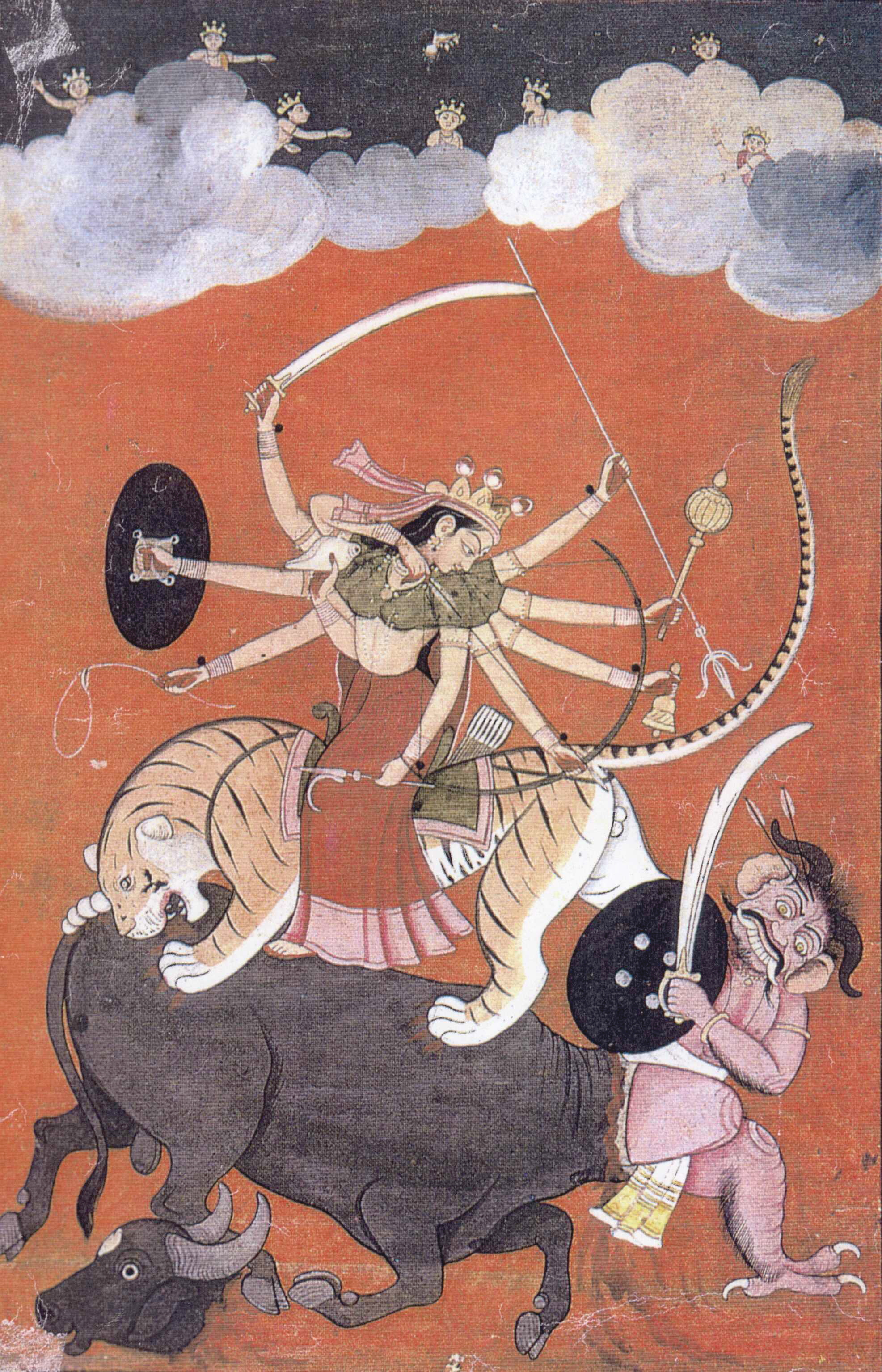
Durga_MahisasuramardiniOne of the Foremothers of the Goddess movement said that it is very easy to observe Goddess in everyday life: just look at teenage girls. They are uninhibited, creative, playfully sexual (I do not promote underage sex here, I am just emphasising that people can be sexual in their life cycle before and after they practice sexual acts with other people). Most of all, teenage girls are bursting with energy.

The question is: where would this energy go? What would it be spent on?

Continue reading “Emerging Energy Wisdom by Oxana Poberejnaia”