Vengeance Is Mine, Saith the Holy: Fear, Faith, and Divine Wisdom by Tallessyn Zawn Grenfell-Lee

Be afraid. Be very afraid.

That seems to be the refrain these days, particularly in politics. The more you terrify people, the more likely they are to vote, protest, and otherwise engage in political activism.

Well, maybe not. Apparently, hammering people with more and more reasons to live in terror actually tends to demoralize and paralyze us.[1] A little bit of fear goes a very long way. A certain amount does indeed motivate people – like a deadline, for example; that nervous energy can make us highly productive, efficient, and focused. Moreover, Gavin de Becker, author of The Gift of Fear, argues that we need to listen carefully to our bodies’ fear response, because our society has trained people – particularly women – to suppress gut instincts that otherwise would have saved them from violent situations.

Interestingly, when we understand not only how to recognize warning signs but also how to trust our intuition to identify potential danger, we feel empowered and live with less anxiety and fear the rest of the time. Validating the ‘gift of fear’ makes us less fearful. Nonetheless, there must be something lucrative to the politics of fear, because studies have shown fear is at an all time high in America, particularly the use of fearmongering as a political strategy. It turns out, fear sells, big time, and it is a pretty great way to further ideas of us vs. them and to undermine a sense of community, of the “neighborhood.”

Continue reading “Vengeance Is Mine, Saith the Holy: Fear, Faith, and Divine Wisdom by Tallessyn Zawn Grenfell-Lee”

The Four Phases of the Feminine Way by Elisabeth Schilling

For so long I’ve been wandering in the maiden stage, but now I am a mother, to myself, since I’ve made hard decisions to loosen or cut ties with people who have not always acted in my best interest in their attached and, at least to me, manipulative ways; I have long felt a mother to whatever group of students I have the honor of guiding; and I moonlight as a card reader/astrological guide where I feel I can nurture and provide compassionate advice to those who desire a connection from the universe. The way I practice is that I allow my empathy and research about ourselves to encounter the client’s own internal wisdom. There is not anything that qualifies me to be a teacher or reader any more than anyone else. We are all guru to each other when we listen closely.

I am not sure why I have never wanted to be a mother of a child. Not-wanting has felt very natural to me. Now that I have put some distance between myself and my own mother, her voice and so her desires are not so much hovering over me. I feel free and good about my decisions, about following the path that is normal for me.

But what I really love about the four phases of the feminine way – maiden, mother, maga, and crone — is that we do not necessarily need to always identify with the stage that aligns with our age or any rites of passage. I remember going to a goddess ceremony in California where we could speak from any of the perspectives we felt aligned with that at the time and explain why.

Continue reading “The Four Phases of the Feminine Way by Elisabeth Schilling”

Small Victories by Sara Frykenberg

Last year was a hard year. I wrote about this difficulty—vaguely eluding to challenges of environment, home, and work—in my last post. In this blog, which was a copy of my reflection for our last faculty meeting of the year, I asked my colleagues and myself: should I take the year apart or find thoughts that will help us put ourselves back together again in the fall? I am pretty good at taking things apart. But returning to school in less than a week, I find myself most concerned with the latter question: have I put myself back together again? Have I found these thoughts?

I have slept more, but am I rested?

I have taken space, but am I ready to be close again?

I don’t know. But I am beginning to find the answers, the fragments of thought, in my small victories.

Bringing my panic to ‘get it together’ before school starts to my brother, he said to me: “You have a stubborn Taurus heart.” He’s right. My Taurus moon, which tends towards obstinacy, perfectly suits my Libra (in)decisiveness. I might have a lot of trouble coming to a decision, but once I have, you better believe that I am going to hold onto that decision—particularly in matters of the heart. I tend to hold onto anger too, problematically. I once lived an entire year in perpetual rage. But, I eventually had to let it go to learn how to breathe again (literally and figuratively). This summer has also been a practice in breathing; and the process feels at best, incomplete. Continue reading “Small Victories by Sara Frykenberg”

Nasty Women Activate by Gina Messina

Version 2I’ve had the privilege of reading for pleasure this summer, a rarity in my world. Nonetheless, the books I tend to reach for are those that also pertain to my research interests and activism. I really can’t say the last time I read a work of fiction (unless you count Trump’s tweets).

Nasty Women: Feminism, Resistance, and Revolution in Trump’s America is one of the books that commanded my attention. Edited by feminist supersheras Samhita Mukhopadhyay and Kate Harding, this anthology offers essays “written at the intersection of feminism” and raises critical points about the issues women face while 45 sits in the oval office.  Acknowledging the differences that impact women based on race, gender, religion, culture, sexuality, age, and so on, is an incredible strength of this volume. Packed with essays from fearless feminists who have made great impact on the ways that we think about gender and sexuality in society, Nasty Women is a must read. 
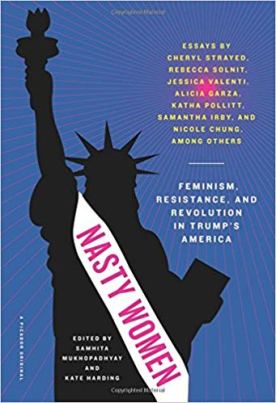
Nasty Women CoverI particularly resonated with Harding’s essay where she declared her atheist beliefs and shared leaving the Catholic tradition behind except for the Communion of Saints. I recognized Harding’s journey and understood why communing with the dead was so important for her. She described adorning herself with momemtos from the women in her family who had gone before her so that they too could be a part of her experience voting for the first woman president of the U.S.; although, as we know, the election didn’t turn out the way many of us expected or hoped. 

As a Catholic feminist, I often discuss that it is the women in my family that have journeyed beyond the physical that I pray to. Not God, not Jesus, but my mother, my grandmother, great aunts, cousins, friends, and feminists. It is they who know my story, who have comforted me, give me guidance, and bring me peace.  Communing with those women is what gives me strength and keeps me focused on a mission for social justice.  But the same is true of the living. Surrounding ourselves with other women, lifting each other up, embracing our shared experiences, and celebrating our diversity is key to creating positive social change and a world worthy of our children. 

Another critical issue addressed in this volume, is that we are often far too focused on finding common ground rather than honoring the ways that we are different. In her essay “Why We Need Identity Politics,” Mukhopadhyay reminds us that identity politics is necessary in a nation where white identity is considered the norm. Anything that deviates from this — meaning the experiences of persons of color — is considered abnormal, and thus, deserving little attention. A liberal politics without identity ignores the concerns, fears, and marginalization of a significant population in our nation.  

Throughout my read I found myself cheering, crying, and laughing as I recognizing so many of my own experiences, fears, hopes, heartbreaks, and so on. This said, I was also reminded of the many ways I continue to be privileged as a white middle class woman and that challenging “Trump’s America” means much more than wearing pink pussy hats and joining a march.

I admit that I bought two of the pink hats for me and my daughter — and later, two of my students each knitted me a hat for which I am very grateful. I was excited about the Women’s March and encouraged students to attend. I was thrilled to see global participation in the call for respecting women’s human rights. Embarrassingly, I did not give much thought to the many voices that were excluded in the March. Much of the attention was centered on white women’s concerns rather than the concerns of women of color. Like the Suffrage Movement where white women put their right to vote above the voting rights of women of color, the Women’s March failed to highlight critical issues for women of color and transwomen.

So how do we move forward? How can we successfully challenge the alt right movement and bigoted leadership of our country while representing the concern of all — especially those who have been silenced? According to Nasty Women, it is time to activate. We must move away from individualism and recognize our roles as members of a larger community; one that is made up of persons of different cultures, races, religions, genders, and so on. While we may not share the same political positions, as Mukhopadhyay explains, we need coalition politics. We will not be able to move forward until our efforts represent the needs of our diverse population. It is likely our only chance to build a progressive future that honors the needs of all rather than those who make up the misidentified norm.

Nasty Womenbrings a wide range of voices together to demonstrate the ways that those who are marginalized continue to be excluded from the conversation. It also offers a well developed argument for identity politics and a map for creating change that matters. I’ll be adopting it in my classroom this fall as I know my students will appreciate these ideas and be able to develop a better understanding of intersectionality and its impact on our current political climate. I took a great deal away from this read, and my students will too. Regardless of where you stand, this book offers an opportunity for a dialogue that we must all be engaged in.

Gina Messina, Ph.D. is an American feminist scholar, Catholic theologian, activist, and mom. She serves as Associate Professor of Religious Studies at Ursuline College and is co-founder of FeminismAndReligion.com. She has written for the Huffington Post and is author or editor of five books including Jesus in the White House: Make Humanity Great Again and Women Religion RevolutionMessina is a widely sought after speaker and has presented across the US at universities, organizations, conferences and on national platforms including appearances on MSNBC, Tavis Smiley, NPR and the TEDx stage. She has also spoken at the Commission on the Status of Women at the United Nations to discuss matters impacting the lives women around the world. Messina is active in movements to end violence against women and explores opportunities for spiritual healing. Connect with her on Twitter @GMessinaPhD, Instagram: @GinaMessinaPhD, Facebook, and her website ginamessina.com.

Medieval Torture Devices and the Goddess by Colette Numajiri

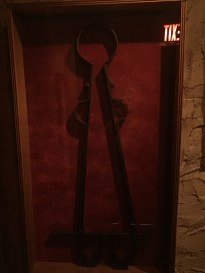
There is a campy dinner and tournament “castle,” Medieval Times, in our city in which you can eat and watch a fully- costumed period play complete with stunning Spanish horses in an indoor arena. Inside of this building, for a mere additional $2, there is a “torture chamber” attraction, a mini museum with a dozen or so of actual torture relics used in the Medieval Inquisition (or accurate looking replicas of them!) along with illustrations from the era.

In this collection they have what appears to be an authentic orifice-expanding “pear” and a “breast ripper” (see and read photo below) among other devices meant to inflict pain and often death to those with the misfortune to be accused.

The actual “Medieval Times” period was a horrific and bloodstained era when the NEW ORDER (the established Catholic and new Protestant churches) set out to “Christianize Europe.” They succeeded and became beyond wealthy by creating a WIDESPREAD FEAR of WOMEN, gaining power over more than half of the population and confiscating their money and land.

There is an hour long film funded by the Canadian government called: “THE BURNING TIMES” that tells the story of the people (85% women) that were brutally killed over a 300 year period in what was the WOMEN’S HOLOCAUST.

Continue reading “Medieval Torture Devices and the Goddess by Colette Numajiri”

Approach the Taking of Life with Great Restraint by Carol P. Christ

Nurture life.

Walk in love and beauty.

Trust the knowledge that comes through the body.

Speak the truth about conflict, pain, and suffering.

Take only what you need.

Think about the consequences of your actions for seven generations.

Approach the taking of life with great restraint.

Practice great generosity.

Repair the web

In Rebirth of the Goddess, I offered Nine Touchstones of Goddess Spirituality as an alternative to the Ten Commandments. The Nine Touchstones are intended to inform all our relationships, whether personal, communal, social, or political.

The seventh touchstone asks us to approach the taking of life with great restraint.

Continue reading “Approach the Taking of Life with Great Restraint by Carol P. Christ”

Lessons from Shofetim by Ivy Helman.

29662350_10155723099993089_8391051315166448776_oThis is the first part of a series of reflections on the weekly Torah portions.  For those of you unfamiliar with Judaism, we read the Torah in sections.  There are 52 parshot (or portions), one parshah (portion) is read each week (most often during Shabbat morning services).  It is common for rabbis, prayer leaders or someone of the congregation to offer reflections on the week’s parshah at Shabbat services.

The parshah for this week is Shofetim.  It is Devarim/Deuteronomy 16:18 – 21:9 and will be read this Shabbat, 18 August.  Shofetim discusses a range of topics: setting up of a system of judges to make important decisions for Israel; the entitlements of the Levites; the rules of warfare; the importance of justice and just governments; and the acknowledgment of G-d as the true and highest Judge.  It also warns Israel against false prophets and practices of idolatry.  Shofetim contains a number of well-known verses including ‘justice, justice you shall pursue…(16:18),’ and notorious punishments like “…a tooth for a tooth; an eye for an eye…(19:21)”  Continue reading “Lessons from Shofetim by Ivy Helman.”

Three Herstorical Divas to Die For by Mary Sharratt

The Urban Dictionary defines a diva as a woman who exudes great style and confidence and expresses her unique personality without letting others define who she should be. In my mind, a diva is a woman who stands in her sovereignty and blazes a trail for other women. We all need to claim our inner diva to truly dance in our power. And if you’re looking for inspiration, I present three herstorical divas to die for.


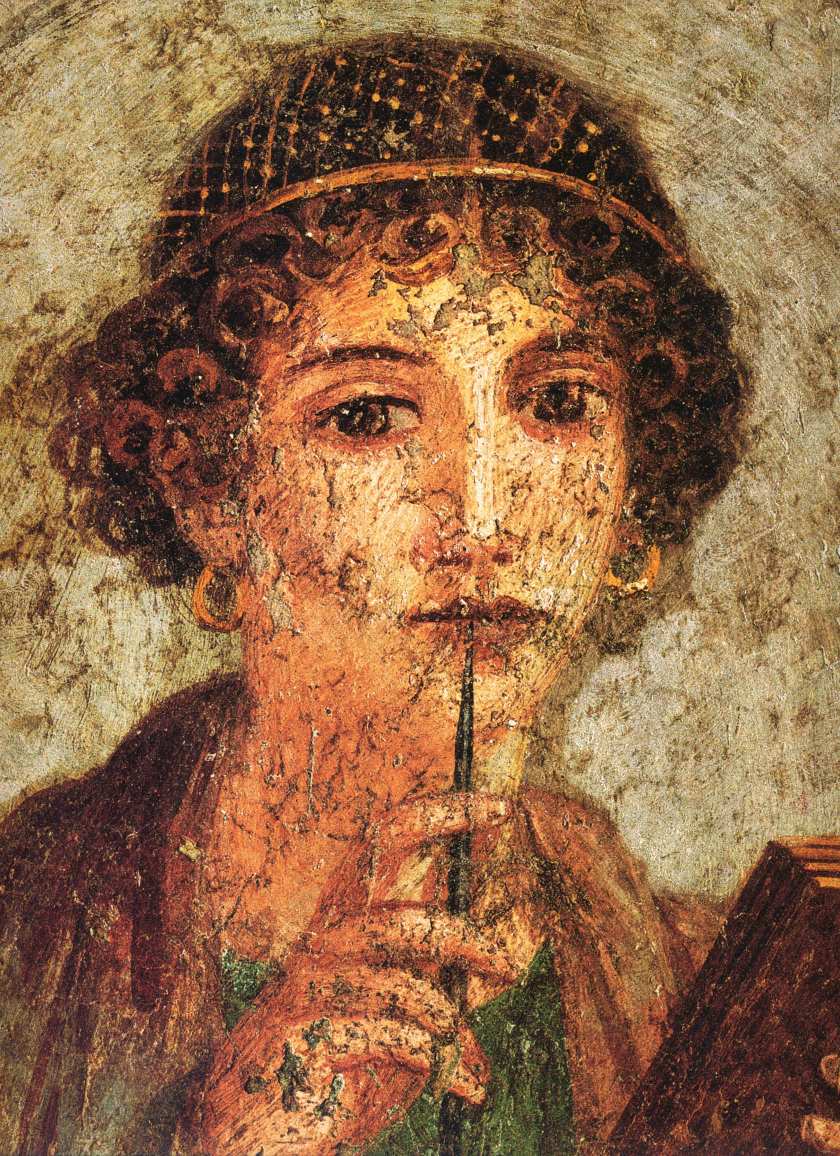
Pompei-Sappho.nocrop.w840.h1330.2x

  1. Sappho ca. 630 – 580 BCE


Sappho of Lesbos wrote the book on love. Literally. Her searing love poetry addressed to other women gave us the word lesbian. She was the first—and the best!—to describe passion as a visceral experience, in which we are seized and transfixed by Aphrodite, Goddess of love. Though much of her work was destroyed by the patriarchal fun police, the fragments of her poetry that survive are timeless, haunting, and utterly true.

What we must remember is that Sappho’s poetry wasn’t just romantic or erotic–it was sacred, each poem a holy offering to Goddess Aphrodite.

Continue reading “Three Herstorical Divas to Die For by Mary Sharratt”

A Silhouette of a Woman, the Menorah, and a Pillar of Light: Discovering the Origins of the Goddess in Judaism by Alaya A. Dannu

2.24.2017

During a meditation before bed, I saw an image of a candelabra similar to what Jewish people use for Hanukkah. It was yellow/gold in color, engraved/etched onto a surface. All at once I saw the imagery of a star, a silhouette of a woman, and a beam of light move from the base of the candelabra through the top and beyond.

In these moments, I did not understand the significance of or the relationship between these images. What did a feminine figure have to do with the Jewish candelabra? What is the name of their candelabra? I could not even recall the name of it. It was something I grew up knowing the name of, as it was an image that I frequently saw beside the kinara of Kwanzaa in my school-aged years.

Because I was sheltered from the Abrahamic religions, my mother opted for participating in Kwanzaa as a means to shield me from any potential bullying from my classmates, and to celebrate a part of my diverse heritage. It was already a problem for my peers and the adult staff at school that I chose to identify as a Jamaican-American or a mixed person, as opposed to African-American. To tell a group of African-American Christians or those with an Afro-centric view that I didn’t celebrate Christmas or Kwanzaa, or that my mother taught me to listen to my dreams and intuition, would only serve as a means to further isolate myself; and by extension, my little sister. So celebrate Kwanzaa we did, until I began high school.

Continue reading “A Silhouette of a Woman, the Menorah, and a Pillar of Light: Discovering the Origins of the Goddess in Judaism by Alaya A. Dannu”

Emergence: Poem to a Plant Goddess by Sara Wright


Her name is Datura.

Delicate fluted deep-throated trumpets open to

humming honey bees and summer rains.

She communicates through scent.


 In the fall I collect her sharp-needled pods.

They rattle like dry bones.

I chill them.

In the spring I coax seeds to sprout

wrapping each in papery white cloth,

sing love songs  –  siren calls

to rouse each root from winter’s sleep.


I am patient…

 a woman in waiting for the heat of the sun

to unfurl the mystery of becoming

 that is re-acted in spring.


Only seeds know when to swell and burst.

Continue reading “Emergence: Poem to a Plant Goddess by Sara Wright”