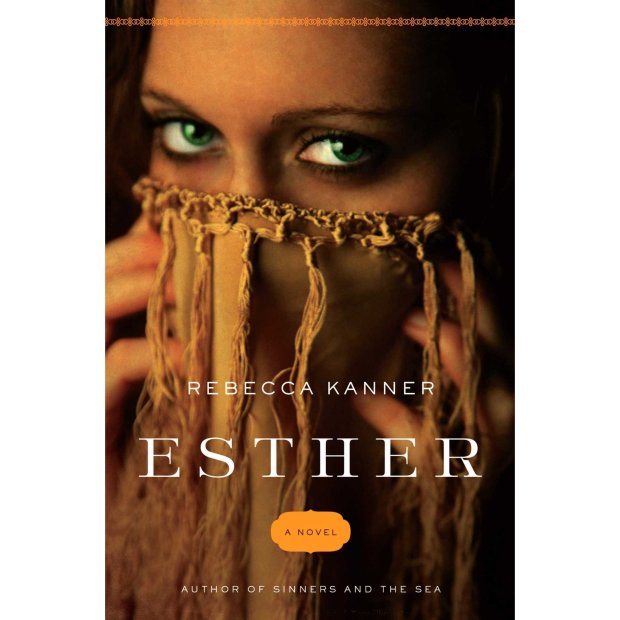
Book Review by Mary Sharratt: ESTHER by Rebecca Kanner

esther


We have been lost to each other for so long. My name means nothing to you. My memory is dust. This is not your fault or mine. The chain connecting mother to daughter was broken and the word passed into the keeping of men, who had no way of knowing. That is why I became a footnote, my story a brief detour between the well-known history of my father and the celebrated chronicle of my brother.

-Anita Diamant, The Red Tent

To a large extent, women have been written out of history. Their lives and deeds have become lost to us. To uncover the buried histories of women, we must act as detectives, studying the clues left from ages lost.

At its best, historical fiction can write women back into history and challenge our misconceptions about women in the past. Anita Diamant’s novel, The Red Tent, became such an iconic classic because she turned our stereotyped image of women in the Old Testament on its head by allowing the biblical Dinah to tell her own story in her own voice. Continue reading “Book Review by Mary Sharratt: ESTHER by Rebecca Kanner”
Dealing with Despair by Carol P. Christ

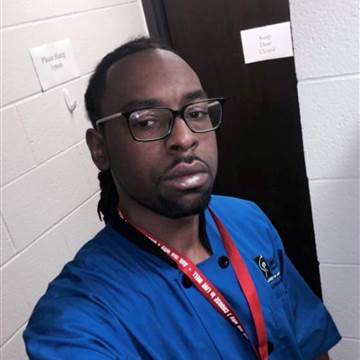
Philando Castile, school cafeteria worker, killed driving while black

In a state of shock after the police shootings of Alton Sterling and Philando Castile, I turned to my Facebook feed, looking for community in my grief and hoping to make sense of what had happened. The statement, “He would not have been shot if he had been white,” referring to Philando Castile, appeared several times. The first time I saw it, I responded, “He would not even have been stopped if he had been white.” Think about it if you are white: how many times have you been pulled over by the police?

I can answer that question: in the United States, only once, and that was because I made a second illegal U-turn at the same stop-lighted intersection as a teenager.  The policeman issued me two tickets, stating that he had been willing to let the first offence go. This is what white privilege means. Continue reading “Dealing with Despair by Carol P. Christ”

The Dog and the Divine by Ivy Helman

20151004_161012When I was in high school, I once gave a speech summarizing what I had learned about G-d through my dog.  I still chuckle at the idea.  I cringe sometimes and wonder what others thought of the piece.  Oh, the seeming immaturity of such an idea and perhaps naiveté.  I’m still embarrassed by my high school self.

The connection, on which I drew, included some of the ways I had come to love my four-legged friend as well as the way I interpreted his actions as love for me.  I remember I had a list of ten things my dog had taught me about the divine.  There was definitely a mention of unconditional love, being happy to see me, probably something about not being angry or ever holding a grudge, sharing secrets, perhaps a lesson on patience, and, of course, many more which I can’t remember.  This is beginning to sound like my blog post about Hanukkah, isn’t it? What were the other two nights?  What were the other six comparisons?  Oh, never mind. Continue reading “The Dog and the Divine by Ivy Helman”

Reading for Fun and Compromise—My Ongoing Search for Feminist Literature by Sara Frykenberg

What I mean to say is, what if, when I wanted to read for fun or simply for the pleasure of reading, I were to put down any book that demonstrated buy-in to kyriarchal ideas, overtly or even in micro-aggressive ways? I have flippantly responded to this question, “then, I may never read any piece of fantasy literature again.”

Sara FrykenbergI love reading fiction, particularly science fiction and fantasy literature. However, since the birth of my daughter I have been pondering the stories we tell and the language we use a great deal; and I have begun to feel a little bit like my ‘fun’ reading almost always involves some kind of compromise. For instance, when I first started reading  Song of Ice and Fire by George R. Martin (the series which inspired the HBO hit series Game of Thrones), I greatly enjoyed the series. The five competed books are ripe with intrigue, complex interpersonal and political relationships, the rebirth of magic in a world, and characters you love to hate. But, continuing to read and watch this series unfold, I have grown to suspect that Martin may hate women because he seems to punish them over, and over, and over again. The most recent book, A Dance with Dragons is so full of sexual violence it is actually hard stomach.

Continue reading “Reading for Fun and Compromise—My Ongoing Search for Feminist Literature by Sara Frykenberg”

Elie Wiesel’s Stories: Still the Dialogue by Carol P. Christ

Elie Weisel is interviewed by Bob Edwards in New York, Wednesday, June 20, 2007. (AP Photo/Seth Wenig)

This blog is dedicated to Elie Wiesel, September 30, 1928-July 2, 2016

During the summer following my second year [as a graduate student] at Yale, I read Elie Wiesel’s The Gates of the Forest[1], which someone had recommended as a book in theology and literature. Elie Wiesel was not well-known, and I had not heard of him. I was totally unprepared to enter into his world. I had heard about the concentration camps and had read Anne Frank’s The Diary of a Young Girl, but I had not faced the reality that was the Holocaust, nor had I connected what happened to the Jews to my belief in the God of the Old Testament.

Reading The Gates of the Forest challenged my theology to the core. I believed God was powerful, loving, and good, and I believed that He had a special relationship with the Jews. Continue reading “Elie Wiesel’s Stories: Still the Dialogue by Carol P. Christ”

A Woman Leads: Church and Politics 2016 by Dawn Morais Webster

Dawn Morais Webster, the Pope off to his summer palace, Castel Gandolfo. He tells the world he will now become just a “humble pilgrim.”There is no shortage of men in power. No shortage of men who are ready to issue warnings and threaten punishment for straying from the party line. No shortage of men ready to hold forth in front of cameras. And yet, and yet….It took a woman with a lot of guts, a lawyer, and a person of faith to champion healthcare for all. It took a woman to criss-cross the country, standing in solidarity with those in need, ministering to those with “broken hearts” who stand on the margins.

There was no shortage of men with institutional power and access to the pulpit, but it took a woman to speak publicly about supporting the President as he worked in the face of Republican obstructionism to make the Affordable Healthcare Act a reality for millions who had no coverage. And once again in this the craziest of elections, it has taken a woman to stand with other faith leaders to call for a Moral Agenda. Continue reading “A Woman Leads: Church and Politics 2016 by Dawn Morais Webster”

Epona – Goddess of the Land by Deanne Quarrie

celtic-horseDeanne QuarrieThis week I bought a pendant that caught my attention.  It is Celtic knot work of horses, meant to represent Epona.  This triggered my interest in Epona and off I went to learn more.
Epona is a goddess from Gaul.  Sadly, any information about her from those early days of worship are lost to us. This is the case of the most ancient deities from that region and time in history. It is thought that she was picked up in Gaul by the conscripted soldiers of the Roman Army who saw a depiction of her upon her horse and they adopted her. Since this army rode across the land on horseback, she was the perfect deity to pay homage to and so, she traveled with them. She soon made it to Rome and is one of only a few deities, not originally Roman, to be worshiped in the Roman Empire. Continue reading “Epona – Goddess of the Land by Deanne Quarrie”

A Servant of God or a Lover of Life? by Carol P. Christ

Carol Molivos by Andrea Sarris 2Thus through an enormous network of mythological narrative, every aspect of culture is cloaked in the relationship of ruler and ruled, creator and created. . . . [Sumerian] legend endows the Sumerian ruler-gods with creative power; their subjects are recreated as servants. . . . [This new narrative was] deployed with the purpose of conditioning the mind anew.(20, italics added)
This provocative statement is found in a chapter titled “The First Major Sexual Rupture” in a collation of the writings titled Liberating Life: The Women’s Revolution by imprisoned Kurdish leader Abdullah Ocalan (pronounced Oh-cha-lan). According to Ocalan, who clearly had been reading authors like James Mellaart, Marija Gimbutas, and Heidi Goettner-Abendroth, the values of the societies that preceded Sumer in the Near East were entirely different. Continue reading “A Servant of God or a Lover of Life? by Carol P. Christ”

Our Ladies of Sea, Earth, and Sky by Joyce Zonana

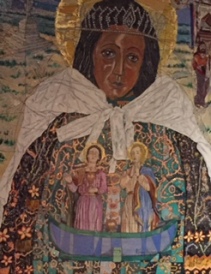
Sara and the Marys
Sainte Sara encompassing Sainte Marie-Salome and Sainte Marie-Jacobe

O Sainte Marie-Jacobe, priez pour nous.

O Sainte Marie-Salome, priez pour nous.

O gardeures de la Provence, priez pour nous.

The priest intoned the words in deep, liquid accents, his voice echoing from the ancient stone church in the remote village of Les Saintes-Maries-de-la-Mer, in the Camargue region of Southern France, where the waters of the Rhone River meet the Mediterranean Sea in a wild, wide, flat expanse populated by black bulls, pink flamingos, and white horses.

“O, Saint Mary-Jacobe, pray for us.”
“O, Saint Mary-Salome, pray for us.”
“O, guardians of the gates of Provence, pray for us.”

I could feel the words resonating through me, bringing sudden, hot tears. The people gathered in the small village square repeated the priest’s chant, their voices rising above the low, white-washed houses into the sunlit sky, out towards the shimmering sea where legend tells us the two Marys had drifted two thousand years ago in a boat without rudder or sail.

Continue reading “Our Ladies of Sea, Earth, and Sky by Joyce Zonana”

#OrlandoStrong: Yes, Baby, the Gay Bar is Still Our Church – Still Our Religion by Marie Cartier

Marie Cartier photo by: Greg Zabilski

The worst gun massacre in United States history happened in a gay bar, PULSE, Sunday, June 12, 2016 in Orlando, CA.

It happened during the United States Pride month of June which commemorates the Stonewall riots of June 1969. The Stonewall riot was the first televised riot over a period of time (approximately one week) allowing members and supporters of the LGBTQ community to join the protests against police violence and harassment.

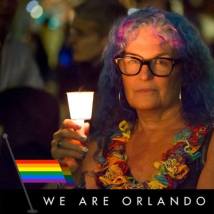
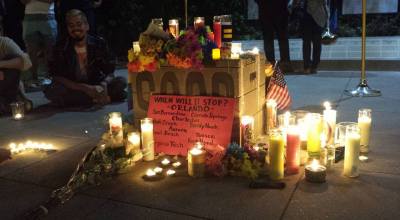
Today’s many social media platforms allow us to respond more quickly than they were able to in 1969. By the eve of June 12, 2016 memorials and vigils were happening around the country. I attended one in Long Beach, CA, at which a couple hundred folks lit candles, sang and mourned. By the following evening I was at a vigil for Orlando in Los Angeles attended by many thousands at which, in Los Angeles style, the reading of the victims’ names began with an emotional tribute to the victims by Lady Gaga. I have included here a video of the reading of the names.

Long Beach vigil
Long Beach vigil

Continue reading “#OrlandoStrong: Yes, Baby, the Gay Bar is Still Our Church – Still Our Religion by Marie Cartier”