 I have a poster on my wall: UPPITY WOMEN UNITE. In big, red, capital letters. I don’t remember where I got this poster, but I know I’ve had it since the late 70s or early 80s. I’m sure it comes from the raggedy late 60s, when second-wave feminism got up a head of steam and uppity women began getting our attention. That’s when Betty Friedan said being a proper 50s housewife was like having a mental illness. It’s when Gloria Steinem founded Ms. Magazine, which (oh, horrors!) did not give us recipes or home-making tips and did not tell us how to dress to lure our men into bed. It’s when Mary Daly started giving us a whole new, original take on the English language. Ahhh, yes, those were the good ol’ days. And the bad ol’ days, too, when the Equal Rights Amendment was not ratified.
“Uppity” can be a troublesome word. In the olden days, if someone called you uppity, it means you were inferior to them and weren’t staying in what they thought was your proper place. If you were a black person, for example, and if you didn’t step off the sidewalk when white men were coming, you were uppity. If you were a woman who wanted equal pay for doing the same work a man did, you were uppity. Those women in the 1980 movie, 9 to 5, were majorly uppity. And they won the battle.
Uppity women didn’t stay in the kitchen or the bedroom. They used—oh, horrors—the Pill. They marched to Take Back the Night. They got up on stage and played their own drums and guitars and didn’t sing like proper ladies should. They shouted. And they got into politics. Bella Abzug said that a woman’s place is in the House. Shirley Chisolm became the first black female member of congress in 1968 and in 1972 ran for president. (And I voted for her.)

The English teacher in me wants to get in a word or two here. Look at the phrase “uppity women unite.” It might be a front page headline that says strong women who won’t stay on the bottom are getting together. Or maybe it’s a simple declarative sentence. But add punctuation and we get more punch. “Uppity women, unite.” Now the verb is imperative. We must unite. Let’s make it stronger: “Uppity women—unite!” Now it’s a command.
So, uppity sisters, and uppity brothers, too, you know how to multitask. Push the on button in your corpus callosum and let your imagination run while you read this. Let’s consider what the planet might look like if we had equal rights (and rites) in all things. Please understand that I’m not saying women should be the ones on top. I’m not talking about “power over,” but about what Starhawk calls “power with.” That’s shared power, which leads to shared magic.
 Imagine yourself as one of a huge crowd of flying people joined as points of light above the earth. Float peacefully up there for a few minutes. Think about the power of people joined together, the energy of people working together. Now let’s get down to earth. Floaty energy is fun, but it doesn’t get much done. Imagine yourself as a member of a group with a goal. Touch down. Stand on the earth and consider the fact that everything on the planet is alive—not just people and animals and plants, but rocks, too. Even things we constructed have some life force. Embrace panentheism for a little while. Now here’s something to do: Find a church that doesn’t accept uppity women or uppity brothers. You’re united. As united, uppity people, go to that church and stand in a circle around it. Send friendly but firm energy into that church so that, even if a whole denomination or religion won’t change right now, that individual church might change. The next time you go to that church, radiate the same energy when you go inside.
You can also find a church that appreciates uppity folks. Send grateful energy to the church and all the people in it.
UPPITY WOMEN UNITE. If enough of us uppity women and our uppity brothers get together, we will eventually build up to a critical mass. A critical mass can lead to an explosion. I’d prefer to see a spiritual, peaceful explosion. What do you want to see?
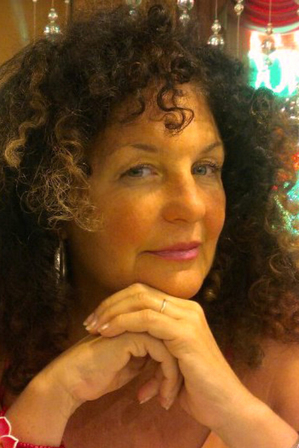
Barbara Ardinger, Ph.D. (www.barbaraardinger.com), is a published author and freelance editor. Her newest book is Secret Lives, a novel about grandmothers who do magic. Her earlier nonfiction books include the daybook Pagan Every Day, Finding New Goddesses (a pun-filled parody of goddess encyclopedias), and Goddess Meditations. When she can get away from the computer, she goes to the theater as often as possible—she loves musical theater and movies in which people sing and dance. She is also an active CERT (Community Emergency Rescue Team) volunteer and a member (and occasional secretary pro-tem) of a neighborhood organization that focuses on code enforcement and safety for citizens. She has been an AIDS emotional support volunteer and a literacy volunteer. She is an active member of the neopagan community and is well known for the rituals she creates and leads.


 I am writing from Oxford, England, where I am privileged to be staying this summer while attending an institute on the theme of “Otherness” in medieval Judaism. Our readings have focused on a variety of topics, including: the development of Christian anti-Jewish polemics; the development of Jewish anti-Christian polemics; the development of medieval Christian visual representations of Jews; and the European medieval expulsions of Jews. The well-planned program, sponsored by the National Endowment for the Humanities, has been illuminating for all – speakers and participants alike, I think. It has also been, at least for me, an occasion of intellectual sadness. It is not that I am surprised by how ugly polemics, pictures, and history can be. It is that I feel myself coming to a deeper appreciation of the dangerous power dynamics in religion, driven by political and economic aims, that strike me as the underlying cause of practical conflict, yet cloaked as principally theological tensions.