The Mountain and the Goddess by Judith Shaw

judith shaw photoMother Earth does not discriminate. She cares for all her children in all their varied forms. Our ancient ancestors considered Earth and its many geological elements to be feminine and/or associated with goddesses – from caves, to rivers, lakes and seas, to forests, to agricultural fields, to mountains.

Continue reading “The Mountain and the Goddess by Judith Shaw”

The Feast of Santo Tomas by Sara Wright

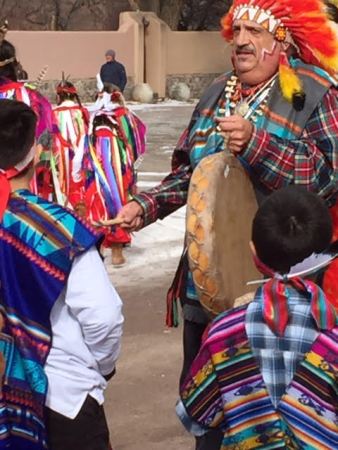
This morning I went up to the village plaza in Abiquiu to watch the dancers parade around the church with their saint who is also honored at this village festival held every year at the end of November.

This is one of the two Native American festivals that is honored each year by the genizaros who are mixed Spanish and American Indian people who embrace and practice the Catholicism that was once forced upon them.

This eclectic community is made up of descendants of Native American slaves. Those captured in warfare were brought here, converted to Catholicism, taught Spanish and held in servitude by New Mexican families. The young women and female children endured the usual atrocities perpetuated on captive females including rape at the hands of their captors. Some New Mexican male genizaros gained their freedom by serving as soldiers to defend frontier villages like Abiquiu from Indian raids. By the late 1700s, genizaros comprised one-third of the population of New Mexico. Ultimately these non – tribal peoples were assimilated into New Mexican culture.

The dances are beautiful to witness with the smallest female children dressed in predominantly white regalia some wearing a rainbow of ribbons, the young girls were dressed in red and white and had red circles of war paint inscribed on their cheeks, some of the older women also wore red, many carried turkey or eagle feathers in their hands. Most wore face paint.

Continue reading “The Feast of Santo Tomas by Sara Wright”

“Para limpiar el corazon”: To Cleanse the Heart by Joyce Zonana

It should have been a wonderful journey, organized by three dear friends who run a yoga center in Costa Rica. I would be traveling with my husband, these friends, and thirteen other like-minded folk to the Sacred Valley of the Incas in the Andes highlands of southern Peru. We’d be staying at a lovely retreat center just outside Pisac, an ancient market town encircled by imposing mountains. And our itinerary would take us to some of the most important Inca sites, including the iconic, hauntingly beautiful and remote Machu Picchu.

jz-headshotIt should have been a wonderful journey, organized by three dear friends who run a yoga center in Costa Rica. I would be traveling with my husband, these friends, and thirteen other like-minded folk to the Sacred Valley of the Incas in the Andes highlands of southern Peru. We’d be staying at a lovely retreat center just outside Pisac, an ancient market town encircled by imposing mountains. And our itinerary would take us to some of the most important Inca sites, including the iconic, hauntingly beautiful and remote Machu Picchu.

We’d made the plans almost a year ago, and I’d been looking forward to the trip. But I fell sick several weeks beforehand and was hesitant to leave my Brooklyn home. Everyone assured me the journey would be magical, and so, feeling better but still uncharacteristically fearful, I reluctantly decided to go. Continue reading ““Para limpiar el corazon”: To Cleanse the Heart by Joyce Zonana”

Rejecting TMT: Protecting and Protesting the Sacred for Mauna Kea and for all by Anjeanette LeBoeuf

AnjeanetteRoughly 3 ½ years ago my FAR post was about the struggle that the Hawaiian people were facing with the proposed building of a Thirty Meter Telescope on the most sacred mountain in the Hawaiian Islands, Mauna Kea. When that post was published, there was a large social media presence and protests that helped cease construction of the telescope and sent the issue to the Hawaiian Courts. I am writing this post because Mauna Kea is again under threat. The Courts ruled in the favor of the telescope and for the last two months, large scale protests have gone under way on the road up to Mauna Kea.

Continue reading “Rejecting TMT: Protecting and Protesting the Sacred for Mauna Kea and for all by Anjeanette LeBoeuf”

Eagle Spirit Guide by Judith Shaw

judith shaw photoEagle, with its soaring flight, its vision, and its courage, has inspired humans since our early days. Eagle, Lord of the Birds, is the ultimate symbol of grandeur, splendor and nobility.

Continue reading “Eagle Spirit Guide by Judith Shaw”

Windigo by Sara Wright

Windigo,

the Potawami Nations call him.

Malignant,

this spirit thrives

in the Northern Woods,

within the human soul.

Hatred for self or other

hidden

under Lies.


Windigo, the

Potawami Nations call him

He thrives

on greed.

Empty

He can never

Be filled.

Continue reading “Windigo by Sara Wright”

Iroquoian Women: Power Held and Shared by Carol P. Christ

According to Barbara Alice Mann, author of Iroquoian Women, women were at the center of a matrilineal Iroquoian society that could be called (though she does not call it that) an “egalitarian matriarchy.” As in other egalitarian matriarchies, including those of the Mosuo and the Minangkabau, women both hold power and share it with men. According to Peggy Reeves Sanday who studied many societies in the anthropological records, female power does not mean female domination.
In attempting to reconstruct the role of women in Iroquois society, Mann first had to engage in a painstaking deconstruction of the scholarly consensus that men ruled among the Iroquois. Believing that male dominance is universal, scholars ignored or explained away a great deal of evidence that Iroquoian women were and are at the center of Iroquoian society. Those who believe that academic scholarship is objective or relatively objective may have to revise their opinions after reading the masses of evidence of witting and unwitting distortion of Iroquois society that Mann uncovers. In order to reconstruct the role of women in Iroquoian society, Mann also had to deal with the fact that the American government destroyed much of Iroquoian oral tradition through policies of forced assimilation that removed children to government schools and forbade the speaking of native languages. Continue reading “Iroquoian Women: Power Held and Shared by Carol P. Christ”

The Gifts of Life: Do We Remember? by Carol P. Christ

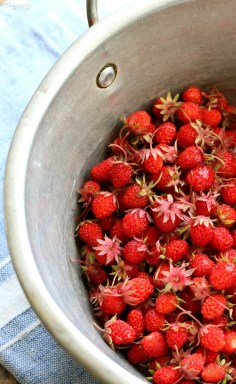
Strawberries shaped my view of a world full of gifts simply scattered at your feet. A gift comes to you through no action of your own, free, having moved toward you without your beckoning. It is not a reward, you cannot earn it, or call it to you, or even deserve it. And yet it appears.

Sweetgrass belongs to Mother Earth. Sweetgrass pickers collect properly and respectfully, for their own use and the needs of their community. They return a gift to the earth.

That is the fundamental nature of gifts: they move, and their value increases with their passage. The fields made a gift of berries to us and we made a gift of them to our father. The more something is shared, the greater its value becomes. This is hard to grasp for societies steeped in notions of private property, where others are, by definition, excluded from sharing.

The essence of a gift is that it creates a set of relationships. The currency of a gift economy is, at its root, reciprocity.

Robin Wall Kimmerer, Braiding Sweetgrass, 27-28

Thanksgiving has come and gone. We gave thanks for the food placed on the table and for the family or friends who shared it with us.

In our culture giving thanks can feel forced: I remember how my brothers and cousins and I hated to be asked to say grace at Grandma’s house. When we have not been taught, it can be difficult for us to understand that nothing is ours by right. Continue reading “The Gifts of Life: Do We Remember? by Carol P. Christ”

Priestess at the Crossroads by Joyce Zonana

In order to transform what is happening at the Mexico/U.S. “border” (and elsewhere) we must first break down the borders within our heads—all the borders in all our heads. Mr. Trump tells us “If you don’t have Borders, you don’t have a Country”; my response today is: “Who needs countries? Who needs genders? Who needs races or competing religions? What we need is Coatlicue.”

jz-headshotAs so many of us recoil in horror at the Trump administration’s cruel attempts  to enforce an impenetrable border between the U.S. and Mexico, I find myself struggling to understand what he and his supporters mean by “borders,” and why they are so invested in maintaining them. The administration’s vicious immigration policy, recently epitomized in a brief tweet on June 19th, 2018—Juneteenth, the day in 1865 when slaves were finally freed throughout the U.S. at the end of the Civil War—“If you don’t have Borders, you don’t have a Country” has sent me back to Gloria Anzaldúa’s visionary 1987 book, Borderlands/La Frontera: The New Mestiza.

Grounded in her experience as a queer mestiza raised in the Texas/Mexico borderlands, Anzaldúa’s bilingual, cross-genre manifesto argues for the transformative role of the mestiza, no longer “sacrificial goat” but “officiating priestess at the crossroads”:

Continue reading “Priestess at the Crossroads by Joyce Zonana”

 Witches in the Weeds by Sara Wright

In folklore Old women are believed to control all aspects of Nature – Fire, Earth, Air and Water, but in myth and story they have a special relationship with water.

The title “witches in the weeds” emerged after I did some research on the Datura plant. This plant is usually associated with old women and sorcery in myth and story. For example, in European mythology, the dark goddesses, Hecate, and Baba Yaga are associated with Datura. Datura is considered to be a ‘witch weed’ and is categorized as a poison along with deadly nightshade, henbane and mandrake. The seeds and flowers have a history of creating visions, delirious states, and causing death. Datura thrives in wilderness areas. Old women, dark goddesses and Datura have a lot in common.

Women and birds have been associated since Neolithic times. Scholar and mytho-archeologist Marija Gimbutas unearthed many bird-women sculptures that were fashioned out of clay in “Old Europe”. Old women in particular are most often associated with owls, herons, crows, ravens, and black birds of all kinds. It is probably the relationship between women and birds that is one of the roots behind the belief that old women can fly. The other root behind flight can probably be found in the relationship between women healers and the plants they used. Plants like Datura contain alkaloid properties (scopolamine, hyoscyamine, and atropine) that are capable of producing visions of flight and are used by folk healers and medicine women and men. Continue reading ” Witches in the Weeds by Sara Wright”