Archives from the FAR Founders: Learning Compassion from Inmate Number 74799 by Cynthia Garrity-Bond

This was originally posted on July 21, 2017. This is the first post of our new series to highlight the work of the four founders of FAR, Garrity-Bond, Caroline Kline, Gina Messina and Xochitl Alvizo
Technically I was employed as a lab assistant at our community

Considered standard prison procedure, Michael was scheduled for an autopsy the following day. While my grief over Michael’s death was considerable, it was the pending autopsy that caused my immediate concern. As I pictured Michael on the cold table of steel, the crude instruments sawing and cutting into his already weathered body, I took it upon myself to somehow ease this last assault. I phoned the Tucson corner’s office, hoping to speak to the pathologist who would be performing Michael’s autopsy. With surprising bureaucratic ease, I was transferred to him. After introducing myself, I explained he would be receiving Prisoner 74799, my brother, from Tucson General, and that by all appearances this was just another disposable inmate whose criminal past simply caught up with him, sort of a karma-like ending. His thin, emaciated body, I warned, is covered in tattoos, which I feared might induce a harsher judgment upon this cast away soul. I asked the pathologist that when he begins the post, he please remember Prisoner 74799 was somebody’s son, somebody’s brother, father and friend and more importantly, that this man was loved. “Please” I pleaded, “try to see beyond the obvious signs of poor choices mapped onto his body, instead see he is more than his prison issued number and that Michael Paul, while far from saint, was a man who loved and was loved.”

Continue reading “Archives from the FAR Founders: Learning Compassion from Inmate Number 74799 by Cynthia Garrity-Bond”
That Old, Old, OLD Story – The Warts and Wisdom of the Ancient

My grandmother Clarine was an incredible human being. I absolutely could not be more proud to be her granddaughter. She started her first teaching position in 1927 at age 17. She met my grandfather in seminary; but despite her clear talent and call, the church apparently felt one minister was enough for the family and refused to ordain her. Undaunted, she famously wrote a one line reply to the bishop: Well, Moses got along fine without it, and Jesus got along fine without it, so I’ll be fine without it, too.

Continue reading “That Old, Old, OLD Story – The Warts and Wisdom of the Ancient”

Last Tuesday Night by Marcia Mount Shoop

It’s been just over a week. Last Tuesday night to be exact. That’s the night the four of us huddled around our beloved companion of sixteen and a half years and said goodbye. 

Buck became a part of our family when he was three months old. We were living in Oakland, California at the time. My son was five and my daughter had just turned one. My husband was coaching for the Raiders and he was gone all the time. It wasn’t a great time to get a puppy on paper—but our hearts said otherwise, so we did. 

Just a little over a year earlier I had said goodbye to Tino. He’s the Blue Heeler that found me in a dream when I was living in Santa Fe, New Mexico. That morning I woke up and just had to get a puppy. It was a visceral pull. And I went to the Santa Fe Human Society and there was the puppy from my dream. He didn’t look like any dog I had ever seen until my dream the night before. 

Continue reading “Last Tuesday Night by Marcia Mount Shoop”

Farewell to Carol Christ at the Kamilari tholos tomb, Crete by Laura Shannon

September 7, 2021

1. Tholos tomb of Kamilari

1. At the gate

On a hilltop between the horned peak of Mount Psiloritis and the wide blue expanse of the Libyan Sea, Ellen Boneparth, Tina Nevans and I prepare to enter the Kamilari tholos tomb. This round vaulted structure served as a communal and egalitarian burial site for thousands of years, from Neolithic through late Minoan times, and Carol brought more than 40 groups of Goddess Pilgrims here to honour those who have gone before. This is where Carol asked the three of us to perform a farewell ritual for her; she wanted no other ceremony. We each don a scarf and necklace which belonged to Carol and enter the sacred space. Kostantis stays behind to guard the gate, in case any other visitors arrive during our ritual.

2. Invocation

On this spot, hundreds of women have honoured thousands of ancestors. We ask for the benevolent presence and the blessing of all those who knew and loved Carol, living and dead. We ask permission of the spirits of the place to enter for this ceremony. We ask Carol’s own ancestors, and the Minoan ancestors of this place, to bless and welcome Carol as a beloved daughter and granddaughter of both lineages.

Continue reading “Farewell to Carol Christ at the Kamilari tholos tomb, Crete by Laura Shannon”

My Father’s Daughter by Xochitl Alvizo

Me with my aunt, my dad’s eldest sister.

I was sometimes told I look like my grandmother on my dad’s side, and although it wasn’t meant as a compliment, I always welcomed it as such. I wanted to be like my grandma. She was a tough, no-nonsense woman who was light-hearted and spunky to the very end of her life. She had a serious expression on her face most of the time but would playfully and unexpectedly stick out her tongue at neighbor-friends when they passed by her house. She had well-developed patterns of good-natured banter with most people in her neighborhood. She was well-known and well-liked, and people also knew not to mess with her. So, if I could be thought to be anything like her, I was good with that.

She lived in Mexico and my family in the United States. In Mexico, even as a younger kid, we were allowed to move around town on the bus if my older cousin was with us. We always landed and stayed with my mom’s side of the family and usually only went to visit my dad’s side for an afternoon or two during the course of our time in Guadalajara, where my parents were from. I couldn’t wait to surprise visit my dad’s side of the family – my grandma, aunt, and grandpa who all lived together. We never announced our visit in advance; so it was fun for me to get to walk into the patio of their apartment complex and find my grandma, as usual, standing in the doorway of her front door, smoking. She was a businesswoman, always running a small business, selling basic grocery items from home, so her door was always open. And she was almost always right there, standing just outside her door, a serious expression on her face, and a smoke in hand.

Continue reading “My Father’s Daughter by Xochitl Alvizo”

Talking about Death with my Daughter & Remembering Carol Christ

Recently, facing the reality that I do not have definitive or perhaps, static “answers” for my little one when she asks me about death, I find comfort in Carol’s words—in the idea that I don’t have to “answer” my daughter with one, forever “truth.” Because I have to ability to give her “enough,” at least for now.

As I sit down to write, I am reminded of a post I wrote many years ago entitled “Where Do Cat’s Go,” about my mother’s cat, Mimi, who passed away at the age of twenty-four. At that time, I was struggling with what death meant outside of an Evangelical Christian ideology. I had rejected the doctrine of heaven (and hell) itself; but doubt lingered. Fear still held sway over my emotions. I wanted to “believe in,” something else. Whether to regain control or simply for comfort, I hoped for new belief.

Carol Christ, who has touched so many of us, who was my teacher and whom I miss, replied to that post (paraphrasing here), “Why does [Mimi] have to go anywhere? Isn’t it enough that she is a loved and remembered part of life?”

At the time it was not enough. But recently, facing the reality that I do not have definitive or perhaps, static “answers” for my little one when she asks me about death, I find comfort in Carol’s words—in the idea that I don’t have to “answer” my daughter with one, forever “truth.” Because I have to ability to give her “enough,” at least for now.

 As a feminist mom, I frequently think about what will give my daughter strength and a sense of her value outside of hetero-patriarchal standards. I am also an ex-vangelical agnostic married to an atheist. He and I want our daughter to have choice in her spirituality and freedom to explore her own directions. I think this is a good commitment, though it is frequently a little more difficult in practice. My partner wants to protect our daughter from all religion and Christianity in particular. I tend to take an educational approach, answering her questions about spiritual matters with, “well, people believe all sorts of things about that,” then listing several beliefs or mythologies that might give her some information on the matter.

Continue reading “Talking about Death with my Daughter & Remembering Carol Christ”

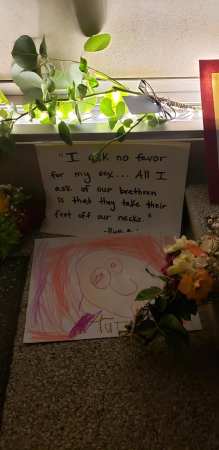
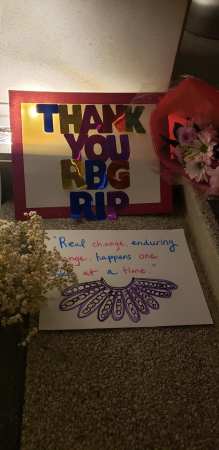
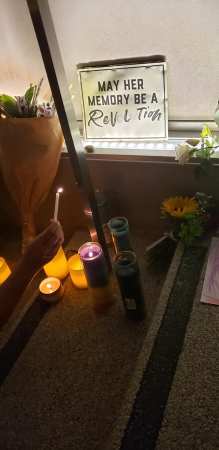
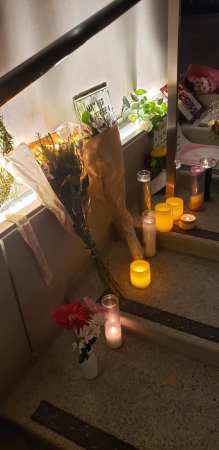
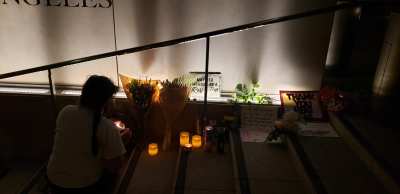
Photo Essay: RBG Memorial by Marie Cartier

RBG Memorial, Long Beach Courthouse, Long Beach, CA
September 19, 2020
All photos by: Marie Cartier

Continue reading “Photo Essay: RBG Memorial by Marie Cartier”

Mourning with the Goddesses, Now More than Ever by Carolyn Lee Boyd


Carolyn Lee Boyd

We may all remember 2020 as the year when we could no longer look away from death. Our western culture has hidden death away in hospitals and funeral homes for generations. However, in these past months we have all been inundated with daily images of COVID-19 patients dying alone in ICUs, terrified people and wildlife consumed by flames or flood, televised funerals of victims of racial violence, children starving due to droughts, the loss of icons of courage and compassion like Ruth Bader Ginsburg, Elijah Cummings, and John Lewis, and so much more.  Even as we seem to be surrounded by death, we risk being inured to its tragedy by the sheer numbers of dead from these and other causes.

How we survive this time as individuals and a society may depend in part on how we are able to answer the question “Were we able to mourn each life lost – human or non-human — as a sacred being, unique and irreplaceable? Did we ignore the suffering of others or did we find deeper compassion?” 

Continue reading “Mourning with the Goddesses, Now More than Ever by Carolyn Lee Boyd”

Loss of Good Friend and Elder Claire French by Glenys Livingstone

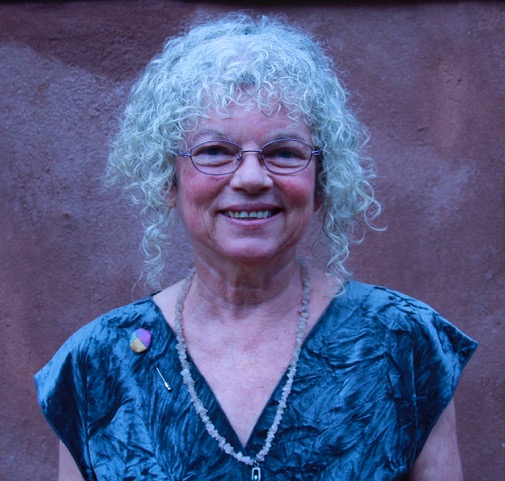
image of author - Glenys Livingstone
Dr. Claire French was born in 1924, Claire Anna Maria Margaretha Wieser, “in the backwoods of Bavaria” as she has described, where “pagan beliefs and superstitions were rife” and “so was Communism amongst the factory workers who lived in her neighbourhood.” She described her mother as “a staunch Lutheran”, her father as “a freethinking artist from the Tyrolean mountains”, and her paternal grandmothers and aunts as “bigotted Catholics”. She has said that she received some of all these ideologies right from her earliest childhood, and that “to this were added the experience of fascist and national socialist authoritarianism during her school years.” In early years she was educated by nuns in Italy. For high school her education was in Germany, where the teachers were partly nazi and partly anti-nazi. She has described her education as “pluralistic in the extreme”.

During the war she was conscripted to the German paramilitary organisation for women working for Tyrolean mountain farmers and later in the military hospital. That year of paramilitary service was conditional for enrolment of women at any German University: educated women were seen as dangerous … the authorities wanted “incubators”, as Claire named it. After the war she studied modern languages and politics at the University of Austria, and in 1945 she was conscipted as interpreter to the military government first by the American and then the French Army Forces. She has said: “In 1951 she finally had enough of Europe and embarked for Australia, where she worked as a housemaid, grape picker, and interpreter and finally as a secretary at Melbourne University. There she started her studies from scratch again as a part time student, graduating in 1956. In that year (an Olympic year she noted), she married Jack French, with whom she had a daughter and two sons. Continue reading “Loss of Good Friend and Elder Claire French by Glenys Livingstone”

What’s Changed? by Elise M. Edwards

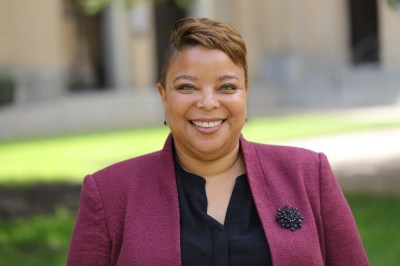
An image of Elise Edwards smiling outdoorsFriends, it has been a few months since I’ve posted in this community.  I’m amazed at how much our world has changed since then.  Here in the northern hemisphere, spring came and went.  It felt like a tide of turmoil rolled in, leaving debris all along the shore and now we are trying to clean it up while keeping our eyes on the sea for more dangerous waves that are coming.

The issues we now face began before March, but for many of us, that was when the COVID-19 pandemic began to alter our patterns of daily existence. In-person instruction at my university and most schools was suspended and spring semester courses shifted online.  In March and April, we quarantined, self-isolated, and sheltered in place.  While a gradual re-opening of businesses and services has occurred in the months since then, I don’t know anyone who has resumed daily life as it was before. The virus continues to spread and the death toll rises.

Continue reading “What’s Changed? by Elise M. Edwards”