

Mary Daly still causes me awe. I think about the way she was so keenly able to diagnose the Catholic Church’s collusion in creating, sustaining, the oppressive structures that directly impact women (and men, as she always affirmed). Mary Daly knew that the situation of women’s second-class status, outlined at the time most powerfully by Simone de Beauvoir in her book The Second Sex,[1] was in great part made possible by the Catholic Church. The church used Christianity to justify the creation of gender hierarchies (for it can be used otherwise), and regarded a category of humans as having greater value and worth than others by default. So much so that it comes to be understood as “god ordained” or “natural” – the right order of things.
At the time of her early writing, Mary Daly still identified as part of the Catholic Church – but she did not hesitate to call out her church. Building on the work of existentialist philosopher Simone de Beauvoir, Daly made a powerful case against the church. She described the antagonism between the Catholic Church and women as based on the fact that the Church’s teachings perpetuated a “traditional view of woman” that both “pretends to put woman on a pedestal but which in reality prevents her from genuine self-fulfillment and from active, adult-size participation in society.”[2] She drew on insights from de Beauvoir to make her case and wrote her book The Church and the Second Sex with the conviction that there were “harmful distortions of doctrine and practice” in the Catholic Church. Continue reading “Mary Daly and Simone de Beauvoir: Sister Diagnosticians by Xochitl Alvizo”
 Parshah Vayigash covers Genesis 44:18 to 47:27. It involves the reunification of Joseph with his brothers and his father, the immigration of Jacob’s entire family to Egypt and Joseph successfully leading Egypt through famine. In other words, the parshah provides the backdrop for how the Israelites become slaves in Egypt.
 I have had the honor of sitting vigil with dying people. And I have prayed through the coming of the death rattle. It can be painful to witness, especially for those witnessing death for the first time. Sometimes the person can hang on, seemingly fighting the inevitable final step of their transition into death.
 The parshah for this week is Lech Lecha (Genesis 12:1-17:27). I’ve actually written about Lech Lecha on this forum before, concentrating on the parental aspects of the divine. See
 This is the first part of a series of reflections on the weekly Torah portions. For those of you unfamiliar with Judaism, we read the Torah in sections. There are 52 parshot (or portions), one parshah (portion) is read each week (most often during Shabbat morning services). It is common for rabbis, prayer leaders or someone of the congregation to offer reflections on the week’s parshah at Shabbat services.
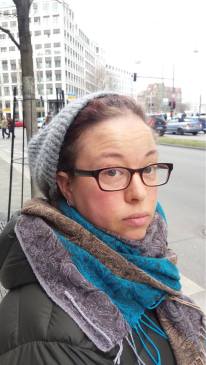 For almost four years, I’ve been living with the long-term effects of an inner ear lesion. The lesion is long gone but its side effects are not. Throughout the day, I feel a combination of unsteadiness and sudden, unpredictable sensations of movement. On better days, the unsteadiness is almost non-existent and the feelings of movement are minimal. On worse days, I’m troubled with a type of brain fog that makes it hard to concentrate as well as disrupting unpredictable sensations of being on a boat that can’t pick one direction in which to move. It’s frustrating, tiring and demoralizing.
 Feminism and Religion