What My Mothers and Mentors Taught Me about Self-Care by Elise M. Edwards

Elise EdwardsDuring another week of killings, war, protests, and debates about whether Black Lives Matter or Blue Lives Matter, I’m concerned about the toll it takes on those who are witnessing the violence and fighting for justice.

I’m not on the front lines of these battles, but I can feel my energy draining, nonetheless. Over the past few days, while I’ve stayed informed about the latest tragedies and conflicts, I’ve intentionally limited my exposure to most news and social media outlets. I’ve begun preparing for a contemplative retreat with other women who also care about justice.  For me to continue to participate in any effort of transforming society, culture, or the church, I must nurture my mind, spirit, and body.

Audre Lorde put it like this:

“Caring for myself Is not self-indulgence.  It is self-preservation, and that is an act of political warfare.”

Self-care is a radical practice of self-love. It is absolutely necessary when engaged in conflict against those who do not show love to you, or worse, those who seek to destroy you.  Your survival and your flourishing are defiantly brave.  Self-care honors the God who created you, the One who loves you, and the Spirit who sustains you. Continue reading “What My Mothers and Mentors Taught Me about Self-Care by Elise M. Edwards”

What Traci West Taught Me about Dominant and Excluded Voices by Elise M. Edwards

Elise EdwardsIn my previous post, I mentioned a book I am writing about how theological and ethical considerations in architectural design can define good architecture.  In that post and in ones to follow, I am acknowledging the feminists and womanists and mujeristas who have influenced me while also opening up the dialogue to the feminists in this community who continue to inspire and guide me to do my best work.

But today, instead of talking about creativity or architecture, I want to discuss how I arrived at the conviction that community decisions about how we ought to live—whether those are decisions about laws, institutional policies, religious practices or architectural buildings—need to include the voices of the diverse people they directly and indirectly influence. Continue reading “What Traci West Taught Me about Dominant and Excluded Voices by Elise M. Edwards”

What Dorothee Soelle Taught Me about Creativity by Elise M. Edwards

Elise EdwardsI’m currently developing a book that considers how theological and ethical considerations in architectural design can define good architecture.  My book discusses five virtues related to the architectural design process that promote human participation in bringing out God’s intention of flourishing for humanity and creation.  Those five virtues (or values) are: empathy, creativity, discernment, beauty, and sustainability.  In the book, I’ll explain how these virtues orient design tasks to the social and ethical aims of architecture.

In this virtual space, I want to have a discussion about what these virtues mean from a feminist standpoint.  In my writing, I draw from theological ethics, architectural theory, and feminist theory to emphasize community discernment and participation.  It’s fitting, then, to claim opportunities in my work to acknowledge the feminists who have influenced me while also opening up the dialogue to the feminists in this community who continue to inspire and guide me to do my best work. Continue reading “What Dorothee Soelle Taught Me about Creativity by Elise M. Edwards”

To Work and to Pray in Remembrance by Elise M. Edwards

Elise EdwardsOne hundred years ago, Jesse Washington was lynched downtown in Waco, Texas. Next week, on March 20th, some of my colleagues and I are organizing a memorial service to remember this horrific event and pray for a better future for our city.

We invited submissions of original prayers, poems, spoken-word pieces, music, drama, and other pieces of liturgy for this ecumenical memorial event.  We received a number of thoughtful, heartfelt submissions, but we also a question:

“Why in the world do we need a memorial for one person who was lynched?!?! In the reality of things, Jesse Washington was one of thousands of Blacks that were lynched in America during the time period.”

I thought the answer was so obvious that I initially brushed off the question. But as our group proceeded with the plans, I thought about the question and wondered whether our university community would understand why we are doing this. And honestly, in moments of exhaustion when I put off responding to emails, I wondered, too. Why am I doing this?

To remember. We memorialize one person who was lynched to remind us that every single one of the thousands who were lynched was a human being who was killed unjustly.

In the speech “Lynch Law in America,” from 1900, Ida B. Wells-Barnett describes the injustice: “Our country’s national crime is lynching. It is not the creature of an hour, the sudden outburst of uncontrolled fury, or the unspeakable brutality of an insane mob. It represents the cool, calculating deliberation of intelligent people who openly avow that there is an “unwritten law” that justifies them in putting human beings to death without complaint under oath, without trial by jury, without opportunity to make defense, and without right of appeal.”

Wells-Barnett was an African-American journalist and activist for civil rights and women’s suffrage. Her writings and activism advanced anti-lynching campaigns adopted by Black women’s clubs and the NAACP. Unsurprisingly, her work was controversial, even among women’s groups. Wells-Barnett argued that lynching began after the emancipation of slaves to repress “race riots.” When a constitutional amendment permitted black men to vote, lynching was used to violently prevent their participation in state and national elections. When fraud, intimidation, and local policy succeeded in suppressing the black vote, the brutality continued in the name of avenging or preventing rape and assault of white women.[1] For this argument, lawmakers, ministers, and women’s groups accused Wells-Barnett of defending rapists and subverting “justice” for their alleged victims.

She did not defend rapists. (Neither do I.) She condemned a system that used allegations of rape of white women to legitimate hanging, burning alive, shooting, drowning, dismembering, dragging, and displaying black men’s bodies. Some allegations may have been true. Many were false. Despite the veracity of the allegations, the vigilantes tortured and killed men, women, and children in brutal, public ways, and we must not mistake that for any form of justice. Lynching apologists explicitly valued white lives over others. Lynching was, and remains a crime against humanity.

In our own age of campaigns against the impartiality of law and law enforcement, we should remember the lynching victims and the tensions within earlier waves of feminism and the temperance movement over anti-lynching campaigns. We do not have to condone criminal behavior to call for humane law enforcement or prison reform. We can affirm the humanity of accused and convicted criminals in the pursuit of justice. So we remember Jesse Washington and the other lynching victims to engage more consciously in the activism of our time. We remember so that we don’t lose sight of the complexities of our work. We work in remembrance of the many victims of injustice.

We also gather to pray. For some people, prayer is about making requests to the divine. But in a more expansive sense, prayer is communication with the divine. In prayer, we set time aside to connect to something greater than ourselves. It’s our hope that gathering as a community to pray for the future of our city prompts us to see beyond individual concerns. In a liberation ethics framework, as explained by Miguel De La Torre[2], prayer is not limited to individual, private conversations with God in hopes of gaining wisdom and guidance. De La Torre presents prayer as a communal activity that brings together different members of the spiritual body. It involves the critical application of the biblical text to the situation at hand. This involves critical analysis of the social context that gave rise to the text or its common interpretation. So we pray to give us time to come together, to read scripture, to seek God and hear God through other members of our community.

So why are we gathering? Why do we memorialize one person when there are so many others who have been harmed, not just in my local community but all of our communities?

To remember past wrongs.

To commemorate.

To honor.

To inspire.

To call attention to persisting injustices.

To make us mindful in our work.

To provoke us to pray.

[1] This argument about the reasons for lynching is found in several of Wells-Barnett’s essays, but is quite developed in The Red Record: Tabulated Statistics and Alleged Causes of Lynching in the United States (1895).

[2] See Miguel A. De La Torre’s Doing Christian Ethics from the Margins (2nd Edition, 2014).

Elise M. Edwards, PhD is a Lecturer in Christian Ethics at Baylor University and a graduate of Claremont Graduate University. She is also a registered architect in the State of Florida. Her interdisciplinary work examines issues of civic engagement and how beliefs and commitments are expressed publicly. As a black feminist, she primarily focuses on cultural expressions by, for, and about women and marginalized communities. Follow her on twitter, google+ or academia.edu.

Wisdom Fiction (Part 2) by Elise M. Edwards

Elise Edwards“There are years that ask questions and years that answer.” from Their Eyes Were Watching God by Zora Neale Hurston

In my previous two posts, I’ve discussed the wisdom that can be found in black women’s literature. Continuing this series, I’m sharing a statement from the most well-known novel written by Zora Neale Hurston. Hurston was an American novelist, folklorist, anthropologist, and cultural critic whose work was first published in the 1920s-1940s. Their Eyes Were Watching God was published in 1937 and has since been reissued and adapted into film.

“There are years that ask questions and years that answer.” This quote is one that has circled around my mind every New Year and every birthday for many years. These times of year are when I’m likely to reflect on the previous year and wonder what has come from it.

Continue reading “Wisdom Fiction (Part 2) by Elise M. Edwards”

Truth in Storytelling by Elise M. Edwards

“[ShakespElise Edwardseare] was an alright writer.  I did not always understand him, but some things he said were beautiful and he made some things so clear the way he explained people.  But one thing he was wrong about.  That ‘To be or not to be?’  is not the first question. ‘What is the truth?’ – that is the question!  Then ‘To be or not to be?’  is the second question.”

-from “Feeling for Life “ in Some Soul to Keep by J. California Cooper

This past weekend, I taught a lesson for an adult church group about Christian imagination in the short stories of J. California Cooper. The quote above comes from one of her stories. I was invited to teach a lesson as part of a series on exploring God through literature. It was a delight to participate for several reasons.

Continue reading “Truth in Storytelling by Elise M. Edwards”

Reform? Progress? By Elise M. Edwards

Elise EdwardsIn my class yesterday (a survey of Christian thought and practices), I was lecturing about monastic life in the Middle Ages. Among other points, I mentioned that medieval religious orders provided settings where women could be educated and assume leadership roles (primarily among other women), thinking of Hildegard of Bingen (1098-1179) who was the Abbess of a monastic community in Rupertsberg. Other women medieval writers who developed influential writings, like Mechtild of Magdeburg (ca. 1210-1282) and Catherine of Siena (1347-80), belonged to tertiaries or third orders, which were monastic community for laypersons. This part of the lesson emphasized that monastic reforms around the 12th century opened religious orders more extensively to women and laity.

Still speaking of medieval reforms, I displayed a picture of Francis of Assisi on the screen at the front of the room. I mentioned that Francis was concerned about the poor and the animals and that he has inspired some contemporary Christians, including the current pope who took Francis as his name. We talked about how both St. Francis and Pope Francis are seen as reformers.

Because earlier in my lesson I’d made a point of speaking of women’s experience, when I spoke about the Pope’s name as a possible sign of renewal or reform, Gina Messina-Dysert’s question “What about the women?” came to mind. In her recent post, she responded to the Pope’s exclusion of many issues that concern women in his address to the US Catholic Bishops. Like Gina, I applaud many of the Pope’s reforms but I am confused about how rarely he is criticized for maintaining the long-held Catholic view that disallows women to be ordained as priests.

Let me provide an example: During the Pope’s visit to the US, one of my students described Pope Francis as “very liberal.” When I interjected that he has not supported the ordination of women, the student laughed and said the pope would be accused of heresy for supporting that! While that may be true, my more immediate concern was that in a classroom of students who are mostly supportive of women in ministry, the Catholic restrictions on the priesthood were seen as a part of the tradition not worth challenging. Why is it that preserving male leadership is excused as a part of the tradition while preserving exclusive marriage practices is something to be challenged? They are interrelated.

As we know from blogs and social media sites, many people who support LGBTQ rights were upset over news stories about the Pope meeting with Kim Davis, the county clerk who was jailed for refusing to issue marriage licenses to same-sex couples. Certainly such a meeting is disturbing to same-sex marriage advocates. But is it surprising? At least one womanist ethicist I know, Eboni Marshall Turman, pointed out in a Facebook discussion that the church has long since been public in its support of male privilege and heteronormativity. My intent is not to single out Catholicism for sexist practices. When recently asked about women’s ordination and leadership in Baptist churches in my own town of Waco Texas, I had to admit that even though ordination of women is permissible and practiced in many of the churches, the number of churches that have called women to the position of senior pastor is shockingly few.

My point is this: When we find teachings in particular religious traditions that justify the exclusion of one group, we should expect to find justifications for excluding other groups, too. In the same discussion I referenced above, Eboni Marshall Turman said, ”Oppressions are compounded and intersectional. If they come for me, it is just a matter of time before they come for you. This is basic theological ethics.”

The experiences of varied groups are not the same; our oppressions and marginalizations also differ. But practices of exclusion are constructed on the same logic that values some persons (the in-group) more than others (the outsiders). Therefore, feminists have a responsibility to advance the well-being and interests of other groups (besides women) who are being marginalized.

Another reason for this advocacy is that many women are included in other marginalized groups. To ignore the intersectionality of oppression is to deny its pervasiveness and the realities of women’s lives. This is why feminists of color are often critical of white feminism. (The recent debate over the photo shoot for the movie Suffragette is a new instance of a persistent critique of white or mainstream feminism. See Rebecca Carroll’s piece on “Suffragette’s Publicity Campaign and the Politics of Erasure”).

To counter the limitations of our own experiences and be consistent in our pursuit of equality, feminists should intentionally cultivate practices of solidarity and coalition-building in our work. I, like everyone else, am often unable to see the inconsistencies in my own practices and teachings without others’ experiences to expand my view. This is one reason I value this Feminism and Religion community. Thank you for the wisdom and practices you offer from your own religious traditions and your own experiences of marginalization. You make me a better feminist through your writings and comments.

Perhaps working together, we can bring about religious reforms that our descendants will recognize in the centuries to come.

Elise M. Edwards, PhD is a Lecturer in Christian Ethics at Baylor University and a graduate of Claremont Graduate University. She is also a registered architect in the State of Florida. Her interdisciplinary work examines issues of civic engagement and how beliefs and commitments are expressed publicly. As a black feminist, she primarily focuses on cultural expressions by, for, and about women and marginalized communities. Follow her on twitter, google+ or academia.edu.

Is There a Such Thing as a Code of Ethics in Academia?  by Michele Stopera Freyhauf


One of things that has dismayed me since I began graduate school and started focusing my study on the Bible, is how much sensationalism exists. We are told in the academy not to use Wikipedia or watch the History Channel. The first, as we know, is unreliable due to the fact that anyone can enter information and make changes. The other caters to the general public. What compounds this problem is the fact that scholars, many times – even reputable ones – appear on these shows. Sometimes creative licenses are exercised by the producer distorting or otherwise shifting the message of what the scholar was trying to explain. Other times, scholars will just give the producers and the public exactly what they want to hear and thus perpetuating myths rooted in literalism.

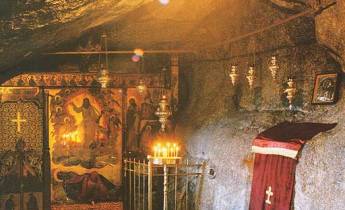
Alpocalypse_Cave
Cave in the Church of the Apocalypse in Patmos, Greece

This is not the only time this issues manifests.  The other time I encountered this is when I travel to sacred or holy sites in the Middle East.  The people in charge of sites may want raise money and increase tourism – so they give the people what they want.  What do I mean by this?  Walking into a place that has a story whether true or not provides pilgrims a sense of awe and wonder.

Certainly I am not saying that this experience should be diminished or should be taken away. What I am saying is that we should be a bit more truthful in our descriptions and remove the shroud of literalism that seems to fuel tourism and not faith. What was difficult for me when visiting Patmos is the rhetoric surrounding the island. It may or may not have been where John had his visions, but certainly the mystique surrounding the Church of the Apocalypse seems to perpetuate the literalism that surrounds the Book of Revelation as being prophetic in dealing with the end times.  Moreover, the vendors around the Church certainly focus their merchandise to support this myth.  However, while I study the Book of Revelation and teach that it is something other than prophetic, a person visits the island and the church, are told that it is prophetic – who is a person to believe?   Me or the religious order running the Church or the vendors living on the island?

This also happens at dig sites.  If a tourist is led by a guide or lead at a holy site being excavated and they tell them what they want to hear so they come back and tell their friends, who has more creditability – me or the person who guides on the site?  When scholars like myself, write about a topic that seems to gel with what the commonly held view of the academy, and goes against literalism or fundamentalist beliefs, we become heretics in relation to the information being fed by the sensationalism on the History Channel and the tourist industry.  So the popular view does not change and the academic view is left on the margins and Biblical literalism wins.

Continue reading “Is There a Such Thing as a Code of Ethics in Academia?  by Michele Stopera Freyhauf”

Islam, Ali, and Reformation by Kile Jones

Kile JonesDoes Islam need a reformation? The ever-controversial Ayaan Hirsi Ali’s new book Heretic: Why Islam Needs a Reformation Now argues that it does. Do you agree with her? Or do you find problems with the way Ayaan Ali frames the discussion?

I ask these questions a few weeks after the first all-women’s mosque was opened. It has also only been a short time since Muslims for Progressive Values (MPV), headed by Ani Zonneveld, sent an open letter to Salman bin Abdul Aziz, King of Saudi Arabia. These, and the innumerable condemnations of the Charlie Hedbo shootings, remind us that this “reformation” Ali is looking for is not entirely absent. Continue reading “Islam, Ali, and Reformation by Kile Jones”

#YesAllWomen, the Darwin Debate, and the God Complex by John Erickson

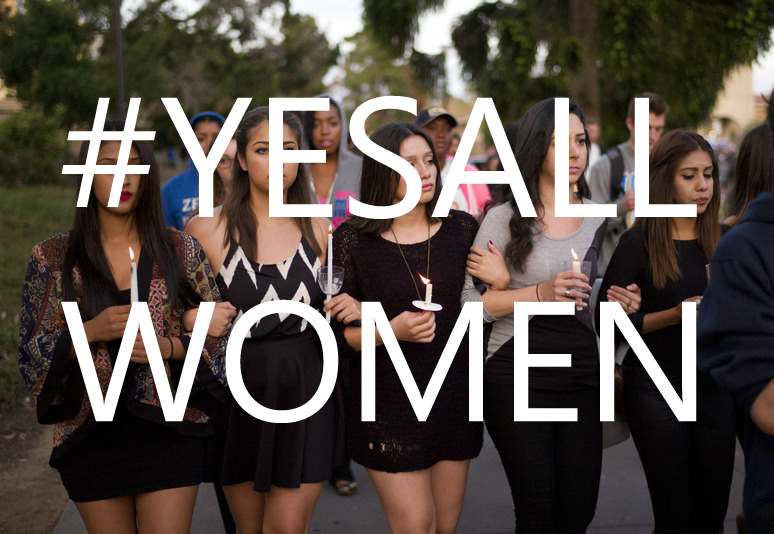
#YesAllWomen proved that although not all men commit horrible crimes against women, the men that often get the headlines and create the most controversy are the ones that need to be watched out for.

John EricksonThe one thing I typically will choose to do on the rare occasion that I’m able to sit down and relax is to watch a documentary.  While some people may go to the gym, read a book, or hang with friends, I typically choose to stay in, nestle up on my couch, and learn.  While on my last bout of relaxation, I chose to watch the HBO documentary Questioning Darwin. Although it offers very little new insight into the evolution vs. creationism debate, it does offer an interesting new way to look at the recent social media hashtag war feminists, allies, and supporters found themselves in over the #YesAllWomen movement that took the world by storm.

yesallwomen

Now, before I discuss #YesAllWomen, I have to admit that I did not enter into the safe space women created for themselves to tell tales of the horrible things they have and have had to face on a daily basis.  I firmly believe that men should not have entered into the digital space Continue reading “#YesAllWomen, the Darwin Debate, and the God Complex by John Erickson”