Jewish Folklore and Women’s Clothing: When Things are the Text by Jill Hammer

Two weekends ago, I had the pleasure of visiting the Jewish Museum on Fifth Avenue in Manhattan.  The Jewish Museum has long been a favorite museum for me.  My wife and I took our daughter to this particular exhibit because we knew she’d like it.  The exhibit is entitled “Veiled Meanings: Fashioning Jewish Dress from the Collection of the Israel Museum, Jerusalem.”  It consists of many, many garments created and worn by Jews, from Moroccan wedding clothes to German prayer shawls to Yemenite amuletic (meant to protect the wearer) dresses.  Accompanying the garments were placards explaining the folk traditions giving rise to the various garments.  What I realized (again) after viewing the exhibition was how much I could learn about the culture of Jewish women, and Jewish culture in general, by looking at things, not texts.

The sacred texts and laws central to Jewish life, while they certainly discuss Jewish women, tend not to be created by or for Jewish women.  This means many aspects of how Jewish women thought or acted (before the present day) are obscured. However, these garments were created by and often for Jewish women, and their shapes and symbols tell a great deal.  For example, the Moroccan Jewish wedding clothes I mentioned were embroidered with spirals, representing (according to the accompanying written material) the spiral of life.  These spirals were also found on Jewish tombstones. The spirals resembled, to me, the spirals I’d seen carved on stone at Newgrange and Knowth in Ireland—the ancient symbols of life and journey.  I was amazed to see them in a Jewish context.  Another dress that mixed Sephardic and Moroccan style also had spirals featured prominently.

Continue reading “Jewish Folklore and Women’s Clothing: When Things are the Text by Jill Hammer”

On the Removal of the Confederate Statues by Stephanie Arel

In the wake of Charlottesville, and following Xochitl Alvizo’s recent post on the topic, I review the May 2017 speech from New Orleans Mayor Mitch Landrieu who made a compelling case for the removal of confederate statues from public view in his southern city. In his argument, he poses a simple question related to how an African American mother or father explains to their 5th grade daughter the reason why a statue of Robert E. Lee holds a prominent visual position on the New Orleans landscape. He asks, pointing to the audience, “Can you do it? Can you do it? Can you look into her eyes and tell her why Robert E. Lee is there to encourage her?” The implication of course is, “No,” because Robert E. Lee is not placed upon high in this stronghold of southern history to inspire her.

Landrieu asserts in the speech that the wounds of slavery remain raw because they are wounds that have not only gone unrecognized but they are wounds that have never been allowed to heal. Instead, he says, American cities have committed “lies by omission” failing to honor memory through the confederate emblems, instead erecting statues to pay reverence to men and only parts of their legacies. If this were not the case, if the whole story were told, then memorials at lynching sites and monuments of slave ships would be present in the United States, but they are not.

The statues celebrate, he asserts a “fictional sanitized confederacy ignoring the death, ignoring the enslavement, ignoring the terror that it actually stood for” erected to send a message about who was still “in charge.”    Continue reading “On the Removal of the Confederate Statues by Stephanie Arel”

Holy Women Icons Online Retreats by Angela Yarber

I’ve shared before that the non-profit my wife and I created, the Holy Women Icons Project, is in the process of creating a small intersectionally ecofeminist retreat center on Hawai’i Island. The Holy Women Icons Project seeks to empower marginalized women by telling the stories of revolutionary holy women through art, writing, and special events.

Both the art and writing side of the project have been a monthly part of Feminism and Religion since 2012 as I feature the story of one of my holy women icons, along with the icon I’ve painted depicting them. As I paint revolutionary holy women from history, scripture, and myth, I also write about their lives; in addition to painting and writing, the bold witness of these women has inspired and grounded many of the retreats I lead in churches, seminaries, women’s and LGBTQ centers. Now the time has come for us to try and fulfill our dream of creating a home for this work, a little off-grid retreat center where people can come on retreat to create, sustain, and empower (by paying to attend or receiving scholarships from grants, but more on that later).

We were thrilled to film the first step of this process—building our family’s “tiny house”—with the television show Tiny House Nation. Since then, we’ve been working tirelessly to get our acre of land ready to build more housing for those on retreat, and to find funding sources to make it possible. Anyone who runs a non-profit or works in sustainable construction knows this is no easy (or affordable) task. We’re realizing that this far-flung dream may take longer than we’d envisioned due to lack of funding. We have some fabulous monthly patrons through Patreon, and we’d surely welcome more tax-deductible patronage or donations! Other than this, though, it’s the scrappy work of my wife and I to try and make this whole intersectionally-ecofeminist-off-grid-Hawai’i-retreat-thing a reality. Continue reading “Holy Women Icons Online Retreats by Angela Yarber”

Moving Forward and into a New Season by Elise M. Edwards

elise-edwardsIt’s only been a month and I am still reeling from the US presidential election.  I feel like I’m just beginning to emerge from the sense of loss and futility that has cloaked me.  But I am beginning to move forward.

I don’t feel better.  I’m still confused and discouraged about why people voted for Donald Trump.  I’m very concerned about his cabinet picks and his proposed policies.  But I am actively seeking a path forward and a path of resistance.  I’m finding support in my spiritual practices and communities.

In the Christian calendar, we are in the season of Advent.  Advent carries profound symbolism, and this year it is especially poignant for me.  The word advent bears meanings of arrival, birth, and emergence.  It’s the beginning of the Christian year, which is patterned on the life of Christ, but the year does not begin Jesus’ birth.  That celebration is observed at Christmas, four weeks into the church year.  The weeks preceding Christmas are a time of preparation and reflection on the need for the Incarnation.  The Incarnation of God in the Christ Child may be a distinctly Christian doctrine, but I believe the need for it–even the idea of it–is found in other spiritual and religious teachings.

Continue reading “Moving Forward and into a New Season by Elise M. Edwards”

#HillYes by John Erickson

I’m going to do something I’d never thought I’d do: fill your newsfeed with yet another article pertaining to the 2016 United States Presidential election and yes, I’m going to talk about former Secretary of State Hillary Clinton (hint: I’m emphatically supporting her and I’m unapologetic about it.)

John Erickson, sports, coming out.I’m going to do something I’d never thought I’d do: fill your newsfeed with yet another article pertaining to the 2016 United States Presidential election and yes, I’m going to talk about former Secretary of State Hillary Clinton (hint: I’m emphatically supporting her and I’m unapologetic about it.)

Let me start off with my central point: a vote for Hillary is a vote to change history and the world. No, not because she’ll hail in some type of new economic stimulus (although I’m sure she’ll do just fine with our economy #ThanksObama) or because she’ll save us all from the evils of the GOP (looking at you Trump/Cruz/and the “moderate” Kasich) but because she’ll do one thing that’s never been done before: become the first female President of the United States, ever.

While I have tried not to get into “it” (read: online trysts with my friends on social networks who are #FeelingtheBern) the question I beg to ask is: what’s so wrong with wanting the right woman to be the President? This is one, but not my only reason, I will cast my vote for her both in the Democratic Primary in California in June as well as in November (and, if you haven’t guessed, I do not believe or promulgate the reasoning or rhetoric that Bernie Sanders will come from behind and win the Democratic Party’s nomination because I passed 5th grade level Math.)

Hillary Clinton

Continue reading “#HillYes by John Erickson”

Why Is Pizza Round? The Black Goddess of Rome by Stuart Dean

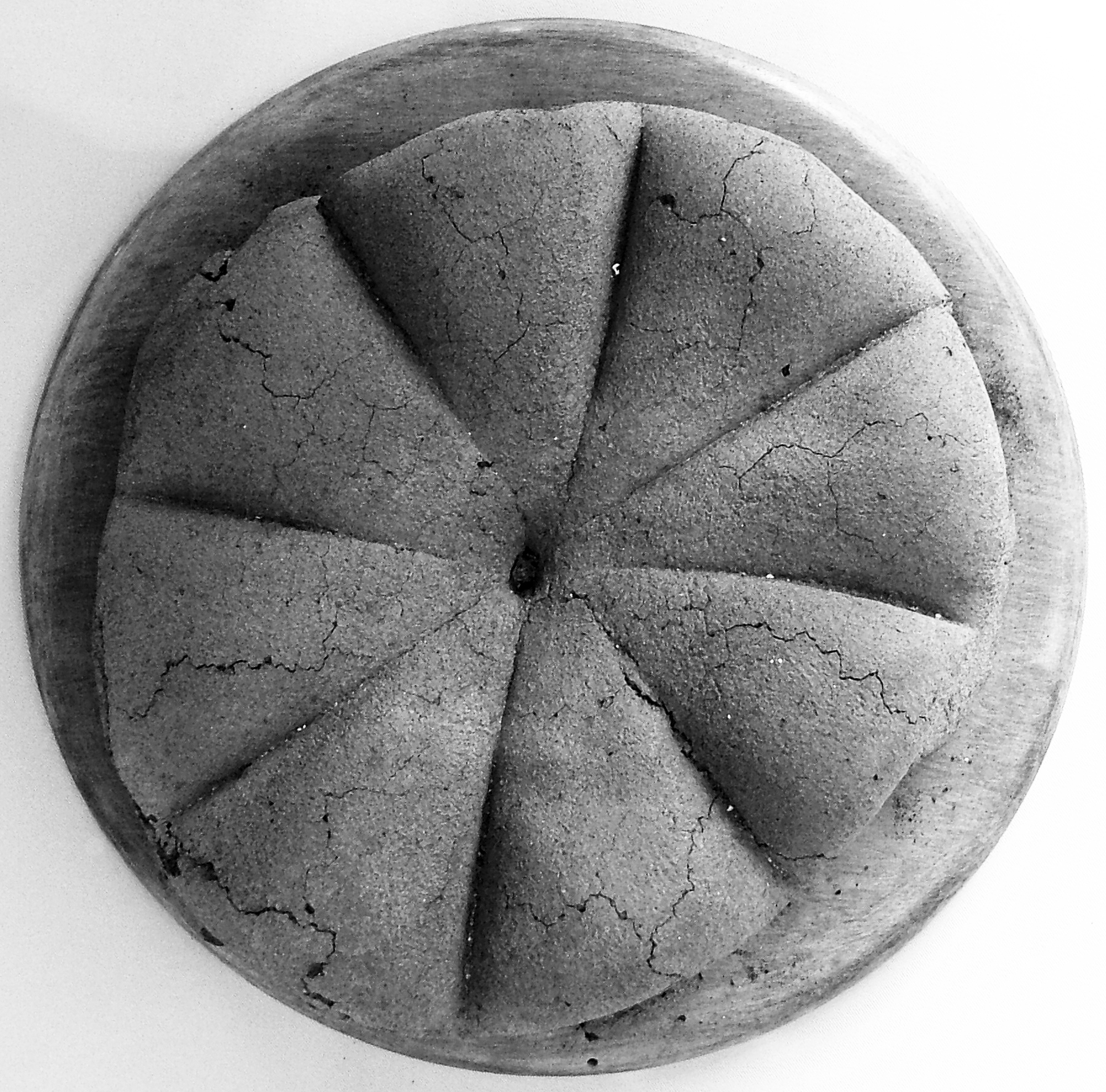
The remains of an ancient Roman bread pie from Pompeii, carbonized in the eruption of Vesuvius in 79 CE
The remains of an ancient Roman bread pie from Pompeii,
carbonized in the eruption of Vesuvius in 79 CE

The poem Moretum (discussed in my last post) narrates the preparation of a meal that can be characterized in modern English as ‘pizza.’  Round flatbread is baked; to go on it, a cheese spread is mixed.  The details of the narration are such as to create a recipe of its ingredients and related cooking instructions.  

The most important ingredient, however, is not an ‘ingredient’ as such, but a shape.  The bread, the cheese, and the cheese spread are all round.  That by itself might not seem remarkable, but the Latin terminology (words from which ‘orbit’ and ‘globe’ derive) is identical to then contemporary astrological terminology.  The bread is even scored into quadrants, symbolizing, among other things, the four elements and the quadrants of an astrological observer’s circle. 

The ancient audience of Moretum would have recognized in all this the world view of the Italian poet from southern Campania, Parmenides.  Though the only poem he is known to have composed is in Greek, the combination of the fact that he likely wrote it while in Italy and that it had over the centuries since its composition become one of the most influential philosophical works of pre-Christian antiquity meant Parmenides had special importance to Romans.  It is not surprising Moretum has the same meter and many of the poetic images as are found in the poem of Parmenides. Continue reading “Why Is Pizza Round? The Black Goddess of Rome by Stuart Dean”

Who Sits at the Center of this Story? By Elise M. Edwards

Elise EdwardsHave you ever heard of the Vitruvian Man? It’s an image from 1490 inked by Leonardo da Vinci that came to symbolize the centrality of the individual in the Renaissance. It is quite clearly a depiction of a muscular, European male. His body is perfectly proportionate and thus simultaneously represents ideal humanity and a microcosm of the universe. The Vitruvian Man is so named after the ancient Roman architect Vitruvius who describes the proportions and symmetry of a temple as being analogous to the proportions of a man.

As an architect and scholar in the humanities, I’ve been acquainted with the Vitruvian Man for many years now. I even had a da Vinci theme on my PC’s Windows software about 15 years ago, meaning that the image of the Vitruvian Man appeared regularly on my desktop and screen saver. There was nothing problematic to me about his presence until a few days ago, when I took part in a discussion about teaching philosophies with some new friends and academic colleagues.

I was listening to Tamara Lewis, an assistant professor in religion whose research and teaching addresses the medieval and Renaissance periods. When she described a metaphor for her teaching philosophy, she discussed replacing the symbol of Vitruvian Man with the “woman at the well.” The woman at the well is a figure in Christian stories about Jesus and his teachings. Her narrative in the Bible is placed in chapter 4 of the Gospel according to John. Int eh story, Jesus encounters a Samaritan woman at a well. He asks her for a drink, which begins a meaningful exchange about spiritual teachings. Jesus’ male disciples and surprised to witness this exchange, presumably because she is a woman and a Samaritan, as the text tells us that Jews do not associate with Samaritans. The woman goes back to her town, tells people about her encounter with Jesus, whom she believes is the Messiah, which prompts many of them to come to him and also believe.

Dr. Lewis described how her presence in the historical study of medieval or Renaissance periods is sometimes questioned and how the woman at the well represents this presumed misplacement. Her metaphor caught my attention not just because of its profound coherence within her own career trajectory and narrative, but its coherence within mine. As a black feminist, religion scholar, and practicing Christian, I often wrestle with questions of belonging and being in or out of place.

This summer, I’m taking the time to think about broad questions and do some vision casting. This past December, Grace Kao wrote about using sabbatical time differently, and I’ve connected this to my own practice of Sabbath keeping as a ritual. I dedicate specific times to cease work.  I am engaging in some productive activity this summer, but I’m also honoring one of the truest blessings and privileges of full-time employment in my profession, which is break time to rest, reflect, and plan for the seasons ahead.  The metaphor of woman at the well who intentionally replaces the Vitruvian Man provokes these questions in my reflection:

Who is the default person around which the places we inhabit are constructed? Who sits at the center of our stories about the places we will go? 

As the little bio that follows my posts says, in my professional career I examine issues of civic engagement and how beliefs and commitments are expressed publicly through aesthetic and artistic practices. I’m currently writing a book-length project about theological ethics and architectural design. So these days I’m thinking a lot about the way public spaces and built environments communicate the values of those who build them and inhabit them. One of the questions I’m wrestling with is the way “common” spaces are defined by the narratives of only some people in the community. What does it mean to be literally “out of place”? What exists as a “safe space” in a public park for a man may not feel safe at all for me as a black woman. A public bench upon which I can rest in the middle of an afternoon jog may not be so uncontested for a homeless man at night.

As I think about my future, I have to ask who sits at the center of my story.   I’m approaching a milestone birthday, and I don’t want to fall victim to someone else’s vision of what a 40 year old woman should be. What does the story look like with me at the center? What happens when I replace an idealized image of perfection, vitality, and beauty with an imperfect but gloriously alive and wonderfully formed vision of who I already am?

As I plan for a new academic year, who do I imagine in my classes? As I engage students in discourse about the history of Christianity, the development of its theology, and the ethical issues of today’s world, who do I place at the center? As the US becomes enmeshed in presidential election politics and ongoing racial tensions, what image to we present as the archetypal American?

I’m so grateful that I was brought to see the woman at the well as a metaphor of intentional displacement. Even in a religion that places a male Savior (Jesus) at its center, there are women who sit with him. Although they confound some of Jesus’ other followers by their presence, they remain meaningful conversation partners and witnesses to their faith.

Elise M. Edwards, PhD is a Lecturer in Christian Ethics at Baylor University and a graduate of Claremont Graduate University. She is also a registered architect in the State of Florida. Her interdisciplinary work examines issues of civic engagement and how beliefs and commitments are expressed publicly. As a black feminist, she primarily focuses on cultural expressions by, for, and about women and marginalized communities. Follow her on twitter, google+ or academia.edu.

Does God have Cleavage? The Avengers and Why the Sheroe We Need is Goddess by Trista Hendren

trista_bkgr_greenMost days I am not certain that anyone really cares about what happens to girls. As a mother of a soon-9-year-old daughter, this burns me.
Because I also have a 12-year-old son, I often end up watching movies I wouldn’t chose on my own. Last Friday, we went to see The Avengers sequel, and I left feeling angry. There were two sheroes shadowed by testosterone; both were highly sexualized. After all the hype over Joss Whedon and his “strong female characters” I began to wonder if the Sheroe we really need is Goddess.

Saturday night we had a lively discussion after dinner with my son’s best friend. I shared my observations on the movie and asked for feedback. They told me the only girl heroes they could think of had “huge boobs.” I asked them why they thought there was not equal amounts of sheroes in movies like this and whether they could think of any movies that were comparable in budget to the Superman, Batman, and Spiderman movies that continue to come out year after year. Continue reading “Does God have Cleavage? The Avengers and Why the Sheroe We Need is Goddess by Trista Hendren”

The Importance of Rituals (Part 2) by Elise M. Edwards

elise-edwards

In my previous post, I wrote about the importance of rituals. The rituals of the Easter season helped me process some difficult emotions. The way that rituals mark time and demonstrate consistency has been a comfort for me when facing new challenges and settings. But I am quite aware that rituals can become empty.   In one of the comments to that post, a woman named Barbara responded, “There came a time for me when familiar and meaningful ritual no longer made sense. I had changed in understanding of what the ritual symbolized and celebrated. And haven’t found new rituals that make sense for me now…or at least I’m not aware of any.” Barbara’s remarks capture not only the loss from no longer being able to relate to existing rituals after life changes, but also the difficulty in finding or creating new rituals to take their place. I thanked Barbara for her honesty and decided that this post would continue the discussion, focusing more on discovery and creation of new rituals.

As I was preparing that post, I watched an episode of Call the Midwife that prompted me to reflect on the need to create rituals when existing ones just don’t work. Call the Midwife is a BBC-PBS show about nurses and midwives living in a convent in London’s East End at the end of the 1950s and early 1960s. The show is based on the memoirs of Jennifer Worth, and it does a better job than most primetime dramas of showing female characters’ experiences the joys and challenges of their professional lives and personal lives. As it is set in a convent with several characters who are both nuns and midwives, the show also explores the theme of vocation. What does it mean to be called to the religious life? Called to nursing? What does motherhood demand? Continue reading “The Importance of Rituals (Part 2) by Elise M. Edwards”

The Importance of Rituals by Elise M. Edwards

elise-edwardsMy sister once said about me, “One thing you have to understand about Elise—she takes the ritual of whole thing very seriously.” My sister was right and her words helped me see this quality about myself. What ritual was she talking about me taking so seriously? Happy hour on Fridays.

It was a different season of my life when she said this. I don’t have Friday happy hours regularly anymore, although I did gather with my friends nearly every week for food and drinks for many years throughout my 20s and 30s. It was often on Fridays, but at one point it was Wednesdays and then, for about a year, it was Thursday nights after a late shift at work.

More recently, I would meet a friend for crepes at the farmers’ market on Saturday mornings. Although the day and the time and specifics of these gatherings would vary, the act of setting aside a weekly time to connect with people dear to me and relax as we indulged in good food or drink was a ritual to me.

Continue reading “The Importance of Rituals by Elise M. Edwards”