Archives from the FAR Founders: The Dark Half: Reflections on the Winter Solstice By Xochitl Alvizo

This was originally posted on December 21, 2011

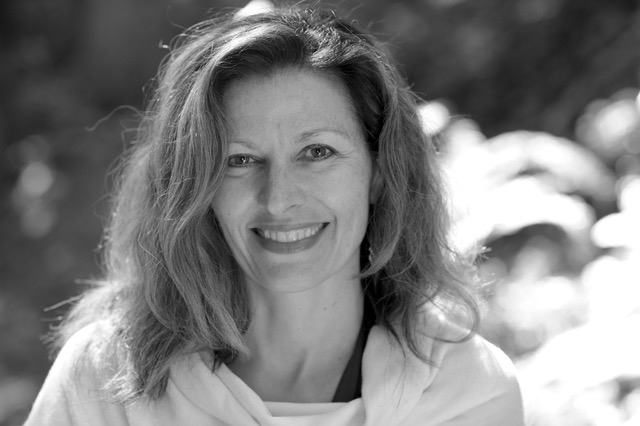
Xochitl Alvizo; Photo by http://www.chrispinkham.com/

I’m a Capricorn. People seem not to be surprised when they find out. I’m also the oldest of three siblings and a keeper of people’s secrets. Stories and secrets – my family’s included – I hear them all, take them all in. Sometimes someone will share something with me that involves another and afterward say, Now, don’t you go telling so and so that I said this. And of course I always reply, I don’t tell no one nothin’. And it’s true, I don’t tell – I simply take it in. I listen and I take it all in. The stories shared, stories of joy and of love, excitement and disappointment, of hurt feelings and misunderstandings, all of them inform me. They all cause me to reflect and consider the fragility of us all, the precariousness of life. We affect each other so much, from the smallest moment to the largest system, all of it makes such a difference to us.

Tonight we celebrate the Winter Solstice – it marks the boundary of darkness and light – it is the shortest day and longest night of the year. 

Continue reading “Archives from the FAR Founders: The Dark Half: Reflections on the Winter Solstice By Xochitl Alvizo”

Jacob’s Ladder, A Feminist Perspective by Janet Maika’i Rudolph

Today, I embark on my retelling of the biblical story of Jacob, the section usually referred to Jacob’s ladder or Jacob’s pillow. The entire story-arc of Jacob is filled with mystery and a sense of shamanic-style questing. What is the goal of a shamanic quest? There are many but the foundation is to open gateways to travel amidst thresholds. It is through these passages that we can gain knowledge of ourselves, have ecstatic experiences, do healing work, divination . . 

I believe this is a feminist issue because when we look at Jacob’s story more holistically, we can strip away the patriarchal assumptions inherent in the tale as it’s come down to us. For example, in my retelling, there is no male grand deity standing above, judging and dictating human actions and interactions. 

Continue reading “Jacob’s Ladder, A Feminist Perspective by Janet Maika’i Rudolph”

What “Can” Women Do? – An Excerpt from Nice Churchy Patriarchy by Liz Cooledge Jenkins

In an essay called Sister, You Can Be Anything God Desires You to Be,[1] Kara Triboulet recalls a discussion in her theology class at her Christian college. When the professor opened up the floor and invited students to express their views on women in leadership, these are some of the things her classmates said:

“I believe women can be in leadership, just not as pastors.”

“Allowing women to teach other women and children isn’t limiting. At least they have a place to serve.”

“Women can be directors, but not pastors.”

“The Bible is very clear . . . women can’t teach or lead men because men were created first. It’s just the way God ordained it, and we all just need to accept that.”

Continue reading “What “Can” Women Do? – An Excerpt from Nice Churchy Patriarchy by Liz Cooledge Jenkins”

Embracing the Shadow Woman of Justice in Dark Times by Carolyn A. Cushing

Justice/Shadow Woman by Rachel Pollack. From the forthcoming The Shining Tribe Tarot: Definitive Edition

Prayer to Justice  

Justice, we call you into the center of our hearts, our minds, our spirits. 

May the fire of your being inspire us to believe your beauty can shine forth in our world.

May the flow of your being purify and release us from wounds that come from the places where You are violated.

May the breath of your being pass through us and form on the lips of all words of wisdom.

May the endurance of your being aid us to persist in serving You.

May we hear your truth. May we know your balance. May we gather your wisdom.

Justice, guide us.

Justice seems so far away, obscured by terror, purposely ignored in these days of war and season of darkness. How can we invite Her back? What will bring Her renewal? 

Continue reading “Embracing the Shadow Woman of Justice in Dark Times by Carolyn A. Cushing”

Prophetic Publishing, Feminist Publishing: 2024 Goals by Dr. Angela Yarber

Queer Chicana feminist author, Gloria Anzaldúa, once claimed, “The world I create in my writing compensates for what the real world does not give me.” I’ve long connected with the revolutionary Anzaldúa, believing in the prophetic power of the written word to create new worlds, worlds big and wide and just and beautiful enough for all people. Worlds where the perspectives of the marginalized are brought to the center.

This is what I aim to do as a publisher and writer myself. It was a meandering path to get here, but on the cusp of a new year, I find myself finally in place with my calling and vocation where all my skills as an activist, writer, professor, artist, and pastoral presence are coming together.

Continue reading “Prophetic Publishing, Feminist Publishing: 2024 Goals by Dr. Angela Yarber”

War, War and More War – Can Goddess Wisdom Offer a Path to Peace? by Judith Shaw

Branwen, Celtic Goddess painting my Judith Shaw

I was on my way home from a wonderful morning spent with my son when I heard the news of the horrific attack by Hamas on Israeli citizens. We had risen early to witness the mass ascension of balloons at the Albuquerque Balloon Fiesta, joining tens of thousands of people from around the world. For 10 days, a diverse crowd gathers on a vast field, experiencing childlike wonder as they watch brightly colored balloons ascend into the early morning sky. It was a joyful morning.

But then, after all that wonder, the car radio delivered the shocking news of the Hamas attack. My joy was shattered. 

Continue reading “War, War and More War – Can Goddess Wisdom Offer a Path to Peace? by Judith Shaw”

Legacy of Carol P. Christ: Is It Essentialist To Speak Of Earth As Our Mother?

This was originally posted on November 25, 2013

The charge of “essentialism” has become equivalent to the “kiss of death” in recent feminist discussions. In this context it is taboo to speak of Mother Earth.  Yet, I would argue there are good reasons for speaking of Mother Earth that do not add up to essentialism. What if the values associated with motherhood are viewed as the highest values? What if the image of Mother Earth encourages all of us to recognize the gift of life and to share the gifts we have been given with others?

For those not familiar with the “essentialism” debate in feminist theory, it might be useful to define “essentialism.”  In philosophy, essentialism is the idea that every “thing” has an “essence” which defines it.  In its pure form, essentialism is a by-product of Platonic “idealism” which states, for example, that the “idea” of table is prior to every actual table and that every actual table is an embodiment of the idea of table.

Continue reading “Legacy of Carol P. Christ: Is It Essentialist To Speak Of Earth As Our Mother?”

Legacy of Carol P. Christ: Hidden Meanings in the Rituals of the Assumption

“[T]he Old European sacred images and symbols were never totally uprooted; these persistent features in human history were too deeply implanted in the psyche.  They could have disappeared only with the total extermination of the female population.” Marija Gimbutas, The Language of the Goddess, 318.

August 15 is known to Greek Christians as the date of the Koimisi, “Falling Asleep” or Dormition of the Panagia, She Who Is All Holy.  December 25 is a minor holiday in the Orthodox tradition, while Easter and August 15 are major festivals.  The mysteries of Easter and August 15 concern the relation of life and death.  In Orthodox theology, both Easter and August 15 teach that death is overcome:  Jesus dies and is resurrected; Mary falls asleep and is assumed into heaven.  These mysteries contain the promise that death is not the final end of human life.  Yet this may not be the meaning of the rituals for many of those who participate in them.

Continue reading “Legacy of Carol P. Christ: Hidden Meanings in the Rituals of the Assumption”

The Queen of Heaven Cakes: Asherah and Ishtar by Michelle Cameron

When one nation conquered another in antiquity, vanquished peoples typically switched allegiances to that country’s gods, since those deities were clearly stronger than their own. In my novel, Babylon: A Novel of Jewish Captivity, the prophet Daniel warns against this tendency, so the Judean exiles would remain faithful despite their captivity:

“You may be tempted to slip away from your Hebrew roots. Many of us struggle to remain steadfast to our faith. We are seduced by the lure of the gods of Ishtar and Marduk, Sin, Damkina, and Ea. Their temples overflow with riches and their ways are strange and compelling.

Continue reading “The Queen of Heaven Cakes: Asherah and Ishtar by Michelle Cameron”

From the Archives: Rosh Hashanah and the Goddess by Joyce Zonana

Moderator’s Note: This was originally posted on Rosh Hashanah Sept 10, 2015. Rosh Hashanah this year begins on Sept. 15th but FAR will be taking a 16 day hiatus at that time so we are posting today.

When I was growing up in the 1950s in my Egyptian Jewish immigrant

My father, an Orthodox man who prayed each morning and went regularly to the local Sephardic synagogue in Brooklyn, privately followed the tenets of his faith.  But it was my mother, unconsciously devout, who brought the public rituals of our religion to life.  As a child, I longed to be at prayer with my father and was envious of the men and boys who studied and recited the sonorous ancient Hebrew; I did not want to be confined to polishing the silver and setting the table.  But today, as an adult, I am grateful for the silent teachings bequeathed to me by my mother.

Continue reading “From the Archives: Rosh Hashanah and the Goddess by Joyce Zonana”