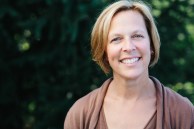
Have you forgotten yet? Have you forgotten what it felt like to go about your life pre-pandemic?
My brain has switched to a different filter system. If I watch a movie or see an image from the pre-pandemic world, the first thing I notice is that people are standing too close to each other. Or I notice that they are touching each other. People are supposed to be in proximity to each other only in the boxes of Zoom or in the confines of their home or in a hospital where the staff has on protective equipment. That pandemic filter overlays itself onto everything now, even memories.
It’s hard to access the joy of greeting someone with a hug or handshake, because those things are something we must tell our bodies not to do. We have to resist that urge. We have to rewire our impulses. There are tiny threads of shared trauma in it all—how will we ever feel like we can be together again and not be afraid? Continue reading “Redemptive Forgetfulness by Marcia Mount Shoop”
I awakened this morning to frozen raindrops hanging from trees – jeweled beads, snow capped hills, and a cacophony of spring songs – I was serenaded by robins, chickadees, phoebes, goldfinches, and nuthatch tweets as I walked out the door into the early morning sun. I listened for the cardinals, who for the moment were absent. It was cold! 28 degrees at the end of April speaks to anomalies, or more realistically, Climate Change.
Yesterday we had rain, and working in the still damp air is literally a healing experience. The fragrance is a combination of chemicals released by soil-dwelling bacteria, oils released from plants during dry spells and ozone created when lightning splits oxygen and nitrogen molecules that then turn into nitric oxide.
I dug in baby trees that I had rescued from the side of the road the day before. Salt kills tender cedar seedlings if the road crew misses slaughtering them. Around Maine trees are worthless except as an economically viable product, a heartbreaking reality for someone like me. Continue reading “Earth Day Reflection by Sara Wright”
During the past week I have been thinking about Greek spring fountains while designing a water fountain for my new apartment in Heraklion, Crete. When the architect sent photos showing that the tiles had been removed from my balconies, I noticed an enclosed niche that could be used for stacking wood, turned into a closet, or as I began to imagine, would be the perfect place for a fountain to bring the soothing sound of running water to my balcony. Continue reading “Designing with the Goddess in Mind: A Meditation on Greek Spring Fountains by Carol P. Christ”
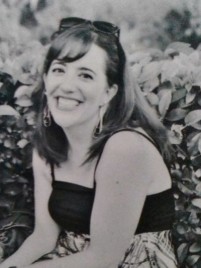
By now, all aspects of life have been altered or halted. The world as we know it has become radically different as we attempt to get a handle on this disease and stop the rising number of deaths each day. We are enduring trauma on a global and individual level. Trauma carries a myriad of emotions; anger and grief sometimes being the prominent two. And with the rising uncertainty paired with the increasing amount of trauma and grief we are all experiencing, we need to find ways to talk about our feelings, share, and move forward.
Photo of the author and her wife by: Margaret Smith
In these United States and across the world we are in quarantine. Lockdown.
Shelter in place. We’re alone together.
And I miss it all: restaurants, coffee shops, movies, hanging out with friends in real time,
But mostly I miss hugs—and I live with my wife and we hug a lot
…but I miss hugs from friends and even sometimes strangers.
I’m a hugger.
I miss handshakes and whispers and rubbing shoulders and close smiles.
Are we embodied beings? Does the body need other bodies?
What is a “crowd of something called” is always my favorite thing to look up:
a pandemonium of parrots, a swarm of eels, a fever of sting rays,
a cauldron of bats, a gaggle of women,
a herd of sea horses, a clutch of vampires, a clowder of cats,
an army of frogs, a crash of rhinos, a business of ferrets,
a passel of possums….
It’s all mythical now, for humans anyway, groups and crowds.
We might as well be mermaids.
And if mermaids were fish, a group of us would be called a school.
If we were human mermaids, we would be a tribe.
And if we were sea mammals, like dolphins, we would be a pod.
I’m missing my pod,
my school, my tribe.
Like whales or manatees, or dolphins—we need a pod.
We are social creatures. We zoom our pod on social media.
And I worry for the elderly in my pod that they do not use this technology that keeps us whizzing
into each other’s homes.
Zooming in– in Brady Bunch boxes.
Here we are! Open your mic!
Toasting the edges of my Brady Bunch box with my glass of wine—Cheers!
Did God mean for us to need each other in bodies? As bodies.
In the same space?
What does it mean that we are here spinning on the planet in embodied forms?
Our experience and our consciousness of being in bodies—
the phenomenology of what it means to be in a body with other bodies.
We are bodies first I think; we are bodies.
Human bodies. A crowd of them, a group… a family, a band, a community,
a nation, a city, a town…a party.
So– I miss hugs, and handshakes and close spaces and smiles and whispers.
I miss sitting tight next to strangers at a sold-out play, a concert, a movie….
I miss crowded events, parades…a club where I am jostling my drink
across the floor to meet my friends.
I miss waiting for a table and making small talk with the other patrons
and chatting up the maître de.
I miss laughing with clerks at the convenience store and talking
to everyone. In person.
And I miss hugging. I’m a hugger.
And I miss, oh I miss
my pod.
–Marie Cartier
April 2020
Photos by the author: from the “sheltering at home” collection
Marie Cartier has a Ph.D. in Religion with an emphasis on Women and Religion from Claremont Graduate University. She is the author of the critically acclaimed book Baby, You Are My Religion: Women, Gay Bars, and Theology Before Stonewall (Routledge 2013). She is a senior lecturer in Gender and Women’s Studies and Queer Studies at California State University Northridge, and in Film Studies at Univ. of CA Irvine.
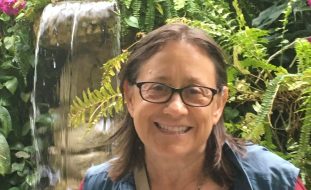
One of my favorite trainings I have received on my spiritual pathway is with Aloha International. I was ordained as an alaka’i (Hawaiian spiritual guide) in 2016. I began studying Huna intensely in 1997. In 2015, I personally met and studied with our Kumu Kupua (founder and shamanic guide) Serge Kahili King. I love the Hawaiian way as it is gentle, loving and teaches us to examine our beliefs, life practices and thought-patterns in a way which heals our wounds and nurtures our lives in many beautiful ways. Huna means secret but not as something we can’t share, rather something that is hard to discover or grasp like the mists of the sea. Dr. King, however, makes it easy and I am happy to share some of his teachings here.
I have several medical people in my family. They study science and closely follow journals to find treatments and cures. I bless those efforts because their findings are wonderful tools when we, ourselves, are in need of medical treatment. The shamans, however, have a different approach to disease. Instead of looking to see what medications work, we like to explore why other methods work. Placebos, for example, are so powerful that scientists must go to extreme measures to avoid activating them with practices such as double-blind studies. What if instead of working to eliminate the placebo effect, we work to strengthen it? What if our goal is to harness the power of our minds to explore how our expectations, beliefs and thoughts affect our health and well-being? Continue reading “Beauty, Blessings and Bistros: The Hawaiian Huna approach to dealing with the virus as well as everyday stresses by Janet Maika’i Rudolph”
Anyone who has seen dolphins frolicking in the sea, understands the allure of these mysterious creatures who live in the water and yet are not fish. Highly intelligent and communicative, Dolphin inspires a sense of joy in our hearts. Often seen leaping and swimming beside boats, stories of rescue and friendship abound.Continue reading “Dolphin – Friendly Guide, Ambassador of Peace and Play by Judith Shaw”
A couple of days ago after an exhausting day of chores I lay out in the sun in my snow pants against the tree I call the “Mother Pine” because she shelters so many creatures from birds to bears. It was late afternoon and the sun was sparkling like a cracked diamond through a myriad of branches over my head. I closed my eyes and listened to an evergreen symphony. The songs produced by pines and other conifers as needles sway and touch soothed me. How much I loved the sound of light winds slipping through the trees.
I had recently returned from the desert where these sounds are totally absent. Instead, ferocious west winds hurl and churn dust and dirt in my face making it impossible to be outside in the winter and spring on many days. Because I have emphysema, I am too often trapped in my house by polluted desert winds… To be present in this precious breezy moment allowed me to feel a deep abiding gratitude for the songs of trees I love… and Maine in general, although the rape of our forests continues unabated. Continue reading “Mother Tree Meditation by Sara Wright”
Imagine that you are a young mother of three from Syria, and that after fleeing your home with your husband and family, you arrived in Lesbos and have been waiting for months to have your asylum papers processed. You don’t know when that will happen, it could take more than a year, you have been told. You are staying in a tent with other families because the containers are full. You have no privacy. When it is cold you are cold, and when it rains you get wet. You try to keep your family clean and healthy, but there are not enough toilets and showers for everyone. In addition, you are afraid to leave the tent at night because some of the men without families drink too much and harass you and the other women.
You have heard that a strange new disease is killing people all over the world. It has a name but you cannot remember it. You don’t know what the symptoms are, and you don’t know what to do to protect yourself and your family. What you do know is that the camp is on lockdown, which means that no one can leave. This is especially hard on the men, including your husband. They have been used to feeling at least a little bit free when they walked outside the camp. Now they feel like they are in prison. They get angry easily, and this makes life harder for you and the other women.Continue reading “Safe Hands in the Moria Refugee Camp in Lesbos: A Starfish Project”
In times of stress, I like to count syllables. It soothes me the way the click of knitting needles might soothe others. Finding rhymes is also calming. Below are poems in forms that require syllable count and/or rhyme, the last three written recently. I hope you are all sheltering well.
Villanelle: 10 syllables to a line. A, B rhyme scheme, with repetition of the 1st and 3rd lines.
noon
I have come to love the silence of noon
the cars have all gone wherever they go
I can hear the bees hum their tuneless tune
the noon of the day is the sun’s full moon
listen, the air is still, the wind lies low
I have come to love the silence of noon
the chainsaws silent, no wood to be hewn
no scratching the dirt, it’s too hot to hoe
I can hear the bees hum their tuneless tune
each shadow cast, now drawn close, is a rune
thickets conceal spotted fawns and a doe
I have come to love the silence of noon
this refuge from noise, a sweet daily boon
a full body blessing, crown to tiptoe
I can hear the bees hum their tuneless tune


 Have you forgotten yet? Have you forgotten what it felt like to go about your life pre-pandemic?
 I awakened this morning to frozen raindrops hanging from trees – jeweled beads, snow capped hills, and a cacophony of spring songs – I was serenaded by robins, chickadees, phoebes, goldfinches, and nuthatch tweets as I walked out the door into the early morning sun. I listened for the cardinals, who for the moment were absent. It was cold! 28 degrees at the end of April speaks to anomalies, or more realistically, Climate Change.
 By now, all aspects of life have been altered or halted. The world as we know it has become radically different as we attempt to get a handle on this disease and stop the rising number of deaths each day. We are enduring trauma on a global and individual level. Trauma carries a myriad of emotions; anger and grief sometimes being the prominent two. And with the rising uncertainty paired with the increasing amount of trauma and grief we are all experiencing, we need to find ways to talk about our feelings, share, and move forward.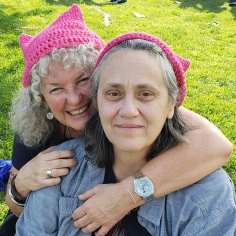


 One of my favorite trainings I have received on my spiritual pathway is with Aloha International. I was ordained as an alaka’i (Hawaiian spiritual guide) in 2016. I began studying Huna intensely in 1997. In 2015, I personally met and studied with our Kumu Kupua (founder and shamanic guide) Serge Kahili King. I love the Hawaiian way as it is gentle, loving and teaches us to examine our beliefs, life practices and thought-patterns in a way which heals our wounds and nurtures our lives in many beautiful ways. Huna means secret but not as something we can’t share, rather something that is hard to discover or grasp like the mists of the sea. Dr. King, however, makes it easy and I am happy to share some of his teachings here.
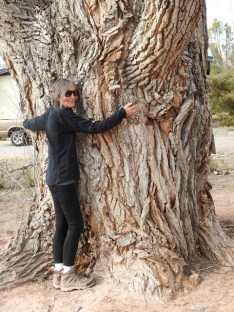 A couple of days ago after an exhausting day of chores I lay out in the sun in my snow pants against the tree I call the “Mother Pine” because she shelters so many creatures from birds to bears. It was late afternoon and the sun was sparkling like a cracked diamond through a myriad of branches over my head. I closed my eyes and listened to an evergreen symphony. The songs produced by pines and other conifers as needles sway and touch soothed me. How much I loved the sound of light winds slipping through the trees.
 Imagine that you are a young mother of three from Syria, and that after fleeing your home with your husband and family, you arrived in Lesbos and have been waiting for months to have your asylum papers processed. You don’t know when that will happen, it could take more than a year, you have been told. You are staying in a tent with other families because the containers are full. You have no privacy. When it is cold you are cold, and when it rains you get wet. You try to keep your family clean and healthy, but there are not enough toilets and showers for everyone. In addition, you are afraid to leave the tent at night because some of the men without families drink too much and harass you and the other women.
  In times of stress, I like to count syllables. It soothes me the way the click of knitting needles might soothe others. Finding rhymes is also calming. Below are poems in forms that require syllable count and/or rhyme, the last three written recently. I hope you are all sheltering well.
