[T]he most grievous wrong ever inflicted on woman has been in the Christian teaching that she was not created equal to man, and the consequent denial of her rightful place in Church and State. –Matilda Joslyn Gage, Woman, Church, and State, 1893, page 1
I do not approve of their [referring to Gage and Stanton] system of fighting the religious dogmas of people I am trying to convert to my doctrine of equal rights to women. –Susan B. Anthony to Olympia Brown, following the disputed merger of the radical National Women’s Suffrage Association with the conservative American Women’s Suffrage Association in 1889
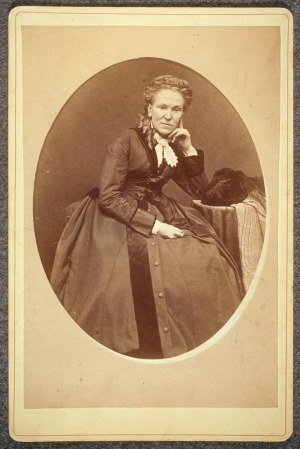
Most readers of Feminism and Religion know that Susan B. Anthony and Elizabeth Cady Stanton were leaders in the nineteenth century struggle for women’s rights. Fewer will know that Matilda Joslyn Gage was widely understood to be Stanton’s equal as a theorist and Anthony’s equal as an organizer. The fact that Gage’s contributions have been lost to history can be attributed to Susan B. Anthony’s bargain with the devil.
If Anthony’s bargain had affected only the reputation of Matilda Joslyn Gage, that would be bad enough. But Anthony’s decision to merge the NWSA with the AWSA signaled that the women’s rights movement would cease and desist from its policy of naming and indicting Christian dogma as the source and cause of women’s subordination in the law in Christian countries. This decision meant that feminists would no longer have a clear understanding of the forces they were reckoning with. Continue reading “Susan B. Anthony’s Bargain with the Devil by Carol P. Christ”
This month is the trilogy to my Queer Eye series. The last two posts talked about the significance of the current reboot Netflix series and the Fab Five. This post will highlight some of the people who were made over. What has also been truly fascinating to see is how much the “heroes” have used their experiences on Queer Eye to ‘pay it forward’ and become their own Fab Fives for others.
While researching Minoan Crete I learned that each autumn young girls once gathered blue violet saffron crocus to leave as an offering for the Wild Crocus Goddess as they prepared for adolescent female initiation rites. I was intrigued by the reference to autumn because I associate flowers more with spring than any other season. From other sources I discovered that in Minoan Crete young girls also gathered bright yellow crocus to celebrate the Great Goddess and the return of the growing season and that yellow was the color associated with the Great Goddess because of the golden color of the dye made from the precious saffron crocus. Later in Greece during the Lesser Mysteries, flowers, especially yellow crocus were also picked to celebrate Persephone’s return from the Underworld. I was particularly delighted by the reference to Persephone picking bright yellow crocus because my relationship with this goddess has been a somber one; I have always associated her with death. And yellow is a joyous color that I associate with early spring.
I felt a wild sense of hope as a volcanic fire erupted inside me when I first imagined Persephone picking spring flowers because of my uncomfortable relationship with this mythical figure and also because I love flowers.Continue reading ” Persephone Rises by Sara Wright”
My neighbor gets up at 2 a.m. and is at work by 3:30 a.m.
Six days a week. She works hard for the money*
She works at a grocery store. She has two dogs and I have two dogs.
Our dogs like each other and we talk about going to the dog beach
together, but who can plan that? We’re lucky to run into each other in our own neighborhood.
“Hey, how are you?” “Tired. You know.” So hard for the money
I do know. I teach six classes at two universities. My wife works freelance for an overseas company
in artificial Intelligence designing for humans to be obsolescent.
In the meantime, she has no time to sleep.
My neighborhood is all plumbing trucks, gardening trucks and vehicles that go to work.
People leave in the morning to make the world turn. And they come home late at night.
On August 26, 1970, I borrowed an old VW bug from my mentor and summer employer Michael Novak to drive from Oyster Bay, Long Island to New York City to take part in the Women’s Strike for Equality march down Fifth Avenue. Some 50,000 women attended the march and another 50,000 took part in sister actions around the United States. The march celebrated the 50th anniversary of the passage of the Women’s Suffrage Amendment that gave women the right to vote. The ERA was on our minds, but it was not the only issue on the feminist agenda. We believed that all the walls created by patriachy would come tumbling down, and soon! Continue reading “ERA—Equal Rights for Women—in the US: Has Our Time Finally Come? by Carol P. Christ”
This is the third year in a row that I will be writing about wildfires in California and their impact on me and my community.
This year, I don’t have any poetry.
This year, I’m not afraid.
This year, I’m angry. I am very angry. And again, I am awash in the (not so?) mundane concerns that surface in the wake of devastation. I am continually struck by this: the strangeness of the everyday next to the blackened hillside, the restricted access, and soot covered floors—the persistence and tremendous regularity, even normality of the everyday. Continue reading “Teaching After the Getty Fire by Sara Frykenberg”
In the beginning
the very beginning, not the
patriarchal, colonial beginning
In the beginning
was the Word
which may have been
a grunt, a vibration, a thought, a feeling
a woman or man or a non-binary being
In the beginning was the Word
And the Word was with God
beside, above, below, inside
and God was perhaps a woman, a man or non-binary
a thought, a vibration, a feeling
or…pure unadulterated love Continue reading “In the Beginning…by Lori Stewart”
A couple of weekends ago, Nancy, one of my classmates from nursing school, organized what she called a “mini-reunion” at her home in New Jersey. Seven of us gathered together to well, reunite. Our graduating class (Muhlenberg Hospital School of Nursing, Plainfield, N.J.) was small. We started out with forty students—all women. Only twenty of us made it to the finish line. One of our fellow graduates, Marcia, died a few years ago. Two or three of the initial forty students dropped out due to health problems, but were able to graduate a year later with the following year’s class. Some students were asked to leave the program because they could not cut it academically or clinically. Others decided they didn’t “belong” in nursing and quit.
She came on the wings of the Owl flew out of the crack of our imagining, swooped low over the underground forest hooing, hooing, hooing screeching and clacking – Haunting the night with her song.
I almost didn’t recognize her inside the feathery brown cape with bars.
On Starry nights while the white moon sleeps the cloak falls away and behold! She steps out in all her Firebird splendor. Burning, crimson, gold, she crackles — turns blue white light torching the fire turned star. Beaming second sight she rises out of Earthen ashesContinue reading “Firebird’s Song by Sara Wright”
Fifteen years ago, I bought my dream home in Molivos, Lesbos, one of the most stunning villages in the world. Over the next two years I renovated a listed Neoclassical house that had been neglected for over thirty years, restoring it to its original beauty. One of my friends who visited exclaimed that it looked like a movie set. Someone else said that the final result was “more Greek than Greek.” I thought this would be my forever home. But, as I have discussed in an earlier blog, I came to feel isolated in a small village.
Two years ago, I followed my heart to Crete, renting a lovely apartment in Heraklion, followed by a house near the sea. Then back to Lesbos, travel to the US and Canada, and Crete again after Christmas. I would have been happy to move back to the apartment I had rented the previous year, but this time I would bring my little dog. The apartment under my friend’s house outside Heraklion seemed like a good compromise, but the drive to Heraklion proved treacherous and parking difficult. Continue reading “Endings, Beginnings, and Dreamings by Carol P. Christ”


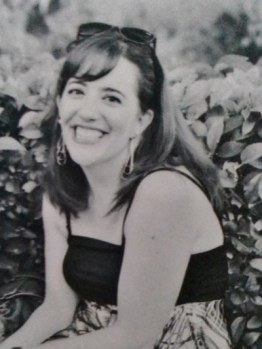 This month is the trilogy to my Queer Eye series. The last two posts talked about the significance of the
 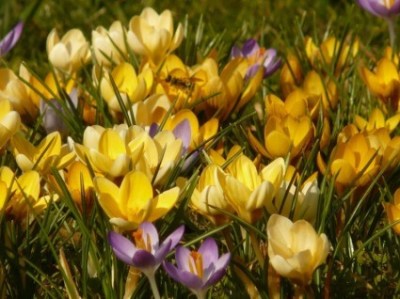 While researching Minoan Crete I learned that each
 On August 26, 1970, I borrowed an old VW bug from my mentor and summer employer Michael Novak to drive from Oyster Bay, Long Island to New York City to take part in the Women’s Strike for Equality march down Fifth Avenue. Some 50,000 women attended the march and another 50,000 took part in sister actions around the United States. The march celebrated the 50th anniversary of the passage of the Women’s Suffrage Amendment that gave women the right to vote. The ERA was on our minds, but it was not the only issue on the feminist agenda. We believed that all the walls created by patriachy would come tumbling down, and soon!
  This is the third year in a row that I will be writing about wildfires in California and their impact on me and my community.
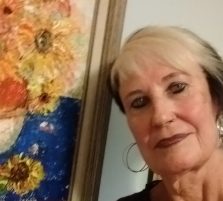 A couple of weekends ago, Nancy, one of my classmates from nursing school, organized what she called a “mini-reunion” at her home in New Jersey. Seven of us gathered together to well, reunite. Our graduating class (Muhlenberg Hospital School of Nursing, Plainfield, N.J.) was small. We started out with forty students—all women. Only twenty of us made it to the finish line. One of our fellow graduates, Marcia, died a few years ago. Two or three of the initial forty students dropped out due to health problems, but were able to graduate a year later with the following year’s class. Some students were asked to leave the program because they could not cut it academically or clinically. Others decided they didn’t “belong” in nursing and quit.

 Fifteen years ago, I bought my dream home in Molivos, Lesbos, one of the most stunning villages in the world. Over the next two years I renovated a listed Neoclassical house that had been neglected for over thirty years, restoring it to its original beauty. One of my friends who visited exclaimed that it looked like a movie set. Someone else said that the final result was “more Greek than Greek.” I thought this would be my forever home. But, as I have discussed in an earlier blog, I came to feel isolated in a small village.
