Turtle moves slowly through the world carrying its home on its back and has done so for over 200 million years, offering us its special wisdom – all you are and all you need is inside of you.
In the pure white sun dream I wore a necklace – bearstone and bone. For months meaning eluded me, but feeling erupted from within- a volcano was burning somewhere beyond me – destructive fires, my body knew. And beyond that stones and bones.Continue reading “Bare Bones by Sara Wright”
Isabella Ides’ White Monkey Chronicles is my lectio divina, the wisdom, humor, and wonder of her story savored daily. (For an overview, see BJ Austin’s review.) Although the titular white monkey is at the heart of the chronicles, and his charge, foundling/avatar Conrad Eppler, is a boy, I have never encountered a more vivid evocation of goddess—multi-dimensional, earthy, transcendent, fierce, compassionate. No one knows Godma better than the Sisters of the Joyous Mysteries, an order of rogue nuns, the focus of this interview with the author.
Give us a thumbnail sketch of the three remaining members of the order, Sister Mary Subordinary, Sister Merry Berry, and Mother Mary Extraordinary.
Mother Mary Extraordinary is ancient, icy white, her soul as scuffed as an old shoe. Extraordinary’s veil hides long white hair that reaches to her ankles. Sister Merry Berry is youthful, dark as an espresso truffle, her hair a disarray of dreadlocks. She ditches her veil, crochets a Rastafarian beret, and adopts a pair of florescent orange running shoes. Nun on the run. The orderly Sister Mary Subordinary is almost without physical detail. She is selfless, a giver, a maker of bread and soup. She is porous. Sometimes her soul escapes her. Mary Subordinary has visitations; the monkey god, for one, slips in. Subordinary herself can enter other minds, although she tries not to snoop.
Have you encountered rogue nuns in your own life?
Author with Sr. Mary Agnus, Blessed Sacrament School
I spent my first-communion year at a Catholic school in Hollywood, on Sunset Boulevard. One day on the playground, Sister Mary Agnus asked if I wanted to see the bones of a saint. Yes, I did! She reached into her deep pocket and fetched out a small gold case with red velvet lining and a glass portal. Forget Mary Poppins. I was enthralled. Yet in my secret life, I did not believe in her god. I was a seven-year-old redactor, appalled by the vision of an ocean of children drowning as the ark of animals sails on.
Then years of public school in the suburbs drained the world of mystery. I jumped at the chance to enroll in an all-girls Catholic high school. My notions about nuns changed irrevocably the day I wore a faux zebra coat over my school uniform. Sister Mary Malua asked to try it on. Her Sister friends giggled like girls. And with a shock, I was made aware that they were girls. Like me. These young Sisters, fresh off the boat. Irish – they spoke Gaelic when ruffled — upper-class girls, smart, some of them brilliant, but not very pretty, and not necessarily traditionally gendered.
And none of them as rogue as my creations. Indignant on their behalf, I stepped into the role of fairy Godmother to the Sister Cinderellas — working for no pay, made to obey their priest confessors, denied agency, denied priesthood, doomed to be brides of an indifferent god. Waving my writer’s wand, I de-colonized their minds, redressed them, and sent them invitations to a spiritual ball, the likes of which they had never known.
Toni Morrison said that she wrote the novels she wanted to read. I wrote the world I wanted for my beloveds.
Their mysterious foundling, Conrad Eppler, is home-schooled by the sisters who have widely and wildly varied approaches to his education. Give us a brief description of their curricula.
Author costumed as Shakespeare’s Helena with Sr. Mary Joseph, Louisville High School
Paraphrasing Marx, from each according to her gifts. Sister Subordinary, mindful of Conrad’s origins, reads to him from the Ramayana, stories of the monkey god, Lord Hanuman, and the story of Guha, her idea of a perfect devotee. Guha’s practice is to faithfully kick the statue of Shiva that the Brahman priests have brought to his forest. She passes to Conrad the spiritual gifts of discernment and doubt.
Merry Berry gives Conrad the childhood that she never had. This is one of the fascinations of motherhood and mentorhood, how the child/student changes the teacher. Motherhood is actually one of the deep themes of the Chronicles, that and redemption. How we transform and are transformed by what we create, what we give birth to in the world.
Mothering a child, a planet, a poem, a prayer, a god.
Mother Mary Extraordinary teaches Conrad astral travel. She is a visionary, come to grief over dead and dying dreams. She is cranky, reluctant to crank up further investments in the material world that betrayed her. Her most potent gift comes late in the novel. She is the difficult parent. The dark side of the moon.
The sisters have a highly original approach to prayer, which lands them in mortal trouble with the Great Church. Tell us a little about the flowering of the heretical practices.
The Great Church cast out its rebel brides for ordaining sister priests. Unbound, all holy mayhem broke loose at the convent. New sacraments were invented, Sisters married each other, created scrumptious communion breads, and each sister wrote a personal mass, worshiping the gods as she imagined them. Then disaster. The prayer eaters came and licked the pages of the prayer books clean. When a Sister’s prayer book went blank, death soon followed. And then there were three. Mary Extraordinary. Mary Subordinary. Merry Berry.
When the sky-blue baby deity is delivered to the convent, the three survivors crack open one of the old prayer books to enter his name in the litany of infants. Theirs is a radical hospitality. All gods are welcome. Well. Almost. This hospitality doesn’t quite extend to those gods who deny that they have mothers, or that claim one-and-only status, or label their progeny the only begotten. In the Sisters’ theology every child is a coming, and a godsend.
We’ll close with an excerpt from one of the sisters’ prayers:
Litany of the Infants
The infants come
on fresh beds of hay
on sterile hospital sheets
down dark Calcutta streets
on the back seats of taxi-cabs
on the beds of Mack trucks
they come
in woodshed and chateau
in barn and bordello
on the snow belt
and bible belt
on the green veldt
and parched plains of Africa
they huddle
in refugee camps
in quarantined villages
they set sail in Moses-baskets
afloat on the Nile
launched
from Bodrum
from the shores of Vietnam
from the banks of the Rio Grande
let them come
with halo hair
and soft eyes shining
Divine Mother, Sweet Protectoress
shelter each foundling
in the house of your infinite kindness
in the womb of your joyous mystery
Holy of Holies, Mary Mother of God
teach us thy trade.
Isabella Ides was born under the Hollywood sign and attended a Catholic School on Sunset Boulevard. Her father ran search lights for movie openings. Thus she was bent towards stage lights and spirit lights from the get go. A poet and playwright, she considers her debut novel, White Monkey Chronicles, the mother lode. Everything leads to it. And away.
Elizabeth Cunningham is best known as the author of The Maeve Chronicles, a series of award winning novels featuring a feisty Celtic Magdalen. Her novels The Wild Mother and The Return of the Goddess have both been released in 25th anniversary editions. She is also the author of Murder at the Rummage Sale. The sequel, All the Perils of this Night, will be published in 2020. Tell Me the Story Again, her fourth collection of poems, is now in print. An interfaith minister, Cunningham is in private practice as a counselor. She is also a fellow emeritus of Black Earth Institute.
I was one of millions inspired by Greta Thunberg’s speech to the United Nations. In her usual courageous fashion, she spoke plain truths all adults need to hear about our failure to assure a future for generations of all creatures. Yet you all come to us young people for hope? How dare you? she rebuked us. How dare you?
The beginning of her speech actually struck me the most. This is all wrong, she said. I shouldn’t be up here. I should be back in school, on the other side of the ocean. Her words echoed the words of the small, simple hobbit Samwise in Lord of the Rings, as he and Frodo journey into the terrifying, almost certain death of Mordor. In the film, Sam says: It’s all wrong. By rights we shouldn’t even be here.Continue reading “From the Biblical ‘Woman on Fire’ to Female Kurdish Fighters: The Women Who Mama Up by Tallessyn Zawn Grenfell-Lee”
Artwork and sustainable agriculture are the two threads of my professional life. They mingle fruitfully beneath the surface as I sift through remaining evidence of ancient worlds, trying to sense how people of lost cultures met basic survival needs and also how they responded to the very human hunger for beauty, meaning, and story.
In revisiting the remnants with empathy and wonder, scavenging for resonant clues and forks in the road that we didn’t take, some subtle but significant things continually resurface. For one, various ancient Greek writers (males, e.g., Plato, Strabo, Euripides) noted that it is “the women” who keep things sacred and maintain spiritually oriented rituals; that without the impetus of women, men would not bother to honor the sacred in everyday life, carrying on without much concern beyond themselves. Continue reading “Wealth In Imagination by Laurie Goodhart”
In a recent post I wrote about finding God in music. I confess, I cannot remember the last time I set foot in a church. As a woman, I continually grapple with the foundational messages of Jesus and Catholic Social Teaching and the disconnect with the power structures that seek to control the ways we love and find justice. I long to participate in the culture I grew up in, but cannot support the weaponization of the tradition.
Lately, I’ve come to realize that the messages I connect to I find in music. There are particular songs that offer me the guidance, philosophy, and ideas around meaning and purpose that I resonate with. One of those is “Where’s the Love?” by the Black Eyed Peas.
I’ve been listening to it on repeat lately because it is the sermon I need to hear; it speaks to me and even though it was recorded quite a while ago, it is still relevant. I think it is fair to say that in our current socio-political culture, people are “acting like they got no mamas.”And by the way, I include myself in that statement. Like anyone, I sometimes get so caught up in believing that my way is the only way, I forget to listen to what others have to say.
We are in the midst of a political civil war and are so busy yelling past each other, we’ve forgotten how critical unity is to shaping a healthy government that serves its purpose – caring for the people. Continue reading “Where’s the Love by Gina Messina”
Author and daughter, Dr. Sheela Jane Menon, Assistant Professor at Dickinson College, PA
The country desperately needs to see the Nuns on the Bus on the road again. I just watched Radical Grace,nearly three years after my daughter and son-in-law gave it to me as a Christmas gift. My tardiness made me feel guilty, but despite the passage of time, the film still feels very timely. Three years after the cancer that is 45 entered the White House; three years after the corruption and cruelty he unleashed has metastasized into key branches of government; three years after Catholics have witnessed the heart of the Gospels ripped out the way children have been ripped from the arms of their parents at the southern border, this documentary about how a few nuns risked their place in the church to fight for justice tells me we need the leadership of the nuns more than ever.
I just want to set the record straight. I’ve heard stories about me being an ungrateful slave girl who was disrespectful to my master and mistress. I hear folks saying I went in and slept with my mistress’ husband, as if I had a choice. I didn’t. My body was not my own.
Now, I am a free woman, but not without a price. I was an Egyptian hand maid to the Pharaoh. He gave me as a gift to a wealthy Hebrew couple, Sarai and Abram. Prior to this, I was respected amongst the other hand maids. I was still a virgin and that was worth something. As a servant, I already had no rights, nor control over my life. But at least I had my pride.
I thought my new mistress would keep me safe from losing my virginity until I found a husband. Instead, out of impatience, she sent me in to her husband to have a baby. You see, Abram and Sarai had been trying to have children for many years. God had already promised Abram that he would be a father of many nations. Sarai, being barren, was no proof of this.
They called me “slave-girl.” I was nameless – meant only to serve her and later to produce a child – something she couldn’t do. Why was it my fault that Sarai was barren? After I was forced to have sex with her husband, it was clear I was nothing but property.Continue reading “A Letter to the Editor: Hagar Has Her Say by Marilyn Batchelor”
Yom Kippur, the Day of Atonement, was the 9th of October 2019. On this day, Jews typically attend shul, offer various prayers, and participate in some form of fasting. The day is meant to be a reflection on the ways in which we, as individuals and as a community, have not been our best selves. In this reflection, we speak aloud our objectionable behavior and ask for the Divine’s forgiveness.
In some Jewish communities, the ashamnu prayer, which we use to acknowledge our harmful and destructive behavior, has been the same for centuries. Its particular form and composition is a stylized, alphabetized list of misdeeds. For example, one can find on the list stealing, lying, being rude, disobeying the Torah, participating in abominations, turning away from G-d and so on.


 Turtle moves slowly through the world carrying its home on its back and has done so for over 200 million years, offering us its special wisdom – all you are and all you need is inside of you.


 I was one of millions inspired by Greta Thunberg’s
  Artwork and sustainable agriculture are the two threads of my professional life. They mingle fruitfully beneath the surface as I sift through remaining evidence of ancient worlds, trying to sense how people of lost cultures met basic survival needs and also how they responded to the very human hunger for beauty, meaning, and story.
 In a recent post I wrote about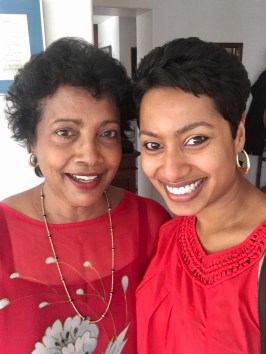
 Dear Editor:
 Yom Kippur, the Day of Atonement, was the 9th of October 2019. On this day, Jews typically attend shul, offer various prayers, and participate in some form of fasting. The day is meant to be a reflection on the ways in which we, as individuals and as a community, have not been our best selves. In this reflection, we speak aloud our objectionable behavior and ask for the Divine’s forgiveness.
