Just that one word dreamed the night of January 1st.
Last evening all my Bear Circle animals gathered in front of the 8 flickering candles (intentions I had set for this coming year) – most were about the loving the Earth, my body, the bodies of animals and trees, giving thanks for gifts offered in 2018.
The animals were walking towards the evergreen wreath, my Circle of Life, soon to enter the Great Round. My fervent hope was that during this human induced ‘sixth extinction’ some would find a way to survive… Continue reading ““Renewal?” 2019 by Sara Wright”
I awaken chilled.
Darkness before dawn refuses to
illuminate frost covered bark –
frozen crystal fingers.
Barely breathing.
the forest sleeps,
Roots pulse Light.
I am running
from future
or past –
Withering away
in wrinkled skin,
Earth shudders.
Am I being called
by Raven,
and Owl
to choose? Re-weave
the circle
of Shadow and Fire,
a monstrous West Moon,
embrace burning bones,
barren mountains
still hidden
from sight? Continue reading “Dreamscape 2018 by Sara Wright”
The parshah for next week is Beshalach (Exodus 13:17 – 17:16). There are a lot of very important events happening in just four chapters. In fact, one could write a blog on any one of the following topics: the Israelite escape from Egypt; the parting of the Red Sea (literally the sea of Reeds); the Israelites being pursued by the Pharaoh and his army; the death of Pharaoh and his army in the sea; the incessant complaints of the Israelites in the desert; and the first descriptions of Shabbat observance.
Yet, this post will not focus on any of those topics. Rather, I want to examine chapter 15, the Song of the Sea. It is one of the oldest sections of the Torah and contains some of the most iconic images of the divine.
Yet, the Song of the Sea is a patriarchal text if ever there was one. G-d is a strong and vengeful (ver. 2) warrior (ver. 3), who has fury or is wrathful (ver. 7), and wields a mighty arm that kills enemies (ver. 6 &12). This in-your-face power of the deity inspires fear in those who threaten the deity’s chosen people (ver. 14-15), and the Israelites are grateful for it (ver. 11). Because of the power of this deity, one can rest assured that this warrior deity will rule (be the King) forever (ver. 18). Continue reading “Beshalach and Liberating Models of G-d by Ivy Helman”
“What I want to do is live in as much silence as is possible at this point in our history.” – Sara Maitland, A Book of Silence
Scottish author Sara Maitland is an intriguing amalgamation of diverse and seemingly contradictory personas. Active in the 1970s Women’s Movement, she is regarded as one of the UK’s pioneering feminist novelists and attempted to create a new mode of narrative inclusive to female experience. She is at once a Roman Catholic convert, a divorcee, a mother, and an unrepentant cigarette smoker. But most uniquely of all, she is a modern-day mystic and hermit, a seeker of silence, solitude, and seclusion, all of which are rare commodities in our crowded, noisy, hyper-connected world.
Her fascinating and beautifully written memoir, A Book of Silence, describes how Maitland, born into a large, gregarious family, came to chose this life. She wasn’t always a hermit, but loved being a mother and wife and adored spirited dinner party conversation. Her “conversion” to silence began gradually, at menopause, after her marriage ended and her adult children moved away. Left on her own, she discovered that, far from being lonely, there was deep happiness and freedom in solitude. Trying to evoke an even deeper experience of this solitary life, she moved to a rural house in Weardale, Yorkshire, where she fell in love with the wild countryside and devoted more and more time to spiritual contemplation. In a most daring experiment, she rented an isolated cottage on the Isle of Skye where she spent a 40 day retreat all on her own, in the depths of winter, not speaking to another soul. Her description of this time makes for riveting reading as she reveals how deeply the solitude effected her psyche. She experienced a certain disinhibition–losing the desire to shower or groom herself because she had no human Other to keep up appearances for. She also experienced auditory hallucinations that intrigued rather than frightened her, including hearing a men’s choir singing plainchant in her bedroom. Though she experienced some negative side effects, what mattered to her far more was the deep bliss and peace that solitude brought her. Only in this kind of silence could she feel the deep spiritual connection to the Divine that she was seeking. Later Maitland made a another retreat deep into the silence of the Sinai desert.
But one thing Maitland discovered was that silence didn’t enhance her creative output as a writer in the way she hoped it would. Her self-chosen spiritual silence also silenced her voice as a novelist, although she reinvented herself as an author of nonfiction. She theorizes that there are two distinct modes of solitude and silence: that of spiritual seekers and that of artists and writers. This latter version she refers to as romanticism, as it evolved from the philosophy of Rousseau and the Romantic poets, such as Wordsworth, who sought romantic seclusion and splendid isolation in nature in order to write:
Religious or eremitc silence, not just in the Christian tradition but in Buddhism as well, is about inner emptiness–emptying the mind and the body of desires, being purged and therefore pure: a kind of blank, a tabula rasa, on which the divine can inscribe itself. It is a discipline of self-emptying, or, to use a theological term, of kenosis, self-outpouring. Whereas romanticism uses silence to exactly the opposite ends: to shore up and strengthen the boundaries of the self; to make a person less permeable to the Other; to assert the ego against the construction and expectations of society; to enable an individual to establish autonomous freedom and an authentic voice. Rather than self-emptying, it seeks full-fill-ment.
Maitland compares her own journey into silence to those of the early Christian desert hermits, to modern day Buddhist nuns who live in silent retreat. She compares and contrasts the experiences of those who seek silence and solitude for spiritual and creative reasons to those who stumble into silence as an occupational hazard–ie Arctic explorers or mountain climbers who become stranded in the wilderness. She also makes a crucial distinction between silence as a choice versus the brutal silencing of oppressed peoples and political prisoners.
For Maitland, after embracing silence, there was no way back. It became her vocation. She now lives alone in a self-built house on a remote farm in Galloway, Scotland, one of the least populated areas in Britain. She lives without television, radio, or close human neighbors, but does have internet and earns her living teaching creative writing via an online distance learning program for Lancaster University. In a 2014 interview with The Guardian, Maitland admits she sometimes struggles to control her time on the internet and that she is not quite alone, as she lives with her dog. But according to her book, she has never owned a mobile phone.
A Book of Silence was published in 2008, before smart phones became so ubiquitous. How much more challenging would it be to follow Maitland’s path into silence now? These days noise is everywhere. Even churches, temples, and libraries are no longer quiet places of contemplation. In the rare instances we are alone, we distract ourselves with our phones and headphones. With our exploding global human population, we live in a world where it’s increasingly difficult to find silence or even personal space. To claim a hermit’s seclusion might appear to many as self-indulgent or elitist escapism. Precisely for these reasons, I found Maitland’s book so radical and compelling.
“In the Middle Ages Christian scholastics argues that the devil’s basic strategy was to bring human beings to a point where they are never alone with their God, nor even attentively face to face with another human being,” Maitland writes. She also observes that “the overstimulation, of which noise is a major factor, of modern society has an addictive quality–the more stimulation and novelty you get, the more you feel you need.”
Although the reader may not necessarily identify with Maitland’s deeply Christian focus, this is an illuminating book that deserves to be regarded as a twenty-first century classic in Women’s Spirituality.
Mary Sharratt is on a mission to write overlooked women back into history. Her novel, Ecstasy, about composer and life artist Alma Mahler is new from Houghton Mifflin Harcourt. Visit her website.
It’s between semesters so am back in Las Cruces, New Mexico, but just for two weeks. Due to circumstances out of my control, I’m not able to spend my usual month—mid-December to mid-January—here in the high desert. When I am here, though, I usually visit the Unitarian Universalist Church (UUC) of Las Cruces and so drove over there last Sunday to attend the 10:30 a.m. service. Some of the faces were familiar. There were many folks I did not recognize. The place was packed—standing-room only.
One of the familiar faces belonged to Tom Packard, a retired pediatrician, from New Hampshire. I remember Tom from a couple of years ago when he stood up during the “Joys and Sorrows” portion of the service to adamantly deny “charges of aggravated felonious sexual assault” that had been brought against him by several young girls. During “Joys and Sorrows,” people are free to tell their own stories in a supportive environment. I remember last year as well when Tom reported to the congregation regarding his upcoming trial—all the while claiming his innocence.Continue reading “All Are Welcome – Including Tom by Esther Nelson”
Last year, I turned 40 and started grad school while working part time at the public library as the Children’s Services Manager, living in a cohousing community, volunteering with my Sisterhood, and raising three teenagers. I’m between semesters at the moment and I’ve had a chance to do some reading by choice instead of reading by syllabus. One of the titles I picked up during this semester break was Fed Up: Emotional Labor, Women, and the Way Forward by Gemma Hartley.
I’ve also had the chance to curl up with my family and watch a few movies. In addition to our epic Marvel chronology review project, we decided to snag the library’s copy of Incredibles 2 (2018) for family movie night. Despite the fact that the original movie released when our eldest child was only a year old, my teenagers have always been fans of Baby Jack-Jack and were excited to see this sequel fourteen years in the making.
I was about halfway through Hartley’s book when we sat down to watch the Parr family pick up right where they left off at the end of The Incredibles (2004). And less than a quarter of the way through the film when Fed Up and Incredibles 2 collided spectacularly inside my head. I spent the rest of the film thinking about emotional labor, parenting, and midlife career change. Continue reading “Emotional Labor, Elastigirl, & Me by Kay Bee”
When European scholars began to study Sanskrit they were surprised to discover linguistic similarities between Sanskrit and Greek and Latin. Old Persian was found to be even closer to Sanskrit. Scholars thus began to speak of related groups of Indo-European languages stemming from an earlier language they called Proto-Indo-European.
Tracing the earliest incursions of Indo-European speakers into Europe from the north along the Danube River, Marija Gimbutas hypothesized that the Indo-European homeland was in the steppes north of the Black and Caspian Seas. DNA research has confirmed Gimbutas’ view: Indo-European-speaking men from the Yamnaya cultural group who carried the YDNA gene R1b–which now is the largest YDNA group in Europe–arrived in large numbers about 2500 BCE from a homeland north of the Black and Caspian Seas.
Until now DNA evidence confirming the Indo-European incursion into India has been lacking. Hindu nationalist groups and some scholars have rejected the Indo-European hypothesis because it suggested that Hinduism and by extension “Indian culture” had a “foreign” origin.
We’re nearly a week into the new year. I almost wish I were a prophet and could predict with assurance that 2019 will be better than 2018—less filled with hate, name-calling, lies, and all-round trumpery (pun intended: “trumpery” is “worthless nonsense”).
When I wrote my daybook, Pagan Every Day, here’s how I began today’s essay:
The Saxons of northern Europe called the first Monday after January 6 Plough Day and honored Freya, “the Venus of the North.” As a goddess who engages in indiscriminate sex, Freya is the spirit of the earth’s fertility. Like Persephone, she is in the underworld during the winter, but early in January we already see hints that she might be rising. We’ll soon set our ploughs into the earth and plant our crops.
Yeager Empress
We can think of planting our crops in both literal and metaphorical ways, but my best guess is that we’d best think of them metaphorically, at least in the so-called developed world, because our part of the world is mostly urban now and if there’s literal planting, it seems to be mostly done by agribusiness. If we’re not farmers literally broadcasting seeds, how do we plant metaphorical crops for 2019?
We can start with numerology, which I studied back in the early 1980s about the same time I was reading books on metaphysical and occult topics, learning the tarot, and reading every book about the Goddess I could find. (There were already lots of them.) As you no doubt know, numerology is based on the meaning of numbers. Whether we’re working with a name, a birth date, or a situation, we use a chart (which you can find online) to convert letters to numbers, then we add the numbers and reduce them to one number that becomes a kind of prediction. It’s important to remember, of course, that true divination does not forecast a fixed and permanent future. Instead, it notes what is likely to happen if things keep going along the path they’re on.
According to my numerology teacher, 1 means creation and individualization; 2 means love, gentleness, service, harmony; and 3 means self-expression, personal creation, optimism, inspiration. One is also the beginning of a new cycle (year, life, experience, adventure), and 9 is “complete expression,” or the end of a cycle, life, experience, or adventure. It’s interesting that 9 + 1 = 10 = 1. The end always leads to what we call a new beginning.
So let’s do some numerology with 2019. We add the numbers and reduce them to one number that will characterize the year: 2019 = 2 + 1 = 3 + 9 = 12 = 1 + 2 = 3. This means that 2019 is a “3 year,” which can (and may) lead to self-expression, optimism, inspiration, talent, sociability, friendliness, and kindness. (Note that there are two 3’s in the calculation; maybe they reinforce the idea of 3-ness.)
Self-expression, optimism, etc. are good crops to be planting this month! These are crops that need to be growing here. If we think politically, as so many of us have been doing for two years, we can hope that the new diverse and Democratic majority in the House of Representatives will grow and harvest these crops and bring an end to trumpery. What do you think might happen this year? Where are these metaphorical crops best planted? How will we feed and fertilize them? How and where will they grow?
Motherpeace Empress
Several years ago, I moved into what I call tarot numerology. Our new year’s 3 corresponds to Card III of the major arcana: The Empress. You know of course that there’s a nearly infinite number of decks with their own illustrations, but most of them show Card III as The Empress. She is the Earth Mother, Mother Nature, the Great Goddess. My tarot teacher said The Empress advises, among other things, “as above, so below,” and when we get The Empress in a reading, she’s usually telling us that new things will be born, there will be productivity and creativity, there will be good crops.
Gaian Tarot Gardener
Our reading of 2019, therefore, is that we are possibly entering a new year of good crops—those metaphorical ones I listed earlier: self-expression, optimism, inspiration, talent, sociability, friendliness, and kindness. A couple months ago, we elected 100 women to a U.S. Congress that is more diverse than any Congress has ever been before. Can these women, perhaps individually, more likely collectively, embody the Goddess?
Rider-Waite-Smith Empress
I’m going to stop writing now because I want you all to finish this post for me. Give me—give us—your ideas and plans for planting new crops in 2019. How can we bring self-expression, optimism, inspiration, talent, sociability, friendliness, and kindness into our weary society? We can keep voting, of course, but what else? Organizing? Marching? Writing? Please think about this new year and then tell us what you’re thinking. What’s gonna happen??
Note: The cards are from the Tarot of Meditation, drawn by Marty Yeager; the Motherpeace Tarot, created by Karen Vogel and Vicki Noble; the Gaian Tarot, drawn by Joanne Powell Colbert; and the Rider-Waite-Smith Tarot, drawn by Pamela Coleman Smith (who did not receive any credit for her work for nearly a century. Oh, look—it’s the patriarchy in action again).
Barbara Ardinger, Ph.D. (www.barbaraardinger.com), is a published author and freelance editor. Her newest book is Secret Lives, a novel about grandmothers who do magic. Her earlier nonfiction books include the daybook Pagan Every Day, Finding New Goddesses (a pun-filled parody of goddess encyclopedias), and Goddess Meditations. When she can get away from the computer, she goes to the theater as often as possible—she loves musical theater and movies in which people sing and dance. She is also an active CERT (Community Emergency Rescue Team) volunteer and a member (and occasional secretary pro-tem) of a neighborhood organization that focuses on code enforcement and safety for citizens. She has been an AIDS emotional support volunteer and a literacy volunteer. She is an active member of the Neopagan community and is well known for the rituals she creates and leads.
Mantras are not just the prescribed sound formulas or sentences found in Eastern religions, but they can also be thought of as the words or phrases that we continually repeat to ourselves. The word mantra comes from Sanskrit and its roots are manas-, meaning “mind,” and -tras, which can be translated as “tool.” Thus, mantra is a tool to protect the mind.
How often do we engage in negative self-talk like “It’s my fault” or “I’m to blame for what’s happened to me” or “No one loves me”? These expressions can become mantras, as we believe their messages from constant repetition. In hospice and hospital settings, one often finds patients who have convinced themselves that “This is God’s punishment” or “Everyone has forgotten me” or “I’m so scared.” These phrases, rather than protect the mind, become what is believed by the mind and may lead to increased anxiety, stress, and depression, and consequently the need for spiritual and emotional support.
Chaplains, as members of the care team in hospice and hospitals, provide spiritual and emotional support to patients and their families. Most often, chaplains attentively listen to patients and their caregivers (often family members) about the patients’ life story, their relationships, their dreams unfulfilled, and their wishes for those whom they are leaving behind. Chaplains take part in family meetings where decisions are made about patients’ care, sometimes interjecting to ask for clarification of medical terms and to ensure that the family understands. Sometimes, the chaplain will lead prayer with the patients and their families, and at other times, the chaplain will pull other tools from her toolbox such as mantra meditation.
Every year, I see multiple pleas from concerned mothers (rarely fathers, because (straight) fathers rarely take on emotional labor of child rearing) wondering what to do about the pile of pink plastic that just came into their home. It’s such a scary pile. It whispers, “come here, little girl… let go of your individuality, your power, your freedom. Join me in the glamour and popularity of gendered subordinate dehumanized servitude… everybody’s doing it… first one’s free….” Mothers (well, the ones who pay attention) look at that pile and see a desolate road ahead of princess girls who grow into teens that think they need to look like pornified sex kittens, who grow into young adults that think it’s ok for men to treat them like sex objects, and on into a bleak dystopian future of internalized misogyny.
I can’t promise that I’ve come up with a magic formula to prevent all that. After all, our girls are met with a barrage, a deluge, of toxic messages luring them down that path in every movie, TV show, magazine, billboard, and media around them. Even female meteorologists can’t just wear suits or have short hair or look plump. And none of my strategies will work if family members are modeling that females should try to please the “male gaze.” So I am not offering a magic bullet. All the same, here is how I handled the Pink Plastic Menace – as usual, a joint effort with my sister Tallessyn Grenfell-Lee.


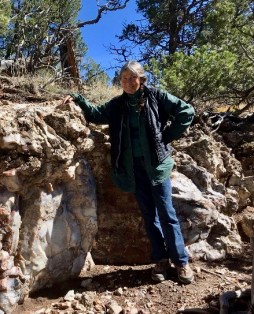 Just that one word dreamed the night of January 1st.
 The parshah for next week is Beshalach (Exodus 13:17 – 17:16). There are a lot of very important events happening in just four chapters. In fact, one could write a blog on any one of the following topics: the Israelite escape from Egypt; the parting of the Red Sea (literally the sea of Reeds); the Israelites being pursued by the Pharaoh and his army; the death of Pharaoh and his army in the sea; the incessant complaints of the Israelites in the desert; and the first descriptions of Shabbat observance.


 It’s between semesters so am back in Las Cruces, New Mexico, but just for two weeks. Due to circumstances out of my control, I’m not able to spend my usual month—mid-December to mid-January—here in the high desert. When I am here, though, I usually visit the Unitarian Universalist Church (UUC) of Las Cruces and so drove over there last Sunday to attend the 10:30 a.m. service. Some of the faces were familiar. There were many folks I did not recognize. The place was packed—standing-room only.
 Last year, I turned 40 and started grad school while working part time at the public library as the Children’s Services Manager, living in a cohousing community, volunteering with my Sisterhood, and raising three teenagers. I’m between semesters at the moment and I’ve had a chance to do some reading by choice instead of reading by syllabus. One of the titles I picked up during this semester break was
  When European scholars began to study Sanskrit they were surprised to discover linguistic similarities between Sanskrit and Greek and Latin. Old Persian was found to be even closer to Sanskrit. Scholars thus began to speak of related groups of Indo-European languages stemming from an earlier language they called Proto-Indo-European.
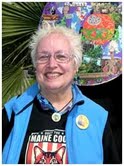 We’re nearly a week into the new year. I almost wish I were a prophet and could predict with assurance that 2019 will be better than 2018—less filled with hate, name-calling, lies, and all-round trumpery (pun intended: “trumpery” is “worthless nonsense”).



 Feminism and Religion