


Woman in religion is a story. This means that all that is said about women in all religions, as well as from social and natural sciences, institutions and the media is a story, a story that is the product of the interaction of mechanisms of power, authority, and performative actions. If gender is a discourse with cultural signifiers, then the “feminine” and “women” in the religious field are too. Speech about women has functioned in patriarchal structures historically, and still now, as a mechanism of control, discipline. and punishment.
In my experience, the situation of women in Islam is generally addressed from two opposing and dominant discourses that I call: The “Idealization of Inequality” and “Demonization.” The “Idealization of Inequality” view argues that the Quran elevated the position of women from a terrible condition of objectification in the pre-Islamic Arab society, also called the age of ignorance or Jahiliyya, a time in which many girls were killed at birth, to a state of full equality and recognition of rights. According to this approach, feminism has no place in Islam. Nothing should be changed. No new hermeneutics must be allowed, since the only differences between men and women stem from biology: women can conceive, men have more physical force. But this does not mean that one is below the other, because, under the “cosmological equality” established by the revelation, the lives of women and men are equal before Allah.
The “Idealization of Inequality” view represents a hegemonic discourse that lacks a strong and coherent response to the prevalence of discriminatory practices against Muslim women based on differences beyond their biological nature: such as the prohibiting women from entering or speaking in some mosques, not allowing women to hold positions of spiritual and administrative leadership, and requiring women to worship in segregated spaces with separate entrances. None of these are related to the “equality” they attribute to the Quran. Nor does the “Idealization of Inequality” standpoint provide real and concrete answers to the other issues affecting Muslim women: institutional violence, racism, stereotypes, and the sexist burden of common narratives.
The “Demonization” view, on the other hand, argues that, with respect to religion, it is not possible to speak of the liberation of women. So all kind of activism or feminist initiatives coming from or seeking background in religion are oxymorons. Accordingly, there would not be Catholic, Muslim, or Mormon feminism or the possibility to develop feminist hermeneutics that can be taken seriously. An important feature of the “Demonization” argument is the assumed axiom of a fundamental difference between East and West, pitting the rationality of “we” against the irrationality of “them,” and the analysis of “our” development versus “their” underdevelopment: reaffirming the western identity as superior. And here lies its most egregious shortcoming: “Demonization” acts as judge and jury in regard to the description of the oppression of all women perceived as “other.” First, it places them in the category of otherness, and then it defines the causes of discrimination suffered by them in their societies. Finally, it gives “us” the messianic ability to save “those” women. Continue reading “Islamophobia and Two Tales about Muslim Women by Vanessa Rivera de la Fuente”
 My spirituality is inherently creative. Deep in the creative process, I open more fully to awareness of what is flowing around and in and through me. When I can get there – to that place of fully giving myself over to Spirit as a channel, vessel, and embodiment – creation itself becomes an act of prayer, of devotion, of intense ecstatic ritual to honor, grieve with, or celebrate the Ground of Being behind all expression. I craft, dig, carve, build, dance, drum, and sing. Mostly, my art involves words – spoken and written – to create moments, spark feelings, paint pictures, or shape ideas. Words carry tremendous meaning, unconsciously as well as when we use them consciously, with intention.
 One of my goals for the summer is to paint more. I find I can often say or think by a picture something that I am trying to work through in a formal, discursive way. Art functions as a methodological tool for my theology insofar as it helps me to articulate in one language something that I am trying to say in another. As my teaching career has lengthened, I’ve become more confident using images I have created to communicate my ideas. This no doubt has something to do with the liberty one gains in teaching as a performance exercise, combined with avoidance of repetition, and the desire to engage as well as to be entertained in one’s own right. Even more than just working out an idea, sometimes I also find making images to be a therapeutic tool. I can laugh, mourn, gripe, or celebrate through an image, and sometimes, I can even protest by one.
 I love reading fiction, particularly science fiction and fantasy literature. However, since the birth of my daughter
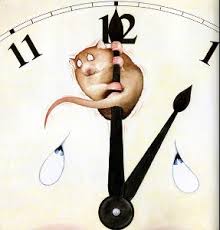 You all know my story, at least the popular version of it. I was an only daughter, the princess (so to speak) of the house until Mama died. Then Papa, who couldn’t seem to manage anything, much less a busy household, went out and got married again and brought Stepmother and her two ugly daughters into the house…and the princess was promptly reduced to servitude.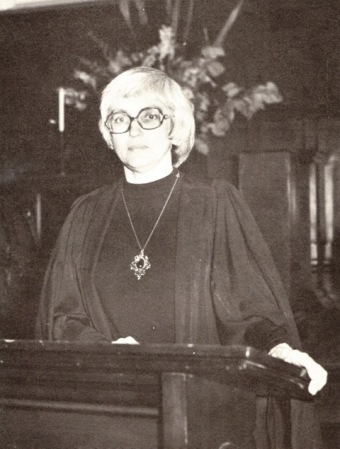
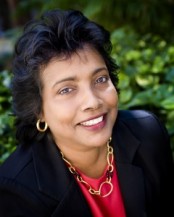 There is no shortage of men in power. No shortage of men who are ready to issue warnings and threaten punishment for straying from the party line. No shortage of men ready to hold forth in front of cameras. And yet, and yet….It took a woman with a lot of guts, a lawyer, and a person of faith to champion healthcare for all. It took a woman to criss-cross the country, standing in solidarity with those in need, ministering to those with “broken hearts” who stand on the margins.
 This week I bought a pendant that caught my attention. It is Celtic knot work of horses, meant to represent Epona. This triggered my interest in Epona and off I went to learn more.
 Feminism and Religion