

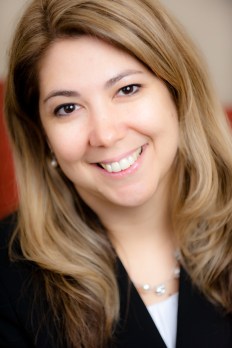
 It seems that Pope Francis has finally read Margaret Farley’s Just Love; and while he is taking steps in a positive direction, he still needs to spend time processing Farley’s words. With his new statement, Amoris Laetitia (The Joy of Love), Francis has called for us to begin to change our attitudes towards “the other” but is still unwilling to change the man made rules of the Vatican. He refuses to acknowledge that LGBTQ relationships are in fact just and maintains the idea of complementarity rejecting women’s roles and capabilities outside of the home. Continue reading “Pope Francis’ “The Joy of Love” Falls Short by Gina Messina”
An Illegitimate Child in Mecklenburg, 1850 by Carol P. Christ
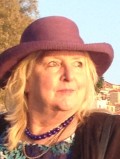 I am Carol Patrice Christ, born in Pasadena, California, daughter of Janet Claire Bergman, born in El Paso, Texas in 1919, daughter of Lena Marie Searing, born in Lyons, Michigan in 1891, daughter of Dora Sophia Bahlke, born in Lyons, Michigan in 1858, daughter of Maria Sophia Catherina Hundt, born in Parum, Mecklenburg in 1827, daughter of Catherina Sophia Elisabeth Schoppenhauer, born in Pogress, Mecklenburg in 1798, daughter of Anna Sophia Seehasse, born in Zulow, Mecklenburg in 1756 in the clan of Tara. I come from a long line of women, known and unknown, stretching back to Africa.
In our ritual on the Goddess Pilgrimage to Crete this May, I will have two new names to add to my mother line. The name Sophia was passed down through the maternal line for at least four generations. I am sorry it was not handed down to my grandmother, my mother, and me.
When I left for Germany a little over a month ago, I knew that Dora Sophia Bahlke was the mother of my grandmother Lena Marie Searing and that Dora Sophia’s parents were Anton Bahlke and Maria Hundt, immigrants from the small towns of Parum and Dummerhutte, in Mecklenburg, Germany. I did not have their parents’ correct names, and I had very little information about their lives in Germany. I have now put some flesh on the bones. Continue reading “An Illegitimate Child in Mecklenburg, 1850 by Carol P. Christ”
Pesach, Toilets, and Clean, Local Water: Seemingly Mundane Yet Necessary Components of an Embodied Liberation by Ivy Helman
 Despite all of the ways Western society has separated the spiritual pursuit from the material and deemed spirituality superior to physicality, the religious holiday of Pesach doesn’t. In fact, it is the physical liberation of the Israelites from slavery in Egypt that starts them on their path toward the covenant and an even deeper spiritual connection to the divine. The Exodus story overflows with images, tales and situations in which: bodies are not ignored; nourishment, comfort and care is addressed spiritually as well as physically and the divine’s spiritual gift, so to speak, to the Israelites is not some other-worldly paradise but a this-worldly land flowing with milk and honey.
Of course, this doesn’t mean that the story is perfect: it is replete with war, murder, militarism, forms of colonialism and other manifestations of patriarchal violence. Patriarchal influences encourage androcentric tellings of events and sexism as well. Three examples are the all-male priesthood, the tenth plague “death of the first-born” (of course the only first born that counts are boy children), and the over-the-top covenantal concern about women as menstruators, adulterers, untrustworthy and so on. These aspects are important to acknowledge and critique, but we cannot stop there. We must cherish the story for its insights as well. Continue reading “Pesach, Toilets, and Clean, Local Water: Seemingly Mundane Yet Necessary Components of an Embodied Liberation by Ivy Helman”
Drawing Pele, Retreating to Hawai’i by Angela Yarber
 I knew I’d paint her from the moment we discovered that we would spend three months of our Year of Volunteer Travel Discernment in Hawai’i. Little did I know how Pele would turn our world inside out, destroying what needed obliteration and recreating new life that we never could have imagined. Pele is the Hawai’ian Volcano Goddess who governs fire, lightening, volcanoes, and the flow of lava. According to legend, she lives in the Halema’uma’u crater of Kilauea on the Big Island.
For over a year, I’d corresponded with a retreat center on the Big Island for my wife and I to be Scholars in Residence, while I also taught yoga and my wife worked on the organic farm. We were beyond excited and arrived in Hilo this January with open hearts and minds, eager to begin our work. Pele had other plans for us. The retreat center where we were planning to work turned out to be a complete disaster: dengue fever, mosquitoes biting my child within five minutes inside our living quarters, proprietors clearly on drugs. We’ve roughed it with no running water in the middle of the woods for months at time, but this was squalor. My wife and I took one look at each other and knew that there was no way we were keeping our child in this environment. Continue reading “Drawing Pele, Retreating to Hawai’i by Angela Yarber”
Islamic Feminism and Heterosexual Dogma by Vanessa Rivera de la Fuente
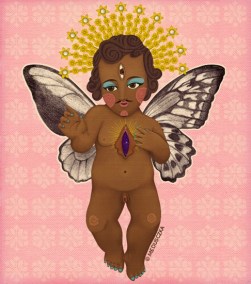
Reza Aslan says in his book “No God But God” that religions are myths. He explains that “religion” is a set of stories fluctuating between truth and fantasy that serve to explain and answer questions about human fate. Taking this idea as base, I think “religion” is a historical product that enables other mythical stories and must be addressed critically about its truth and meanings.
Patriarchal religious discourses, currently mainstream, have a common element that often is left outside the reading of equality and is part of the myth: Heterosexual belief.
Feminisms in Religions aim at challenging patriarchal readings. However, questioning the nature of God is not enough if we don´t challenge heterosexual belief that may or may not include the idea of a God Father/Male. In Islam, Allah has no sex or gender, is not masculine nor feminine. However, the heterosexual belief exists in the Islamic religious narrative. Continue reading “Islamic Feminism and Heterosexual Dogma by Vanessa Rivera de la Fuente”
Caroline Schelling on Birth & Death by Stuart Dean
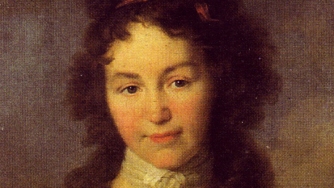
Of the many letters Caroline wrote to her lifelong friend Luise, one of the most intense (the 57th Letter) dates from seven years after the 4th Letter discussed in my last post. By then both were married; only a few months earlier Caroline had given birth to her first child (Auguste); though Luise already had children, Caroline knew that one of them was terminally ill. In the first paragraph Caroline describes how difficult Auguste’s birth was for her; in the second she consoles Luise over the impending death of her child. She thus subtly parallels birth with death and hence the labor for one with mourning over the other.
Fifteen years later, only a few months after the death of Auguste–the last of her four children to die–Caroline’s generally positive disposition evidenced in the 4th Letter and her experience in grappling with birth and death evidenced in the 57th Letter were being put to the test. Though she was holding up well, Friedrich Schelling (Friedrich), the man who was to be her third husband, seems to have been suicidal from feeling guilty (rightly or wrongly) for having failed to do enough to cure whatever illness killed Auguste. Caroline wrote frequently and urgently to him, offering advice and comfort. In one of those letters (274d) she characterizes the challenge of overcoming grief as a formula to be solved: “(death/pain) x (love/bliss) = (life/peace).” She terms this one of her ‘primal axioms’ (the “Ursatz”), although she seems playfully to concede to Friedrich that he or perhaps someone else shares responsibility for it. Continue reading “Caroline Schelling on Birth & Death by Stuart Dean”
STEM and Sexism: Pedagogical Responses to “Chilly Climates” by Sara Frykenberg
Another way to put this: there is nothing inherently competitive about the study of mathematics. The classroom is competitive in order to create a particular kind of graduate—one who engages in a particular [dominant] culture. Liberative pedagogy challenges the ways that classrooms are run in order to challenge the dominant culture.
 Recently, a friend of mine sent me a journal article entitled, “Are STEM Syllabi Gendered? A Feminist Critical Discourse Analysis,” and a response to the research from a rather conservative publication, the National Review: “Female Researcher: We Must Make STEM Courses ‘Less Competitive’ to be more ‘Inclusive’ of Women.” Not a feminist or feminist scholar himself, his question to me was whether or not the author of the original research article, Laura Parson, was sexist and/or racist for suggesting that course syllabi needed to be, or rather sound, less “difficult,” less competitive, etc.
For those of you who don’t know, STEM educations refers to education in Science, Technology, Engineering and Mathematics; and within the United States, women are significantly underrepresented within these fields. I share these articles and my friend’s question in this blog because I believe there is a common misconception that feminist and other liberative educators are arguing that we need to make courses “easier” or “less intimidating” in order to create inclusion. The implication here, that somehow women and/or people of color need an easier course, can be understood as a sexist and racist assertion of inferiority. However, this common critique misses its own investment in kyriarchal codes. Conflating masculinist pedagogical practices with academic rigor, this circular logic redirects the responsibility for inclusion onto the oppressed themselves as though the supposedly “intimidated minority,” is deficient, not the exclusivist language and practices that reinscribe power for particular people and particular ways of being. Continue reading “STEM and Sexism: Pedagogical Responses to “Chilly Climates” by Sara Frykenberg”
Finding Bavarian Ancestors by Carol P. Christ
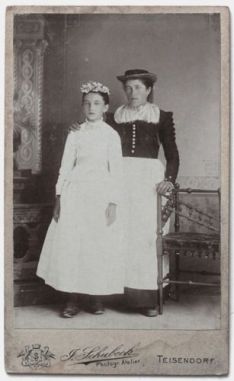
In the past month I have been on a spiritual journey seeking my German ancestors. Six of my 2x great-grandparents were born in Germany, which means I am 37 ½ percent German. Growing up, I was subjected to a form of patriarchal family disciple I came to identify as German, but I was told very little, positive or negative, about my German heritage.
Though I had been researching my family tree for five years when I began my trip to Germany, I had no clue about where in Bavaria the Thomas Christ-Anna Maria Hemmerlein branch of my family originated. While making final preparations before the trip, I learned that German church records are no longer kept in individual churches, but are grouped together in church archives. Some areas also have family records in state archives. Contrary to popular belief, the majority of German records were not destroyed in the two World Wars. However, many of the German records are not online. Continue reading “Finding Bavarian Ancestors by Carol P. Christ”
Mary, Mary, Quite Contrary by Barbara Ardinger
 Mary, Mary, quite contrary,
How does your garden grow?
With silver bells and cockleshells
And pretty maids all in a row.
From her lips to our ears.
Who wrote that poem? I’ve heard that some so-called scholars think it’s about a queen of England named Mary Tudor (slandered as “Bloody Mary” because she stuck to her religion after her father declared himself head of his own bloody church) or Mary Queen of Scots (slandered for other reasons, and then murdered). Well, much as I feel sorry for those two queens, the poem’s about me, and I don’t grow any little garden. I am a gentlewoman farmer. The fellow who wrote that silly poem probably works for one of those corporations that want to buy my land and plant their engineered crops on it and create monocultures that murder the land. Continue reading “Mary, Mary, Quite Contrary by Barbara Ardinger”
Easter, West and East by Laura Shannon
 Western Easter has come and gone, and I missed it this year, by design. I went to Athens for the weekend, where Easter this year won’t come until May 1. In the Greek Orthodox Church, Easter is reckoned differently, so that sometimes (like next year) Easter falls on the same date in both faiths and sometimes (like now) the celebrations are several weeks apart.
In contrast to the UK, where Easter now seems to be mostly about chocolate, Easter in Greece is the main festival of the Christian year, much more important than Christmas. Throughout the Lenten period, fasting foods – ‘nistisimo’ – are available everywhere (heaven for vegan visitors).
And many Greek Easter customs intertwine Christian and pre-Christian beliefs, revealing the changing layers of belief and custom here throughout history. Continue reading “Easter, West and East by Laura Shannon”

