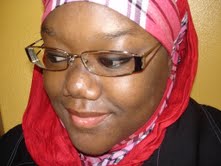
 Now that spring is upon us, it started me thinking about the beach. I love the ocean. Like me, lots of people get that back-to-the-peaceful-womb feeling when looking at the ocean. As I thought about the ocean, I realized I saw it as having a very strong feminine energy. She is like our distant relative. I mean, we are mostly water and when we cry it’s salty, when we sweat it’s salty, and we both (ocean and human) are alive, and we are both Muslims (in the sense of submission to Allah), so we are connected.
Allah says that there is nothing Allah did NOT create from water; I think this water connection is what so many of us feel when we are at the foot of the ocean. We feel closeness to Allah because we are in our element, or better said, we are in a space so close to something that shares the same chemical elements as us perhaps. The earth is one big organism within which we all play a part, though we think we are completely independent. Khalil Gibran has a quote that says something like if we love, our love neither comes from us nor belongs to us; if we are happy, our happiness is not in us, but in life itself; if we feel pain, our pain is not in our wounds, but in all of nature. I believe this. If we are still enough and just tune into that faculty beyond the most recognized, we can also feel it. Continue reading “Nature: The Best Muslim and My Favorite Muse by Jameelah X. Medina”

 I want a new religion. I have changed to the point that I cannot be a part of a patriarchal religion and I feel that all of the major organized religions fall into that category. It has taken me a long time, but I can now see that these organized religions were created largely to support the patriarchal culture that most humans have lived in for at least the past 5,000 years.


 The story of the woman from Timnah, Samson’s first wife – found in the Hebrew Bible, Judges 14:1-15:6 – is often interpreted as yet another wickedly seductive woman who distracts and confuses the heroic judge, preventing him from enacting the deity’s will. I remember the first time I questioned this interpretation: I was an undergraduate student teaching a youth bible study.I asked the high school students in the room what they thought about the Timnah woman and how we might understand the story differently if we read it from her perspective. Neither the students nor I had any idea how to answer these questions because we did not know how to see Samson as anything but a hero.

 Deborah is one of the few women in scripture depicted as a strong leader who does not need the help of a man. The start to Deborah’s story appears bland, a mere introduction to a narrative that will later become juicy, surprising, and even a bit gory. Judges chapter four merely introduces us to a woman named Deborah, a judge over Israel. Judges is a book that records a time when Israel was without a king, so judges had to arbitrate justice, command, lead, and settle disputes. The book of Judges involves a constant downward spiral in which the people of Israel experience God’s grace; they forget God and do evil; they get into trouble and cry out for help; a judge arrives to help; the people get better; the judge dies and the people repeat the cycle.