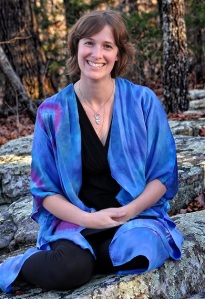
Stories from the Yoga Mat: Sleep as Spiritual Necessity (Part Three-Final)— Feminism, Sleep and On with the Revolution by Marie Cartier

This is a follow up to my summer 2013 blogs: “Stories from the Yoga Mat: Sleep as Spiritual Necessity” –  part one and part two.

“The nicest thing for me is sleep. Then at least I can dream.”
–Marilyn Monroe

In the past two months I have written extensively about “sleep as spiritual necessity.” The Dalai Lama believes spiritual practice suffers without sleep. Sleep is important—all things in life work better if you have a good night’s sleep under your belt before undertaking them. But—how many of us slog through the day without that good night’s sleep? In my first blog on this topic I posted information about how women get less sleep than men. And last month (August) I followed up with yoga therapy techniques to combat insomnia—postures, meditation, and helpful techniques such as the use of aromatherapy. Continue reading “Stories from the Yoga Mat: Sleep as Spiritual Necessity (Part Three-Final)— Feminism, Sleep and On with the Revolution by Marie Cartier”

Enduring the Trials of Graduate School: From Conception to Labor Pains and Birth (Revisited) By Michele Stopera Freyhauf

Freyhauf, Feminism, Religion, Durham, Old Testament, Blogger, Bible, Gender, Violence, Ursuline, John Carroll

With the new school year in full swing, I thought this post from almost two years ago would be an appropriate reflection, encouragement, and outward support to those returning to school or nearing the completion of their degree.  Remember – do not give up – the sweat, sacrifices, and struggles are worth it in the end AND  You are not alone.  Remember the strength and courage it took to return to school or take that next step to pursue your educational goals will become the tool to help you persevere and reach that finish line!!

Going back to school at 30-something to complete a B.A. in a completely different field (from accounting to Religious Studies and Theology) was an interesting endeavor.  After many years of legal and business writing as well as crunching numbers, learning how to write academically, including formatting citations and using new technology was quite an undertaking that has proven to be rewarding.  All the searchable databases in the library no longer included card catalogues and microfiche.  This was amazing!  No more correction ribbon and electric typewriters (am I showing my age yet?!)  Going to college in 1985 is different then going back to college in 2006. Continue reading “Enduring the Trials of Graduate School: From Conception to Labor Pains and Birth (Revisited) By Michele Stopera Freyhauf”

Truths My Mother Taught Me by John Erickson

I never gave much credence to religion but through my mother, I met G-d, and through her I understood that I’m not a feminist because of the books I’ve read but rather because of the woman I call mom.

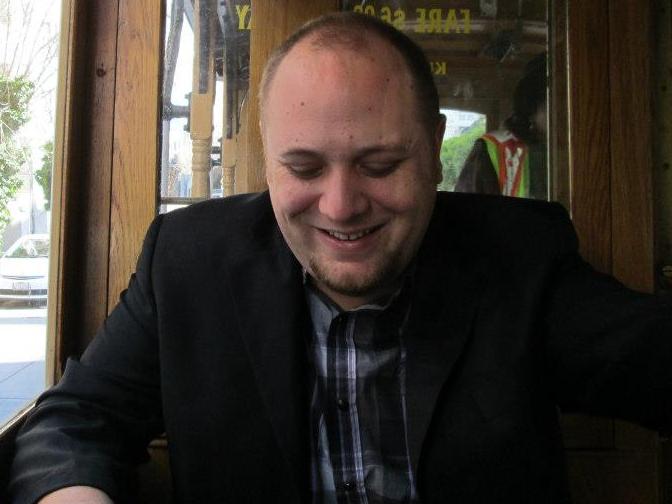
Graduation PhotoThe first question I always get asked when I’m in feminist spaces is: “What inspired you to become a feminist?”  Although I could go into the various histories revolving around men’s involvement in the early stages of the women’s movement to the similarities between the LGBTQ and women’s movements, my simple answer has always relied on one person: my mother.

I’ll be the first to admit (as well as many other people who will join me in the same chorus) that my mother deserves Sainthood for having put up with all the shenanigans I have, and still continue to, put her through. From running away from our local Catholic church the moment she dropped me off at Sunday School, to swearing like a sailor on leave at a very early age in front of Father Schmidt (who still fondly remembers me and the list I brought in with me to the confessional booth). Continue reading “Truths My Mother Taught Me by John Erickson”

The Purity Complex: Are Men Really Less Affected Than Women? by Andreea Nica

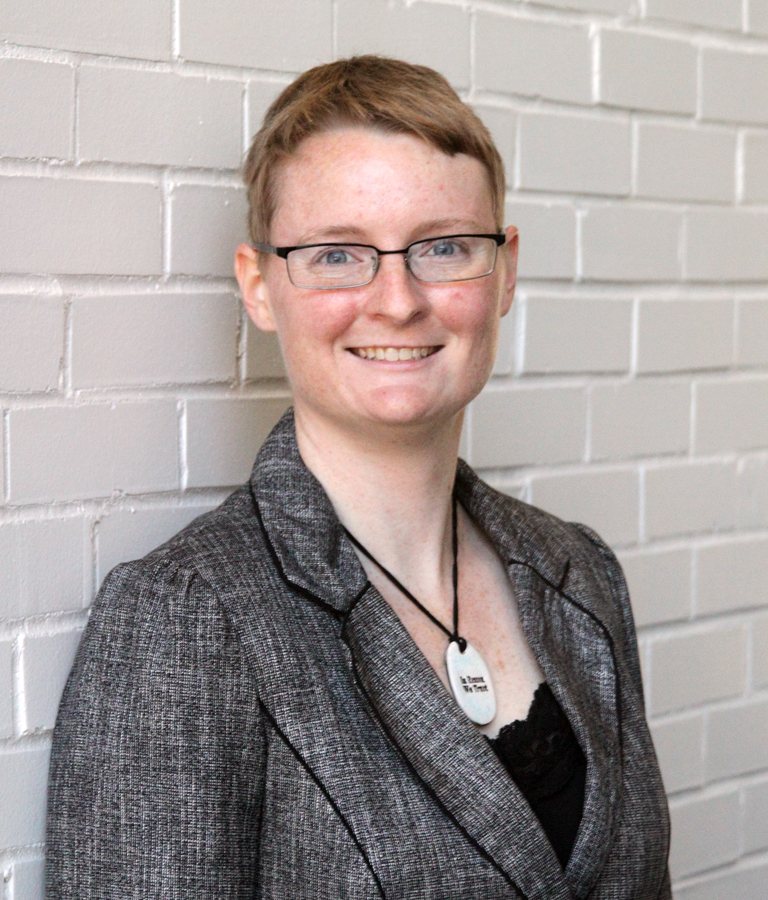
Andreea Nica, pentecostalismWomen’s bodies continue to receive an inexhaustible amount of attention. As a society, we have glorified, scrutinized, degraded, hypersexualized, underrepresented, and misunderstood the female body. Purity culture has orchestrated a movement around the management, perception, and regulation of women’s bodies. As a former Pentecostalist, I grew up knowing there was more focus on my body versus those of my  brothers in Christ. There was a bodily divergence between men and women that I did not fully comprehend but felt obligated to adhere to; the ideological basis of this difference was filled with much ambiguity.

Each time the church organized a sexual purity event and/or discussion, boys and girls were unfailingly segregated. I was always so curious about what was discussed in the boy’s group so I would ask my brother, Christian boyfriend, and male friends at the church to fill me in on the gossip. In my teens, I didn’t know how to perceive the information relayed to me. Looking back now, I am surprised at the discourse around purity culture and masculinity in the church. During my earlier years at college, I convened with the male pastoral leadership, and they confirmed the following main themes taught to men during sexual purity discussions. Continue reading “The Purity Complex: Are Men Really Less Affected Than Women? by Andreea Nica”

WANGARI MUTA MAATHAI AND SACRED MOUNT KENYA by Carol P. Christ

carol-christWangari-Maathai-1September 25, 2013 is the second anniversary of the death of environmental, peace, justice, and democracy advocate and Nobel Peace Prize recipient Wangari Muta Maathai.

Wangari Muta was born in 1940 in a round hut in rural tribal Kenya.  Wangari’s tribe considered the fig tree to be holy, and she was taught that one is never to cut a fig tree down or to use its branches for firewood.  Wangari spent many happy childhood hours in the shade of a fig tree that grew by a nearby stream.  Fig trees play an important role in the ecological system of the Rift Valley of Kenya.  Their roots penetrate the hard rock surface of the mountains to find underground water, thus opening channels where the water flows upward to fill streams and rivers.

As an adult Maathai learned that the fig tree she played under had been cut down by a settler with the result that the river had dried up.  This was happening all over Kenya on a massive scale to make room for cash crop plantations.  Rivers were silting up and widespread erosion threatened to turn the fertile Rift Valley into a desert. Crops were failing, animals were starving, there was no wood for cooking fires, and rural people were suffering.

Maathai  says that as she was thinking about this problem “It just came to me: ‘Why not plant trees?’ … This is how the Green Belt Movement began.”  Continue reading “WANGARI MUTA MAATHAI AND SACRED MOUNT KENYA by Carol P. Christ”

Letter to Allah by Jameelah X. Medina

Would we eat without the pangs of hunger? Would we drink without feeling thirst? Would we sleep without feeling fatigue or drowsiness? Would we cry without feeling sorrow? These are some questions I’ve asked myself when I wonder why so many people tend to find God, religion, or spirituality in times of great dis-ease and despair. Suddenly, I felt inspired to write a letter to God thanking Her for all that She is and for all that I am. In labyrinthical terms, this is my letter to the God in me that resides within me in God.

Letter to Allah Continue reading “Letter to Allah by Jameelah X. Medina”

Flidais, Celtic Earth Goddess, Lady of the Forest and Much More by Judith Shaw

gugg jude72This year the fall equinox occurs on September 22.  In the Pagan calendar it is a time for giving thanks called Mabon.  Mabon celebrates the end of the harvest season and is a time to honor our wild nature and nature spirits. It is a day of perfect balance when the hours of daylight and darkness are equal. Mabon ushers in our journey into the dark night of winter.

Flidais (pronounced flee-ish) is a complex Celtic Goddess with many differing stories and aspects.  She represents both our domestic and our wild natures and is an appropriate Goddess to call on on this day of balance.  She first appears in the ancient mythological cycles as an Earth Mother. She was the  mother of the Irish cultivator heroes, Arden, and Bé Téite and the “she-farmers” Bé Chuille and  Dinand.   From Her they gained the power to cultivate and work the earth for the community.

Flidais, Celtic Goddess painting by Judith Shaw Continue reading “Flidais, Celtic Earth Goddess, Lady of the Forest and Much More by Judith Shaw”

An Equinoctial Ritual for Balance by Barbara Ardinger

Day and night are in balance twice a year, at the spring and fall equinoxes. (The word “equinox,” of course, comes from Latin words meaning “equal” and “night.) I think most of us will agree that balance is a good thing—after all, many of us are writing these blogs at Feminism and Religion to bring some balance to the ideas and institutions of religion. Many spiritual teachers in many faiths tell us that it’s good to bring ourselves into balance—our physical, emotional, mental, and spiritual bodies are healthier and we’re happier when they’re in balance. This is one reason we try to live healthy lives. Note that the fall equinox is also the day the sun moves into the astrological sign Libra, the symbol of which is the scale with its balance pans.

Working on achieving personal balance is a way we can act locally as we think globally. If we can get ourselves into balance, then maybe our personal balance will ripple out into our family, our extended family, our community, our church, our workplace…heck, maybe eventually into local, state, and federal governments. In this age of civil wars, terrorists, drones, and what seems like universal spying, balance is something devoutly to be wished for. And worked for. To celebrate the equinox (September 22), therefore, let’s do a modest ritual of balance. Continue reading “An Equinoctial Ritual for Balance by Barbara Ardinger”

“JC” by amina wadud

Amina Wadud 2 I am Muslim, by choice, practice and vocation

It’s been more than three decades, and certainly most of the influential time of my own theological/social justice career, since I was first introduced to Joseph Campbell (may he rest in “bliss”).  He was still alive then, and my husband and I were like geeks following his PBS series on Myths and Metaphors, and reading all his books.  We called him “JC”, an intentional play on initials and Jesus Christ.  Both of us Muslims by choice, we embrace the Gospels as part of the divine legacy of revelation and accept that they come from the same Source as the Qur’an, the Torah, and other sacred texts, but we fall short of the divination of Jesus.  The grey area of this is hard put for some Christians because “accepting Christ” means to accept the story of his birth, death and resurrection as formula bringing salvation.

We accept his extraordinary divine mission.  Our sacred text not only recaps the virgin birth but also gives Jesus the gift of speech from the cradle where he confirms that his unmarried mother was not a loose woman, but rather the bringer of a Divine miracle, and as such, a miracle herself.  Maybe at another time I will discuss how Mary configures so uniquely in my own feminist theology as read through the Qur’an, but, today I have in mind something about the transformation I went through with Joseph Campbell, starting with the virgin birth.  Continue reading ““JC” by amina wadud”

#SolidarityIsForWhiteWomen and the Power of Micropolitics by Dirk von der Horst

DirkIn my last year of seminary, I experienced a crisis of faith that left me struggling for my theological voice for about ten years.  Sure, there were basics I still affirmed, or wanted to affirm, but speaking my truths was a challenge.  I found my voice again at the now defunct web community Street Prophets, the first place I’d found that combined interreligious dialogue and progressive activism in a way I’d been looking for for all of my adult life.  From 2006-2009, it was home.

It took only one person to destroy that home.  Well, one person and the many people who stood by and let that person attack the LGBT people on the site.

It was this experience that reminded me that I had some serious listening to do when the hashtag #SolidarityIsForWhiteWomen erupted on Twitter on August 12.  Continue reading “#SolidarityIsForWhiteWomen and the Power of Micropolitics by Dirk von der Horst”