Everywhere I am surrounded by tales of violence by Grace Yia-Hei Kao

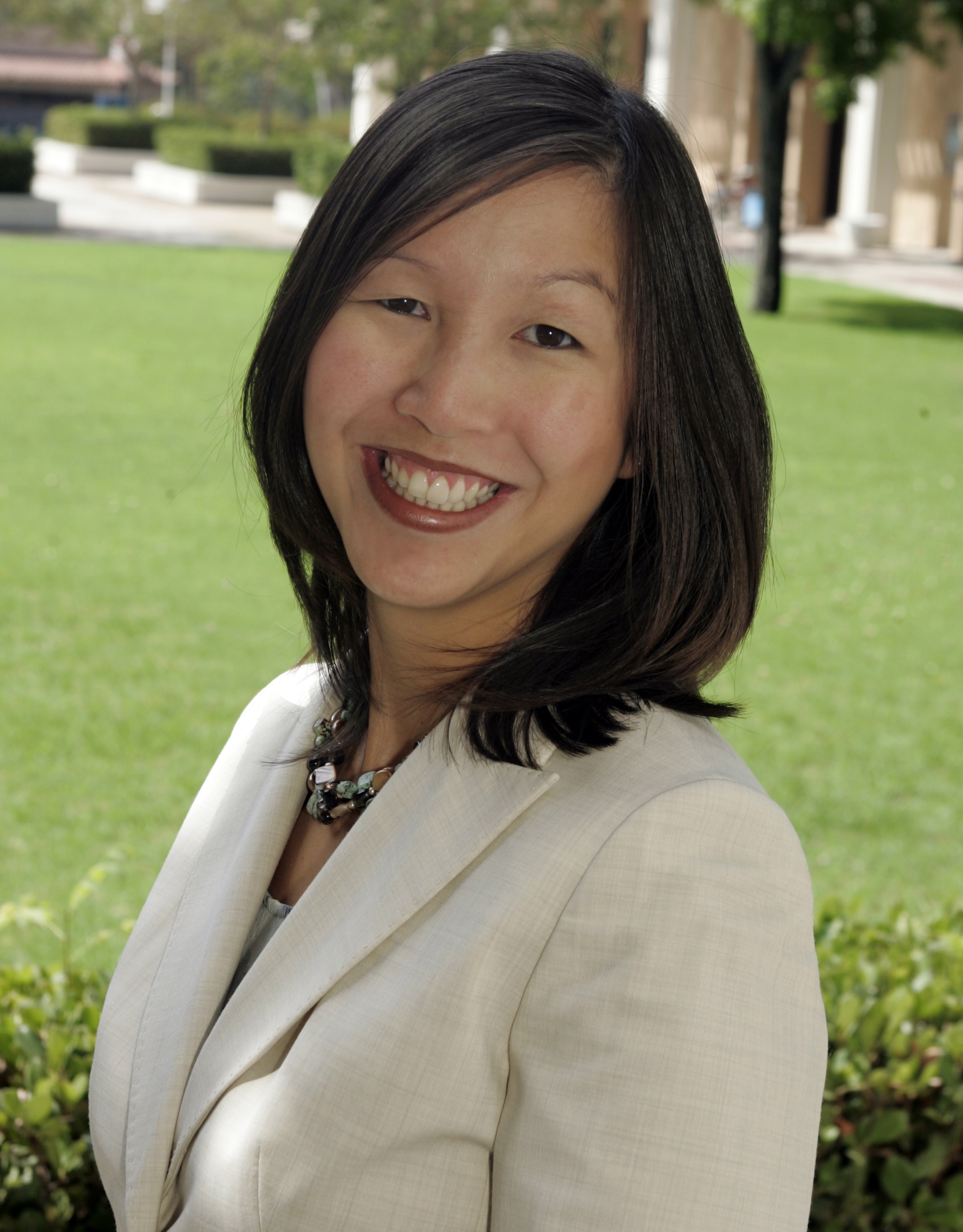
 Grace Yia-Hei KaoAs I write this blog, I am nearing the end of my week-long family vacation in Palm Desert. While we’ve had lots of fun splashing around in the pool, everywhere I turn I am bombarded by scenes and memories of violence.

Continue reading “Everywhere I am surrounded by tales of violence by Grace Yia-Hei Kao”

To Blog or Not to Blog? Is That Even a Question..? by amina wadud

Amina Wadud 2 I am Muslim, by choice, practice and vocationI just want to introduce myself to this blogging forum Feminism and Religion. I will join and then try to keep some kind of pace, so before I jump right in on this that or the other personal and or political topic of interest or inspiration, let me locate myself in blog-relative terms.

The first time I ever participated in a public forum blog was also related to women and religion, but with the word “spirituality” in its title.  For me, there is no divide: to discuss religion I must discuss feminism, and to discuss feminism, I must discuss spirituality.  You will see how these are interwoven, contested and re-woven as the time goes by for me here: blog-wise.

I am Muslim, by choice, practice and vocation. Meaning, I accepted Islam as my way of life, after a loving relationship as a daughter of a Methodist Minister. I was not yet 21.  Now I am 60. The years in between have allowed me to both intra-face within my religion of choice but also to inter-face with religions worldwide and across a wide spectrum of commitments by the followers. Currently, I live in India (about which you will undoubtedly hear a great deal).  Continue reading “To Blog or Not to Blog? Is That Even a Question..? by amina wadud”

“The Invisible War” Goes On by Marie Fortune

Marie FortuneThe invisible war of sexual assault of female and male military personnel by their fellow soldiers, sailors, airmen and marines continues even as the U.S. Senate holds hearings and presses for substantive changes in the way cases of sexual assault are handled. The Academy Award nominated documentary tells the story of survivors of rape and of an institution long on rhetoric and short on change.

In 2012, there were 26,000 reported rapes in the military which is a 35% increase over the previous year. Since 1991, it is estimated that 500,000 women have been raped in the U.S. military. Half a million. At least 20% of women who serve have been assaulted while serving.  This gives new meaning to “friendly fire.” One commentator compares it to incest: a military unit has a family dimension. You should be able to trust the members of your unit to have your back and your commander to protect you as needed. Continue reading ““The Invisible War” Goes On by Marie Fortune”

The Words Ring Hollow by Kelly Brown Douglas

July 2008 the United States House of Representatives passes a resolution apologizing for the more than two hundred years of slavery and the decades of Jim Crow that followed.

June 2009 the United States Senate passes a resolution apologizing for slavery and Jim Crow.

October 2007 Tallahatchie County Mississippi Board of Supervisors and Sheriff William Brewer, Jr. sign a resolution apologizing to the surviving family of Emmett Till for his murder and for the acquittal of the two men who murdered him.

March 2013 Montgomery Alabama police chief Kevin Murphy apologizes to Congressman John Lewis for the failure of police to protect Lewis and other Freedom Riders from mob attacks when they rode through Montgomery in 1961.

April 2012  “I am sorry for the loss of your son,” George Zimmerman says at his bail hearing to the parents of Trayvon Martin. Continue reading “The Words Ring Hollow by Kelly Brown Douglas”

Two Ultimates: The Ground of Being and Goddess by Carol P. Christ

carol p. christ 2002 colorThe concept of two ultimates, the ground of being and Goddess, can be helpful in understanding differences of emphasis within and among religions.  Some religions or strands within religions focus on relationship with or worship of a personal God, while other religions or strands within religions focus on identifying with or merging with the impersonal ground of being or the whole of which we are part.  These two ultimates are found in feminist spiritualities and theologies.

In “Being Itself and the Existence of God”* process theologian John Cobb identifies two ultimates.  The ground of being as the metaphysical principles that structure all of life is unchanging; as the whole of which individuals are part, the ground of being is impersonal.  God, on the other hand, is an active presence in the world, is personal, and cares about individuals in the world.  If God is understood to be in some sense an individual in relation to other individuals, then God cannot be identified with the whole, because the whole is made up of God and other individuals.  Yet God is not simply one individual among other individuals.  Only God has perfect knowledge of the world and every individual within it and only God cares for the world in light of perfect knowledge of it.

I find Cobb’s notion of two ultimates helpful in understanding some of the differences in feminist views of Goddess and God.  Some spiritual feminists, especially Goddess feminists, view the sacred as the whole of which we are a part, structured by the seasons and cycles of birth, death, and regeneration.  Starhawk’s tree of life meditation in which the individual identifying with the tree draws energy from its ground imagines Goddess as the ground of being and life.  Z Budapest’s song “We all come from the Goddess, and to Her we shall return” connects us to the cycles of birth and death.

The view of Goddess as a personal presence who loves, understands, and inspires us to love is based on the notion of God as a person with whom individuals are in relation.  Jennifer Berizan invokes a Goddess who cares in her song “She Who Hears the Cries of the World,” addressed to the Goddess in the form of Chinese Goddess Kwan Yin.  Prayer to Goddess and a sense that She is always with us are based on the idea of a relational, personal God.  According to Cobb religions do not have to choose between the two ultimates. If both are real, then religions can and should recognize both.  Continue reading “Two Ultimates: The Ground of Being and Goddess by Carol P. Christ”

The Inter-Faith Youth Initiative and Feminism by Ivy Helman

ivyFrom June 25th through July 2nd 2013, I participated, as one of three Jewish mentors, in IFYI (Inter-Faith Youth Initiative), an inter-faith immersion experience for high school and college-age youth sponsored by Cooperative Metropolitan Ministries (CMM). The mentors and the rest of the staff guided, encouraged, empowered and supported 30 participants. Throughout the week, I also led an art interest group and co-led an affinity group with Beau Scurich, the Muslim chaplain at Northeastern. The entire community of participants and staff gathered around the week’s theme: the ways of truth and love. As Mahatma Gandhi said: “When I despair, I remember that all through history the ways of truth and love have always won. There have been tyrants and murderers, and for a time, they can seem invincible, but in the end, they always fall. Think of it–always,” (emphasis added).

IFYI was not only an exercise in how to live out the ways of truth and love, but it also became a vehicle through which the participants and staff expressed to the larger world what the ways of truth and love meant to us. Here is some of what the ways of truth and love came to mean throughout our journey together. Continue reading “The Inter-Faith Youth Initiative and Feminism by Ivy Helman”

Painting Lilith, Leaving Church by Angela Yarber

 Lilith has been a misunderstood, appropriated, and redeemed woman throughout the ages.  Many feminists claim her as an empowering figure in Jewish mythology, her story reclaimed by contemporary artists such as Sarah McLachlan, who created the all-women music tour, “Lilith Fair.”  Others have claimed that Lilith was a demon who seduced men and strangled children in the night.

Based almost entirely on Judith Plaskow’s beautiful Midrash, “The Coming of Lilith,” this new Holy Woman Icon with a folk feminist twist has empowered me to reject the sexism and heterosexism that was rendering me broken.  So, she joins Virginia Woolf , the Shulamite, Mary Daly, Baby Suggs, Pachamama and Gaia, Frida Kahlo, Salome, Guadalupe and Mary, Fatima, Sojourner Truth, Saraswati, Jarena Lee, Isadora Duncan, and Miriam as powerful women who have done holy and remarkable things.  First, her story.  Then—if I may—my own.

Continue reading “Painting Lilith, Leaving Church by Angela Yarber”

Creating Ritual by Linn Marie Tonstad

Linn Marie TonstadLast time, we considered whether the creation of rituals, I mean habits, might serve as an antidote to depression, or as a way of managing depression. But the creation of ritual has had a much more significant role in feminist religious practice than such an approach might suggest. Currently, WATER – Women’s Alliance for Theology, Ethics, and Ritual, a leading center for feminist religious thought – creates multiple rituals marking various seasons and events in the year, most recently for the summer solstice. These rituals can provide alternative ways of marking the year’s rhythms, and they can serve as ways to take control of liturgical spaces that have tended to exclude women or to allow women to serve only in various subordinate roles.

Yet the terminology is odd. What does it mean to create a ritual? If I think of the rituals of my childhood, what presented itself to me as ritual was connected either with religious practice, or with seasons of exception. Indeed, the most stylized rituals of the year were areligious (as I understood religion). They took place on Christmas Eve. First, during the distribution of presents, my father would put on a terrifying, horrifying, grotesque Santa mask. It was intended, clearly, to be a friendly Santa, which was why its leering was so fundamentally disturbing. My sister and I would try to run away, emotionally and sometimes physically petrified by the transformation of our father into this monster. Second, after Christmas dinner, we would eat cold rice porridge with cream and try to get an almond – “mandel i grøten” in Norwegian tradition. Getting the almond, which is blanched and hidden in the porridge, is considered an auspicious omen for the new year, and requires that the finder be given a gift – traditionally, a marzipan pig. Continue reading “Creating Ritual by Linn Marie Tonstad”

Adventures in Churchgoing by Elise M. Edwards

Elise EdwardsI am often greeted by warm smiles and handshakes–and sometimes even hugs–from churchgoers around me.  But I wonder if the friendly people would be so welcoming if they knew that I identify as feminist.

It’s hard being a feminist and visiting a new church.  I’ve recently moved to Texas from California and I’m looking for a church to attend.  There are many things I love about church: corporate worship, talks with people of faith, gatherings where friendships are built, and opportunities to serve and to learn. I also love to sing, and my not-ready-for-primetime voice would love to join a choir with and contribute to other people’s worship experience.

In my past, I’ve been a member (or regular attender) of churches where I felt welcomed and affirmed. Yet, I always feel defensive when I seek out new places to worship.  I question whether a church will be affirming to women and girls as whole selves – as embodied, thinking, feeling beings.  I mentally prepare myself to hear male imagery and language for God and I pray themes of male headship vs. female servanthood are not expressed.  I feel like an investigator seeking out clues to determine our compatibility.  It’s no wonder that I’ve recently heard several people compare visiting churches to dating.

Continue reading “Adventures in Churchgoing by Elise M. Edwards”

Feminism and My Existentialist Leanings by Xochitl Alvizo

In light of so much destruction in our world – from the violence inside individual homes to beyond and between national borders – how is it still possible to hope for and to live toward a vision of beauty and peace for the world?

It was at a community college in LA in my Psychology 4 class that I first formally encountered existentialism. When it came to the time of the semester to teach on that topic, our professor, Eric Fiazi, came alive in a new way, energetically teaching us about existentialism and Jean-Paul Sartre. Professor Fiazi dramatically gestured and sketched on the board as he explained the concept of ‘nothingness’ and Sartre’s well-known proposition that “existence precedes essence.”  Teaching psychology was for him a means of teaching what he truly loved, art and existentialism. He believed these subjects helped expand students’ horizons and helped make them happy and productive members of society. And so these class sessions were his favorite to teach – and mine to experience. Immediately, I was hooked.

I remember the moment he hit the chalk to the board – leaving a speck of a mark – telling us that the tiny little mark left on the great wide chalkboard was like our galaxy, tiny  against the great vastness of the universe; the earth, a particle of chalk-dust in comparison, and our individual lives, imperceptible in its midst (it now reminds me of Carl Sagan’s pale blue dot monologue). Engaging the students, he countered each one of their assertions that humans indeed have an essence, a meaning. “Humans are good by nature” – “Humans are inherently selfish beings” – “Humans are created in the image of god” – “We are each created for a purpose”; for each of these he gave a clear and logical retort. I was fascinated! What would it mean to live a life with no inherent meaning – with no essence to determine or guide our existence? How might it be different to live my life stripped of any assumed or inherited sense of meaning or purpose – to instead give these up and start from a presupposition of nothingness? Continue reading “Feminism and My Existentialist Leanings by Xochitl Alvizo”