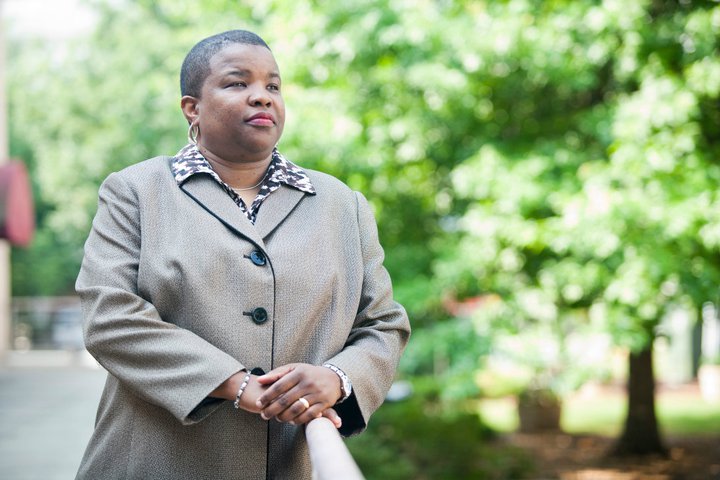
A Personal Journey of Embodiment by Stacia Guzzo

My struggle and fascination with the subject of embodiment began at a young age. Perhaps my first sense of the nuances of being an embodied being began with the realization that my younger brother was considered “different” as a result of being born microcephalic (having an abnormally small head and brain) and therefore having lifelong developmental delay. I remember wondering: How is it that the body can work so perfectly sometimes and yet have so many complications other times? What had happened to make his development so starkly contrast my own? And why can’t it fix itself?

As a high school student, my struggle manifested in the forms of anorexia and bulimia. The anorexia came first, and began almost as if a switch had been thrown. I dieted severely and dropped 60 pounds in a little under 3 months, in the end making it a goal to lose a pound a day. My cheeks sunk in. I slept through lunch. I found little occasion to laugh. And still I could not see an ounce of beauty or satisfaction when I looked at my body. I poked at the jutting bones of my pelvis and wished my bones were smaller. I saw my body as a devious enemy. During my junior year, I became bulimic as a means of coping with increasing pressures by family and friends to eat. Continue reading “A Personal Journey of Embodiment by Stacia Guzzo”

Occupy Wall Street Denver and the Birth of a Lunchtime Consciousness by Cynthia Garrity-Bond

Over the post-Christmas holiday I helped move my middle daughter to a suburb outside of Denver, (releasing my 28 year old to the Universe should be a blog post in-and-of-itself.)  While exploring the downtown area of Denver, Em and I noticed an unusual number of strategically parked police cars with an equal number of unmarked police cars speeding past us. Between the two of us we arrived at the conclusion that 1) a bank-robbery/get-away was in progress; 2) Barack Obama was in downtown Denver or 3) a multiple murder/homicide had taken place very close to us (I might add Em and I both love T.V. shows focused around women as police/detectives).  As we approached our restaurant we heard what appeared to be random chanting and yelling.  As we turned the corner we discovered a group of perhaps 50+ people who were the focus of the police in 1) riot-gear and 2) police on horseback with batons at the ready.  The “dangerous” peaceful gathering turned out to be the Occupy Wall Street Denver movement. My desire to watch and engage those gathered lost out to Em’s need for food.  No worries I thought.  I’ll have time to engage the OWS participants after our lunch, which proved to be the wrong decision.  Within the hour or so it took us to eat, the peaceful gathering had vanished.  But the conversation between my daughter and her activist mother proved to be the most interesting event of that day.  Continue reading “Occupy Wall Street Denver and the Birth of a Lunchtime Consciousness by Cynthia Garrity-Bond”

The “Tenting” God and the Tenacity of Hope by Sheila E. McGinn, Ph.D.

Easter Sunday 2010 marked the last Mass at Historic Saint Peter Church in Cleveland, Ohio. After over 150 years of continuous use, the oaken doors of this sacred space on 17th and Superior were closed and locked. In rich irony, the building that once had been the womb of a vibrant inner-city Catholic community closed like a tomb on the very day when the Christian church around the world celebrated the feast of Christ breaking the bonds of death and rising triumphant from the grave. The official ecclesiastical act of “suppression” that closed the church building was intended likewise to roll the stone across the grave of the vibrant parish community that inhabited that domus ecclesiae. But Christians know that Resurrection happens. Easter cannot be stopped, not even by bishops.

Almost before he set foot in the door of the Chancery in Cleveland, Bishop Richard Lennon announced his intention to close one-third of the 180+ parishes in the diocese. Sixty-three parishes were to be selected for elimination based on the criteria of declining membership and financial dependency. Not surprisingly, many of the faithful were quite disturbed at this announcement. The diocesan spokesman sought to reassure them: “We don’t close parishes; we close empty buildings.” “Alright,” I thought, “maybe this won’t be so bad as it sounds.” And at first, that looked to be the case. Continue reading “The “Tenting” God and the Tenacity of Hope by Sheila E. McGinn, Ph.D.”

It is the Best of Times. It is the Worst of Times: An Athlete Looks at Her Life and Title IX By Paula McGee

I expect 2012 to be a great year. Not only do I plan on graduating in May with a Ph.D., but I will also receive one of highest honors in sports. On Sunday, February 19, 2012 in the USC Galen Center during halftime of the USC and UCLA women’s basketball game, USC will retire the jerseys of my twin sister and I.  Most people in my women’s studies and theology world do not really know that I have a twin sister, nor do they fully appreciate that about twenty-five years ago, my sister and I played on one of the most prominent teams in women’s basketball and in women’s sports. We won two back-to-back national championships in 1983 and 1984. We were also the first NCAA national champions (previous women’s teams were American Intercollegiate Association for Women (AIAW) championships). My sister and I played with Cynthia Cooper and Cheryl Miller. Our team was one the first women’s teams to get mainstream acceptance in the larger sports world. We were not just “girls” that happened to play a sport; we were “real” athletes. We received the same media attention and acceptance of any sports team during that period.

Most of my feminist friends—the preachers, scholars, and theologians—have no idea of what it means for a university to retire a jersey. In the sports world, retiring an athlete’s jersey means that no other person in that sport will ever wear that number at that university. The retired athletic jersey hangs in the rafters of the sports facility forever. This honor for an athlete is synonymous to a scholar receiving a named endowed chair in the academy. What is exciting for me is that my jersey will not only be hanging with my sister’s—that alone would be enough to celebrate. USC is one of the few institutions in the country in which the majority of the retired jerseys are the jerseys of women: Cheryl Miller, Lisa Leslie, Cynthia Cooper, and now Pam and Paula McGee. Cheryl and Cynthia are also members of the Naismith Hall of Fame, and Lisa is sure to join them  with that honor very soon. Continue reading “It is the Best of Times. It is the Worst of Times: An Athlete Looks at Her Life and Title IX By Paula McGee”

(Non-Human) Animals on the Agenda by Grace Yia-Hei Kao

“[E]thical interest in nonhuman animals is flourishing.”

To my delight, the New York Times recently chronicled the growing scholarly interest in human/non-human animal interactions in a story entitled “Animal Studies Cross Campus to Lecture Hall.” There are now more than 100 courses in colleges and universities in the burgeoning field of animal studies. At least 40 U.S. law schools now routinely offer courses in animal law. A growing number of formal academic programs, book series, journals, conferences, institutes, and fellowships are also dedicated to (re)examining human-animal relations from a variety of disciplinary perspectives—“art, literature, sociology, anthropology, film, theater, philosophy, [and] religion,” to name a few.

Continue reading “(Non-Human) Animals on the Agenda by Grace Yia-Hei Kao”

The Reclamation of Culture in Reality TV By Elise Edwards

In my academic life, I spend a lot of time thinking about issues of race, gender, religion and cultural production.  In my free time, I watch a lot of tv.  At times, the two interests converge, and I’m fortunate to have this community and forum to share the thoughts that come from it.  A couple months ago, I started revising a paper I’d written a few years ago about the issue of cultural imperialism and in that process, I recognized that there had been a subtle shift in television programming that features black women.  In the wide and ever-expanding reality tv genre, there are many shows that cast a black woman as a villain (the black bitch) or sexual object.  But there are other shows that present alternative, positive images of black women as caring, capable, professional, and talented.[i]   I’ve also noticed that several shows seemed to be overtly designed to combat the lack of positive images by celebrating the passions, skills, and abilities of women of color.  I am encouraged to see black people claiming an active role in their own cultural production. The act of creating is self-affirming, and when used by marginalized peoples, it can be a source of empowerment to counter their mistreatment.   In Art on My Mind: Visual Politics, bell hooks states, “It occurred to me then that if one could make a people lose touch with their capacity to create, lose sight of their will and their power to make art, then the work of subjugation, of colonization, is complete.  Such work can only be undone by acts of concrete reclamation.” [ii] Continue reading “The Reclamation of Culture in Reality TV By Elise Edwards”

Sanctioned Ignorance and the Theological Academy By Egon Cohen

Namsoon Kang writes that dislocation can be a theologically transformative process of self-discovery, using the metaphor of the “homeless traveler . . . leaving home for Home.” Kang also states that one’s identity—one’s location as traveler—is necessarily influenced by one’s position along axes of identity such as race, religion, ethnicity, class, gender, ability, and sexuality. And it is at this interstice that I, and many other liberationist theologians, grapple with issues of privilege. We are committed to traveling with the marginalized, but our luggage is packed with advantages denied to our companions. Indeed, as individuals with the luxury of pursuing advanced theological studies, most academic theologians operate within a space of significant privilege.

In this regard, I have observed four main typologies of response: (1) denial, (2) guilt, (3) cataloguing, and (4) instrumentalizing. It is hard to constructively engage the first type of response within the present discussion—the existence of such institutionalized privileges is one of my implicit operating premises, so I will bracket this analysis for another occasion. Similarly, I believe that the constructive/transformational capacity of guilt for or detailed acknowledgment of privilege is quite limited. So the question becomes, how do white and/or male and/or heterosexual and/or “first world” theologians instrumentalize our privileges for and (more importantly) with our “fellow travelers”? Continue reading “Sanctioned Ignorance and the Theological Academy By Egon Cohen”

Michele Bachman is a Woman: Using the Gender Card in Iowa By John Erickson

I have been flirting with the idea of writing a blog post about Michele Bachmann for a while.  When this post goes live, Republicans in Iowa will fire the long awaited starting pistol of the 2012 Republican Presidential Nomination Race.  Among the citizens of Iowa and the Presidential hopefuls, one individual, Representative Bachmann, is hoping and more importantly in her case, praying for a miracle.

In the recent weeks, some frontrunners have surfaced: Mitt Romney, the former Massachusetts Governor and if I dare say, devout Mormon, Ron Paul, a United States Congressman from Texas’ 14th District, and Rick Santorum, a former United States Senator from Pennsylvania and fervent Catholic.  However, although the troupe is the typical political line up (all white, privileged, religious, heterosexual family men), Michele Bachmann is hoping to capitalize on the major factor that sets her a part from the pack: her gender.

Continue reading “Michele Bachman is a Woman: Using the Gender Card in Iowa By John Erickson”

A Next Wave of Scholarship By Kwok Pui Lan

I came to the United States in 1984 to begin my doctoral studies at Harvard Divinity School. It was an exciting time to do feminist theology and religious studies. Womanist ethics just began to emerge, as Dr. Katie Geneva Cannon has just completed a dissertation on the subject at Union Theological Seminary in 1983. I count it as a blessing that she was teaching at the Episcopal Divinity School, just on the other side of the Cambridge Common.

The mid-1980s saw the paradigm shifts in feminist studies in religion, as womanist, mujerista/Latina, Asian and Asian American women began to articulate their own theological understanding. If Womanspirit Rising (1979) was a reference text for our field, which contained essays by white women, we had the first reader by radical women of color, This Bridge Called Our Back(1981).

We began to discuss multiple oppressions and multiple identities, and the need to integrate race, class, and gender into our analyses. We challenged white women who have universalized their middle-class, white experience as if women were all the same. Continue reading “A Next Wave of Scholarship By Kwok Pui Lan”

How to Talk to a Deity* By Barbara Ardinger, Ph.D.

Originally, when ritual was still part of everyday life and everybody talked to gods and goddesses all the time, we spoke to them in everyday words. As time went on and priests assumed more power, however, exalted language and fulsome invocations arose, and pretty soon only the High Priest could speak to God Most High. We common folks were allowed to pray, of course, but the important prayers were uttered by the priests.

During the European Renaissance and all the way up to the 19th-century occult revival, it was thought that the gods spoke Hebrew and Latin. Ceremonial magicians wrote rituals in these languages or made up other highly esoteric languages like crypto-Egyptian, quasi-Sanskrit, and Enochian (the “angelic language” of the Elizabethan Dr. Dee). If you read books on high occultism, you’ll see scripts in these languages. Trying to pronounce the words can be like trying to unscrew the inscrutable.

Fortunately, we discovered that it can be dangerous to invoke an invisible power in a language we can neither understand nor enunciate properly nor improvise in. As anyone who has ever studied a foreign language knows, boners come easily and can be very embarrassing. Worse, some powers may become angry if we mispronounce their names … or we may not get who we intended to call. Like the modern Roman Catholic Church, occultists, ceremonial magicians, and witches have generally adopted the vernacular. Continue reading “How to Talk to a Deity* By Barbara Ardinger, Ph.D.”