A Poem for Enheduanna by Nan Lundeen

Cuneiform Tablet from Nippur, Sumeria
(Modern Iraq) 2300 – 2100 BCE
Mary Harrsch from Springfield, Oregon, USA,
CC BY 2.0 <https://creativecommons.org/licenses/by/2.0&gt;,
via Wikimedia Commons

In beautiful synchronicity, I received an invitation to submit a poem to an anthology in the voice of a female-identified persona around the same time I first learned of Enheduanna. The first named author and poet was mentioned in my New Moon Womyn’s Circle. When I looked her up, I was flabbergasted. I am a poet, a feminist, and a long-time student of Women’s Spirituality, and yet the world’s first author—a high priestess who worshipped a female supreme deity, was unknown to me.

I learned that Enheduanna was a brilliant poet who wrote with majestic metaphors, who shared her emotions, and who grappled with concepts of the divine as a female supreme deity in and with nature, and with whom she experienced a personal relationship. She lived and wrote around 2300 B.C.E. Scholars say they do not have the specific dates of her birth and death, but they do know that she served as high priestess for 40 years at the city of Ur in what is now Iraq.

Continue reading “A Poem for Enheduanna by Nan Lundeen”

Who Gets to Define What it Means to be Pro-Life? by Janet Maika’i Rudolph

The sky and sun on June 7th in the afternoon on Long Island.

Today I am coughing and choking here on Long Island because of our unhealthy air quality.  The smoke from the wildfires of Canada have reached us. We, here in NY, are not alone in dealing with air so polluted that breathing is at risk. I think of the CA wildfires, the SpaceX rocket that exploded in April, the Ohio train derailment in Feb. No place is safe.

While coughing and thinking about this, two bits of news came into my consciousness, The first was the Supreme Court ruling narrowing the scope of the Clean Water Act.

My first thought was, do they and their children not have to live in this world too?  Do they think they can buy a clean environment for themselves and their families and the rest of us be damned? 

The next report I heard was from a prominent conservative commentator who explained how “prolife” he is and went on to describe his “deep concern” for life.

Continue reading “Who Gets to Define What it Means to be Pro-Life? by Janet Maika’i Rudolph”

Spiritual Practices for Summer Flourishing by Molly Remer

The spiritual life need not be
divorced from the physical.
It is with our hands that we make magic
It is with our breaths that we offer prayers. 
It is with our eyes that we see beauty. 
It is with our hearts that we know love. 
It is with our ears 
that we hear birdsong and ballads.
It is with these bodies 
that we reach out to touch the holy 
every day.

This morning, I watched the baby woodpeckers. Still nestled safe within their tree they stab wildly at their brave parents who cautiously poke snacks into the trunk and then dive away again, narrowly evading the enthusiasm of their progeny. I peek at the baby phoebes too, heads nearly full-feathered, no more room for a parent in the nest against the wall of our house. They peer back at me, black eyes solemn, while the hummingbirds dodge and weave and battle it out between branches. I hear the thin and persistent cry of a broad-winged hawk from somewhere in the oaks just outside my vision. Summer is settling into the woods, though spring seems just barely to have arrived. The woods are becoming heavy and green and closing to exploration as the bugs and brambles stake their claim and exact their blood prices for entry. The blackberries are in bloom, wild and riotous, their white flowers open gratefully to both rain and sun. The wild raspberries have already begun to set their fruits, hard knobs of green clustered hopefully on each cane. The mulberries were brave enough to try again after frost crisped their efforts to black, now re-leafed, small green flowers and starts of berries once more emerge to hang with delicate promise next to their ruined brethren. As I finish writing my poem and offer my prayers, I look up to see a bald eagle making great wide circles above the house. The sky is clear and blue and the air is sweet and fresh and full of promise. I sit, as I do, in this cocoon of green, my heart wide, my mind soothed, and my soul replenished by the magic of place and all it manages to hold and teach each day. 

Continue reading “Spiritual Practices for Summer Flourishing by Molly Remer”

Mary’s Garden by Sara Wright

Opening the doors to mist ‘Mary’s Garden’ each morning is entering a magic realm. My nose sniffs the scent of fertile woodlands even as I gazed out at an impossibly deep white shroud for months, and presently peer out at pale green earth, bees, and budding trees.

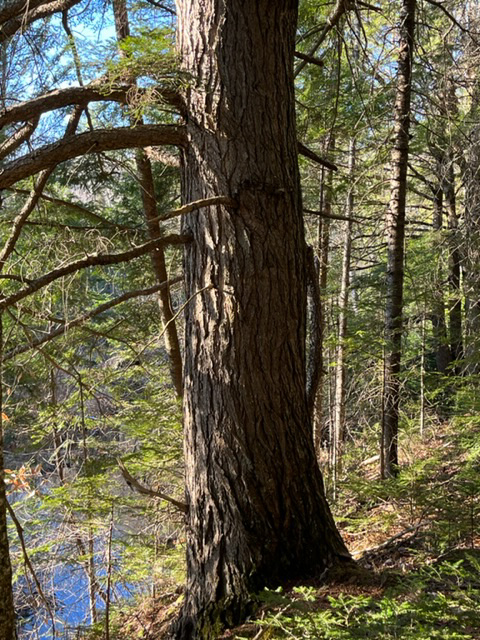
All the original contents of Mary’s Garden, mosses, lichens, liverworts, hemlock seedlings, stones and pieces of bark are buried or supported by the richest detritus and soil that I gathered with such care from a protected forest of thousands of acres just before the snow set in last November. There is a small pond in the center of the four-sided container, edged with emerald moss. Two of my animal fetish friends, a Zuni bear and frog live among the greenery. All throughout the winter this lively miniature woodland created a living link to ‘my’ beloved forest, a place I longed to be part of but could not traverse during winter months. Mary’s garden has been a source of endless enchantment and comfort during the coldest winter days.

Continue reading “Mary’s Garden by Sara Wright”

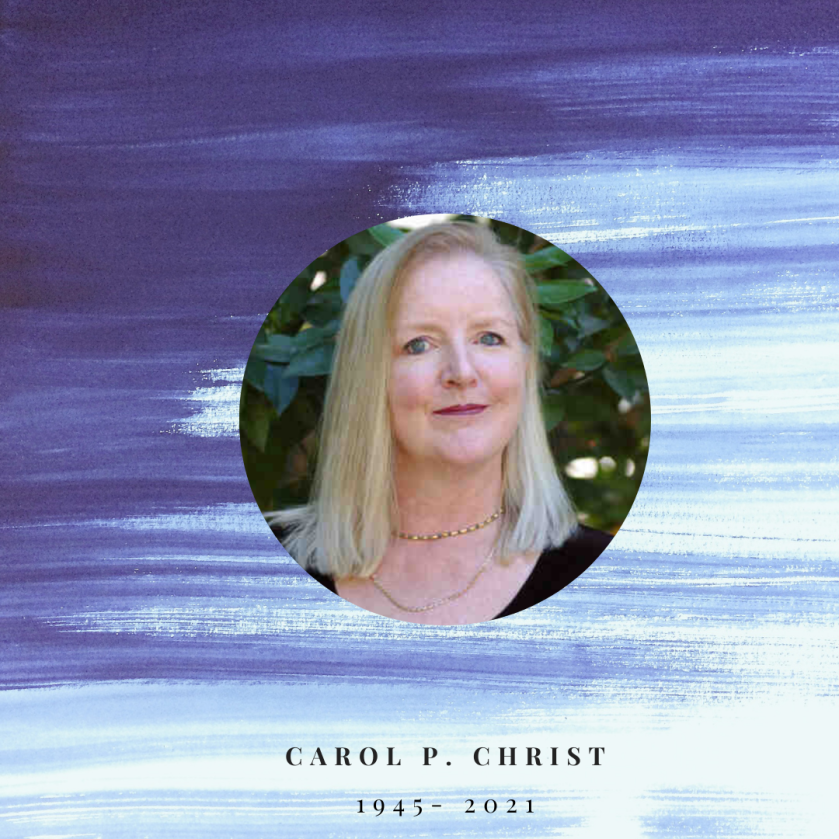
Legacy of Carol P. Christ: The Heraklion Museum: A Critique of the Neolithic Display

This was originally posted April 2, 2018

If I had been asked to write the words that introduce visitors to the Heraklion Archaeological Museum of Crete to its earliest inhabitants, I would have said something like this:

While there is evidence that human beings visited Crete as early as 150,000 years ago, the first permanent settlers arrived from Anatolia in the New Stone Age or Neolithic era, about 9000 years ago, bringing with them the secrets of agriculture and soon afterward learning the techniques of pottery and weaving. As the gatherers of fruits, nuts, and vegetables and as preparers of food in earlier Old Stone Age or Paleolithic cultures, women would have noticed that seeds dropped at a campsite might sprout into plants. Women most likely discovered the secrets of agriculture that enabled people to settle down in the first farming communities of the New Stone Age. As pottery is associated with women’s work of food storage and preparation, and as weaving is women’s work in most traditional cultures, women probably invented these new technologies as well. Each of these inventions was understood to be a mystery of transformation: seed to plant to harvested crop; clay to snake coil to fired pot; wool or flax to thread to spun cloth. The mysteries were passed on from mother to daughter through songs, stories, and rituals.

Continue reading “Legacy of Carol P. Christ: The Heraklion Museum: A Critique of the Neolithic Display”

Archives from the FAR Founders: Learning Compassion from Inmate Number 74799 by Cynthia Garrity-Bond

This was originally posted on July 21, 2017. This is the first post of our new series to highlight the work of the four founders of FAR, Garrity-Bond, Caroline Kline, Gina Messina and Xochitl Alvizo

Technically I was employed as a lab assistant at our community

Considered standard prison procedure, Michael was scheduled for an autopsy the following day. While my grief over Michael’s death was considerable, it was the pending autopsy that caused my immediate concern. As I pictured Michael on the cold table of steel, the crude instruments sawing and cutting into his already weathered body, I took it upon myself to somehow ease this last assault. I phoned the Tucson corner’s office, hoping to speak to the pathologist who would be performing Michael’s autopsy. With surprising bureaucratic ease, I was transferred to him. After introducing myself, I explained he would be receiving Prisoner 74799, my brother, from Tucson General, and that by all appearances this was just another disposable inmate whose criminal past simply caught up with him, sort of a karma-like ending. His thin, emaciated body, I warned, is covered in tattoos, which I feared might induce a harsher judgment upon this cast away soul. I asked the pathologist that when he begins the post, he please remember Prisoner 74799 was somebody’s son, somebody’s brother, father and friend and more importantly, that this man was loved. “Please” I pleaded, “try to see beyond the obvious signs of poor choices mapped onto his body, instead see he is more than his prison issued number and that Michael Paul, while far from saint, was a man who loved and was loved.”

Continue reading “Archives from the FAR Founders: Learning Compassion from Inmate Number 74799 by Cynthia Garrity-Bond”

Durga Rising: Feminism as Fierce Compassion By Beth Bartlett

In her FAR post earlier this year,[i] “Why Feminism Needs the Fierce Goddesses,” Susan Foster argues that a “flagging” feminist movement needs the revitalizing energy of the “fierce goddesses” of ancient times to challenge the patriarchal forces that seem to be on the rise as increasingly we find women’s lives and freedoms constrained. She writes, “the dark goddesses of ancient times have been submerged in our psyches, but they serve as a repository of fierce energy, of female rage against injustice.”  She continues, “It’s important and healthy for us as women to reclaim our anger, using it to protect ourselves and fight for our rights in systems that are oppressive.”

Reading this, I immediately thought of Beverly Wildung Harrison’s, “The Power of Anger in the Work of Love,” and China Galland’s, The Bond Between Women: A Journey to Fierce Compassion. Anger as the work of love; fierce compassion.  In this time of mass shootings, insurrection, the ongoing assault on women, LGBTQ, and BIPOC peoples, when rage seems so easily fueled by hate, envy, and greed, it is the rage based in love and compassion that is most needed.  This is the rage of the fierce dark goddesses who are moved to act against injustice, the rage of the feminism I love. With its source in love and compassion, it is a rage that rebels in the best sense of the word – that at once refuses injustice and affirms dignity and respect, that speaks truth to power, that is grounded in solidarity and friendship, and values the immanence of the earth, the water, the body, and the divine spark in all beings.[ii] 

Continue reading “Durga Rising: Feminism as Fierce Compassion By Beth Bartlett”

From the Archives: Are Bees Begotten from Bull? by Judith Shaw

This was originally posted on June 23, 2021

At first glance the ancient belief that bees were birthed from dead bulls seems odd. But if we delve deeply into pre-historical artifacts we discover the mythopoetic roots of this idea.

Our Paleolithic ancestors lived immersed in nature within the cyclical nature of time. For them the moon, which revealed monthly, yearly and even longer cycles of time, became the symbol of the cycle of birth, death and regeneration.

By photo 120 – Own work, CC BY 3.0, https://commons.wikimedia.org/w/index.php?curid=5044488
Continue reading “From the Archives: Are Bees Begotten from Bull? by Judith Shaw”

From the Archives: “What If We Touched Ourselves Lovingly Every Day?” by Trelawney Grenfell-Muir

This was originally posted on June 5, 2020

I watched her hand stroke along my arm, so gently, so lovingly. Her voice whispered, “I love you, Trelawney. I love you, Trelawney.” The soft, tender caress felt poignant, healing, magical. I wept with gratitude.

It was my own hand stroking me. My own voice.

I want you to take a moment and imagine the person you love best in the world. Is there anyone? Is there someone you love utterly, you think of with pure, unconditional, compassionate, embracing, affirming, tender, protective, loyal, sacred love? Close your eyes a moment and let that feeling of pure love fill your heart until you understand that feeling with every fiber of your being. Do you have that Love? Truly feel it and know it with all your heart, soul, mind, and strength?

Continue reading “From the Archives: “What If We Touched Ourselves Lovingly Every Day?” by Trelawney Grenfell-Muir”

Human by Xochitl Alvizo

I’ve written about my existentialist leanings and how these are very much a reflection of my upbringing, and particularly my papa’s influence on me. He always talked about how we are all “just human.” He would humph disapprovingly at the use of categories or identity labels for people; he wanted to always affirm that all people are human, nothing more, nothing less. For my dad, labels and categories fixed people to a particular aspect of themselves.

He did not like the idea of reducing a person’s being, or limiting their many possibilities, with an overarching label. There were times with me when he would grumble if I referred to myself as Mexican-American or lesbian, for example, and he would say, “Argh, you’re human, that’s what you are, human.” He was always on guard about how a given identity can serve to limit my own imagination about myself or, worse, allow others to box me into their preconceived ideas of what that identity means.

Continue reading “Human by Xochitl Alvizo”