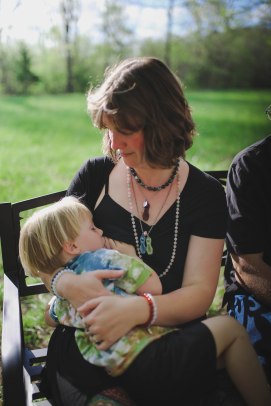
Babies and Bathwater by Oxana Poberejnaia

Since patriarchy is atrocious, and capitalism is currently driving the earth to a very real catastrophe, we can get passionate about these issues. We can get angry. We can get self-righteous.
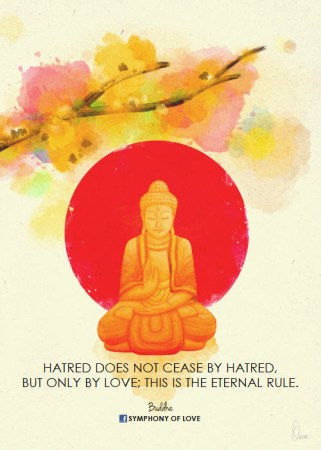
However, as one of the most famous verses of Dhammapada goes:

Hatred is never appeased by hatred in this world. By non-hatred alone is hatred appeased. This is a law eternal.

Dhp I:5, translated by Acharya Buddharakkhita

 We may ask: why should we be patient and kind while we are the ones who are being oppressed and wronged? I don’t have an answer for that, only that through history positive change has ever been affected only by people who made more effort than the ones who wanted to keep the status quo.

Abolitionists, Suffragettes, Socialists and Civil Rights activists all had to be more altruistic, better educated, and more open-minded than their contemporaries. Continue reading “Babies and Bathwater by Oxana Poberejnaia”

Tall Order by Sarah Kiefer

I saw an interesting headline the other day entitled: “Olympic Gymnast Hits Back at Body-Shaming.” I immediately thought, “Wow not again.” The fact that body-shaming is even an expression is a disheartening commentary on the society we live in today. Women’s bodies have long been the subject of casual objectification in our culture and in the media. The fact that people think it’s ok to comment on a woman’s body, in whatever fashion pleases them, blows my mind. Not only is it disrespectful, but it comes from the problematic way society equates a woman’s worth with her beauty.

People have diverse ideas of beauty, and different cultures value different physical qualities, but this does not mean that those who don’t live up to the ideal should be shamed. In the article, Gymnast Aly Raisman relates an experience at an airport where a female employee recognized her and mentioned one of the reasons was “because of her muscles.” A male colleague then stated “Muscles? I don’t see any muscles” and “continued to stare” making Raisman feel uncomfortable. She then took to twitter to relay the events stating: “I work very hard to be healthy and fit. The fact that a man thinks he can judge my arms pisses me off.  I am so sick of this judgmental generation.” Continue reading “Tall Order by Sarah Kiefer”

Rape, Community and Healing by Vanessa Rivera de la Fuente

During my last months in Cape Town I have been facilitating a series of workshops on Rape, Gender Justice and Culture of Consent. I am blissful for the opportunity to teach and learn with a group of people with whom we have navigated in the approach of Rape and Sexual Assault in their different perspectives, from the socio-political to the intimate tenets.

This has been an exciting journey of healing and soul blooming. I have realized the critical role that Cape Town has played in pushing me towards empowerment and thriving, enhancing my taking back ownership of my body and all the experiences happening through it.

This journey started few years ago when I decided to come out of the closet as a rape survivor. I wrote about it on Feminism and Religion. This was the first step of my breakthrough. Little by little I became confident and shameless about saying: “Yes, I was raped”.

Continue reading “Rape, Community and Healing by Vanessa Rivera de la Fuente”

The Intersections of Faith and Reproductive Justice by Katey Zeh

The Intersections of Faith & Reproductive Justice

Last week I participated in a panel discussion hosted by the Center for American Progress (CAP) on the intersections of faith and reproductive justice. These conversations are critically important, particularly in these political times when threats to our bodily autonomy and right of conscience are sanctioned by our current administration, Congress, and many state legislatures.

The framing of these public discussions is always interesting and somewhat troubling to me. Often progressive spaces like these do recognize that many people of faith support reproductive health care, but with that understanding is the assumption that supporting the full spectrum of reproductive healthcare, including access to safe abortion care, necessitates some kind of moral reckoning for religious people.

Continue reading “The Intersections of Faith and Reproductive Justice by Katey Zeh”

Beginning Conversations about the Body at Ease by Stephanie Arel

A topic that continually perplexes me, both personally and professionally, concerns the connection, or harmonization if you will, between our cognitive capacities and our physical expression and comfort, between thinking and feeling. Yoga, dance, working out, meditating, and other modalities which explicitly bring body and mind together often achieve their goal at the point of practice, and while these disciplines have residual effects, how do they have staying power?

For instance, how do we maintain rootedness in the body when we are caught off guard – for instance, by traumatic affect? When we are faced with information about reality that disturbs us – the truth about a relationship or a physical illness – how do we stay physically present? Or when we (I) spend an inordinate amount of time immersed in activities that are essentially not embodied despite the efforts at theorizing such embodiment – reading, researching and writing – what happens to the body?

Sustaining a mind/body (and spirit) connection is a little tricky. Some psychologists would call this connection a kind of attunement (between a dyad) that fosters a form of affective regulation. This means that subjective experiences, correlating thoughts, physiological responses, and the bodily expressions these provoke come into alignment but not in the manner of repression or suppression, rather as a form of accord or modulation that brings us to our best adult selves and enables decision making that supports our most core self. Capable of achieving this? I think it’s an art. Continue reading “Beginning Conversations about the Body at Ease by Stephanie Arel”

How do you feel about me now? by Natalie Weaver

How do you feel about me now?

I was talking to an old friend the other day, and when I asked how he was, he said, “I’m getting by.”  “Getting by?  Not tearing it up, not taking ‘em down, and taking names?”  I joked. “No,” he replied too dryly, “not at my age.”

“Well, how old are you now?” I inquired playfully.  “Eighty-three,” he said.  “Oh,” I paused.  “And, I tell you, Nat,” he continued, “I don’t know about these last twenty years.  I just don’t know what happened to me.  Never imagined my life would turn out like this…” he spoke, trailing off.

His talk prompted me to wonder about the girl I once was, the woman I used to be, the mother I had imagined in myself at the outset, the scholar I prepared, the indefatigable friend I was to my peers as a teenager, the filial duty I felt in my youth, the honor I ascribed to my vocation as an educator, the family I tried to create.  I have changed too, I realized.  These last twenty years have been markedly transformational for me as well.  As I considered, I saw in all of the things I tried to do how my spirit and my faith walked alongside my life unfolding as companion and guide and interlocutor.

At each step along the way, my faith both informed and framed the meaning of my choices and my disposition toward the outcomes of my efforts.  For a long time, there was a harmony and an alignment between my meaning, my disposition, and my experience of living purposefully.  But then, sure as rain, the wheel turned, and I began to lose clarity on that alignment.  The idealism I had brought to each of my roles and endeavors was tested and tried as a matter of course.  But, in some instances, the trial was egregious.

I concluded that some disappointments run so deep they change who we are.  Some wounds are structural enough that they scar the tissue permanently and alter the curvature of our spines.  Some blows are so devastating that our speech transforms and our thinking must be rewired to survive.  Whether they are inflicted by the self or by others, whether by accident or intent or illness, injury has a common thread – it calls the Spirit to awaken and challenges it with the question: “How do you feel about me now?” Continue reading “How do you feel about me now? by Natalie Weaver”

Bikini Season by Sarah Kiefer

I grew up in a suburban town stuck in the middle of rural Indiana. I drove through corn fields to get to school and on more than one occasion I did have to crawl through my sun roof to get into my car because I was sandwiched between two monster trucks. My grandfather, an avid bird watcher, waged a personal war against the chipmunks and within one summer caught and drowned anywhere between fifteen and twenty of them until my mom pointed out that he was probably attracting them by putting bird seed on the ground.

I was raised in the non-denominational Christian church and part of my weekly activities was attending youth group. For those of you not familiar with youth group, it’s usually held on Wednesday night for the youth in the church. It’s basically church geared towards pre-teens and teenagers. Some of my fondest memories of my teen years are from youth group. You foster deep friendships in a fun environment and have good role models all the while learning about the Bible in a way that is more easily understood by a young person.

When I was about thirteen I went to a conference with the rest of the girls in youth group. It was a “modesty conference” geared at teaching young women the “biblical” truth of their role as a female and how that translates into how one dresses. We were taught that we are responsible for the relationship between our brothers in Christ and Jesus. One of the ways that we can make them fall is wearing too revealing clothes. If we wore something too tight, too low, or too short, the men wouldn’t be able to control themselves and would sin in the eyes of Jesus. We were encouraged to wear loose t-shirts and shorts that went to the knee in order to keep our brothers from sinning.

The last night was the long awaited fashion show of the conference and we had all stayed up the night before eagerly finishing the dresses we would be modeling the next day. At the end of the fashion show the lead pastor’s wife came out wearing a bikini. We were all cheering her on because she looked great. She stood at the end of the runway shaking and grabbed the microphone. As she spoke, the mood of the room dramatically shifted. She said she would never wear a bikini in public because her body is for her husband alone and other men looking at her would cause them to sin. The sadness and guilt her voice conveyed sobered all of us. We all vowed we would never wear a bikini again and from here on out it was modest, one piece bathing suits for us.

Looking back at this experience, I recognize quite a few issues I want to address. First, teaching young Christian girls that we are not only responsible for our own relationship with Christ, but also the relationship of all men feels wrong to my spirit and isn’t even biblical. Second, teaching us to be ashamed of our body’s natural shape and covering it in baggy clothing so men won’t sin when they look at us is detrimental to both men and women. The detriment to a young girl’s self-esteem because she has strict guidelines reinforced with guilt around dressing herself leads her to thinking there is something “wrong” or “bad” about her body. This also perpetuates the lack of accountability for men, as they grow up thinking they can’t control their sexual being so they don’t even try, placing the responsibility on women. Why do you think the question “well what was she wearing?” asked in the case of a woman’s rape comes up so often? (This thinking comes from the common misconception that rape is an act of uncontrollable sexual urges, not a man exercising an intentional act of power.) These innocent teachings have further reaching effects on society than we think.

Lastly, I want to address what the pastor’s wife shared with the group, particularly her comment on her body being her husband’s. True, our bodies are not our own, they are a gift from God. 1 Corinthians 6: 19 says “Do you not know that your bodies are temples of the Holy Spirit, who is in you, whom you have received from God? You are not your own; you were bought at a price. Therefore honor God with your bodies.” All God asks in return is that we treat our body respectfully. I don’t know about you, but I see nothing in that verse about a woman’s body being owned by a man. A woman’s body is not to be owned by a significant other no matter what their marital status is, just like a man’s body is not to be owned by a significant other. Language of possession and ownership in romantic relationships needs to be struck from the dialogue of Christianity and replaced with the language of respect.

Since I’m not the gatekeeper of heaven and hell I can’t say for sure, but I’m relatively certain if you wore a bikini you won’t be sending three men plus yourself into eternal damnation. With bikini season around the corner, take some time to reflect on the way you view your body. Do you treat it with respect? Do you own it? Do you love your body? Or have you given away that privilege to someone else? I say as a Christian woman, we unburden ourselves of the responsibility for our brother’s sin. We have enough to do. Like bikini shopping.


Sarah is graduating with her undergraduate degree as a psychology major with a pre-law concentration and minor in women’s studies in 2017. She has accepted a full ride scholarship to law school and is expecting to pursue prosecutorial work. Outside of the classroom, she serves as a Resident Assistant, plays on the championship lacrosse team, and also serves as president of Women’s Circle—the feminist student group that she helped to establish and for which she continues to lead discussion and events.

Call Me the Devil, If You’d Like by Natalie Weaver

Call me the devil, if you’d like.

I have just completed the three-hour retreat at the church to prepare my son for his first communion.  It was a long morning, to be sure, but during that time I decide I want to try to bring the family all together.  I host such occasions often, at significant cost and personal effort, but I think it builds up love and community so I do it anyhow.  I go home and begin sending out invitations for the gathering.

At precisely the moment of my welcoming, I learn that I have, once again, been directly charged by so-and-so, because I have worked in a professional capacity and (I am not kidding, dear readers) because I have not had my children in T-ball and Rec Center sports. I am accused of self-aggrandizement because I go to professional conferences (to which I also take my children almost without exception).  I am charged with doing things for my own glory because I teach overloads and offer paid lecture series.

There is no acknowledgement that I work to eat and to earn income to support my children or that I have never had the option not to work outside the home.  I am furious, of course, because I have heard this in varying degrees over the length of my professional life and time as a parent, including once on Mother’s Day. I’m tired of the insult, but when I respond after years of such claims in outrage, I am accused of being too angry.

But, life goes on, and so does the gathering.  It’s a nice time, but after the gathering, I wake up to the boldly voiced disgruntlement of a friend who has been inadvertently insulted by a conversation that occurred at the table.  The insult is derived from the charge that I did not say the right words when I should have. There is a very strong critique and withering suggestion about my core values at stake, since the issue is racial.  I listen and apologize but am left wondering, “don’t you know me by now?”  Have you not dined with me, celebrated with me, felt my love and friendship, outreach and appreciation? I am stymied.  Am I here to be judged?

Continue reading “Call Me the Devil, If You’d Like by Natalie Weaver”

A Maternal Perspective Towards the Body by Elisabeth Schilling

IMG_0617Separatism and dualism do not usually serve me. I understand that denying unity and reducing the multi-prismatic complexity of existence muddies up our vision of reality and can sometimes clog up the channels to compassion. So knowing that this perspective is not universal, but temporarily (at least) healing to me, a particular body with a life situation that gives me access to this kind of thinking, I explore taking a maternal perspective toward my body.

In Roshi Pat Enkyo O’Hara’s Most Intimate, she mentions the “freedom of experiencing myself [the self] as relationship” (23). I was confused when I first read this.  Relationships are usually outside of me or with me, but not what I am. Yet, after thinking about it, I know that I have been in relationship with myself. We (my body and whatever the “me” is) have been simply so enmeshed and mottled with my perspective of possession, owning, unrealistically demanding and having authority over that body, that it was just not a healthy relationship. Continue reading “A Maternal Perspective Towards the Body by Elisabeth Schilling”

Body of Nature by Oxana Poberejnaia

oxanaIn the medieval European philosophy, woman’s body was seen as a vessel filled with sins, while man was regarded as a more spiritual being. This is one of the reasons why the concept of body is reassessed in feminist studies and why body is elevated in neo-paganism and Goddess spirituality. My fear is that nowadays body can be treated as an instrument for social advancement.

OLYMPUS DIGITAL CAMERA

We still live in a society that is deeply hostile to women’s bodies. Alla Demidova, an actress I respect for her talent and her critical mind, did a programme of Christmas-related poetry. I could not listen to more than five minutes of it.

The poems have been all written by men. I am not saying that men do not have the right to write about birth. I am saying that our prevalent image of Christmas should not be based on male view alone. In this sense I much better like the Carol from “The Vicar of Dibley” (one of my favourite British comedy series, about a female Vicar), which describes the movement of baby Jesus through Mary’s birth canal.

Continue reading “Body of Nature by Oxana Poberejnaia”