Let Us Proclaim the God Who Bleeds Now by Carol P. Christ

we need a god who bleeds now

we need a god who bleeds now
a god whose wounds are not
some small male vengeance
some pitiful concession to humility
a desert swept with dryin marrow in honor of the lord

we need a god who bleeds
spreads her lunar vulva & showers us in shades of scarlet
thick & warm like the breath of her
our mothers tearing to let us in
this place breaks open
like our mothers bleeding
the planet is heaving mourning our ignorance
the moon tugs the seas
to hold her/to hold her
embrace swelling hills/i am
not wounded i am bleeding to life

we need a god who bleeds now
whose wounds are not the end of anything

–Ntozake Shange

Continue reading “Let Us Proclaim the God Who Bleeds Now by Carol P. Christ”

Religions and the Abuse of Women and Girls: God Is the Problem by Carol P. Christ

At the 2009 meeting of the Parliament of World Religions, former US President Jimmy Carter called the worldwide abuse of girls and women the greatest unaddressed human rights crisis of our time. In the book that followed the speech, he compared sexism to the racism he witnessed in the US South, stating:

There is a similar system of discrimination, extending far beyond a small geographical region to the entire globe; it touches every nation, perpetuating and expanding the trafficking in human slaves, body mutilation, and even legitimized murder on a massive scale. This system is based on the presumption that men and boys are superior to women and girls.

He stated further that this problem is:

largely caused by a false interpretation of carefully selected religious texts and a growing tolerance of violence and warfare, unfortunately following the example set during my lifetime by the United States.

Carter also said:

There’s one more basic cause that I need not mention, and that is that in general, men don’t give a damn.

As a feminist theologian I was thrilled to learn that Carter joined us in recognizing religion as one of the primary causes of the abuse of women and girls. I am grateful to him for using his position as former President and Elder statesman to call attention to the roles played by religions in justifying the oppression of one half of the human race. And I am very happy that he gives a damn. At the same time, I have questions about Carter’s understanding of the problem of sexism in religions.

I agree with Carter that warfare is one of the main causes of the abuse of women and girls. War plays an important part in the oppression of women and girls because rape and slavery have been and continue to be “an ordinary part of war.” As wars continue and increase, the rape of women and girls, in many cases the brutal gang rape of women until they die, continues. Moreover, the sexual slavery known as trafficking of women and girls, flourishes in the wake of war, as women fleeing war torn homelands are targeted, tricked, and sold into forced prostitution.

If the idea that rape and slavery have always been part of war sounds strange to you, I call your attention to the founding work of western culture, the Iliad: set during the Trojan War, its plot turns on the dispute between Agamemnon and Achilles about which of them has the right to hold a woman from Lesbos named Briseis as his “spear captive,” a scholarly euphemism for rape victim and sexual slave. In their conquests of Canaan, the Hebrew people reportedly killed the men and took the women and children as slaves, raping the women as the right of the victors to “the spoils of war.”

Some were astonished to learn a few decades ago that Serbian soldiers routinely raped Bosnian women, but they should not have been, because rape in war had already been widely reported in Africa. One of the little known crimes of the Second World War is the widespread rape of German women fleeing Russian armies occupying territories that became part of the Soviet Union. As horrible as it is, rape in war is not the only reason to call warfare one of the major causes of the abuse of women. Soldiers bring the violence of war with them when they return home and thus a climate is created in which men understand that is their right to dominate women, using violence if necessary.

Jimmy Carter’s view that religions justify the abuse of women by “false interpretation of carefully selected religious texts” requires further scrutiny. Carter appears to view the Bible as a primarily liberating text with a few unfortunate exceptions that are cited by religious leaders to support patriarchy. Regarding his decision to leave the Southern Baptist Convention, Carter wrote:

So my decision to sever my ties with the Southern Baptist Convention, after six decades, was painful and difficult. It was, however, an unavoidable decision when the convention’s leaders, quoting a few carefully selected Bible verses and claiming that Eve was created second to Adam and was responsible for original sin, ordained that women must be “subservient” to their husbands and prohibited from serving as deacons, pastors or chaplains in the military service.

I suspect Carter knew Phyllis Trible’s essay “Eve and Adam: Genesis 2-3 Reread,” in which she argues that Genesis 2 teaches the equality of Adam and Eve. Surely he also understands that original sin is a Christian doctrine that could not have been anticipated by the authors of Genesis 2, though it is often justified by interpretations of it. Carter and Trible believe that their interpretations of Genesis 2 are correct and that interpretations supporting patriarchy are incorrect.

I, on the other hand, would say that Merlin Stone’s interpretation of the text as a “tale with a point of view” intended to disparage the woman, the snake, and the tree, all of which were symbols of the sacred in earlier and competing religions, is the correct one. St. Augustine, if he could, would probably still argue for his view. So how do we resolve this dispute?

Judith Plaskow and I say that we cannot. Rather we must accept that all interpretations of scripture are based in the standpoints of individuals and communities. While some interpretations seem less plausible when we take account of the original language and context of Biblical texts, we can never be certain that our interpretation is the correct one. On these grounds, Carter’s assertion that only “false interpretations” of Genesis support male domination must be rejected.

In addition, Carter states that only “carefully selected” texts can be used to support male dominance. If he has read feminist theology at all, Carter must be aware that some feminists assert that the Bible as a whole supports male dominance through the pervasive and almost exclusive use of language that portrays God as a male, most often as a dominant male, as Lord, King, Warrior, and Father.

Counting texts that portray God as male as justifying the idea that the male is God and the female is something less than God and males, Mary Daly opined that the texts in the Bible that do not support male dominance might be collected in a small pamphlet. In Goddess and God in the World Judith Plaskow admitted that when she read the Jewish Bible from cover to cover, she was appalled at the number of times the texts justified violence. She asks Jews and Christians to wrestle with the images of God as a dominating other in the Bible, rather than trying to explain them away.

Once again we are faced with a question of interpretation. Is the use of male dominator language for God irrelevant or at the root of the problem? I say that it is one of the main justifications for the abuse of women and girls.

*This is an excerpt from the speech I delivered at the Parliament of World’s Religions on November 5, 2018. My interview with Mary Hynes on CBC’s Tapestry recorded during the conference will be airing soon.

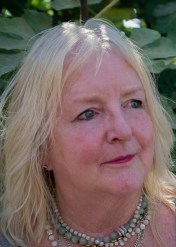
Carol P. Christ is an internationally known feminist writer, activist, and educator living in Greece. Carol’s recent book written with Judith Plaskow, Goddess and God in the World: Conversations in Embodied Theology, is on Amazon. A Serpentine Path: Mysteries of the Goddess is on sale for $9.99 on Amazon. Carol  has been leading Goddess Pilgrimage to Crete for over twenty years: join her in Crete. Carol’s photo by Michael Honneger.


Challenging Christian Feminists to Re-Imagine the Goddess by Carol P. Christ

From the 1993 Re-Imagining Conference:

Our mother Sophia, we are women in your image:
With the hot blood of our wombs we give form to new life.
With the courage of our convictions we pour out our life blood for justice.
Sophia-God, Creator-God
let your milk and honey pour out,
showering us with your nourishment.

From my reflections on the Re-Imagining Conference presented at Hamline University on Novemeber 1, 2018:

One reason the creative re-imagining of God as female has not taken hold in churches and synagogues is fear of paganism and the Goddess. The creators of the Re-Imagining Sophia ritual took great care to guard against this charge by connecting it to Bible and tradition. Commenting on the reasons for the backlash against the Re-Imaging Conference, Sylvia Thorson-Smith stated:

One was the liturgical use of the biblical image of Sophia – but blown up as evidence of Goddess worship. Second was the milk and honey ritual – an ancient part of early Christianity, but attacked as a pagan substitute for communion.

While I understand her reasons for doing so, “the lady doth protest too much, methinks.” Continue reading “Challenging Christian Feminists to Re-Imagine the Goddess by Carol P. Christ”

Goddess Pilgrimage: A Sacred Journey for Women by Carol P. Christ

A pilgrim leaves home and sets off on a journey, seeking healing, revelation, and direction in her life. She finds companions along the way whose stories reflect her own, validating her quest and shedding light on her journey. According to anthropologists Victor Turner and Edith Turner, pilgrimages have common structural elements. A pilgrim separates from family and friends, work and obligations. She steps across a threshold into “liminal space” in which daily routines are suspended, opening herself to discovering new ways of being and living.

For spiritual pilgrims, the goal is a place or places said by others to be a “sacred” because healing or revelation have occurred there through the intervention of a deity, a saint, or spirits. The place is often on a mountain, in a cave, or near a spring. Along the way, pilgrims meet and share stories as in the Canterbury Tales. Some pilgrims say that the experience of sharing community with other seekers is as important as the revelation gained at the destination. When the pilgrim returns home, she must re-integrate into the community she left behind or find a new one. Continue reading “Goddess Pilgrimage: A Sacred Journey for Women by Carol P. Christ”

Troubling Our Souls: Selling Arms to Saudi Arabia, the War in Yemen, and the US Military Industrial Complex by Carol P. Christ

There is a very big elephant in the room. Apparently it is invisible because even the left is not discussing it. This elephant is the civil war in Yemen to which Saudi Arabia has contributed 19,000 (19,000!) deadly (deadly!) air strikes that have been alleged to have caused 60,000 (60,000!) civilian (civilian!) deaths (deaths!). These air strikes have been carried out with arms purchased from the US and its allies. The UN estimates that 22.2 million Yemeni civilians are in need of immediate humanitarian aid and that 13 million are at the risk of starvation. Yet a Saudi-led blockade is preventing food and other supplies from entering the country.

In the wake of the disappearance of legal American resident and Saudi journalist Jamal Khashoggi, the left castigates Saudi Arabia for a vicious murder. The US President warns congress not to cut off arms deals with Saudia Arabia because to do so would threaten more than half a million US jobs in the military industrial complex. Continue reading “Troubling Our Souls: Selling Arms to Saudi Arabia, the War in Yemen, and the US Military Industrial Complex by Carol P. Christ”

Religions and the Abuse of Women and Girls by Carol P. Christ

At the 2009 meeting of the Parliament of World Religions, former US President Jimmy Carter called the worldwide abuse of girls and women the greatest unaddressed human rights crisis of our time. He stated that this problem is “largely caused by a false interpretation of carefully selected religious texts and a growing tolerance of violence and warfare.” Carter discussed these issues in A Call to Action.

In my address to the Parliament of World Religions on November 5, I will agree with Carter that religions play a major role in the abuse of women and girls, but I will question his view that religion’s contribution to the abuse of women and girls stems from the misinterpretation of a few selected texts. Rather I will argue that patriarchal ideas permeate most of the so-called great religions. Continue reading “Religions and the Abuse of Women and Girls by Carol P. Christ”

“What Would Happen If One Woman Told the Truth about Her Life?” by Carol P. Christ

According to poet Muriel Rukeyser, “the world would split open.”

This poem accurately describes what many women experienced in consciousness raising in the 1970s and what many women experience today in the #MeToo movement.

For many of us the world did split open. We began to take ourselves and our experiences seriously. To do so we had to question received wisdom encoded in such questions as: “What was she doing there in the first place?” “Was she drinking too?” “Why didn’t she change out of her bathing suit?” Underlying these questions is the assumption that: “whatever happened, she must have asked for it.”

A lot of people are wondering why congressmen and voters who claim to uphold Christian principles are not more outraged about credible allegations of sexual assault against a child whose name was Christine Blasey. Continue reading ““What Would Happen If One Woman Told the Truth about Her Life?” by Carol P. Christ”

Sophia, Goddess, and Feminist Spirituality: Imagining the Future by Carol P. Christ

Though represented by its detractors as an incursion of paganism into Christianity, and presented as an integrally and intrinsically Christian phenomenon by its supporters, the truth about the Re-Imagining Conference and movement is that it was a product of a wider feminist awakening. The critique of patriarchal religions that emerged in the academy and in churches and synagogues in the late 1960s and early 1970s was part of the emerging feminist uprising. The feminist movement placed a question mark over all patriarchal texts and traditions, secular and religious, and as such was beholden to none.

In the spring of 1971, Roman Catholic Christian Mary Daly published “After the Death of God the Father” in the liberal Catholic magazine Commonweal. She asserted that the God whose death was touted in the “Death of God” movement was an idol fashioned in the image of male power and authority. She called for “the becoming of new symbols” to express the new becoming of women. In the summer of 1971, a group of nuns from Alverno College convened the first Conference of Women Theologians. Besides sparking dialogue about the role of women in religions, the conference endorsed my call to form a women’s group at the fall meetings of the American Academy of Religion, up until then a gathering of several thousand male scholars of religion, with only a handful of women scholars in attendance. At winter solstice, Z Budapest launched the Susan B. Anthony Coven #1 in Los Angeles publishing a Manifesto calling on women to return to the ancient religion of the Goddess. Continue reading “Sophia, Goddess, and Feminist Spirituality: Imagining the Future by Carol P. Christ”

A Prophet in Our Midst: Vandana Shiva by Carol P. Christ

She is not crying in the wilderness. She is not railing in the streets.


She sits quietly and speaks softly and with absolute clarity and certainty.

To let all the water systems and food systems and planetary climate systems get destroyed. That is the stupidity which rules us today.

No fire and brimstone, no angry God.

I do not think the planet will die. I think the earth is too powerful.

A simple truth.

We need to protect our home.

Men have lost the way.

Going to war and killing was considered important. Making profits at the cost of others was considered important.

Women must lead.

The values we need are in the knowledge of how to live with nature. That’s what women’s knowledge is. We need knowledge of how to care. That’s knowledge: it’s … called emotional intelligence now. We need knowledge of how to share.

We are part of the earth.

Working with our hands is not a degradation.

Could it really be as simple as that?

Some gender scholars will protest. “This is essentialism,” they will say. “This will keep women in the home where they have always been,” they will say.

If they say this, they will miss the point. This is not gender essentialism. The situation Shiva describes is a product of history. A history in which powerful men determined that war, killing, and profit are the highest values. It may or may not be in women’s nature to know how to live with nature, to care, and to share. These values are part of “women’s knowledge”* because they derive from the work women have been doing while men were making war and making profit on the backs of others.

Shiva is not telling women to stay in the home. She is telling women to confront “deceitful, dishonest, brutal power.”  She is telling women to teach those who rule the world how to live with nature, how to share, how to care.

If women are can teach what they know, how to live with nature, how to care, how to share, women’s knowledge will become human knowledge once again and we may be able to save our home.

If not,

. . . we are dispensable. She’ll find a way.

A prophet is speaking. listen to her words. Etch them on your heart. And save the world.

*Shiva has stated that women do most of the farming in the world. Women who are not farmers care and share and may tend gardens. Women’s knowledge is a relative term. Some women in industrialized countries place ambition, competiton, and profit above caring and sharing. Even in this situation, women generally care for children. See Shiva’s Staying Alive: Women, Ecology, and Development.

Carol P. Christ is an internationally known feminist writer, activist, and educator currently living in Lasithi Prefecture, Crete. Carol’s recent book written with Judith Plaskow, Goddess and God in the World: Conversations in Embodied Theology, is on Amazon. A Serpentine Path: Mysteries of the Goddess is on sale for $9.99 on Amazon. Carol  has been leading Goddess Pilgrimage to Crete for over twenty years: join her in Crete. Carol’s photo by Michael Bakas. Carol will be speaking at the 25th Anniversary Celebration of the Re-Imagining Conference at Hamline University in St. Paul Minnesota on November 1 and 3 and at the Parliament of World Religions in Toronto, Canada on November 5.

The Ninth Touchstone: Repair the Web by Carol P. Christ

As I reflected on the Nine Touchstones again recently, I was pleased to discover that the first and the eighth touchstones are articulations of the central values of egalitarian matriarchal societies. Few of us live today in egalitarian matriarchies, and it would not be possible for all of us to return to cultivating the land. I offer the Nine Touchstones in the hope that they can help us to find a way to express and embody the values of egalitarian matriarchal cultures in the modern world. The touchstones are intended to inform all our relationships, personal, communal, social, and political.

Nurture life.

Walk in love and beauty.

Trust the knowledge that comes through the body.

Speak the truth about conflict, pain, and suffering.

Take only what you need.

Think about the consequences of your actions for seven generations.

Approach the taking of life with great restraint.

Practice great generosity.

Repair the web

The ninth touchstone is based on the Jewish “commandment” to repair the world. It is derived from the mystical tradition in which prayers were directed towards reuniting the broken sherds that became the created world with their transcendent source. It was reinterpreted by liberal Jews in America as a commandment to create justice in this world through social and political action. I rephrase it as “Repair the web,” to underscore to the need to repair not only the human community, but also the web of life in which it is situated.

To nurture life is to protect the weak and the vulnerable and to create the conditions in which human beings and all beings can experience the joy of living.

To walk in love and beauty is to love yourself, other human beings, and all beings in the web of life, and to appreciate the beauty that is found in all of our diversity and difference.

To speak the truth about conflict, pain, and suffering is to recognize that everything is not love and light in the modern world: to speak the truth about that which is broken is the path to healing.

To take only what you need is to recognize the interdependence of life: when we take more than we need, we take from others without reason.

To think about the consequences of your actions for seven generations is to recognize that what we do today will affect the next generations and the planet as a whole, in good ways, and in bad.

To approach the taking of life with great restraint is to think about what we eat, never to kill unnecessarily, and not to react with violence when there are other ways to resolve conflict.

To practice great generosity is to recognize that none of us has the God-given right to own anything, and to learn to give and receive in the grace of life.

To repair the web is to always act to create a better life for ourselves, for the next generations, and for the species with which we share life this earth.

The Nine Touchstones help us to imagine the way to a better world. Can we join together to create it?


*Parts of this blog will be included in my keynote address at The Parliament of World Religions on November 5, 2018 in Toronto, Canada.

*Also see: Ethics of Goddess Religion: Healing the World , Nurture Life: Ethics of Goddess Spirituality,  Walk in Love and Beauty: A Touchstone for Healing,  Trust the Knowledge that Comes through the Body: Heal Yourself, Heal the World,  Speak the Truth About Conflict, Pain, and Suffering, Take Only What You Need, Think About the Consequences of Your Actions for Seven Generations, Approach the Taking of Life with Great Restraint,  Practice Great Generosity


Carol P. Christ is an internationally known feminist writer, activist, and educator currently living in Lasithi Prefecture, Crete. Carol’s recent book written with Judith Plaskow, Goddess and God in the World: Conversations in Embodied Theology, is on Amazon. A Serpentine Path: Mysteries of the Goddess is on sale for $9.99 on Amazon. Carol  has been leading Goddess Pilgrimage to Crete for over twenty years: join her in Crete. Carol’s photo by Michael Bakas. Carol will be speaking at the 25th Anniversary Celebration of the Re-Imagining Conference at Hamline College in St. Paul Minnesota on November 1 and 3 and at the Parliament of World Religions in Toronto, Canada on November 5.