

 On a trip to Ireland several years ago, I was fortunate to have been able to see the Sheela-na-gigs in the National Museum of Dublin. Two of these Sheelas including the one removed from the Seir Kieran Church of County Offaly, pictured below, are currently on display. They stand at the doorway of a room dedicated to items from the medieval period and easily missed. As there was little interest in them and they are not in cases, I was able to silently commune without interruption.
Tag: Carol P. Christ
A Marriage Blessing by Carol P. Christ
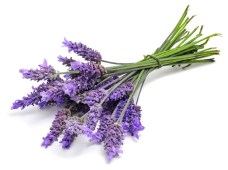 Asked the secret of her long and happy marriage, Dorothy Hartshorne, wife of the philosopher Charles Hartshorne, posed a question: “What do you think you must never do in a marriage?” The young woman thought for a moment and replied, “Never hurt each other?” “Oh no,” Dorothy responded, “you will hurt each other all the time. What you must never do is bore each other.”
In the years since I first heard this story, I have come to understand that a good marriage requires that both partners have their own interests and be willing to share them, and that each partner be interested in at least some of the interests of the other. Happy people share an interest in life in all of its diversity and difference. A person who is interested in life may ask herself why her neighbor is so unhappy and offer an ear to listen to her story. Or he may ask about the birds that come into his garden—learning their names and behaviors, while delighting in their beauty. It doesn’t matter if the things you are interested in are large or small, but you must be interested in life.
Second, each you must be interested in yourself and in your partner. If conflicts are to be resolved, if hurts are to be assuaged, you must always be willing to ask: why was I angered or hurt in this situation, and why did my partner act or react in a particular way? This will not always be easy. Often one of the partners will feel more comfortable talking about feelings. Patience and deep listening may be required of one of you, and moving into unfamiliar territory of the other. If you are not interested in your own feelings and those of the other, your relationship is likely to founder—not only in hurt and anger, but also in boredom.
Dorothy’s husband Charles Hartshorne was fond of saying that the golden rule to love your neighbor as yourself implies that you love yourself. This is wise counsel. We are often told that marriage involves loving another, but less often that it requires loving yourself as well.
As you, Shelby and Mark, enter into marriage, I offer you these blessings:
May you always retain your interest in life.
May love yourself as well as the other.
May you never bore each other.
May you have many long and happy years together.
* * *
 Carol gave this blessing at the wedding of Shelby Carpenter and Mark Miller on August 3, 2017 in Molivos, Lesbos.
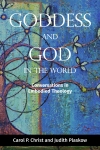
Carol’s new book written with Judith Plaskow, is Goddess and God in the World: Conversations in Embodied Theology.
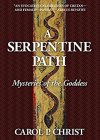
FAR Press recently released A Serpentine Path: Mysteries of the Goddess.
Join Carol on the life-transforming Goddess Pilgrimage to Crete. Space available on the fall tour.
Healing from beyond the Grave by Carol P. Christ
 Despite having thought that I had resolved my issues with my father, shortly after his death I fell into a lethargy accompanied by stomach flu and a cold. After about two weeks, the only symptom was a lingering cough. But I had no energy. I knew there were a number of essays to write or edit in the pending file on my computer, but didn’t have the will to do anything.
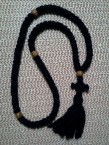 During this time, I came across the Greek Orthodox prayer rope (komboskini) that had been spontaneously removed from her person and given to me by the Mother Superior of the Paliani Convent in Crete a few years previously. Made of black wool yarn with one hundred intricately woven knots and a cross, it was not something I could easily wear in my everyday life. But as I was still lounging around in a black jersey nightgown, I put it on. I felt it on my skin and cradled between my breasts. Continue reading “Healing from beyond the Grave by Carol P. Christ”
Why Is the Democratic Party Slapping Women in the Face? by Carol P. Christ
 While the Republicans in Congress and in state legislatures across the country are working to repeal and restrict a woman’s right to control her own body, the Democratic Party has decided not to “insist” that the right to abortion is a basic human right.
During the 2016 election, Hillary Clinton was criticized for choosing a Tim Kaine as her vice presidential running mate even though as governor of Virginia, he had supported several anti-abortion bills. Last winter Bernie Sanders and his coalition were criticized for backing Heath Mello, a Democrat running for mayor of Omaha, Nebraska, who co-sponsored the first statewide bill to ban abortions after 20 weeks and who voted for a bill to outlaw the “telemedicine” (speaking to a doctor via the internet) to monitor medication abortion when no local doctor will supervise it. Last week the chair of the Democratic Congressional Campaign Committee, Ben Ray Luján, said the party would support anti-choice candidates. Senate Minority Leader Nancy Pelosi agreed with him that abortion should not be a litmus test.
And why not? Why should the Democratic Party have a “big tent” that includes those who deny a woman’s right to choose abortion? Continue reading “Why Is the Democratic Party Slapping Women in the Face? by Carol P. Christ”
As We Bless the Source of Life in Midsummer by Carol P. Christ
August 1 is the Neo-pagan and Wiccan holiday known as Lammas. For many witches and pagans this is the time when the young male God identified with the harvest of the seasonal wheat crop is sacrificed in the interest of the larger cycles of birth, death, and renewal. Here in Greece August 15 is a major holiday celebrating the Dormition and Assumption (death and rebirth) of the Panagia, She Who Is All Holy.
In her ground-breaking book The Spiral Dance: A Rebirth of the Ancient Religion of the Goddess, Starhawk identified the ancient religion of the great Goddess with Wiccan tradition defined by the Englishman Gerald Gardner and transmitted to her through her initiation into the Faery (or Feri) tradition of the Americans Victor and Cora Anderson. In her vision, the ancient religion of the great Goddess is understood to be a magical tradition in which spells play a prominent role. Continue reading “As We Bless the Source of Life in Midsummer by Carol P. Christ”
Grief and Healing by Carol P. Christ
 My father died on July 6, 2017, 98 years, 4 months, 12 days. The last time I saw him was in the spring of 2004. During that visit, he gave me “the silent treatment” (refused to look at me or speak to me) when I stepped over an invisible line. That was not the first time, but it would be the last. When I gave lectures in California in 2008 and 2010, I agonized and yet made the decision not to visit him. I did not want to give him the chance to hurt me again.
My father and I kept in touch at Christmas and birthdays. In recent years we found our mutual interest in the family genealogy to be safe ground on which we could make contact. I was pleased to be able to tell him that I found the place of origin of our branch of the Christ family in Unterpreppach, Lower Bavaria when I visited Germany in the spring of 2016 with my cousin Bill. My father was with me in spirit when I visited the Christ family graves at Most Holy Trinity Roman Catholic Cemetery in Williamsburg, Brooklyn in the winter of 2016.
When my father had his first heart attack a few years ago, I agonized again and made the decision not to visit. I did not want to give him the chance to hurt me again. This time the decision was final. Continue reading “Grief and Healing by Carol P. Christ”
Sometimes I Think I Am a Voice Crying in the Wilderness … by Carol P. Christ
 Just last week I was dumbfounded when an acquaintance told me that his philosopher partner calls a woman leading a workshop on labyrinths “a tree hugger.” “What,” I wanted to say, “is wrong with being a tree hugger? Are we not all interdependent in the web of life? Why should we imagine that trees or the cells of trees have no feelings at all?” But the tone of contempt and dismissal in the man’s voice told me that I would only be creating another “fuss,” the kind that can make me persona non grata among the ex-pats in my village.
Moreover, I could not have made my point simply. I would have had to discuss Plato’s assertion that the mind of man is destined to rise above the body and nature and modern science’s conclusion that nature is mere matter for man to use as he chooses. I might have needed to cite Susan Griffin or indigenous worldviews. This could have been a very long discussion indeed. Continue reading “Sometimes I Think I Am a Voice Crying in the Wilderness … by Carol P. Christ”
Woman and Nature: Our Bodies Are Ourselves by Carol P. Christ
This earth is my sister; I love her daily grace, her silent daring, and how loved I am how we admire the strength in each other, all that we have suffered, all that we have lost, all that we know. We are stunned by this beauty, and I do not forget: what she is to me, what I am to her.
These words are from Susan Griffin’s Woman and Nature which I often recommend as one of my favorite books. Over the years I have read this passage and others from Woman and Nature aloud with my students, and we have always been moved, most of us to tears. More recently these words have become the center of the “Morning Blessing” on the Goddess Pilgrimage to Crete.
In the epigraph to the book Griffin writes,
These words are written for those of us whose language is not heard, whose words have been stolen or erased, those robbed of language, who are called voiceless or mute, even the earthworms, even the shellfish and the sponges, for those of us who speak our own language . . .
Continue reading “Woman and Nature: Our Bodies Are Ourselves by Carol P. Christ”
Is This How Patriarchy Began? by Carol P Christ
 In my widely read blog and academic essay offering a new definition of patriarchy, I argued that patriarchy is a system of male dominance that arose at the intersection of the control of female sexuality, private property, and war. In it, bracketed the question of how patriarchy began. Today I want to share some thoughts provoked by a short paragraph in Harald Haarmann’s ground-breaking Roots of Ancient Greek Civilization. Haarmann briefly mentions (but does not discuss) the hypothesis that patriarchy arose among the steppe pastoralists as a result of conflicts over grazing lands. As these conflicts became increasingly violent, patriarchal warriors assumed clan leadership in order to protect animal herds, grazing lands, and the women and children of the clan. Continue reading “Is This How Patriarchy Began? by Carol P Christ”
Do All Religions Teach Love and Justice? Or Do Some Religions Teach Domination? by Carol P. Christ
 Recently at a discussion of Goddess and God in the World, Judith Plaskow and I were asked if the dialogue across religious difference we embody and advocate in our book is a “liberal thing.” Can it, the questioner wondered, occur with those who do not have a liberal view of religion and religious meaning?
I answered that Judith and I identified two principles that made our dialogue possible. The first and most important is that we share the conviction that individuals and communities always interpret their texts and traditions from particular standpoints, deciding with aspects of text or tradition they will make central and which they will criticize or ignore.
For example, those who advocate Lev. 18:22’s injunction that “you shall not lie with a male as with a woman” (NRSV) generally expand its meaning to include female as well as male homosexuality. They ignore the fact that extending this text to a prohibition of lesbianism is an “interpretation” not found in the original Hebrew. At the same time, they ignore other provisions in the text–including that it condones slavery under certain conditions as the notorious letter to Dr. Laura “Why Can’t I Own a Canadian?” attests. Continue reading “Do All Religions Teach Love and Justice? Or Do Some Religions Teach Domination? by Carol P. Christ”

