Moderator’s Note: This was originally posted on September 19, 2016

Max Dashu’s Witches and Pagans: Women in European Folk Religion 700-1000 challenges the assumption that Europe was fully Christianized within a few short centuries as traditional historians tell us. Most of us were taught not only that Europe became Christian very rapidly, but also that Europeans were more than willing to adopt a new religion that was “superior” to “paganism” in every way. Careful readers of Dashu’s important new work will be challenged to revise their views. When the full 15 volumes of the projected series are in print, historians may be forced to hang their heads in shame. This of course assumes that scholars will read Dashu’s work. More likely they will ignore or dismiss it, but sooner or later–I dare to hope–the truth will out.
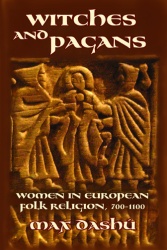
History has been written by the victors—in the case of Europe by elite Christian men. These men may have wanted to believe that their views were widely held, but Dashu suggests that they were not. Combing artistic and archaeological records, Dashu finds (to give one example) that images of Mother Earth nursing a snake are far from uncommon and can even be found as illustrations in Christian documents and on Christian monuments. Clerics rage against people—particularly women–who continue to visit holy wells and sacred trees and to practice divination and healing rituals invoking pagan powers. To paraphrase Shakespeare: “Methinks the cleric doth protest too much.” Were these things not happening and happening often, there would have been no need to condemn them. Using these clues, Dashu provides intriguing new readings of the Poetic Edda and Norse sagas.
Continue reading “The Legacy of Carol P. Christ: Weaving and Spinning Women: Witches and Pagans by Max Dashu A Review”