A Total Eclipse of the Moon by Carol P. Christ

The morning after the July 27 total eclipse of the moon, I wrote:
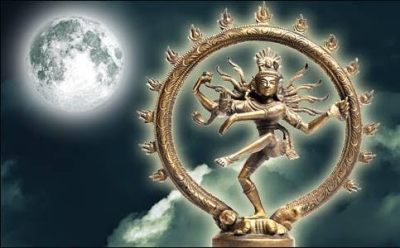
I am a-mazed and still in awe. Last night I saw the eclipse and the blood moon from my favorite tavern in Pachia Ammos. We pulled the table out from the roof shelter and positioned our chairs so that we were looking at the high mountains where the moon came up, almost full, the night before. The mountains are sheer exposed rock that seems to have risen up from the sea. In the evening light they were bathed in the rose glow of the setting sun.

I read that the eclipse would last from 8: 22 until 2: 28, but at 8: 22 the moon was still hidden behind the mountains. Soon someone shouted, “it’s coming,” pointing to lacy clouds capping one of the peaks that had suddenly become luminescent. The clouds disappeared leaving only a faint light emerging from behind the mountain. When the moon finally rose about 9, the eclipse had already begun. It looked like someone had taken a small bite from the lower left side of a cookie. It was very white and there was no sign of the promised red moon. Mars was positioned to the lower right of the moon, so large and so bright I had mistaken it for Saturn a few nights earlier. Continue reading “A Total Eclipse of the Moon by Carol P. Christ”

Small Victories by Sara Frykenberg

Last year was a hard year. I wrote about this difficulty—vaguely eluding to challenges of environment, home, and work—in my last post. In this blog, which was a copy of my reflection for our last faculty meeting of the year, I asked my colleagues and myself: should I take the year apart or find thoughts that will help us put ourselves back together again in the fall? I am pretty good at taking things apart. But returning to school in less than a week, I find myself most concerned with the latter question: have I put myself back together again? Have I found these thoughts?

I have slept more, but am I rested?

I have taken space, but am I ready to be close again?

I don’t know. But I am beginning to find the answers, the fragments of thought, in my small victories.

Bringing my panic to ‘get it together’ before school starts to my brother, he said to me: “You have a stubborn Taurus heart.” He’s right. My Taurus moon, which tends towards obstinacy, perfectly suits my Libra (in)decisiveness. I might have a lot of trouble coming to a decision, but once I have, you better believe that I am going to hold onto that decision—particularly in matters of the heart. I tend to hold onto anger too, problematically. I once lived an entire year in perpetual rage. But, I eventually had to let it go to learn how to breathe again (literally and figuratively). This summer has also been a practice in breathing; and the process feels at best, incomplete. Continue reading “Small Victories by Sara Frykenberg”

The Play of Emotional Insecurity and Pull by Elisabeth Schilling

It is not easy navigating the world with fragile boundaries, self-worth, and a potential history of manipulations. I often seek wisdom in spiritualities and unfamiliar religions because I need a substitute for the childhood traditions I have abandoned as a raft mid-stream. I am attracted to fashioning another raft, this one not pre-fabricated but gathered over some time by reaching for branches and tendrils. I am never confident about my assessments concerning relationships, and I mostly avoid going very deep with people anyhow or keep my head down so as to go unnoticed or divert the interest of others because I don’t yet know how to have healthy relationships that entail elements of balance or stay more-or-less in the middle way. It is awkward and fumbling to do life on one’s own, and I am hardly a victim. I completely admit that healing is within my purview and I simply have not tried hard enough, or that I just need to accept that no relationship is perfect and one cannot exactly have pleasure without pain, and so allow my body to sink into the underwater worlds and be taken by the sensory suctions of sea urchins and stings of jelly fish. Perhaps a relationship can also be one of peace and calm passions where those involved keep their attachments in check. I guess that is possible. 

Continue reading “The Play of Emotional Insecurity and Pull by Elisabeth Schilling”

Bake the Damn Cake: Owning Up to and Mitigating Our Traditions’ Trauma Histories by Chris Ash

Christy at the beach

“We have learned that trauma is not just an event
that took place sometime in the past;
it is also the imprint left by that experience
on mind, brain, and body.
This imprint has ongoing consequences
for how the human organism
manages to survive in the present.”
— Bessel A. van der Kolk, The Body Keeps the Score: Brain, Mind, and Body in the Healing of Trauma

While I’m not a trauma therapist, I work in a field in which I regularly support people who have experienced trauma. Sometimes I’m accompanying a recent survivor of assault at the emergency room for a rape kit, speaking warmly, offering compassion, providing distraction. Other times, I’m holding space over the phone while a fifty-something year old survivor tearfully discloses, for the first time in her life, the things done to her during childhood. Recent or old, those experiences shape us and our responses to them, even those that might not serve our health, are efforts to protect ourselves, to avoid pain, and to seek an elusive sense of safety.

“Trauma isn’t what happened to us.
Trauma is what happened inside us as a result of what happened to us.”
— Gabor Mate, in his presentation “Addressing the Long-Term Effects of Childhood Trauma”
during the Healing Trauma Summit

Our attempts to resolve trauma, to escape it, may be labeled dysfunctional and may not, ultimately, serve our highest good. They are, however, the actions of someone who wants to feel secure, who wants to feel loved.

My desire to understand trauma and trauma recovery serves my professional development as well as my personal journey, and learning more about the how trauma relates to the body has proven helpful in both of these areas of my life. I’m not a mental health clinician — I’m a crisis advocate and consent educator. But the process, as I understand it, is something like this: Continue reading “Bake the Damn Cake: Owning Up to and Mitigating Our Traditions’ Trauma Histories by Chris Ash”

With Our Tears, Let Compassion Flow: Remembering the Armenian Genocide by Laura Shannon

Today, April 24, is the worldwide day of remembrance for the Armenian genocide of 1915. On this day three years ago, marking the centenary of the genocide, I wrote about dance as an expression of solidarity with the Armenians people, and with all victims of genocide throughout history and throughout the world. You can find that piece here.
Now as then, I am encouraging my students to dance Armenian dances with their groups this week, or even simply to light a candle, listen to Armenian music (some recommendations are listed at the end of this post), with an open heart. How better to heal the wounds of history than with such tiny and intimate acts of compassion?
The root of the word ‘compassion’ essentially means ‘to suffer with’, and I think that one of the gifts of our own suffering might be that we can begin to have sympathy for those who have suffered like us.
Through compassion, our own heartbreak helps our hearts to be broken open. Although suffering can cause us to feel terribly isolated and utterly alone, at the same time, our pain opens our hearts in sympathy for the pain that others feel. To paraphrase Tibetan Buddhist teacher Chogyam Trungpa, this enables us to ‘reach out to help others… to discover a greater universe and a fuller and fuller broken heart. This is not something to feel bad about; it is a cause for rejoicing.’

Continue reading “With Our Tears, Let Compassion Flow: Remembering the Armenian Genocide by Laura Shannon”

We Don’t Need Armed Guards, We Need Grandmas by Karen Moon

(Written the day after the Parkland high school, Florida shooting.)

Last night, my husband and I went outside to our driveway to sit in the car and have a beer.  Those of you with lots of children will understand that sometimes you just do not have the time, energy or funds for babysitting, but at least we have some uninterrupted time to talk to each other. Our youngest is six years old, so the older ones can easily watch her for twenty minutes.  We are not leaving toddlers to fend for themselves.  And it is cold out.  That is why we are in the car.

Only last night, there was no ‘unwinding’ going on. Somehow, we started speaking about the Parkland, Florida high school gun shooting, and his voice became raised.

He calls it ‘Meditarranean’ and ‘passionate’; I call it an ineffective way of communicating.  I would like to say that I replied calmly. But I did not. He had me, and my voice became raised in response.

Continue reading “We Don’t Need Armed Guards, We Need Grandmas by Karen Moon”

The Practices of Forgiveness and Yoga by Vanessa Soriano

Forgiveness and yoga require consistent practice.  As we engage in each, healing unfolds in the body, mind, and soul.  Forgiveness and yoga exist in a symbiotic relationship: forgiveness allows us to release emotional blockages that affect the body/mind, and yoga delivers us to more empowered and peaceful states within the body/mind that encourage the release.  Yoga and forgiveness illuminate the body-mind connection.

All world religions and spiritual traditions emphasize the practice of forgiveness.  Sages, prophets, rishis, shamans, medicine women—figures who have helped shape religion and spirituality—understood that resentment and anger depress the body and mind, which hinders our connection to the soul and Divine.

Being angry diminishes the quality of life and can incite violence against our self and others.  Forgiveness helps us function at fuller capacity from a healthy internal state.

Just as forgiveness promotes healing in the body/mind, yoga accomplishes the same effect.  Scientific studies from Harvard show that yoga increases body awareness, relieves stress, improves mood and behavior, and calms and centers the nervous system.  Since yoga decreases the stress response in the body, it creates space in the psyche to journey into the practice of forgiveness.

Continue reading “The Practices of Forgiveness and Yoga by Vanessa Soriano”

Carrying Our Mothers by Chris Ash

The past few weeks, I’ve been sitting with the many layers held by the concept, and the manifest reality, of mother, mothering, and motherhood. Mother is seen in the divine feminine, in the cosmos, and in the sea and the glow of the moon. She is held in our genes and our histories and the eyes of our children. She is found in archetypes of healing, nurturing, and comfort, as well as in stories of criticism, coldness, and abuse. She is the soft one who tends grief and holds hands and braids hair, and she is the unbreakable one whose labor and caregiving is taken for granted in most areas of her life. We carry our mothers with us in our DNA, in our stories, and in the way we navigate the impacts of intergenerational trauma.

She doesn’t always appear in our stories in simple or easy ways. Some of us mother children we did not or could not grow in our bodies; some of us birth babies who are now mothered by others. Some of us are not mothers at all. Some of us had mothers who could not love us unconditionally, or did not have mothers in our lives, or had mothers who brought us more pain and humiliation than comfort, from whose effects we are still recovering, are still healing. Others have mother wounds, mother blessings, that escape delineation in a single blog post restrained both by its word count and the sometimes-limited imagination of its author.

Mother is a tough concept for me. My own relationship with my biological mother was a source of confusion and heartache for years; the resolution of that internal conflict left me feeling cut off from my maternal grandparents, whose influence on my early life was wholly positive, loving, and stabilizing. Connecting with my ancestors is a part of my spiritual practice, so this loss was present with me, in my heart and waking meditations as well as in my rich dream life, which included frequent visits to my grandparents’ home. Each morning I’d awaken from a dream spent in that space to the stifling realization that their home – my childhood home for my earliest memories – had been torn down years ago. Continue reading “Carrying Our Mothers by Chris Ash”

Priestessing the Priestesses by Chris Ash

Christy CroftLast week, I had the incredible privilege of sitting vigil with a friend in hospice in her final hours on this earth. She slept for most of the time I was there, but her waking moments were lucid, if brief. She whispered how good the fresh juice tasted (it had been made for her by a friend), and she seemed to prefer having my hands on her back to pain medication. In the last hour I was with her before leaving, a mutual friend joined us and played gentle, lullaby-style music for her on the kalimba and guitar. As he sang softly to her, I could barely make out his words; the intention was pure, the moment was intimate, and I felt honored to be present for such a profoundly sacred moment.

Speaking with another mutual friend who had held space for Maria in her final days, I mentioned that as I was at hospice I had felt an awareness of priestessing the priestess. Our friend agreed, and said she’d had a similar sensation. “That’s who Maria has been for many of us, whether she claimed that title or not.”

Maria and I were not part of a shared formal congregation or spiritual community in the traditional sense. We were both part of an informal network of friends in a variety of communities whose membership and interests overlap – sacred movement, ecstatic dance, ancestral healing, sound healing, and alternative spiritualities. It’s a network that is both leaderless and full of leaders, as its inherent diversity of beliefs and practices lends itself to members who are specialists in one tradition, students in another, and generalists in deep compassion, holy presence, and unconditional love. Continue reading “Priestessing the Priestesses by Chris Ash”

Kintsugi for the Soul – Part II – by Vanessa Rivera de la Fuente

IMG_20170723_113240

Continued from Part 1.

How do you start to put the pieces together? For me, it was imperative to keep a space to express emotions without self-censorship or self-prejudice, to identify exactly what was hurting me. It was not the What, but the How. A split is always sad, but part of life. I could have been the “ungrateful” partner.

What aches …

Well, just to mention some, it was not the obstacles of a relationship between two people used to singleness, with different cultural backgrounds and family styles, but the neglecting, insults, and public belittling, leading to my progressive invisibility and objectification in the daily life. It was not his one night stand a few years ago with an Islamic feminist I know. Every adult has a sexual past, that is not a problem, but discovering that past was quite current (thanks Whatssap) is the problem. Someone decided I was not smart enough to understand it, so triangulation and lies were employed, with the consequent mind games, an emotional roller coaster that included gaslighting and violation of trust.

Continue reading “Kintsugi for the Soul – Part II – by Vanessa Rivera de la Fuente”