 The past few weeks, I’ve been sitting with the many layers held by the concept, and the manifest reality, of mother, mothering, and motherhood. Mother is seen in the divine feminine, in the cosmos, and in the sea and the glow of the moon. She is held in our genes and our histories and the eyes of our children. She is found in archetypes of healing, nurturing, and comfort, as well as in stories of criticism, coldness, and abuse. She is the soft one who tends grief and holds hands and braids hair, and she is the unbreakable one whose labor and caregiving is taken for granted in most areas of her life. We carry our mothers with us in our DNA, in our stories, and in the way we navigate the impacts of intergenerational trauma.
She doesn’t always appear in our stories in simple or easy ways. Some of us mother children we did not or could not grow in our bodies; some of us birth babies who are now mothered by others. Some of us are not mothers at all. Some of us had mothers who could not love us unconditionally, or did not have mothers in our lives, or had mothers who brought us more pain and humiliation than comfort, from whose effects we are still recovering, are still healing. Others have mother wounds, mother blessings, that escape delineation in a single blog post restrained both by its word count and the sometimes-limited imagination of its author.
Mother is a tough concept for me. My own relationship with my biological mother was a source of confusion and heartache for years; the resolution of that internal conflict left me feeling cut off from my maternal grandparents, whose influence on my early life was wholly positive, loving, and stabilizing. Connecting with my ancestors is a part of my spiritual practice, so this loss was present with me, in my heart and waking meditations as well as in my rich dream life, which included frequent visits to my grandparents’ home. Each morning I’d awaken from a dream spent in that space to the stifling realization that their home – my childhood home for my earliest memories – had been torn down years ago. Continue reading “Carrying Our Mothers by Chris Ash”



 Last week, I had the incredible privilege of sitting vigil with a friend in hospice in her final hours on this earth. She slept for most of the time I was there, but her waking moments were lucid, if brief. She whispered how good the fresh juice tasted (it had been made for her by a friend), and she seemed to prefer having my hands on her back to pain medication. In the last hour I was with her before leaving, a
 Despite having thought
 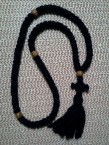 During this time, I came across the Greek Orthodox prayer rope (komboskini) that had been spontaneously removed from her person and given to me by the Mother Superior of the
  is story, my Word program froze several times, and I lost what I had written. This has never happened before. The fifth time, it occurred to me that Artemis was not happy with the way I was telling the story of her life and death. I lit a candle and prayed for her spirit to fly free like the gulls over the sea that I could see out my window and began again. The words in italic are the ones she added.
 I wrote this piece in response to an e-mail from a friend that said: “Yes, women’s circles may help you with your headaches that you have every 3 to 7 days (or whatever else ails you.)”
