“Don’t break the bucket” by Oxana Poberejnaia

oxanaVictor Pelevin is a prominent contemporary Russian author, with books translated into a multitude of languages. To me, his novels act as a series of Dhamma talks (Buddhist sermons, if you will).

I have also always thought that Pelevin’s novels can be broadly divided into two groups: “This is how to do it” and “This is how not to do it” groups. For instance, “The Clay Machine Gun” and “The Sacred Book of the Werewolf” are “How to do it” stories, with the protagonists reaching his and her (respectively) destinations. “Babylon”, on the other hand, is the “How not to do it” story, as the protagonist ends up enslaved by the world he has created.

Victor Pelevin
Victor Pelevin

One of my favourite novels by Pelevin is “Life of Insects”, which tells the tales of a number of characters, all of them “How not to do it” stories bar one. One of the most interesting quotes from the positive story for me is “Don’t break the bucket”.

Continue reading ““Don’t break the bucket” by Oxana Poberejnaia”

Redefining Spirituality, One Church for All by Andreea Nica

Andreea Nica, pentecostalismAs a former lover of Christ and ex-Pentecostalist, I had countless visions and dreams that one day I would be a spiritual leader. While growing up in the charismatic church, it was even prophesied that one day I would become one.

Nearly ten years after leaving the church, I carried a distrust in religion’s relationship with women and its barrier to free thought. My work as a freelance journalist led me to discover a spiritual women’s retreat held in North Bend, Washington. Inspired to experience a non-religious, spiritual gathering, I registered for the retreat held by Center for Spiritual Living (CSL) in Seattle.

CSL is described as a:

“Trans-denominational, inter-generational, not-your-usual church, that was started in 1921. A safe place for ‘the rest of us’ who are looking to connect with God/Higher Power/Universal Presence, but don’t really fit in with any one religion.”

The spiritual center’s core teaching philosophy derives from “Science of Mind” or Religious Science, a New Thought spiritual, philosophical, and metaphysical movement founded by practical mystic Ernest Holmes. The spiritual principles rely on the laws of physical science in establishing its core beliefs. Continue reading “Redefining Spirituality, One Church for All by Andreea Nica”

Identity as an enemy of Feminism by Oxana Poberejnaia

oxanaRita M Gross is her “Buddhism after Patriarchy” says that Buddhism is Feminism. I think I understand what she means.


The goal of Buddhist practice, Enlightenment, is often called Liberation. Liberation can be seen as the goal of Feminism too. In different schools of Buddhism is interpreted differently, but one of the classic explanation is that it is freedom from or absence of anger, lust and ignorance. Enlightenment is also described as a state of ego-lessness.


Rita M. Gross justifiably clarifies the Buddhist understanding of “ego” and “ego-lessness”, which is different from conventional Western notion of ego as “strength” or “scale” of personality. Rita M Gross points out that sometimes feminists say that women need larger egos, not smaller or no egos.

Continue reading “Identity as an enemy of Feminism by Oxana Poberejnaia”

Truths My Mother Taught Me by John Erickson

I never gave much credence to religion but through my mother, I met G-d, and through her I understood that I’m not a feminist because of the books I’ve read but rather because of the woman I call mom.

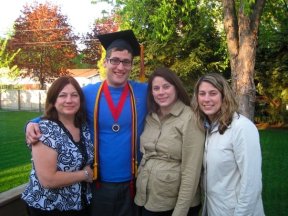
Graduation PhotoThe first question I always get asked when I’m in feminist spaces is: “What inspired you to become a feminist?”  Although I could go into the various histories revolving around men’s involvement in the early stages of the women’s movement to the similarities between the LGBTQ and women’s movements, my simple answer has always relied on one person: my mother.

I’ll be the first to admit (as well as many other people who will join me in the same chorus) that my mother deserves Sainthood for having put up with all the shenanigans I have, and still continue to, put her through. From running away from our local Catholic church the moment she dropped me off at Sunday School, to swearing like a sailor on leave at a very early age in front of Father Schmidt (who still fondly remembers me and the list I brought in with me to the confessional booth). Continue reading “Truths My Mother Taught Me by John Erickson”

Mindfulness of Putting Ourselves Down by Oxana Poberejnaia

oxanaFrom the Buddhist point of view, all phenomena are conditioned, i.e. they arise, carry on, and come to an end because of other phenomena. Buddhism does not look at anything we experience as “things”, but rather as processes.

Confusion arises due to various factors, chief among them : 1) vague sense of “ego”, and 2) language. The vague sense of ego is portrayed in Khemaka Sutta as the last delusion that a monk drops before getting Enlightened, so we won’t worry about it now. Where language is concerned, Buddhism stands on similar positions to those of postmodernism and feminism, i.e. our social world is defined by how we speak about it. One can say that we actually create society by the act of speaking.

Continue reading “Mindfulness of Putting Ourselves Down by Oxana Poberejnaia”

Creating Ritual by Linn Marie Tonstad

Linn Marie TonstadLast time, we considered whether the creation of rituals, I mean habits, might serve as an antidote to depression, or as a way of managing depression. But the creation of ritual has had a much more significant role in feminist religious practice than such an approach might suggest. Currently, WATER – Women’s Alliance for Theology, Ethics, and Ritual, a leading center for feminist religious thought – creates multiple rituals marking various seasons and events in the year, most recently for the summer solstice. These rituals can provide alternative ways of marking the year’s rhythms, and they can serve as ways to take control of liturgical spaces that have tended to exclude women or to allow women to serve only in various subordinate roles.

Yet the terminology is odd. What does it mean to create a ritual? If I think of the rituals of my childhood, what presented itself to me as ritual was connected either with religious practice, or with seasons of exception. Indeed, the most stylized rituals of the year were areligious (as I understood religion). They took place on Christmas Eve. First, during the distribution of presents, my father would put on a terrifying, horrifying, grotesque Santa mask. It was intended, clearly, to be a friendly Santa, which was why its leering was so fundamentally disturbing. My sister and I would try to run away, emotionally and sometimes physically petrified by the transformation of our father into this monster. Second, after Christmas dinner, we would eat cold rice porridge with cream and try to get an almond – “mandel i grøten” in Norwegian tradition. Getting the almond, which is blanched and hidden in the porridge, is considered an auspicious omen for the new year, and requires that the finder be given a gift – traditionally, a marzipan pig. Continue reading “Creating Ritual by Linn Marie Tonstad”

To Have and to Hold: Gay Marriage and the Religion Question

If a conservative religious traditions can’t give their mothers or sisters full equality, how can we expect them to give a GLBT individual the time of day?

John Erickson, sports, coming out.Outrage.  Anger.  Fear.  Hatred.  These are just a few of the words that flashed across my Twitter feed as I woke up on that fateful Wednesday, June 26 morning when the Supreme Court of the United States ruled that the Defense of Marriage Act (or DOMA) was unconstitutional and that supporters of Proposition 8, the hotly contested voter initiative in California that banned same-sex marriage, had no standing.   People were mad.  However, it wasn’t just the typical kind of mad that is associated with hatred, it was a type gay_marriage_81102178_620x350of mad that was met with impossible anguish because what I was reading and feeling was a result of one thing: there was nothing more they could do.

What does all this mean?  Questions from friends and family were filling up my inbox and although I wanted to take a moment to just hit “Reply All,” and input the words: Equality, I had to hold back and start to examine the notion that although equality may now be firmly on the proverbial table, there is still a lot of work to be done, specifically for gay marriage and those wanting to marrying inside the traditional church spaces they grew up in and not just the ones that have come out as open and affirming in recent years towards LGBT individuals. Continue reading “To Have and to Hold: Gay Marriage and the Religion Question”

I Love Love Tel Aviv By Laurie-Ann Cota

Laurie-annAs a self-identified Jewish musician, pop culture nerd/aficionado, getting in touch with my cultural heritage in creative ways is extremely important to me.  This past year I traveled to Israel for the first time and it was life changing.

I traveled with close friends from my undergraduate days at UCLA.  We had bonded and formed a friendship through the blood, sweat, and tears shed in a Hebrew class.

As a Jew in the United States I realized that I was conforming to social standards without even knowing it.  Coming home to Israel, this became very clear.  For instance, many of my friends have very curly hair – we call it the “Jewfro” – and they remedy this problem with the ever so popular Brazilian Blowout, which definitely makes one look less “ethnic.”  I have BIG hair, which I maintain by getting it razored or thinned out; if I don’t, I end up looking like Einstein.  In Tel Aviv there were big heads of curly hair that were flowing with pride.  My friends and I commented that we didn’t even realize how much of our Jewish identity we hid with simple hair products.  Something as innocuous as our hairstyles made me step back from the manner in which we alter ourselves to fit into society here in the United States. Continue reading “I Love Love Tel Aviv By Laurie-Ann Cota”

Thanks for Coming (Out): Sexuality, Sports, and Spirituality by John Erickson

I have to be honest, Jason Collins’ admission that he was a homosexual, albeit brave, upset me. While coming out is an completely unique experience to every individual that does it, Jason Collins’ story was just another example of the rampant sexist and heteropatriarachal world that privileges male bodies and sexualities over women’s similar experiences. While I applaud Jason’s story and it’s timing, the first thing I asked to my colleagues was: Where was the hubbub over Sheryl Swoopes or Martina Navratilova?

John Erickson, sports, coming out. Like marking off items on a proverbial checklist, closeted LGBTQ individuals who exist within and outside of the world of professional sports, can recount the numerous things they struggle with in terms of their sexuality.  From fearing of the actual coming out process, dressing in their car or at home to avoid the subtle glances and whispers of individuals in the locker room, to wondering what coming out would mean not only for their game but also for their social and, if they choose, spiritual lives, closeted and out LGBTQ individuals within the multi-billion dollar professional sports industry must grapple with that age old question: what does it mean to be gay and open about it?

The Locker Room

I have to be honest, Jason Collins’ admission that he is a homosexual, albeit brave, upset me.  While I understand that coming out is an completely unique experience to every individual who does it, for me Jason Collins’ story was also an example of the rampant sexist and heteropatriarachal world that privileges male bodies and sexualities over those of women.  While I applaud Jason’s story and the timing, the first thing I asked to my colleagues was: where was the same hubbub over Sheryl Swoopes or Martina Navratilova? Continue reading “Thanks for Coming (Out): Sexuality, Sports, and Spirituality by John Erickson”