

These are difficult days. We awaken daily to the ongoing horror of senseless killing. My heart is filled with a yearning for peace. Now is the time to dream of peace, to choose peace, to practice peace – within our selves, with those we love, in our communities and in our world.
But what might a peaceful world look like? It can be hard to even imagine – not only because we live in a world filled with war, but because we have been taught to believe, as Carol Christ explains, that “patriarchy and with it war and domination are universal and inevitable.” However, she goes on, “this is a myth perpetrated by those who do not want to give up the power and privilege the patriarchal system has accorded to them.” War is not inevitable. Peace is possible.
Continue reading “Crete is the Cradle of a Culture of Peace – Part One by Laura Shannon”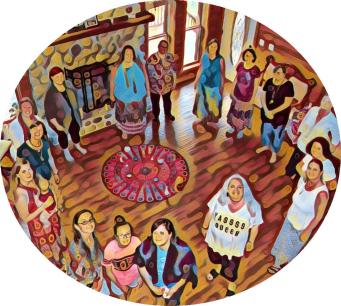


 At the age of nine, I was taken to see the film Brother Sun, Sister Moon. It is a gorgeous film about the early life – and spiritual revelation – of Saint Francis of Assisi, or as I like to call him: Brother Francesco. As the final credits rolled, that first time seeing it, I couldn’t stop the tears from flowing. My Mom asked me what was wrong, and all I could say was, “I want to go be with him, I belong with him.” Her response was predictable: 1. I was Jewish. 2. He was dead. 3. I was a girl!
 The Sabarimala Temple has received an influx of global attention since last October. In my last
  A pilgrim leaves home and sets off on a journey, seeking healing, revelation, and direction in her life. She finds companions along the way whose stories reflect her own, validating her quest and shedding light on her journey. According to anthropologists Victor Turner and Edith Turner, pilgrimages have common structural elements. A pilgrim separates from family and friends, work and obligations. She steps across a threshold into “liminal space” in which daily routines are suspended, opening herself to discovering new ways of being and living.
