

Introduction: When I last wrote for Feminism and Religion, I shared some of the experiences that led me to write Maiden Mother Crone, a memoir in verse exploring trauma, motherhood, addiction, recovery, hope and the search for more inclusive forms of spiritual expression.
That personal journey has now opened into a wider conversation.
Maiden Mother Crone: The Anthology, published by Sea Crow Press and co-edited by me and Sea Crow Press founder and publisher Mary Petiet, is the third and culminating volume in my Crossing Places series. Drawn from around 150 submissions and developed through workshops in the UK and internationally, it brings together poets from across cultures, generations and geographies to explore body, memory, land, love, loss, motherhood, daughterhood, ageing, renewal, courage and hope.

While responding to Mary’s questions about the anthology, I found myself returning to Bosorka, a statue I encountered recently in Bratislava. Created in memory of the women and men persecuted and killed after being accused of witchcraft, she seemed to embody many of the questions at the heart of the collection: whose voices are heard, whose experiences are mistrusted or erased, and how poetry and storytelling can help us remember, bear witness and create connection.
The following conversation originally appeared on the Sea Crow Press website.
1. How did Maiden Mother Crone: The Anthology evolve from the Crossing Places series, and what inspired you to invite other poets into the conversation?
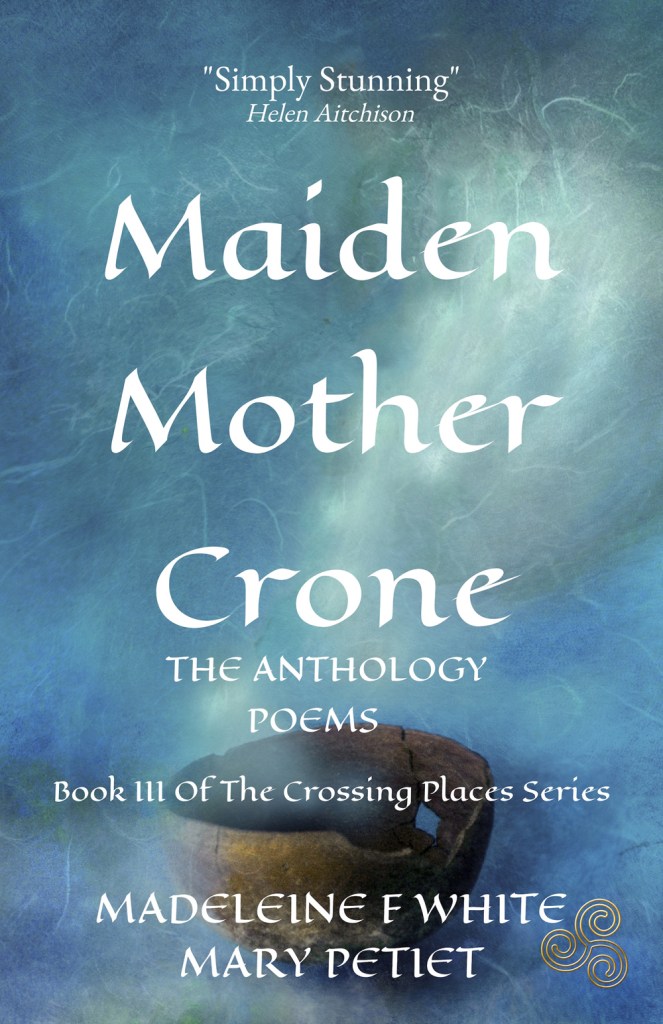
The Crossing Places series has always moved outwards. The Horse And The Girl was about discovery – finding the stillness to hear my own voice. Maiden Mother Crone allowed that voice to unfold through personal truth, exploring trauma, motherhood, addiction, recovery and hope. The anthology became the natural third movement: connection.
My original collection was a kind of calling card, an invitation for others to enter the conversation. The response to it – and to the workshops I ran over eight months – showed me other poets weren’t simply responding to my story. By taking the questions I had opened and carrying them somewhere I couldn’t, they were completing and continuing the conversation.
This was why Mary and I approached the anthology through listening rather than assumption. What began as one woman’s search for voice became a shared poetic space, connecting truths across cultures, generations and geographies.
2. This anthology brings together the voices of 50 poets from around the world. What surprised you most as the poems began to arrive?
I’d always hoped Maiden Mother Crone might act as a creative impetus – offering images and ideas that others could enter and remake. I was still surprised though by the sheer originality of what came back.
Within the ca 150 submissions, written by women and men across the world body, memory, land, love, loss, ageing and the need to be heard were inherent. But despite this communality, no two poets approached those themes in the same way. Rather than simply echoing the original collection; they extended, challenged and fulfilled possibilities I’d only begun to glimpse.
It was this combination – extraordinary difference held within recognisable human concerns, that surprised me most.
3. The archetypes of the Maiden, Mother, and Crone have resonated across cultures for centuries. Why do you think these themes continue to speak so powerfully to readers today?
I think the archetypes endure because of their fluidity. ‘Maiden,’ ‘Mother’ and ‘Crone’ are not fixed age brackets or instructions for what a woman should be. They offer ways of understanding awakening, creation, relationship, loss, memory and change – experiences that overlap throughout our lives. Their power lies in our ability to question and rewrite them.
I was reminded of this recently when I encountered Bosorka in Bratislava, a figure created to commemorate women and men who were silenced, persecuted and executed as witches over centuries. Many were punished for being perceived as other or different, and for ways of living and knowing connected to nature, the body, spirit and older matriarchal practices.
Yet Bosorka isn’t bowed by that history. With wild hair, ravens at her shoulder and feet lifted in playful abandon, she remains curious and turned towards what comes next. She offered me a new kind of archetypal vision: one that carries suffering and memory without being imprisoned by either.
Perhaps that is what these ancient figures can still offer us: not identities to submit to, but shapes through which we can carry the past forwards and rewrite ourselves into being.
4. Although each contributor writes from a unique perspective, common threads emerge throughout the collection. Were there any recurring themes or discoveries that particularly moved you?
I was particularly moved by how often the pieces travel from what has been held privately towards expression. Silence isn’t presented as empty. It can be shelter, wound, inheritance or survival, with the poems gradually finding language for what they contain.
The body and the natural world often become the means of doing that. Earth, water, blood, forests, seasons and the unseen allow poets to express experiences ordinary language can’t always hold. The individual becomes connected to something older and wider.
Motherhood also emerges less as a category than as a weaving of love, guilt, rage, responsibility, loss, creativity and return.
Space became an important thread too across the three sections: how it’s denied to us, how we hold it for others and how, eventually, we learn to claim it for ourselves. The poems make room, not by smoothing away pain, but by giving it shape and allowing something else to grow alongside it.
5. What do you hope readers will take away from this anthology, whether they are encountering these archetypes for the first time or returning to them with new life experience?
The poets have written themselves into being through these pieces but I hope this anthology will make readers feel they belong to the conversation, too. Reading is an act of co-creation. So its not just the contributors, but everyone bringing their own history, body, beliefs and experience to the page. Each reader will notice different connections, recognise different truths and carry the poems onwards in a different way. Together, we begin to create a more expansive way of seeing and, for me, that’s lived participation.
The anthology isn’t a display of finished truths that readers are expected to stand outside and admire. It asks us to enter, listen, question, recognise and perhaps begin to articulate something of our own.
Whether these archetypes are new to someone or have accompanied them for decades, I hope the collection expands the language available to them. Most of all, I want belonging to feel like something we create together, rather than something we wait to be granted.
6. If readers could leave this collection with one lasting feeling or insight, what would you hope it would be?
I’d want them to leave feeling less alone, but also more open.
Many of us carry stories we’ve been unable to speak, or have learned to believe don’t matter. Yet when one person finds the courage to express something true, it can help another recognise and perhaps voice their own experience. That’s what I mean by hearing one another into speech.
The hope in this anthology isn’t easy or sentimental. The poems bear witness to beauty and cruelty, breaking and remaking, without pretending suffering can simply be overcome. But neither do they surrender the future to it.
I would love for readers to come away knowing what they carry has meaning, that their voice can make space for another and, that we can carry memory forwards without allowing it to close us down.
Pain is part of the story; it doesn’t have to have the final word.
The book is newly released today, August 4th, 2026. You can purchase it at Amazon or directly at Sea Cow Press by clicking the links. Press here for info on the 3 book series.
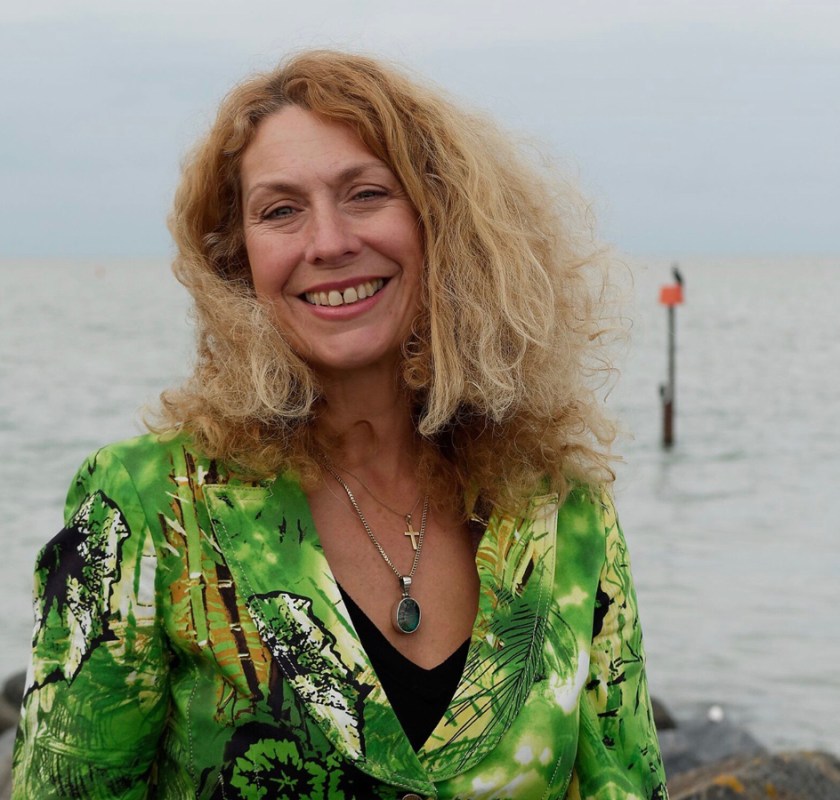
BIO: Madeleine F White is a poet, author, editor and publishing thought leader, born in Germany with roots in Canada and the UK. Her debut novel Mother Of Floods was published by Crowsnest Books, her Crossing Places poetry series is published by Sea Crow Press and a deal for her second novel is due to be announced imminently. Founder and Editor of the Write On! suite of publications, Madeleine works at the intersection of storytelling, capacity building and systems change. She supports publishing platform Libraro on partnerships and external positioning, and speaks and writes on discoverability, authorship integrity and trust in an increasingly AI-mediated publishing landscape. Her work explores story as connective infrastructure: how human creativity travels, connects and remains linked to value.
Instagram, X and Bluesky: @madeleinefwhite
BIO: Mary Petiet, co-editor and publisher of Maiden Mother Crone: The Anthology, is an award-winning writer, poet, and publisher from Cape Cod. Her work emphasizes our connection to each other and the natural world with a focus on positive empowerment. Mary has contributed to many books and journals and is the author of Minerva’s Owls and Owl Magic in addition to Moon Tide: Cape Cod Poems and Wash Ashore: A Tale of Cape Cod. In addition to her writing, Mary is the founder of Massachusetts-based independent publishing company Sea Crow Press.
Discover more from Feminism and Religion
Subscribe to get the latest posts sent to your email.


I think the archetypes endure because of their fluidity. ‘Maiden,’ ‘Mother’ and ‘Crone’ are not fixed age brackets or instructions for what a woman should be. Exactly!!!!
LikeLike